
Kenya’s Social Health Authority (SHA) launched in late 2024 with an ambitious mandate: universal healthcare access for all Kenyans. It would even enable innovative private healthcare businesses to be reimbursed for serving the country’s lowest-income populations. We were among those who cheered on the market-creating potential of such a program.
On Monday, the Guardian published a scathing exposé revealing that SHA’s algorithm systematically overburdened the poor while undercharging the rich. Combined with mounting concerns raised over recent months, SHA payments have ground to a near halt — leaving millions of low-income Kenyans in limbo, facing unpaid health bills and barriers to care they were promised. Critics claim “this is an experiment that has failed.”
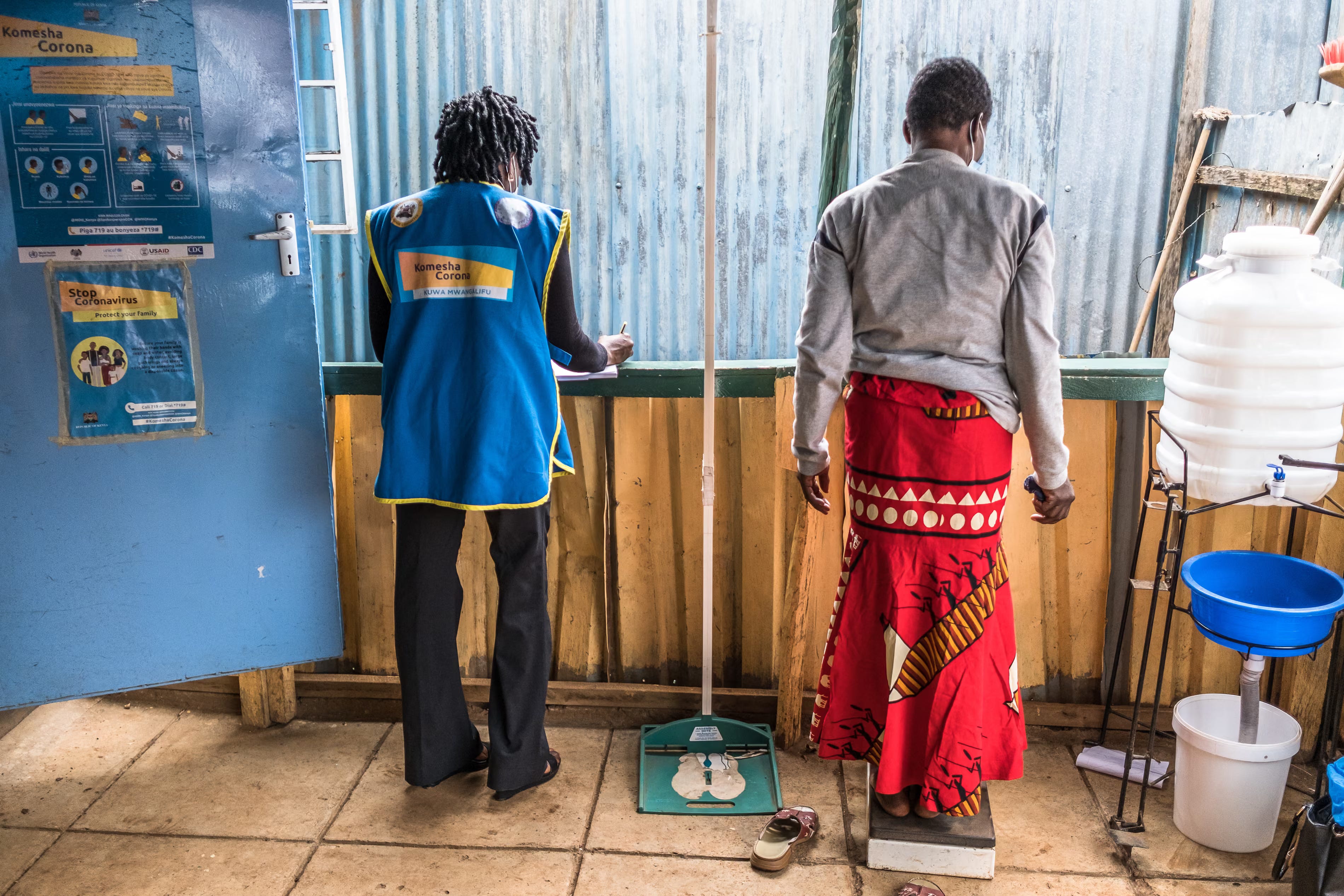
It is tempting, in the face of such a setback, to abandon the promise of universal health coverage altogether, or to write off AI as a tool for health systems reform. But first we must ask: what is the alternative?
The system SHA replaced largely excluded the informal sector, where most Africans work. It resulted in high out-of-pocket costs. The pathways to preventative care were extremely limited. That alternative is simply not good enough.
The status quo remains unacceptable. Populations and patient volumes are exploding. The leapfrog opportunity across Africa — despite the real challenges that accompany new initiatives — remains. So we press forward. Instead of giving up, we ask: what can we learn from these critical early efforts?
On data: AI learns from the data it is trained on. This algorithm drew very few data points from Kenya’s poverty pockets, then amplified that exclusion and distortion at scale. Future efforts need to ensure representative data that serves the whole market.
On health equity: Machine learning cannot substitute for a sustained commitment to health equity at all levels of decision-making and governance.
On course correction: Mission-critical systems must be rigorously tested and validated before rollout. Even post-deployment, structured, stigma-free mechanisms are needed to flag and respond to early warning signs. Systems must be smart enough to learn and adapt to real-world complexity.
On AI: AI is a tool to execute human intention. While it dramatically expands human capabilities, it is not a substitute for judgment, iteration, inclusivity, and governance.
These are not reasons to retreat. These are lessons learned on which we can rebuild more durable, more intelligent, and more equitable health systems.
Read on for 10 new deals, 39 opportunities, and 18 upcoming events relevant for healthcare innovators and investors in Africa.
For the first time in this newsletter’s history, every startup fundraise announced in April featured an Africa Health Ventures portfolio company. On the one hand, this reflects meaningful progress for our ventures and their growing ecosystem of supporters. On the other, across 54 countries and 20% of the world’s population, a handful of deals only scratches the surface of the opportunity. There is much more work for us to do. Here are the companies which announced raises in April:
South African medtech startup AI Diagnostics has raised $5.2 million in its oversubscribed pre-Series A funding. This Africa Health Ventures portfolio company provides Ostium, an AI-powered digital stethoscope designed to diagnose disease earlier based on the sound of your lungs with an initial focus on tuberculosis.
Biovana closed $200,000 from Madica. The biotech startup harmonises biobank, registry, and clinical datasets into research-ready, globally trusted assets that power discovery, innovation, genomic research, and precision medicine.
Mulago Foundation provides unrestricted grants of $100,000 as part of its prestigious 2026 Rainer Arnhold Fellows. New fellows include one healthtech startup and several nonprofits:
Ikpeme Neto of Africa Health Ventures’ portfolio company Wellahealth provides affordable private health insurance in Nigeria.
Nafisa Jiddawi at WAJAMAMA Zanzibar delivers group-based prenatal care.
Jonathan McKay at SameSame (SiyaFanaFana) provides AI psychotherapy for African youth.
Megan Lindmark, PhD at Mangrove Water delivers easy and affordable water chlorination.
Yvette Ishimwe at IRIBA Water Group builds water filtration kiosks.
Biovac, a South African biopharmaceutical company, announced a €75 million quasi‑equity investment from EIB and the European Commission alongside a $20 million senior loan from IFC to build Africa’s first end-to-end mRNA vaccine manufacturing facility.
Breega Africa Seed I secured €7.5 million from the African Development Bank Group to invest in early-stage African startups across sectors, including health. They back companies from pre-seed to Series A in Nigeria, South Africa, Kenya, Egypt and Francophone Africa.
Shona Capital Zambia has closed a $5 million financing facility with TLG Capital to expand fast-disbursing loans to underserved SMEs across sectors including healthcare, retail, and agriculture in Zambia.
Speedinvest launched a €230 million fund targeting Series A and B companies across Africa and the Middle East. The fund will back tech companies including healthtech.
Growth Investment Partners Ghana has attracted $20 million from Axis Pension Trust and Norfund, supporting a portfolio of 16 companies spanning manufacturing, agriculture, and healthcare.
The private equity fund SPE PEF III received a $15 million commitment from The African Development Bank. It targets growth-stage businesses in North Africa across manufacturing, business services, and human capital (including pharmaceuticals and health services).
Ghana rejected $100 million in US health aid over concerns about sharing sensitive citizen health data. Zambia continues to push back on a US deal providing healthcare aid in return for access to critical minerals. This builds upon months of negotiations by multiple countries with the US on healthcare aid tied to US commercial interests overseas.
Just two years after introducing the malaria vaccine, Burkina Faso has seen a 44% decrease in malaria-related deaths. The impact is attributed not just to vaccination but to its integration with other interventions like bed nets, preventive treatments, and improved diagnosis and care.
The Pharmaceutical Council of Nigeria has introduced new e-pharmacy regulations that create a robust legal and technical structure for digital pharmacy providers.
Meditect in Côte d'Ivoire has been selected for the 10th cohort of the Google for Startups Accelerator Africa. The startup digitizes pharmacy operations in Francophone West Africa.
Zambia has consolidated over 12 million patient records into the SmartCare Pro electronic health records system, now operating across 2,000 health facilities nationwide.
DeepEcho has received FDA Breakthrough Device designation for its “Blind Sweep” technology, which uses AI to enable ultrasound imaging without the need for highly trained operators.
CarePoint has launched an international health training institute in Ghana to build healthcare workforce capacity through professional training and education programs.
Case Study: how a healthtech company worked with government to rebuild a collapsed medicine supply chain from Salient Advisory.
Due May 7: Establishing Infrastructure Hubs to Power Evidence Synthesis: Wellcome is funding up to £1.9 million per research award to establish five AI-enabled evidence synthesis hubs led by researchers in low- and middle-income countries.
Due May 8: Women in Tech Accelerator is a 12-week program run by Standard Chartered Foundation, Village Capital, and the Enterprise Development Centre offering women entrepreneurs in Nigeria $10,000 equity-free grants alongside mentorship, training, and access to investor networks.
Due May 10: Orange Social Venture Prize is a competition open to early-stage startups in 17 countries across Africa and the Middle East that use technology to address social or environmental challenges, with prizes ranging from €10,000 to €25,000 plus a dedicated €20,000 Women’s Prize.
Due May 10: WE Empower UN SDG Challenge recognises women entrepreneurs advancing the Sustainable Development Goals.
Due May 11: The Futurize Incubator Program supports early-stage founders building technology-driven ventures with structured incubation, mentorship, and access to networks to help refine ideas and prepare for scaling.
Due May 13: Africa Health ExCon Accelerator Program in partnership with Africa CDC supports healthtech startups with mentorship, training, and networks. No due date is specified but the bootcamp launches May 13.
Due May 15: BRICS Women’s Business Alliance Women Startup Contest is an international competition for women-led startups across BRICS nations (including South Africa).
Due May 15: THRIVE Global Impact Challenge is a worldwide competition for early-stage agrifood startups, offering finalists the chance to pitch on stage in Silicon Valley for up to $1M in investment, with a focus on themes including regenerative agriculture, AI and automation, and climate resilience.
Due May 15: GSMA Innovation Fund for Climate Resilience and Adaptation 2026 supports startups using digital solutions to strengthen climate resilience.
Due May 17: a16z Speedrun is an accelerator program from Andreessen Horowitz that invests up to $1M in new startups, offering founders capital, over $5M in tool credits, operator support, and networks.
Due May 17: UNICEF Venture Fund – Climate Ventures Cohort is an equity-free funding initiative offering up to $100,000 to early-stage startups in UNICEF programme countries developing open-source technology solutions at the intersection of climate and child health.
Due May 20: iF Social Impact Prize is an annual award from iF Design that distributes €100,000 to support projects aligned with the UN Sustainable Development Goals, open to established design-related organizations working toward at least one of 15 specified SDGs.
Due May 20: Halcyon Climate Fellowship provides climate-focused entrepreneurs with equity-free funding, mentorship, and residency.
Due May 21: MIT Solve 10 for 10 Challenge supports innovative solutions across a range of global challenges as part of MIT Solve’s anniversary initiative, including AI For Humanity, the Philips Foundation Social Impact Award, and The Collegium Prize for Innovation.
Due May 25: Global Good Fund Fellowship supports social entrepreneurs with leadership development and coaching.
Due May 27: .ORG Global Impact Awards is a global awards program by Public Interest Registry that recognizes individuals and organizations creating positive social impact.
Due May 28: FII Innovators Pitch is a program organized by the Future Investment Initiative Institute and MIT Solve that seeks AI-driven innovations addressing healthcare, climate change, robotics, and education.
Due May 28: Africa Business Heroes offers African entrepreneurs grant funding, training, and exposure.
Due May 30: Commonwealth Scholarships Commission Commonwealth Startup Fellowship 2026 provides entrepreneurs with funding, mentorship, and business support.
Due May 31: Turn.io Health AI Accelerator supports organisations building AI-powered health solutions using chat-based platforms, offering technical support, mentorship, and access to infrastructure.
Due May 31: Echoing Green Fellowship supports early-stage social entrepreneurs with seed funding and leadership development.
Due May 31: DayOne Accelerator Program for HealthTech Startups supports early-stage healthtech startups with mentorship, training, and access to investors.
Due Jun 1: Thrive Seed Grant funding up to $5,000 for initiatives advancing alternatives to industrial animal agriculture, plant-rich food systems, or plant-based food access and awareness.
Due Jun 5: Y Combinator Summer 2026 Batch invites early-stage startups globally to apply for its accelerator programme.
Due Jun 7: D-Prize is a funding program for first-time entrepreneurs launching new organizations focused on distributing evidence-based poverty interventions in low- and middle-income countries, targeting early-stage ventures that have not yet raised outside funding.
Due Jun 9: Clinton Health Access Initiative has released a request for proposals to scale AI-driven cervical cancer screening.
Due Jun 14: TIME’s Top HealthTech Companies of 2026 is accepting applications.
Due Jun 15: UNICEF Venture Fund invests in early-stage, open-source solutions that improve outcomes for children.
Due Jun 16: Apply for Grant – Niger Delta Digital Summit offers seed funding of a total ₦1,800,000 to digital or tech-led startups in the Niger Delta.
Due Jun 16: Cartier Women’s Initiative Regional Awards invites women-led impact entrepreneurs globally to apply for fellowship awards.
Due Jun 16: Niger Delta Digital Summit Business Competition is a seed funding competition awarding ₦1,800,000 in total prizes to tech-led startups between 6 months and 5 years old operating in Nigeria’s Niger Delta region.
Ongoing: DIV Fund is a tiered grant program supporting innovative solutions in low- and middle-income countries, offering Stage 1 grants of up to $200,000 for pilots, up to $500,000 for Stage 2 testing, and up to $1.5M for Stage 3 scaling of validated interventions.
Ongoing: Assistive Technology for Disability (AT4D) Fund supports startups developing assistive technologies for people with disabilities in Africa. They provide funding of up to $100,000 with priority given to graduates of their accelerator.
Ongoing: Fetola and FNB Youth Start-up Accelerator (YSA) invites aspiring entrepreneurs in South Africa aged 18–35 to apply for a 12-month accelerator delivered by Fetola and FNB.
Ongoing: Antler Nigeria and Nairobi are accepting applications for its 10-week program including $100,000 in funding.
Ongoing: Stanford GSB Impact Fund makes impact investments into early-stage for-profit ventures with strong social or environmental impact.
Ongoing: Indie EmpowerHer is a women’s financing initiative in Lagos providing female entrepreneurs with up to N5 million in business loans.
May 5-6 in Morocco: GITEX Future Health Africa
May 11-13 in Tunisia: Global AI Congress Africa
May 18-23 in Geneva: The World Health Assembly
May 18-20 in Geneva: Health Innovation Exchange (HIEx)
May 26-27 in London: The Digital Health World Congress
May 27-28 in Johannesburg: Healthcare Innovation Summit Africa
May 27-29 in Amsterdam: Katapult Future Fest
May 29 in London: Africa Tech Summit London
Jun 9-10 in Toronto: AHTS x Canada
Jun 9-11 in Berlin: bio:cap
Jun 11 in Accra: Tech in Ghana
Jun 10-12 in Lusaka: Africa Impact Summit
Jun 15-17 in Amsterdam: SuperReturn Emerging Markets
Jun 15-18 in Amsterdam: HLTH Europe
Jun 17-20 in Paris: VivaTech
Jul 8-9 in London: Impact Investing World Forum
Jul 16-17 in Abuja: Africa Health Business Symposium
Jul 22-24 in Lagos: Africa Social Impact Summit
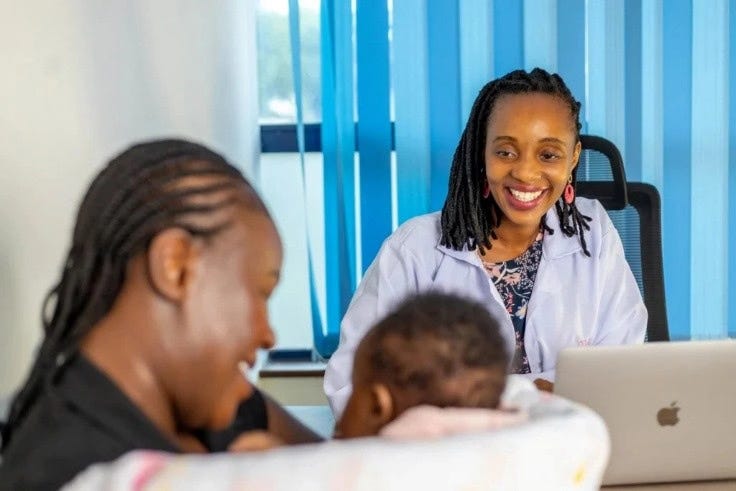
Africa Health Ventures recently announced our partnership with MotherFood to strengthen health systems through social entrepreneurship across Africa. MotherFood supports local entrepreneurs to prevent maternal and child malnutrition, which aligns closely with our mission to empower entrepreneurs enabling better health in emerging markets. Together we are backing high-impact, scalable healthcare businesses that enhance quality of care and improve access and affordability for families across Africa.
📢 Read the full press release here.
Please share reactions, deals, news, or events with us on LinkedIn. You can also:
👍Follow us on LinkedIn
🪙Nominate a startup for seed funding
🎙️Subscribe to our podcast on Spotify, Apple, or wherever you get your podcasts
This newsletter is public. Please share it with others who might find it useful.
No posts
Comments
Nothing yet. Say the first thing.
Sign in to join the conversation.