
The financial system that drives the art world obscures the definition of success, leaving those whose labor shapes the field unsure as to whether they have arrived, and where, exactly, they are supposed to land when they become successful artists. This issue also impacts artists’ capacity to develop a career that will sustain and support their art practice when it takes them outside of the studio. The murkiness around the goalposts – what it means to be successful, or how to make mortgage payments and maintain a well-developed art practice – is a bleak status quo that generates confusion and a constant fear of missing out, or FOMO, a social anxiety triggered by limited access to desirable experiences. FOMO has become the dominant marketing language of social media, and has translated itself into the economic drivers of the art market as well—my feed is currently full of people who are hanging out at Les Rencontres d’Arles, and I am totally fine with that. Really. I really am. In any case, mid-career artists are left to feel that no matter how many milestones they hit, it’s never enough. And if they have a career outside of the studio, inspiring and supportive of their work as it might be, they are doing something wrong. Someone else must do it better. But it does not have to be this way: the anxiety-ridden operational mode that became the engine of an elusive success can be redefined.
Cultural strategist Joey Lico recently wrote about realizing the art world does not know what success looks like anymore; how artists at the height of their career, who have accomplished coveted achievements, remain unsure of whether they have “made it.” Visual artists pursue a certain set of goals as they climb up the tricky ladder of career advancement, which includes ascending steps like showing at a biennial, having a museum retrospective exhibition, having a certain caliber of collectors or representation by a high-end gallery, working with acclaimed curators in one’s respective field, or being reviewed by certain journals. But as Lico notes, today’s picture is much more complicated, which means it’s impossible for mid-career or established artists to know when they have accomplished enough to become recognized as successful: critical acclaim does not necessarily translate to commercial success, and commercial highlights do not guarantee history will revere, or even remember, a certain body of work. The legitimacy artists crave is not derived from, or conferred by, a single institution. And this, Lico adds, might be the art world’s real crisis – the ecosystem we built does not align with itself. And if a shared understanding of “arrival” or success is missing, artists feel they need to chase what Lico defines as “proxies”: more sales, exhibitions, reviews, followers, or auction records – seeking all of them while feeling nothing is ever enough.
And to constantly feel this way about one’s practice and career is exhausting. I have been hearing about similar experiences from established artists—the pursuit of the next accomplishment never stops, and begins during opening night, when you are asked what’s next.
I will go one step further than Lico to suggest this is not a bug in the system, but a feature in the hardware: that this amorphous state of affairs reflects and correlates with the algorithmic logic that has taken hold of cultural production—the inability to agree on a shared reality in a disjointed field, the illusion of openness and accessibility, and the constant feeling that everyone (who are they?) is doing much, much better than you. Again, that’s FOMO, and when we are triggered by it, we are co-opted by a system that does not place our well-being as a priority.
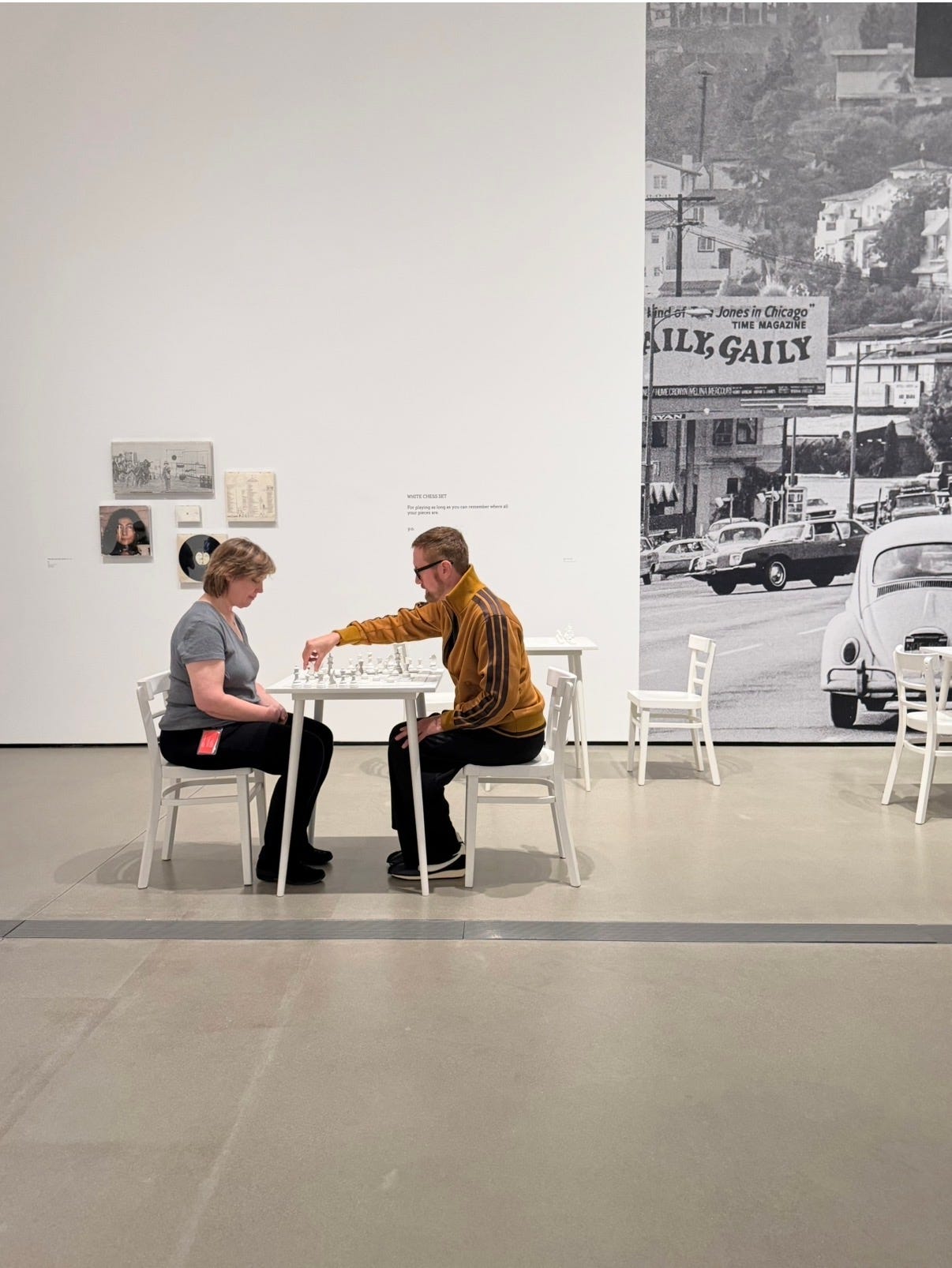
In Blackbird Rook, art advisor Greg Rook discusses another important factor that contributes to the sense of confusion and professional loss: the value of labor, and how that connects to the definition of success on the one hand, and the ability to support a sustainable practice on the other. By the time they reach their forties, artists might realize that they have many crucial skills, but what they need is a job that exists outside of the studio. As Rook notes, the “outside” world rewards climbing up a ladder, and by their forties, many artists have developed proficiencies that belong to a different scale altogether, not to mention constant muscle pain and dad bods.
At the risk of overgeneralizing, the photography world seems to have internalized these relationships between the studio and the “outside” world by adopting a much more flexible route and attitude toward success. Many of my colleagues in leadership are working photographers themselves, and almost all the exhibiting photographers I know have a deep commercial practice, whether as event or entertainment photographers, behind the scenes on sets, or as studio managers, teachers, archivists, curators, or sometimes as a combination of all of the above. They might be showing in museums and publish glossy coffee-table books; they might be having commercial successes but still share their work in portfolio reviews. Always the misfits of the art world, photo-makers are already marching to the beat of their own drum, and that beat says that their jobs are inseparable from their practice. To be sure, with a field that is always contentious when it comes to sales or art world legitimacy, that drum always thumps that there is no one specific path to success, and the boundaries between commercial and critical acclaim are muddled from the get-go. I also noticed that veteran, beloved photographers tend to not be as bothered by those distinctions; they seemed to have accepted that their path is somewhat uncharted.
What photographers might teach us is that artists need workable skills, and the way we speak about artmaking has to change. It’s time for the art world to finally relinquish the abstract, romantic notions of the lone artist, disconnected from the world in the studio, away from their kids and families, creating work from the depth of their soul with no connection to the world, who finds acclaim because benevolent benefactors push them to the limelight. That air of mystique does very little to help the ecosystem of artmakers and does very much to sustain an art world defined by inequities and ambiguities. We do not need shamans or emotional martyrs—lord knows art histories had plenty of those. We need cultural producers who nurture the fabric of social dynamics with creative expression.
Art schools should help artists translate their skills into jobs that can support, protect, and nurture their practice—from art handling to curation to administration, collection management, production, or studio management. And if there is one thing artists have always been doing and photographers continue to insist on, it is that a community and a network of colleagues and collaborators help to demystify the ambiguities one encounters along the way. Perhaps the most challenging thing that artists should learn now is that the goalposts have become subjective, and in a system that insists on remaining obscure, the definition of success will remain as elusive as the fragmented financial reality in which it exists. So perhaps it is time to shift and hold a different relationship with the market. Not to reject the current mechanisms of the art world per se, but to adopt a flexible view of the dominant fractured market and one’s position in it, to realize that there is no one clear path toward arrival or any sort of finish line.
Further Reading:
· Here I wrote about the art world, FOMO and the joy of missing out.
· Danish psychologist Svend Brinkmann articulated the idea of getting off the treadmill that leads nowhere and opting for JOMO.
· Martin Herbert’s Tell Them I Said No features a collection of essays about artists who have withdrawn from the art world.
No posts
Comments
Nothing yet. Say the first thing.
Sign in to join the conversation.