
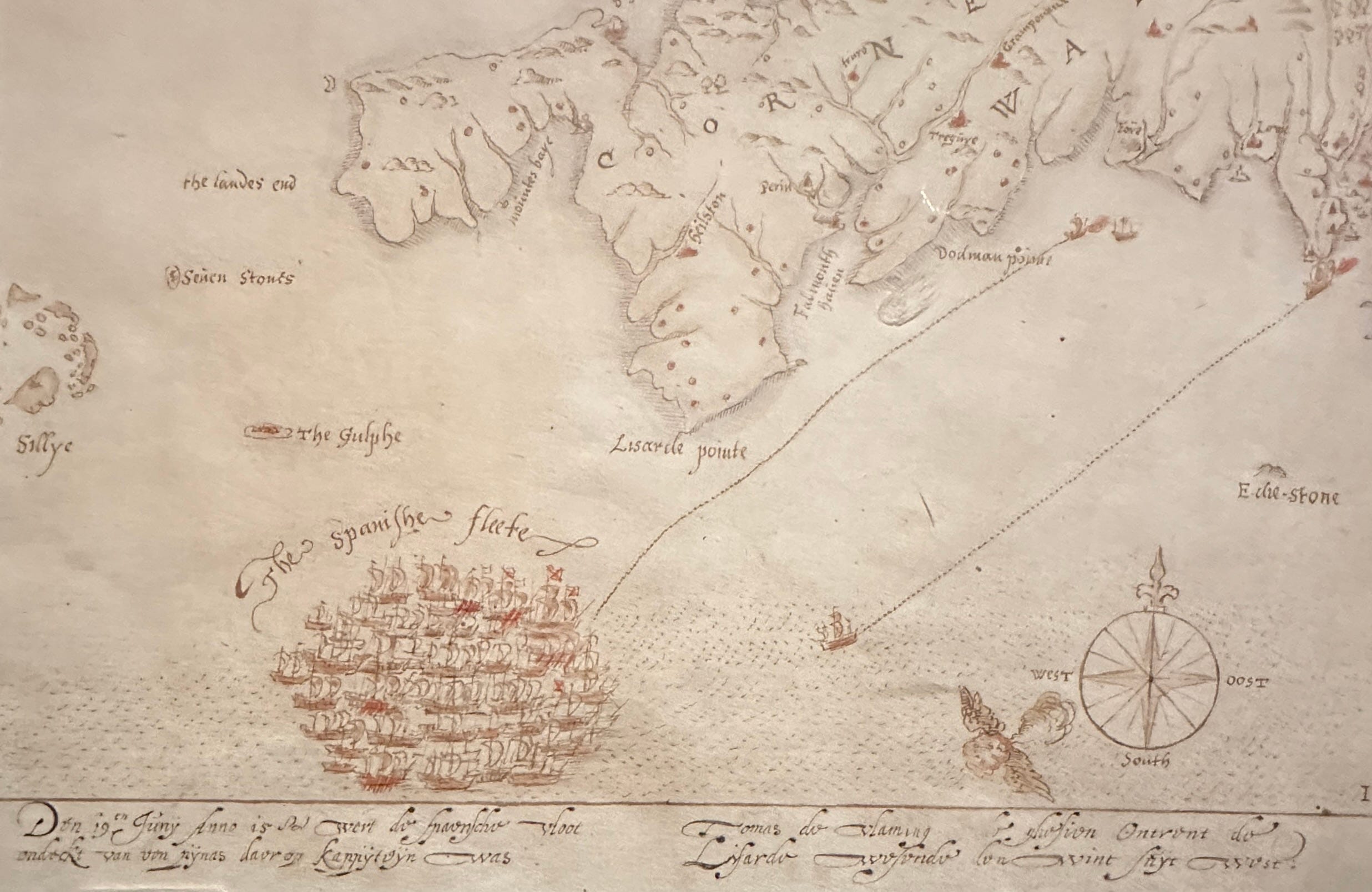
The Spanish Fleet off the Lizard1
Background
On 29 July 1588, 2 sailors on an English scout ship spotted the Spanish Armada off the Lizard in Cornwall. One hundred and thirty ships, carrying a formidable invasion force, breasted the waves, advancing like stately dancers into the English Channel.
Of the 30,000 men on board, only 8,000 were sailors. The rest, 22,000 men, were well-equipped, battle-hardened soldiers. Against them, on land, England could field roughly 20,000 to 27,000 men. However, there were few well-drilled professional soldiers in the ranks of rag-tail army called up to repel the invaders. The so-called trained bands, despite their name, had received only rudimentary training, stepped up somewhat during 1587. Alongside them, the untrained men of the wider general muster of the local militia had only rudimentary and outdated weapons, like bows and arrows and billhooks. Elizabeth 1, ever parsimonious, argued with the local gentry about who should pay for their food and armaments. Many went without pay.
The people of Devon must have felt particularly vulnerable. During 1587, after Sir Francis Drake’s audacious attack on Cadiz, everyone believed the Spanish invaders would make landfall at Falmouth or Plymouth and lay waste to the countryside. Dartington Hall lay only six miles from the coast, with possible landing beaches nearby at Paignton and Goodrington Sands. The enemy could easily come up river from Dartmouth on the River Dart.
Mistress of Dartington Hall
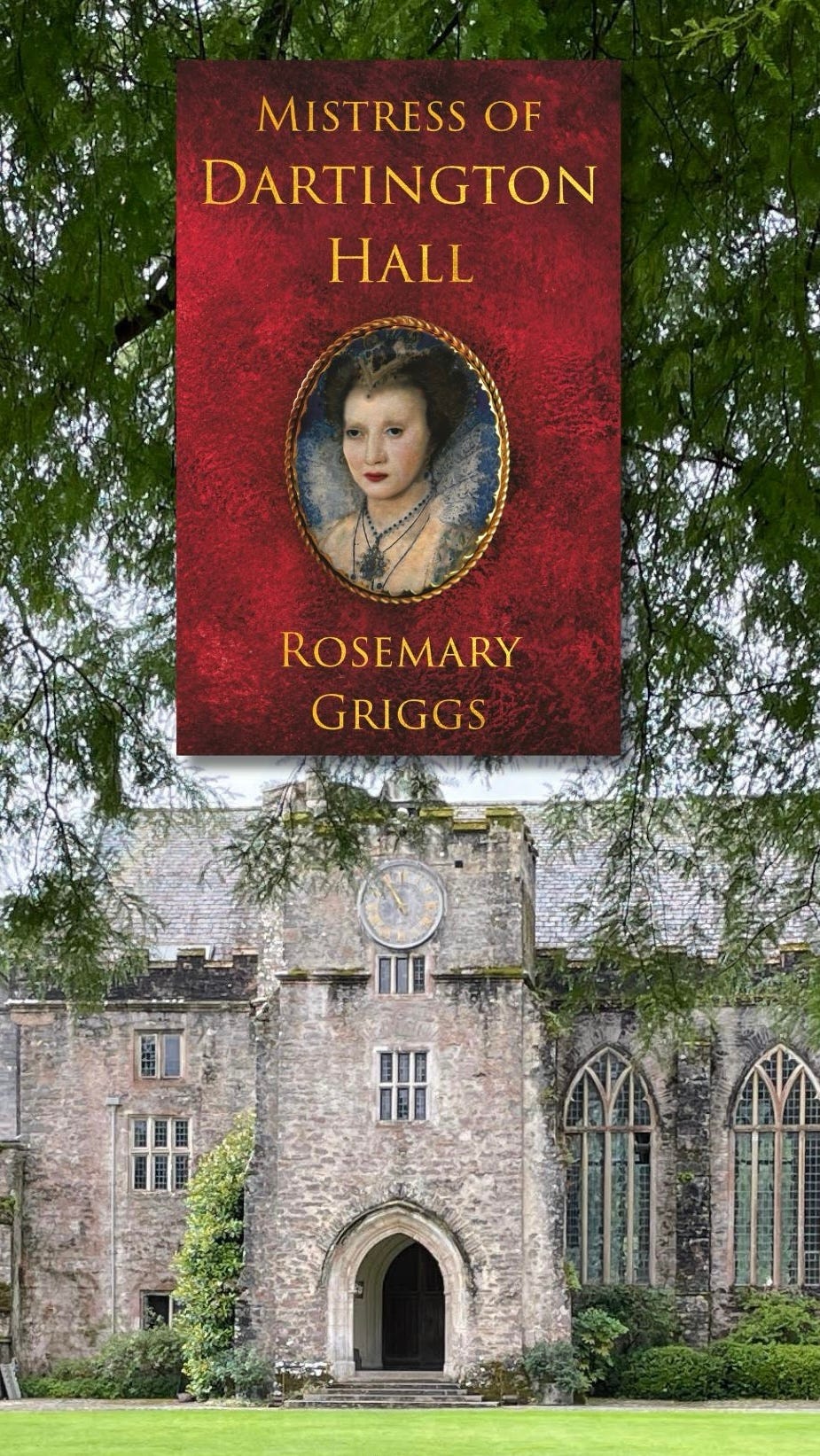
My novel begins in November 1587, amid the panic caused by one of many false alarms. Lady Gabrielle Roberda Montgomery, Gawen Champernowne’s French Huguenot wife, has rebuilt her life after his cruel attempt to set her aside. Roberda is a resourceful woman. She rallies the terrified people of the remote manor house, until Gawen’s unexpected return from Ireland throws her world into turmoil. Against the advice of her maid and confidante, Clotilde, Roberda accepts Gawen’s offer of a reconciliation, while fears of invasion grow.
The southwest of England prepares. Cousins, friends and neighbours take up their positions. Sir Walter Raleigh, as Lord Warden of the Stannaries and Lord Lieutenant of Cornwall, organises regional sea defences. Sir John Gilbert, one of the Deputy Lieutenants of Devon under William Bourchier, 3rd Earl of Bath, stands ready to lead the local militia. Meanwhile, Gawen’s friend,3 Sir Francis Drake, prepares his ships in Plymouth harbour. At Dartington, the churchwardens replenish the parish stocks of powder and shot and pay someone to polish up the few pieces of armour stored in St, Mary’s church behind the hall.4
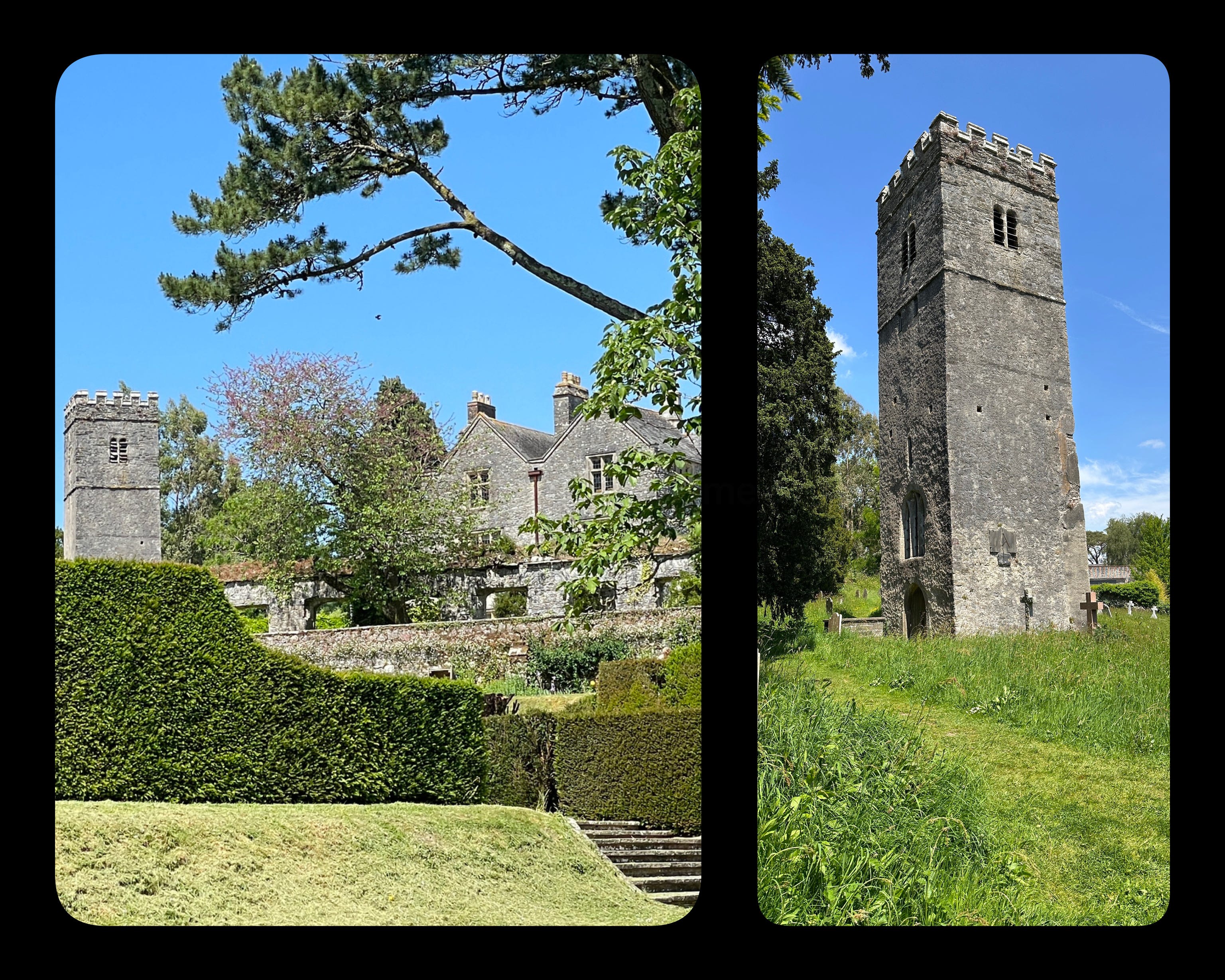
Dartington Hall and Old St. Mary’s Tower 5
After a traumatic childhood following her father, a Huguenot general during the French Wars of Religion, Roberda is under no illusion as to what to expect. She’s been in the thick of the fighting during the bloody Siege of Rouen. Unlike most of the local women, she knows what devastation an advancing army can bring, laying waste to farms and villages, burning crops and murdering or displacing the local people. Roberda checks and re-checks her store of portable foodstuffs in case they need to evacuate. She puts the women of Dartington to work, making salves and ointments to treat the wounded, sewing shirts and trying to make armoured jerkins — jack o’plates — for their menfolk.
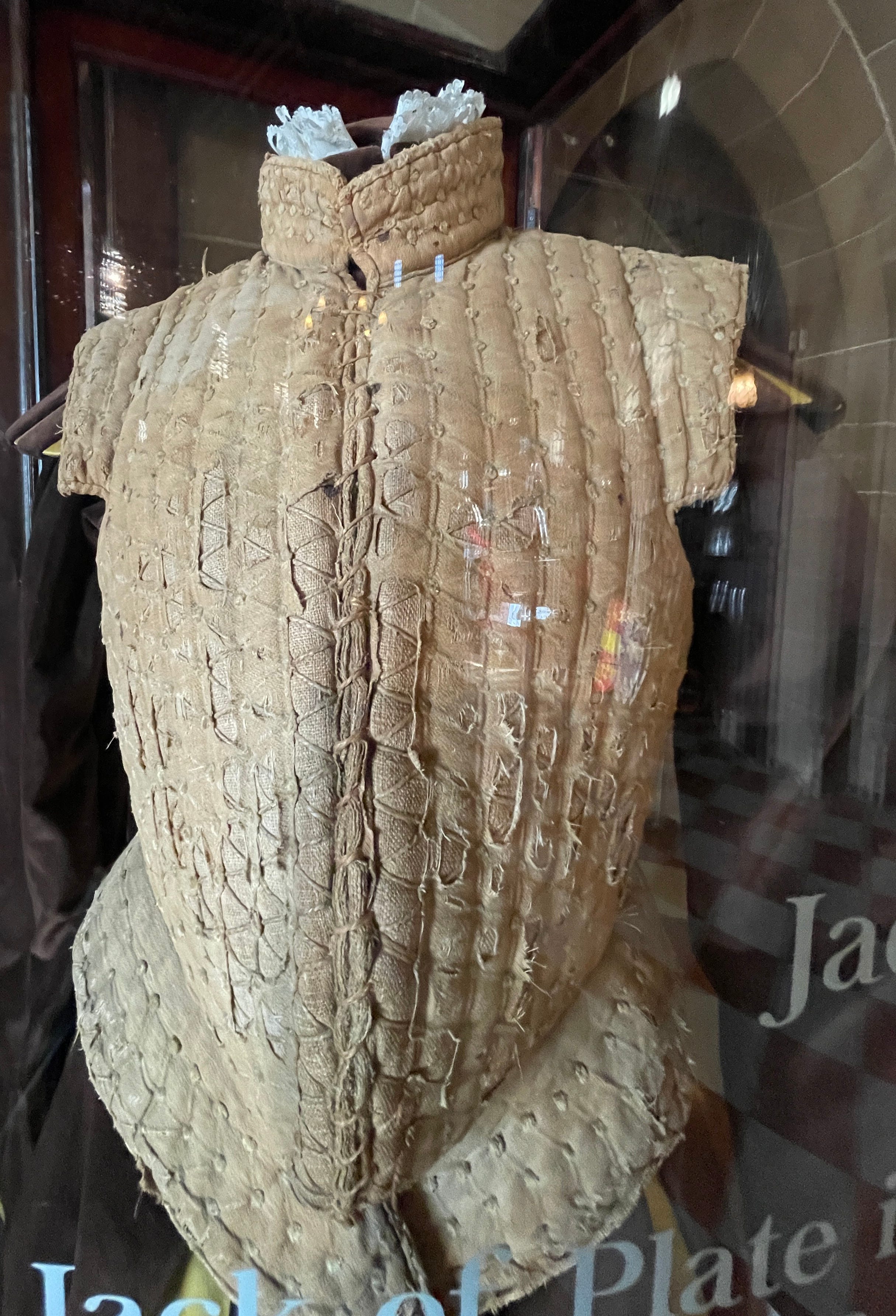
Jack o’plates on display at Warwick Castle
In the sultry heat of that tense summer, Roberda awaits the birth of her fifth child, or sixth if you count the little boy who lived only a short time and lies in St. Mary’s church, next to his grandfather, Sir Arthur.
In July, the worst possible news travels swiftly along the chain of warning beacons. The Spanish invaders are coming. Gawen prepares to lead the local cavalry, some 200 riders, armed to the teeth. Sir John musters his men on Warborough Common, a high point with wide views across Torre Bay.
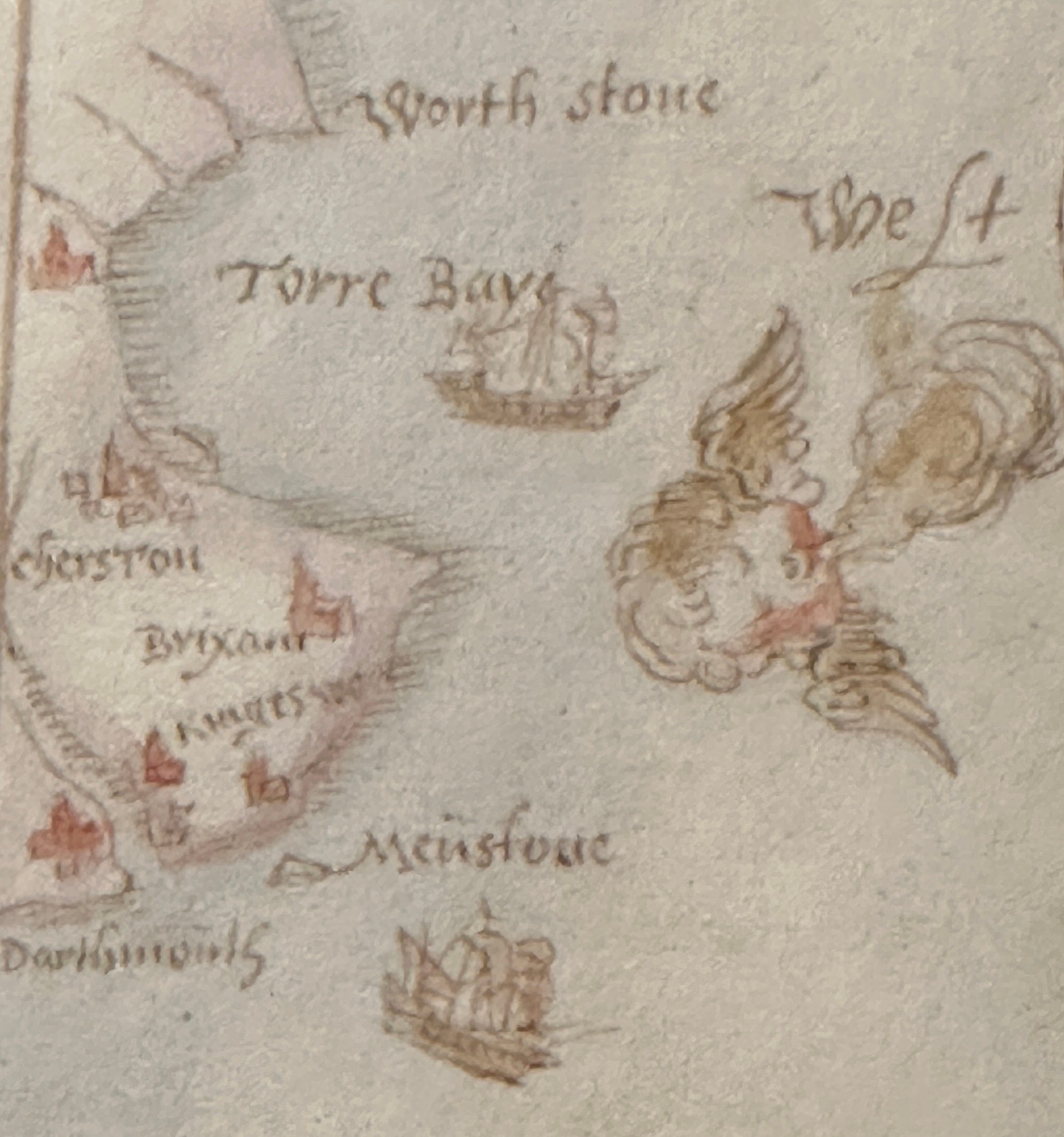
Ships off Torre Bay as the English ships harry the Spanish fleet
William Putt, Roberda’s faithful steward, answers the call to arms and joins the men summoned to defend their homeland. A few lucky men wear well polished armour from St Mary’s church; others carry a portion of powder and shot from the church stores.
In this excerpt from Mistress of Dartington Hall, William returns to give his eyewitness account. Roberda’s son, seven-year-old Arthur, is all agog.
***
Did you see them, William? Did you see the Spanish ships?’ Arthur’s eager face shone, but in stark contrast, William’s expression turned grave. He gave a slow, deliberate nod.
‘That I did, young master. That I did. I hope I never see anything so terrifying again.’ He shook his head from side to side.
‘Did you see my husband?’ Clotilde gave me a black look but I couldn’t contain my anxiety any longer. William shrugged his shoulders.
‘He was beside Sir John at the start. But then a messenger came – oh my, there were so many of them flying around at such a rate! Post horses commandeered and ready for the riders to change everywhere from here to London and back again. They carry word almost as fast as the beacons.’ I scowled and set my hands on my hips.
‘But what of my husband?’
‘Once the threat of a landing was over, Master Gawen led all his mounted men away. Bound for Tilbury, where Lord Leicester assembles his forces in case the Spanish should succeed and join up with Parma. There’s concern they may launch an attack from Kent or Essex. Or so I believe, ma’am.’
‘As I feared! May God protect him!’ Feeling light-headed, I sank onto the settle, waving Marie away as she thrust a cushion behind me. Margery Searle, the midwife, on hand as my time drew near, gave me a long stare as she took Marie’s place at my side. I ignored her pursed lips and furrowed brow.
‘Tell us more about the ships, William.’ Arthur piped up. ‘What colour were their sails? Could you see the guns?’ Arthur’s cheeks had a feverish glow.
‘Their sails are black as the night sky – like an endless line of black ants, they came crawling across the horizon – all the way from Berry Head to way beyond Hope’s Nose, as far as I could see. They say they sail in convoy, all grouped tight together in a shape like the horns of the new moon. Each of their great ships protects another.’ He took a long draught from the mug and wiped his mouth on his sleeve before he went on.
‘Another rider came from Plymouth, said he’d heard the guns. Sir Francis and Lord Howard had to wait for the tide before they could give chase. They engaged the enemy in fierce fighting. It sounds like they harried the Spanish fleet, but could not stay them, nor break their formation. Those great galleons sailed on to meet the Duke of Palma and his army. Then they’ll likely unleash a multitude of Papist soldiers on our shores.’
Even Arthur fell silent when he heard the chilling truth confirmed by William’s words. While imminent danger no longer threatened Devon, the war was far from done. My mouth was dry with fear as the child wriggled and squiggled inside me.
‘So they sail on to threaten our land!’ I said, my voice shrill. ‘I pray they will keep a close guard on our Queen. God alone knows what world this boy will be born into!’ Margery’s scrutiny bore into me, noticing every detail, until her eyes came to rest on my feet.
‘It would be best if you would sit down, ma’am,’ she said, eyeing my ankles.
‘Nonsense… William has more to tell us. Go on.’ He set down his empty mug with a sigh.
‘Our Devon men have come home. I doubt Sir John could have kept them any longer –they drifted away as soon as those devilish ships had passed Torbay. There’s a lot of muttering about pay – or the lack of it! Yet our English soldiers must still stand ready at Dover or Tilbury or wherever they gather. Begging your pardon, ma’am, but I pray the Queen has the sense to pay those men and see them well fed.’
We were all quiet, digesting the depressing news. At last William spoke in a more encouraging tone.
‘Yet there’s some cause for hope. Our English ships are faster and can turn about. They’re nimble and they can tack into the wind. And we have the finest commanders. Perhaps they’ll catch them before they reach Flanders.’
‘So we have captured no prizes yet, William? Not put any of those Papist fools to the sword?’ Arthur asked. William shook his head, and Arthur collapsed onto a bench, his young face twisted into a frown.
‘Well, now, that’s not quite true, young master,’ William said, and the boy sat up, a glimmer of hope shining in his eyes. ‘There’s one of them won’t trouble us any more. The Nuestra Senora del Rosario, flagship of Don Pedro de Valdés, who had command of some other great ship.’
‘What do you mean? Has Sir Francis blasted her out or the water?’ Arthur’s face brightened at the prospect.
‘They say Sir Francis took her – but not before some of the damned English Papists she had on board had slipped away! Traitors, the lot of ’em!’
‘Amen to that!’ The words burst out from Marie as she snapped her sewing basket shut. She stared at William as he continued his tale.
‘Sir Francis had the Rosario brought into Torbay. Saw it myself, I did. They say Don Pedro’s taken up and any Spaniards that might fetch a ransom. They took a few more of the crew and some English Papists up to London. May they hang and rot!’ That brought out a ripple of agreement amongst the servants.
‘The Spaniards they didn’t take to London – well, Lord alone knows what they’ll do with them. Taken ’em to Torre Abbey, I heard. Locked ’em up in the barn.’
Although my back ached from standing so long, I rallied my dwindling store of strength and spoke up to cheer them all.
‘The prisoners are not our problem. William, I’m glad to have you back and the other men too! Let us all go about our business as we await more news.’
Most of us at Dartington Hall breathed a little easier, slept a little better. Yet I tossed on the feather mattress, fighting off demons. Thoughts of Gawen plagued me.
***
King Philip II of Spain had changed his strategy. There was no landing in the southwest. Instead, the Armada, with the inexperienced Duke of Medina Sidonia in command, sailed on, hoping to rendezvous with Alexander Farnese, the Duke of Parma, commander of Spanish forces in the Netherlands. King Philip intended that the Spanish fleet would ferry Parma’s massive forces across the channel, where they would mount a full-scale attack on the South East of England, with the Queen and London in their sights.
As things turned out, the English fleet, aided by Dutch flyboats that blockaded Parma’s fleet of barges, trapped Parma and his army in Dunkirk. Drake’s fireships caused the Spanish vessels to break their defensive crescent formation, and a change in the wind swept them into the North Sea and around Scotland, where fierce storms raged. Estimates suggest that between 20 and 24 Spanish ships were wrecked off the coasts of Scotland and Ireland. Barely half the original fleet survived to limp back to Spain, severely battered and damaged.
The inscription on a medallion Queen Elizabeth commissioned to commemorate the ‘victory’ reads:
"He blew with His winds, and they were scattered"
England had a lucky escape in 1588.
Mistress of Dartington Hall is the third book in my Daughters of Devon series.Roberda has many more challenges to face if she is to remain Mistress of Dartington Hall and secure her children’s inheritance.
This post is public so feel free to share it.
The Armada Maps, drawn up in 1589, tell the story of the Spanish Fleet’s progress. The maps were on display at National Trust Buckland Abbey, Sir Francis Drake’s Devon home, in July 2026, while on loan from the Royal Navy Museums.
Recorded in contemporary accounts as 19 July, but 29 July in the Gregorian Calendar.
The National Archives, PROB 11/79/235. In his will Gawen Champernowne leaves a ring to his friend, Sir Francis Drake.
South West Heritage Trust holds a full set of transcripts of the Churchwardens Accounts for ST. Mary’s Dartington in the 1580s. They reveal the costs of the parish’s warlike preparations, which replace the usual minor expenditure on things like, grave digging, gate repairs or cleaning the church.
Old St Mary’s Church, built in the 13th century, stood very close to Dartington Hall. Only the Tower now remains, much of the stone having been re-used when a new church was built in the 1880s.
No posts
Comments
Nothing yet. Say the first thing.
Sign in to join the conversation.