
Years ago, on one of my walks, I passed a bus stop across from the Beverly Center, directly in front of the Sofitel hotel. Taking up several seats was an enormous pink teddy bear. Tossed there. Abandoned. Discombobulated. Looked a bit weathered, perhaps dragged. No child in sight. The image stopped me in my tracks. It stayed with me to this day.
I don’t know where the photograph I took of it is on my phone. I don’t remember what year it was, much less what day, and searches by location or business name bring up nothing. I can’t imagine how deeply buried that single frame must be among all the photographs accumulated on a phone over the years. It doesn’t matter. I’ll find it one day.
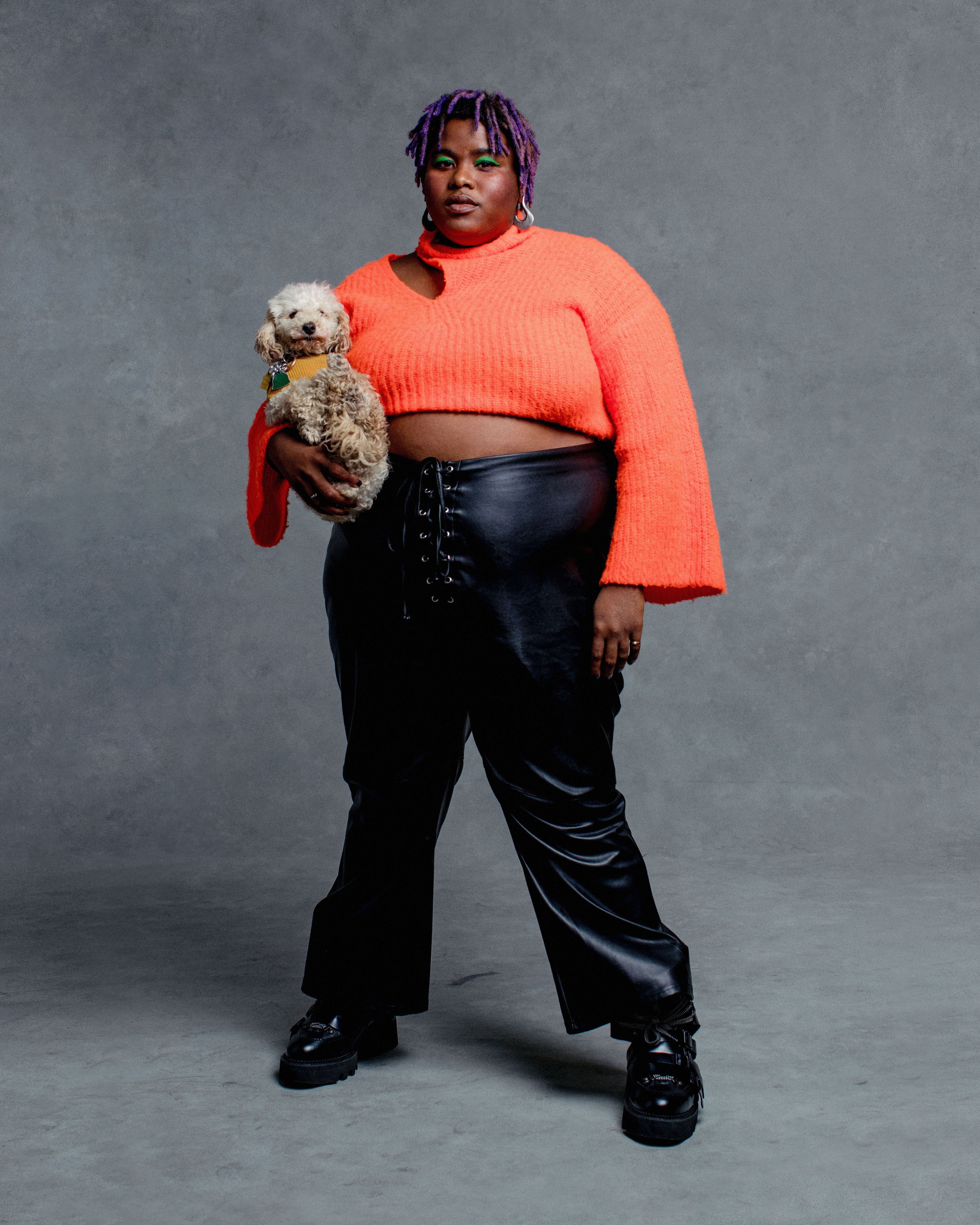
A few months ago, while reading an article in FAD Magazine announcing the 2026 Art Basel Awards, we stopped at a name we didn’t know: Precious Okoyomon. We like learning about artists we don’t know about, especially artists receiving serious recognition who end up buried under the tiring slop of endless articles on Picasso and Van Gogh, both dead, by the way, like, died a loooong time ago.
We looked Precious Okoyomon up on Artfacts, an enormous database that tracks artists through their exhibition histories: museums, galleries, biennials, art fairs, and other institutional appearances. It contains records for more than a million artists and uses that exhibition history to map professional visibility within the contemporary art world. Precious Okoyomon is an artist and poet born in London in 1993 and now living in Brooklyn. Their work has moved quickly through some of the most visible spaces in contemporary art. This year, the Whitney Biennial in New York and the Holy See Pavilion at the Venice Biennale include them.
And then, we saw one of Okoyomon’s works:
in the belly of the sun endless, 2025.
A gigantic teddy bear lying on the floor.
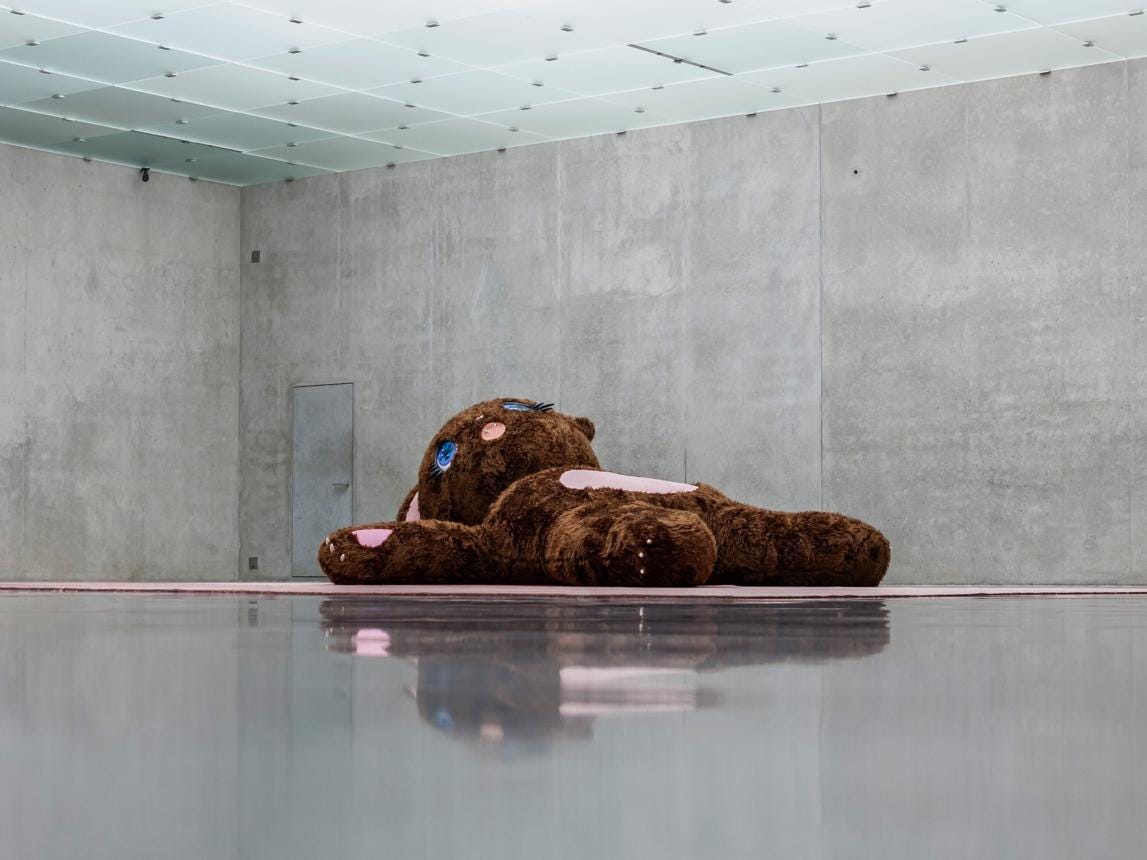
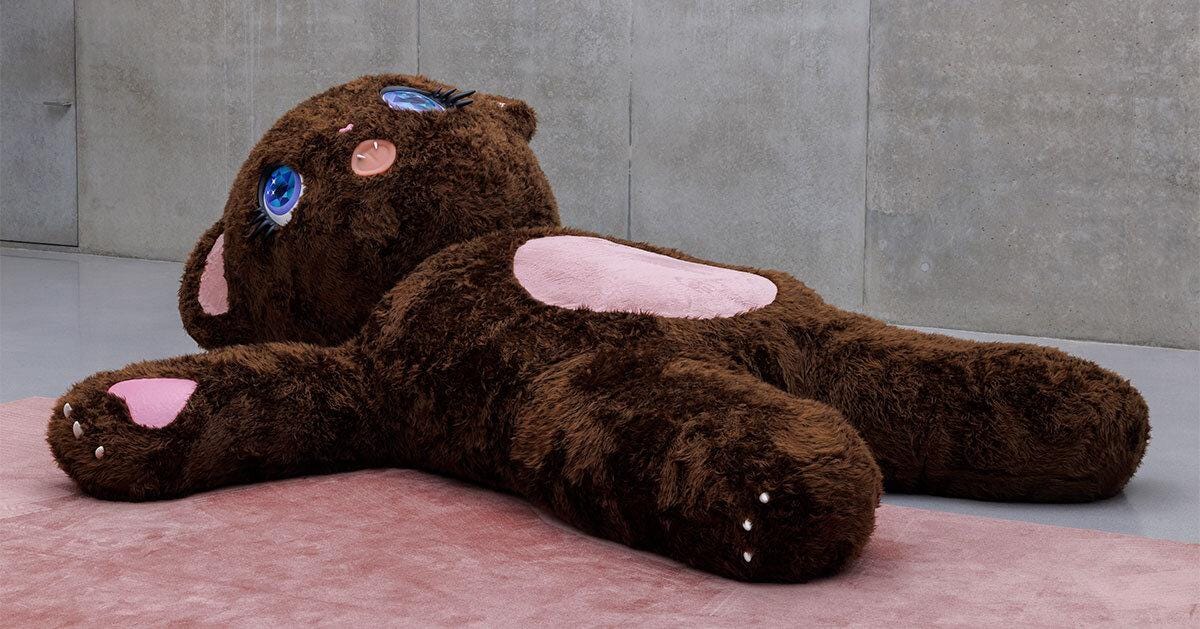
Immediately, I remembered the enormous pink teddy bear that had been abandoned at the bus stop in front of the Sofitel.
Okoyomon spent much of their childhood moving from place to place. They describe their attraction to battered and weathered toys, whose bodies reveal that somebody once loved them and eventually let them go. Moving as a child meant receiving another bear in another place while an earlier one disappeared. They now collect damaged stuffed animals, take them apart, combine their limbs and eyes, and sew them into strange new creatures.
Okoyomon’s bears carry childhood within them, with all its lights and shadows, but also the persistent possibility of becoming something else, someone else.
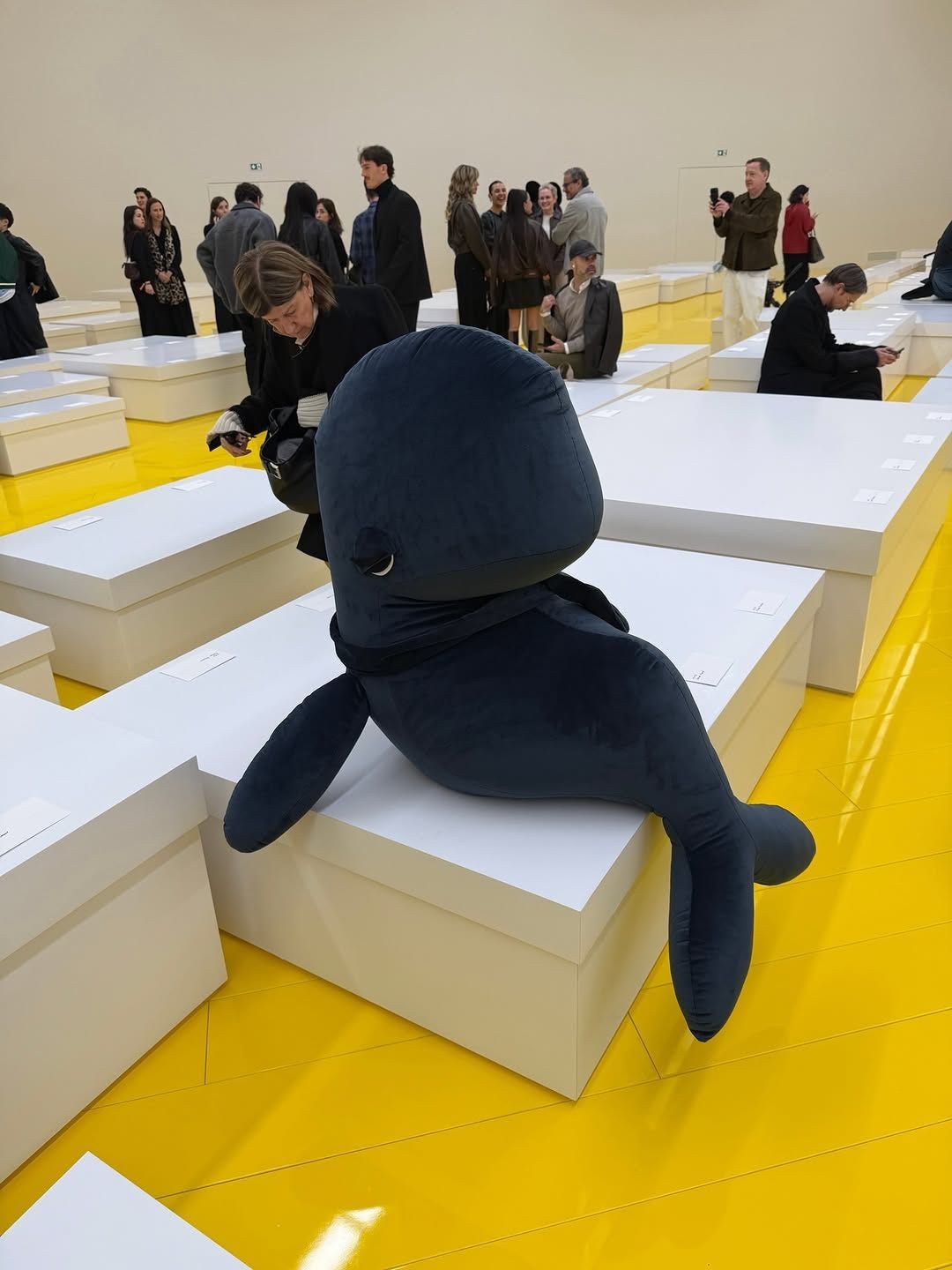
In this past March’s Loewe Fall 2026 show, the designer duo at the helm of the house commissioned Mombasa-born, Cologne-based artist Cosima von Bonin to create outsized stuffed animals that sat alongside guests. Von Bonin has been making enormous stuffed dogs, whales, octopuses, sharks, rabbits, and other creatures for decades. They often appear exhausted, slumped over furniture, sleeping, waiting, staring, or simply refusing to do much of anything. They become strange surrogates: soft creatures carrying very human conditions of fatigue, alienation, consumption, and social expectation. At the Loewe show, they occupied the front row alongside the fashion crowd, becoming spectators themselves, but perhaps also mirrors.

Earlier this year, we went to see Fictions of Display at MOCA, curated by José Luis Blondet, a show I loved even though a couple of people fought me over it afterward. One of the works that stayed with me was Marnie Weber’s Brown Bear and White Ghost from 2005: an enormous upright bear wearing a pointed red hat and cape, holding a walking stick, with a ghost hovering behind it. Weber has described the animals that populate her work as alter egos and spirit guides, giving them human personalities, psychological states, and an uncanny sense of presence. She has described some of these creatures as “lost, existentially,” which feels especially resonant when thinking about abandoned stuffed animals. A stuffed animal left on a sidewalk already resembles a small body lost existentially. We instinctively read posture into it: slumped, face down, sitting upright, staring into traffic. Its human surrogate quality makes its abandonment strangely affective. It looks lonely because we have already taught ourselves to believe that we can be lonely too one day.
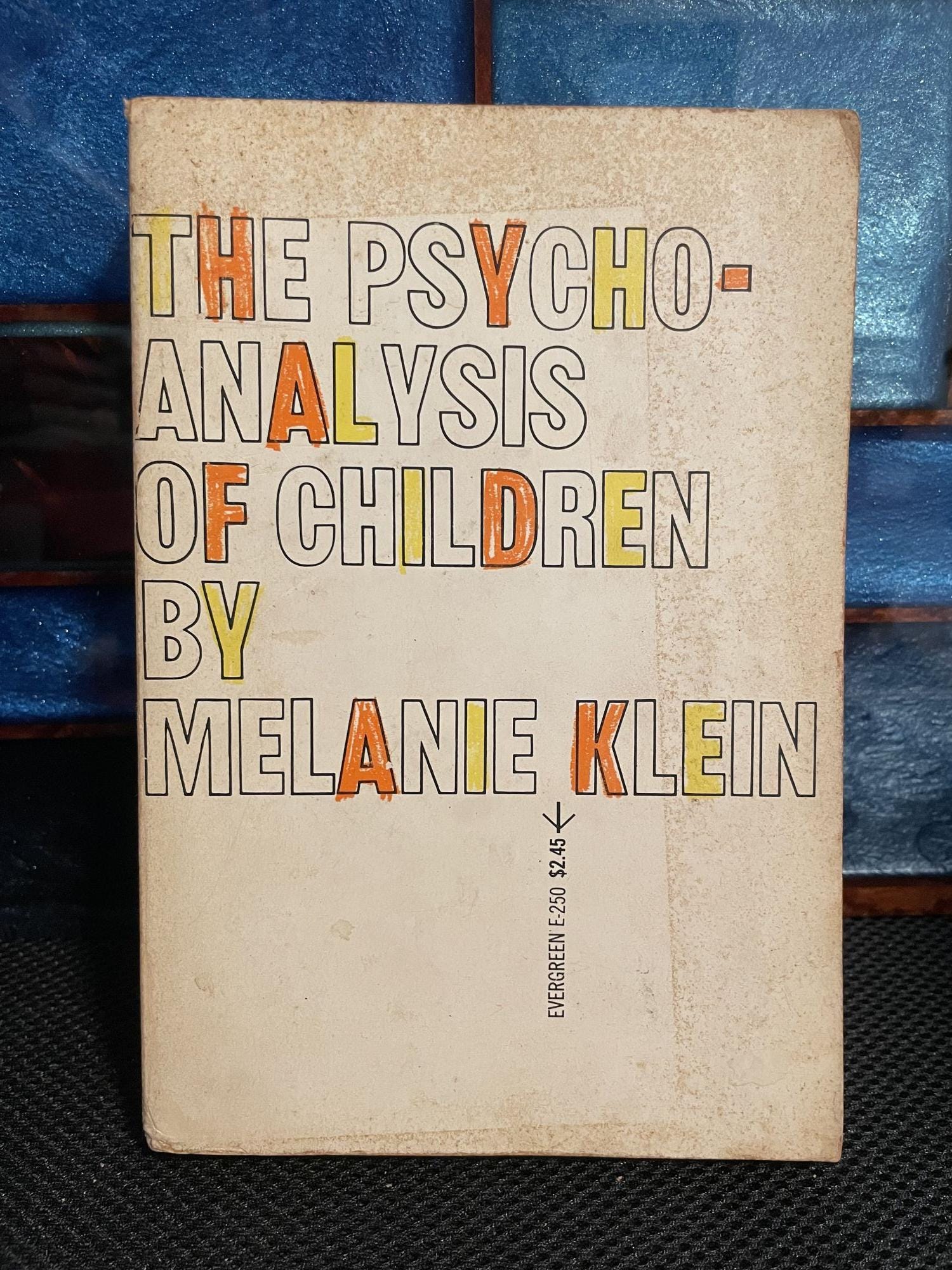
Austrian-British author and psychoanalyst Melanie Klein (1882-1960) understood children’s play as a language of its own, distinct from words. In her work with children, small toys, dolls, and animals became figures onto which a child could project affection, sadness, family relationships, and parts of themselves that were difficult to put into words. A toy could become a person, a companion, an enemy, or the child themselves. We learn very early how to give an inanimate object an interior life. Maybe this is part of what makes an abandoned stuffed animal so moving. We don’t quite see a thing that has been thrown away. We see something that once participated in a relationship.
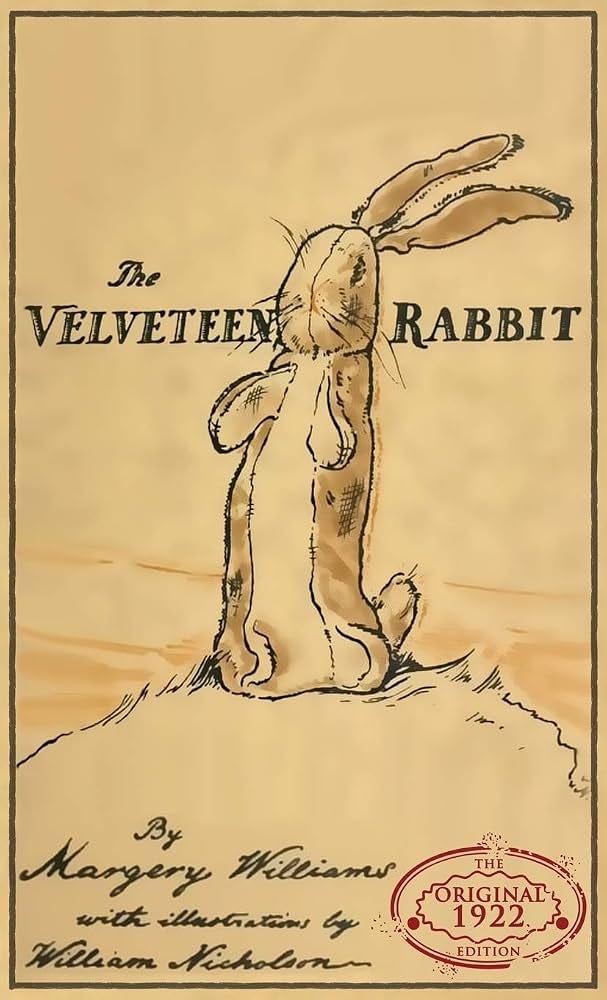
And then, there is The Velveteen Rabbit, written by Margery Williams and published in 1922. When I was teaching first grade at Dickinson Elementary, a public school in Compton, I had the book in my classroom library. I actually never read it to the kids, I’m ashamed to say. I recall thinking the story was too profound, too deep, even for me to read it and act it out. As a newly arrived immigrant, I also didn’t grasp the monumental place this little book already occupied in the American cultural vernacular. Revisiting it now gives it a whole new meaning in relation to this month’s subject and for me personally. A stuffed rabbit becomes real through being loved; its shabby, worn-out body becomes evidence of that love. When it is eventually discarded and facing incineration, perhaps the reason I didn’t read it to my students, it is given another life as an actual rabbit, free to disappear into the woods. Emphasis on FREE.
More than a century later, I find something absolutely radical in this story: our aging bodies as visual and physical evidence of lived love, with all its lights and shadows; the possibility of becoming something else at any point, someone else, to begin again; and, last but not least, the radical assertion of an animal’s right to exist freely, unattached to human surrogacy.
Oh, how I regret not reading this book to my students now.
Previous Collections
Support
Join our Roofless Postcard Club.
No posts
Comments
Nothing yet. Say the first thing.
Sign in to join the conversation.