
It’s time again to put the TRIAGE for Watch Collecting system to the test.
When my wife and I created the TRIAGE for watch collecting system, we had two purposes in mind:
The first was to decide whether or not a watch was worthy of being acquired. The second purpose is just as important: is a particular watch in our collection worthy of staying there, or should that watch be sold and removed from our collection?
For many collectors, a watch acquisition is ostensibly a permanent decision. When we acquire a watch we apply all sorts of mental models and jump through various cognitive hoops to convince ourselves that this watch is perfect. It takes a lot of flexibility to admit that a watch we once held in high regard now needs to leave our collection.
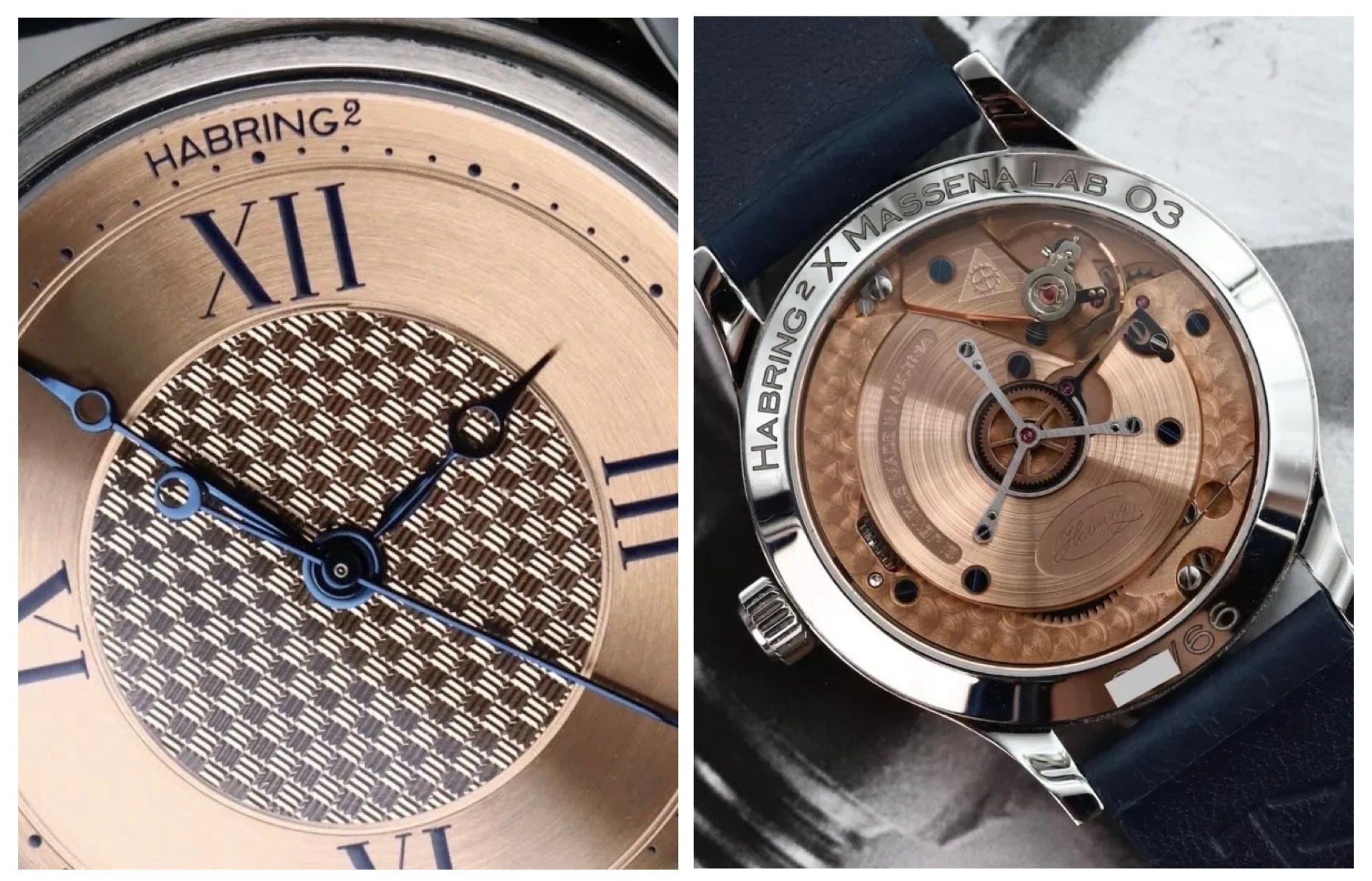
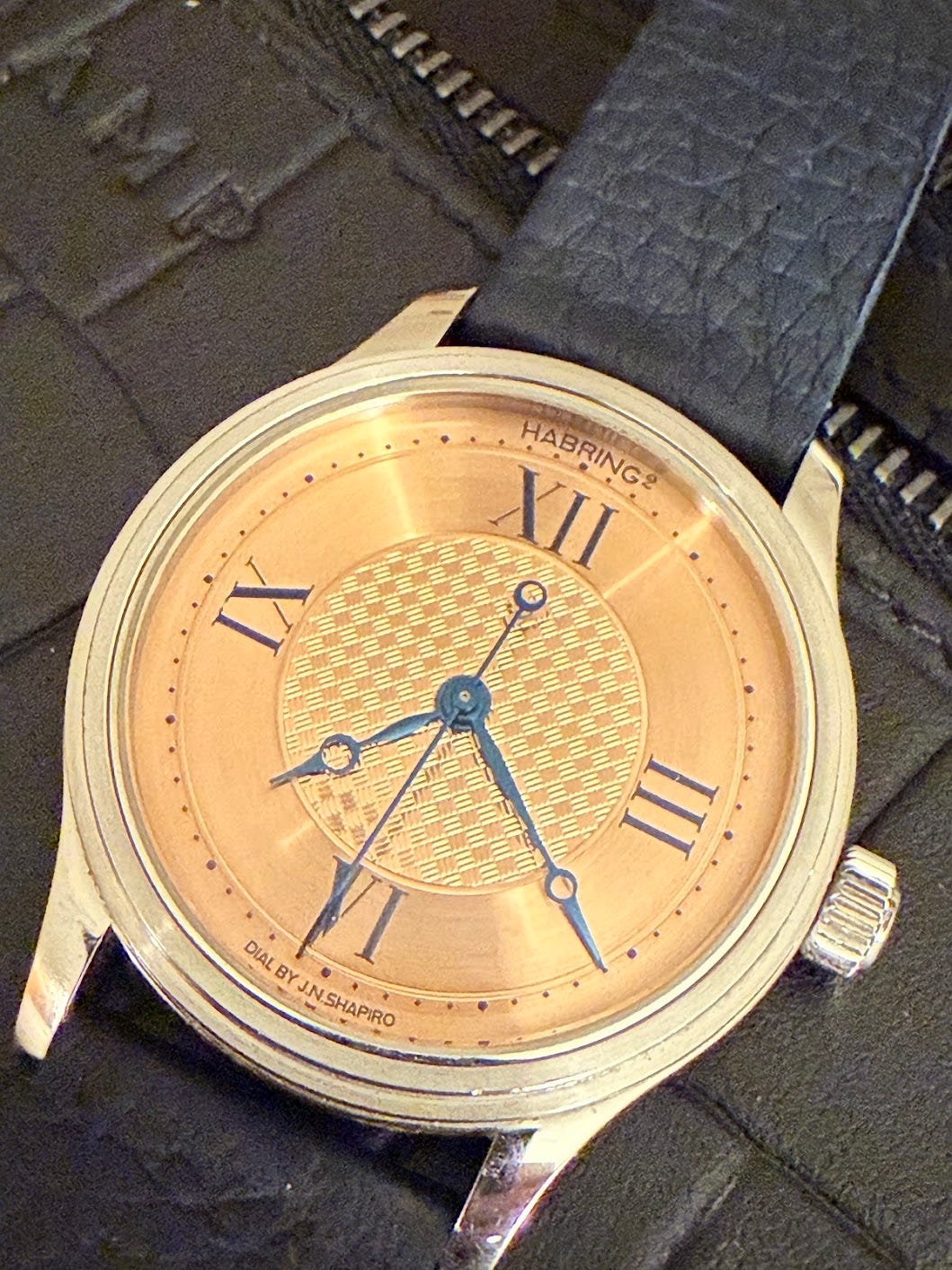
My wife and I have applied the TRIAGE for Watch Collecting System to several of our watches and we’re moving on from a number of them. Today I’ll review one of the watches we are letting go from our collection, the Habring² x Massena Lab Erwin Lab03 with JN Shapiro dial.
Here’s a reminder of the 6 steps of TRIAGE for Watch Collecting which we follow:
-T arget
-R itual
-I nvert
-A gility
-G alvanize
-E levate
You can find them in our book, TRIAGE for Watch Collecting available on Amazon here: Buy here

Let’s get to evaluating the Habring² x Massena Lab Erwin Lab03 and see if it is a watch which makes sense for me to keep or to let go. You already know the answer since this essay is titled “Outgoing Watch Alert: Moving on.” For each of the six steps, I’m going to apply a grade of Red, Yellow, Green, similar to a traffic light.
Several years ago, I decided that the primary focus of my collection would be watches made independent makers. I want to feel that my watch acquisitions put money in the pockets of people I want to support. This watch acquisition met that target as the watch combines the efforts of three independents: (1) William Rohr, known in the watch world by the pseudonym William Massena. (2) The movement is made by Habring2 which is the husband - wife duo of Richard and Maria Kristina Habring. (3) The watch dial is made in the workshop of the famous American watch craftsman, Josh Shapiro.
I’m a big fan of guillochage, and give a premium to watchmakers who keep that craft alive rather than use stamping techniques, CNC, or other automated techniques to create “engraved” dials. For more on this technique, read this article on ScrewDown Crown:
Josh Shapiro is known for two things: His quest to bring watchmaking back to America, and his hand turned guilloche dials. At the time this watch was released, it was the most affordable watch with a JN Shapiro dial. Does this watch hit my targets today?
1) A collector who supports independents.
Of the three principals involved in this watch, I have met Josh Shapiro. He’s a splendidly affable and humble man who I want to succeed, and a person whose long-term goals I want to support. He’s someone who thinks about his craft in terms of a contribution that goes far beyond his individual gain.
When I put on that watch, I would stare at the dial and feel that part of me was a contributor to the JN Shapiro mission. But for a while now, I’ve found myself reflecting that if I want to feel as I’m a part of the JN Shapiro project and legacy, that I could better fulfill that desire with other watches in the JN Shapiro line.
Speaking of “the people behind the watch” which is so important to me, I don’t feel any connection to Massena Lab, the entity behind this watch project. I don’t even know if William Massena is alive, and I can’t recall seeing him in any public-facing media in the past 5 years.
2) Supporting my identity as a collector who appreciates subtleties of craftsmanship, specifically hand-turned guilloche dials.
I’ve found that I wear two other watches in my collection with guilloche dials more often. My ChronoSwiss Blue Orbit, and my Benzinger GAP1. (The Benzinger GAP1 has a movement made by … drumroll… Habring2 .)
Grade for T-Target: 🟡 Caution. Overall, this watch no longer hits my targets with conviction.
In my last essay about using the TRIAGE for watch collecting system, I wrote the following:
”Every watch in your collection should survive a delay ritual. Don’t allow emotions, peer pressure, or status games to push you into purchasing a watch without reflection.”1
How does the “R-Ritual” work for watches we already own? Rather simply. Over the course of weeks or even months, is the watch part of your ritual? Do you reach into your tray to wear this watch over others?
This is a deliberate practice for my wife and I. For security purposes we keep our watch collection off site at a vault, and about once a week we go to that location to pick out two watches we plan to wear for the coming week. For us the planning ritual is deliberate, and it should be for everyone.
Even if you don’t wear the watch often, does it occupy a space in your mind? Over time, is this watch one you routinely bring up in conversation with other watch collectors or share on social media if that is your outlet?
Grade for R-Ritual: 🔴 Stop. I don’t reach for this watch over the other watches in my collection. It does not pass the Ritual test.
Inversion is asking the opposite question most people ask. Instead of asking what conditions lead to success, ask what conditions would lead to failure. Then avoid those conditions!
Inversion is the discipline of asking the question backward.
Most collectors ask, “Why should I keep this watch?” That question is dangerous because it invites nostalgia, rationalization, and sunk cost. I can almost always find a reason to keep something I already own!
So I ask the Charlie Munger question. Using inversion it is the same question in reverse: “If I wanted to build a weaker collection, what would I refuse to sell?”
The question is uncomfortable as are the answers for the wrong watches.
I would keep watches that no longer get wrist time. (See R for Ritual above.)
I would keep watches that repeat the role of better watches. (See A for Agility in the next section.)
I would keep watches because I remember wanting them, not because I still want them.
I would keep watches because selling feels like admitting a mistake.
That is the inversion test for a watch already in the box. Not, “Does this watch make me happy?” Instead since the question is “ “If I wanted to build a weaker collection, what would I refuse to sell?” the real criteria is whether this watch would make my collection lose some element of deep meaning.
(As noted before, I am indebted to the lessons of Charlie Munger for teaching me about Inversion.2)
Grade for I Inversion: 🔴 Stop. This watch no longer passes my Inversion test. The future me would not be able to look at this watch in my collection and consider it one with deep meaning.
This watch has a few esoteric characteristics which remain unique in my collection.
1) Movement with deadbeat seconds.
It has a deadbeat seconds movement which is a cool nerdy feature and got me going down the rabbit hole to learn about other watch movements which have this feature.
A while back I went down the “deadbeat seconds rabbit hole” and learned of FPJ, Panerai, DeBethune, and A. Lange & Sohne models with this feature.
2) Aesthetics of the dial.
There are two aesthetic issues which stand out for me.
I don’t have a watch with a bronze dial, and the two watches I have with guilloche dials are rather different in appearance. So as I gaze at this dial, it is unique in its appearance compared to my other watches. But that’s true of all of my watches.
(Not all collectors prefer this route, I have acquaintances who collect multiple Chopard Alpine Eagles or multiple Rolex GMT-II’s with similar dials.)
Grade for A Agility: 🟢 Based on my individual quirky tastes, this watch does possess qualities which none of my other watches do.
The G for Galvanize is about a watch bringing me together with other collectors. Preferably for in-person meetups, but also for discussions in WhatsApp groups, Substack newsletters, or online platforms.
This particular watch has plenty for me to talk about and also receive interesting feedback. But similar to my musings on “R for Ritual” this watch is no longer one of the top watches in my collection which I turn to as focal points for conversation.
Grade for G Galvanize: 🟡 Caution. The watch can be a conversation starter but others in my collection fulfill that role better.
Can it elevate my personal collecting journey?
Do I become a better member of the watch community with this watch? Am I smarter and do I have more to offer back to others as a result of this watch?
One aspect of this watch which I have not yet addressed is the connection with the Horological Society of New York (HSNY).
It was the first watch to receive chronometer certification from the HSNY.
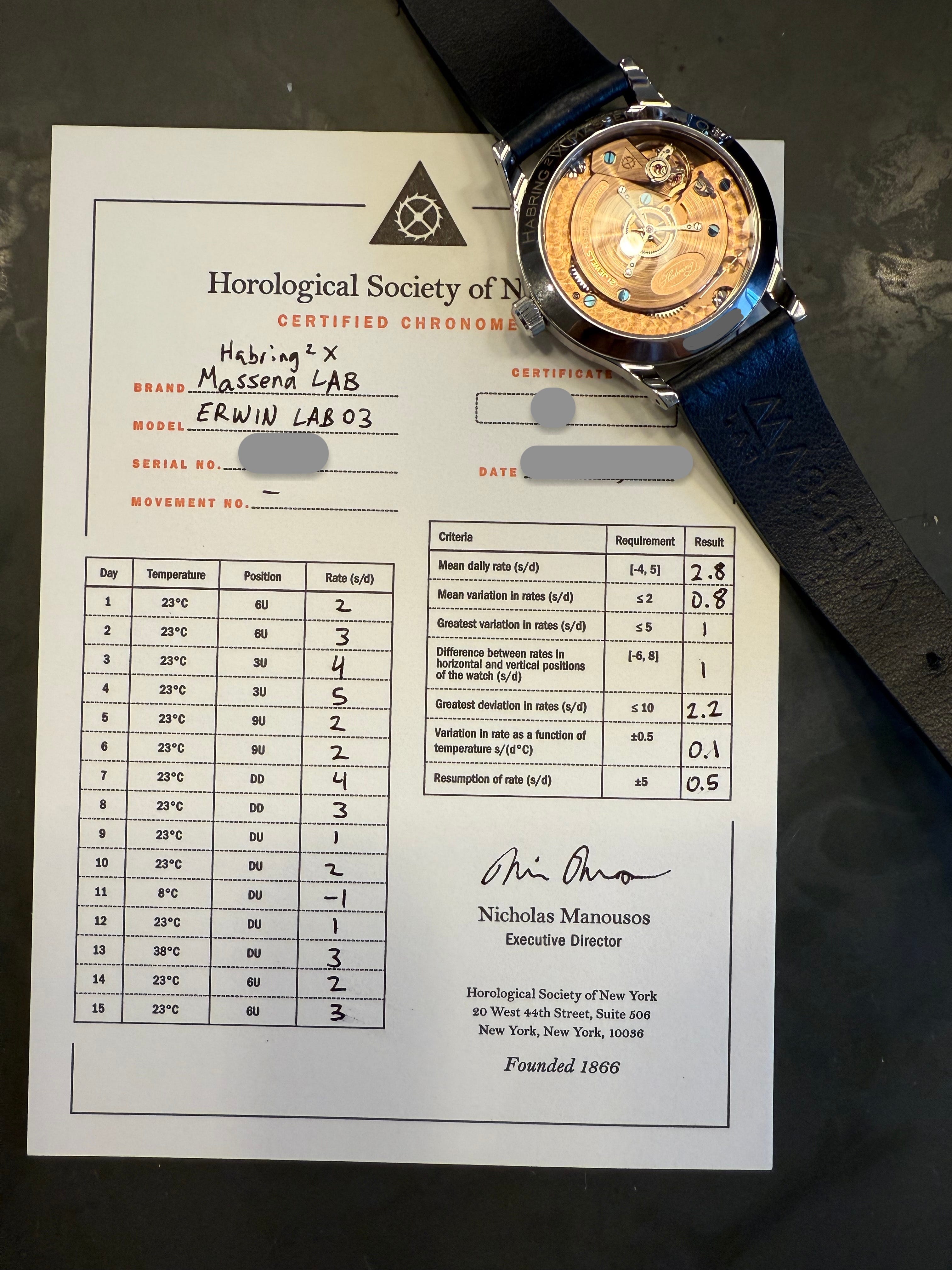
This seemingly minor tidbit got me interested to learn more about the HSNY and it is largely because of that research that I joined the HSNY and attended their 2026 annual gala.
The gala was a tremendous experience for me and I plan to attend each year, and I also learned of the great resources including their physical library and lecture series. Most (all?) lectures get shared to YouTube and just this week, the excellent Substack author SFWatchLover drew from the HSNY YouTube video of Kari Voutailenan’s lecture at the HSNY in his newsletter discussing Kari V.3
The connections I made with people at the HSNY gala, and my exposure to the offerings of the HSNY might not have come about were it not for this watch.
But with that now in the rearview mirror, I don’t know how much more I get out of this watch by holding it in my collection in terms of elevating my connection to the watch enthusiast community nor with elevating my own personal knowledge.
Grade for Step 6 - 🟡 Yellow but this could have been a red.
Final Score
TARGET 🟡
RITUAL 🔴
INVERSION 🔴
AGILITY 🟢
GALVANIZE 🟡
ELEVATE 🟡
It’s clear that this watch needs to be let go and this test is a reminder that I need to fulfill my internal pledge to put all of my watches to this test every six months.
Let me know how this system works for you in the comments and how often you plan to give outgoing watch alerts (OWA) in addition to new watch alerts (NWA.)4
Prior essay on TRIAGE for Watch Collecting here:
Kari V’s lecture at the HSNY found here:
Thanks to MW for coming up with the idea for OWA and to JM for the final determination of the acronym.
No posts
Comments
Nothing yet. Say the first thing.
Sign in to join the conversation.