

When Barack Obama ran for president in 2008, I was living and working in Florida, traveling often for my work at ESPN. Each time I rode in a cab, entertained clients at dinner, or sat at a bar enjoying a beer, someone would invariably say something along the lines of, “You must be happy Barack Obama could be president?”
My answer never failed to surprise or even dismay them. One encounter stays with me: a couple from Chicago became so incensed at my answer, while we sat at a restaurant bar in Key West, Fla., in October of 2008, that the husband got up and walked away, leaving his wife to apologize.
For what it’s worth, this reaction never occurred with Black individuals. I’ve wrestled with this dynamic for years without finding a satisfying answer.
Anyone who engaged me long enough would hear my rationale:
“I don’t think the first Black president should be a liberal Democrat, or even a centrist Democrat. He’ll be pushed to move further left than is necessary or helpful — maybe further than he’s comfortable — and I fear it will make it harder for the next Black president to get elected. Having grown up and seen what I’ve seen in the way of attitudes and beliefs, I live by the oath that you keep the door open for those who follow.”
Once Barack Obama became President Obama, I adopted a similar refrain:
“Even though I didn’t vote for him, I’m proud of what he represents: progress. For young Black boys and girls — or anyone growing up without hope — his election makes real the promises of America, that anyone from anywhere can reach their rightful station in life regardless of the circumstances they’re born into.”
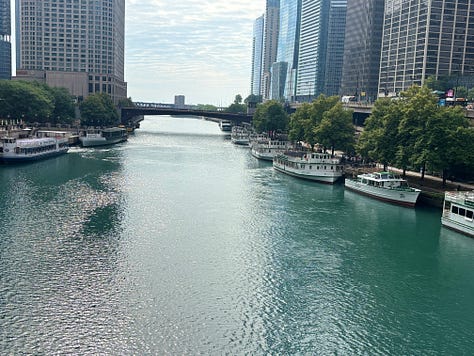
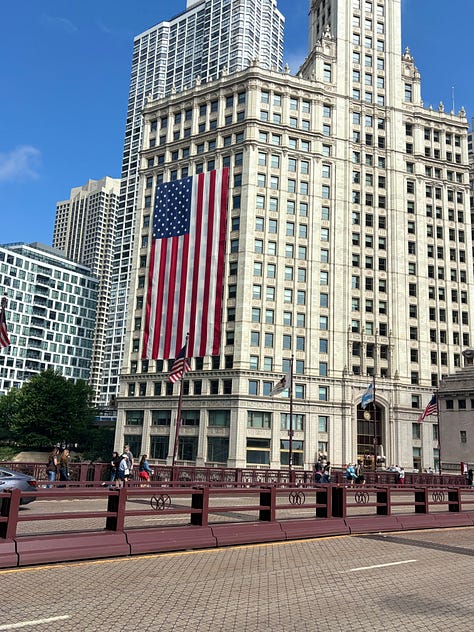
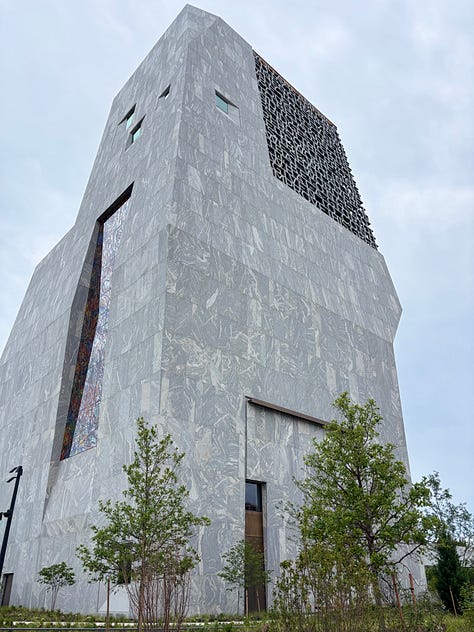
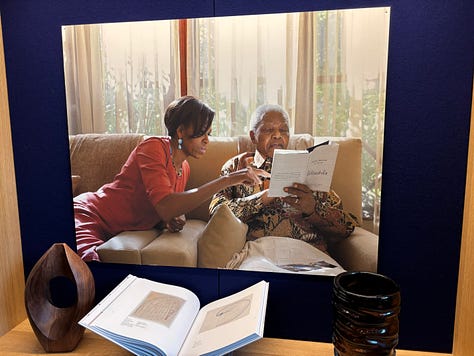
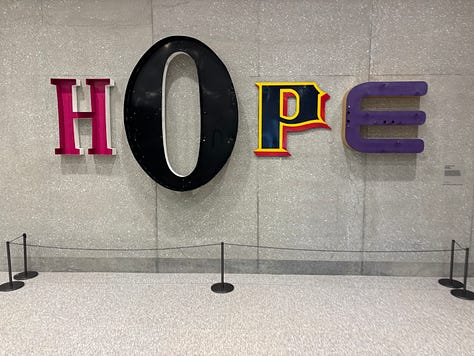
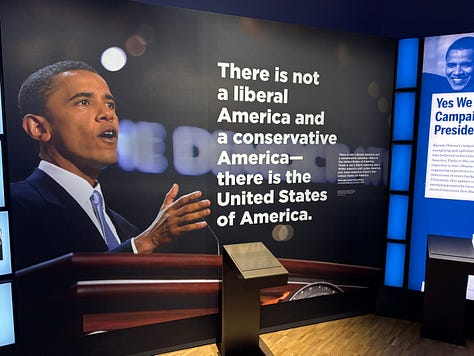
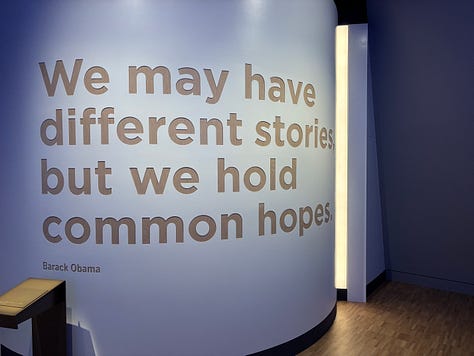
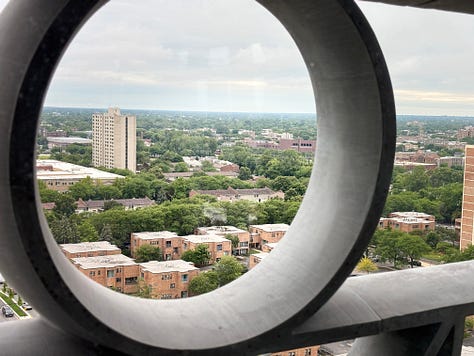
I still feel this way, which is why I was elated to visit the Barack Obama Presidential Center late last month. My latest Dallas News column details that visit.
An excerpt:
Shortly after Obama’s election, our nanny gave our family a commemorative plaque from his election night, and we set it on the mantel in our home. My sister joked later that she was surprised I hadn’t “dropped” it.
I left it there on purpose, where my two young daughters would pass it every day, because I wanted them to see it as evidence of how far the country had traveled in the time between my parents’ childhood and theirs. That plaque was the whole thing in miniature: a private reminder, on a mantel in Windermere, Fla., that the ceiling had moved.
What I walked through on the South Side of Chicago is that same reminder, built at civic scale and positioned where it cannot be missed.
Leaving the center, I looked back to see a throng of adults dancing to old-school R&B, and a long line waiting to take a picture with the giant sculpture of Barack and Michelle Obama.
Near the front stood two couples as old as my mother, smiling, unbothered by the wait.
Read the full column: Smith: I opposed Obama’s policies. His presidential center still moved me

News broke this morning that Sen. Lindsey Graham died Saturday evening after a brief and sudden illness. He was 71. Whenever I heard his name, one exchange always came to mind.
Asked how he — a longtime friend of Sen. John McCain — could grow so close to President Trump, who had savagely insulted McCain on numerous occasions, Graham told reporters he was trying “to be relevant,” explaining that working with the president gave him the chance to deliver outcomes for the country.
If you want to be relevant, you’ve got to be on the team, he was later reported to have said.
The answer says as much about the man as it does about politics, for one of the first things you learn as a politician is that you must be willing to let some supporters — even close friends — go in favor of accomplishing your goals. It’s a hard lesson to administer, and it can look like cruelty to the people it touches.
Roland Fryer, WSJ, “The economics of Friendship"
Rose Horowitch, The Atlantic “The end of reading is here"
Anne-Laure Le Cunff, NYT, “We Are Losing the Ability to Discover What We Didn’t Know to Ask"
Christopher de Vinck, The Dallas Morning News, “Texas’ required reading list for public schools is extraordinary"
Glenn Rogers,The Dallas Morning News, “Don’t let data centers skirt water management"
Comments
Nothing yet. Say the first thing.
Sign in to join the conversation.