
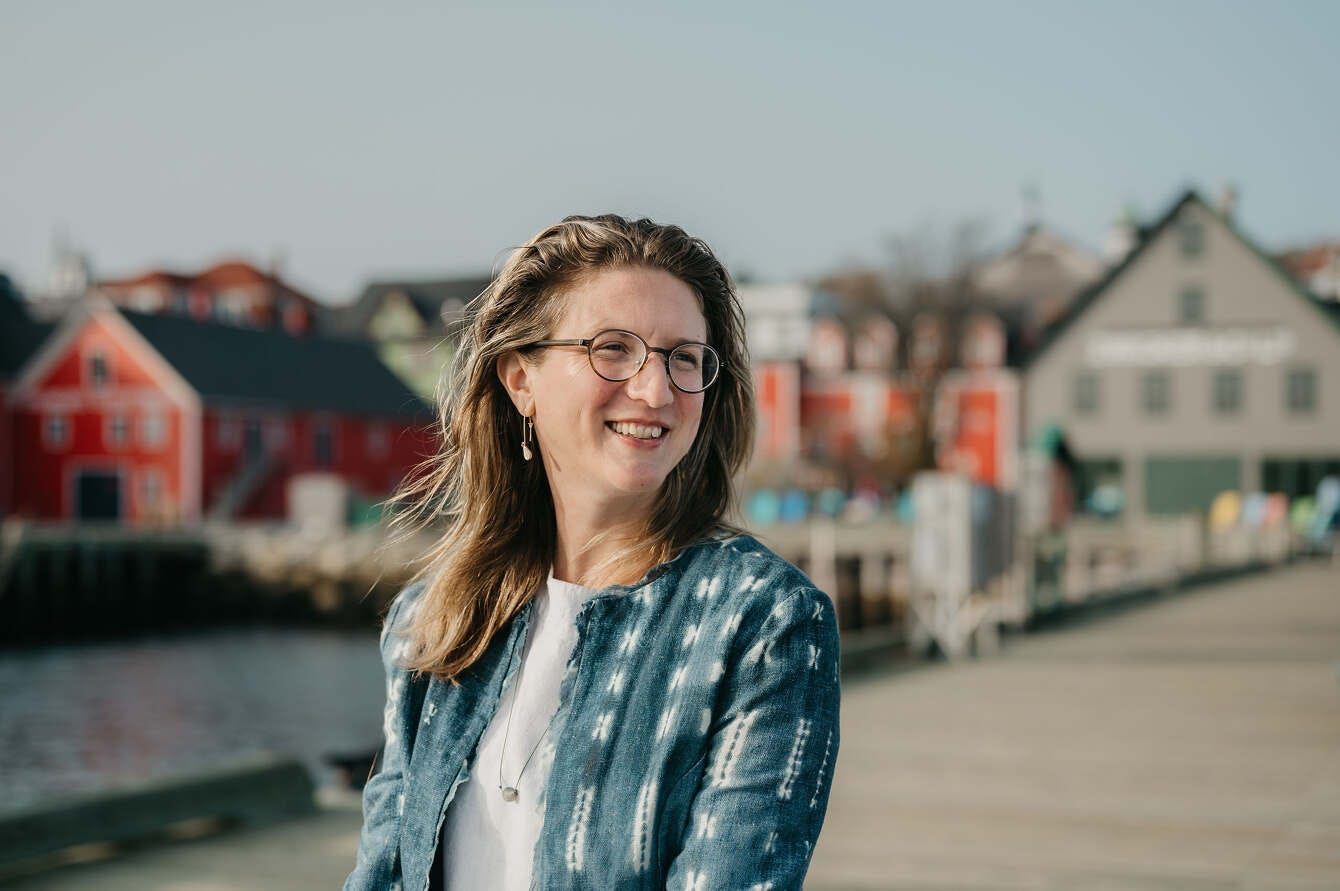
photo credit Kim Campbell-Sullivan
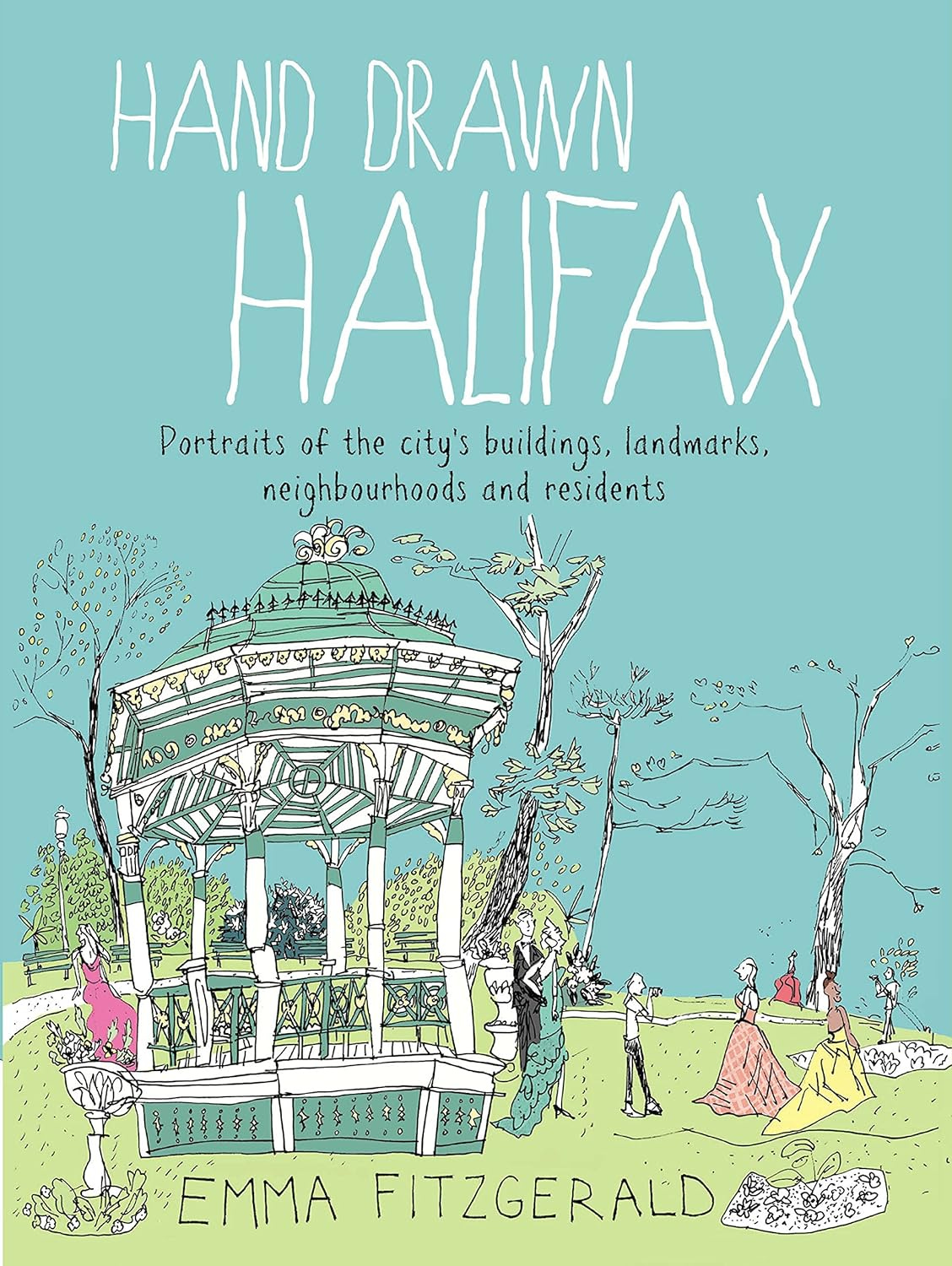
Emma Fitzgerald is the author and illustrator of a number of books, including Hand Drawn Halifax, a best-selling book based on her chosen home of Nova Scotia. The Globe & Mail describes it as “part journal, part sketchbook, Hand Drawn Halifax is a love letter to Atlantic Canada’s largest city.”
Author and Charitable Irish board member Ronan O’Driscoll sat down with Emma to discuss her career and how Irish and international connections have influenced her art:
Like many people of Irish extraction you meet overseas, you have an interesting origin story. Can you tell us about your connection to Ireland?
I suppose travel is in my DNA. My parents came from Dublin and Port Laoise. They were both medical professionals and met in the Sligo hospital. They decided to go to Lesotho (a small country surrounded by South Africa) for two years to work. That’s where I was born. I’ve been travelling since!
How long were you in Lesotho?
I don’t really remember being a child there as we moved back to Ireland when I was one, and to Canada when I was three. I did go back to Lesotho as an adult during my architecture degree at Dalhousie University. It was a life-changing experience. After secondary school in Canada and Ireland I decided to study Fine Art at UBC in Vancouver, which is also where my parents had eventually settled. But I still found ways to incorporate travel, In my first year, I studied at Herstmonceux castle in England.
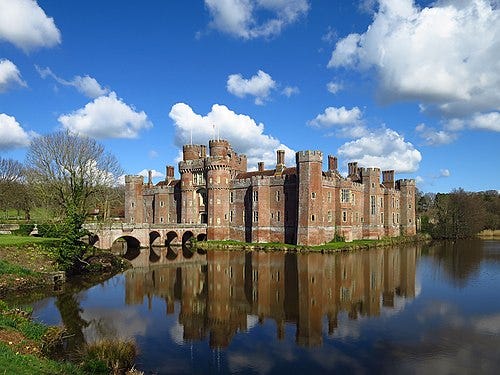
Herstmonceux Castle
It was a beautiful old castle that got me excited about the way we depict buildings in art. I also met people from Dalhousie university who were studying there. This was my first connection to Eastern Canada.
Third year at UBC, I decided to travel again. This time to L’ecole de Beaux Arts in Paris. At this time I thought seriously about becoming an architect. My boyfriend wanted to come to Dalhousie university, so we both came here to study architecture. That’s how I ended up in Eastern Canada for the first time!
How did you find architecture as a topic of study?
It was very hard. Math is not really my thing. I was quite stressed but decided to stick it out. One avenue of escape was a work term in Johannesburg. My best friend from childhood was from there and her mum introduced me to an architect called Peter Rich whose career as professor was shifting into larger built projects.
I think I’ve heard of him…
Yes, he’s quite famous now, and has won international awards for sustainable architecture. I consider him a big influence on my work. He was an architect but also someone who loved to draw on location. He would use pen to draw very quickly and fluidly. One thing that we did a lot of in Pete's office was scan his drawings and add colour in Photoshop. I learned skills that I still use all the time now in my illustration work. This also showed me the power of combining digital and hand drawn. I spent nine months working for him in 2007. It was such an amazing experience. We worked on designing social housing and community centres.
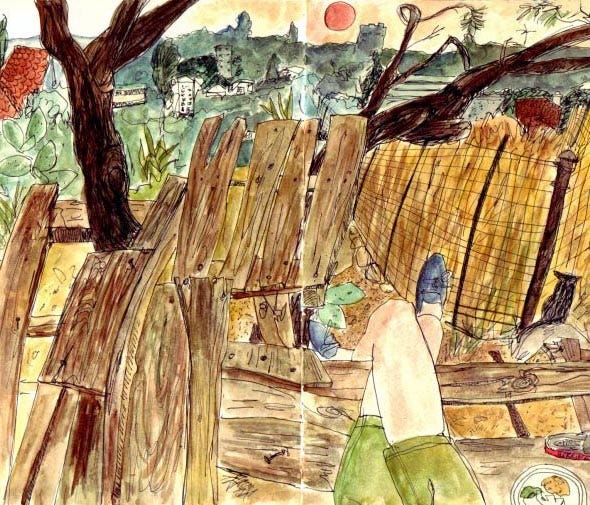
View from the treehouse in Johannesburg. Drawn while working with architect Peter Rich.
Your style is very distinctive. Who are some of your influences?
I never set out to look at one person’s work and copy it. It’s more about movement and travel throughout life that informs my style. Like I said, Peter was a big influence with his pen drawing on location. But I already had this tendency, even as a sixteen year old going to secondary school in Ireland. I would go alone into Dublin by bus (we were living in Wicklow) and walk around and sketch. To be honest, I felt dislocated then and this kind of art really helped me channel my sense of yearning and not belonging.
That’s a common part of the immigrant experience. Was there anything else that influenced you?
I've always loved dance, both ballet and modern. There’s something about that combination of knowing when to slow down and speed up that appeals to me. It has to be right there, in the moment. Of course, you have to know the technique, just like with drawing. But also there’s the ability to be loose, both are very important. The line of my art is the flow of dance.
That sums it up perfectly. Tell us more how your connection to Ireland or Africa informs your art style?
I still feel quite connected to Africa, not just from my early days. My uncle Niall lives in Dublin but brings Irish kids to Lesotho as part of a cultural exchange. I’ve also taught in Gambia for five months in 2011 as part of a program with Dalhousie university and CIDA. It was an undergraduate program in community building and design at the Gambia Technical Training Institute. The program was set up by some former classmates from Dalhousie. Incredible experience. We would take students to see the village elder before drawing on location there. It was important to ask his permission by giving a gift of a Kola nut first. It was a symbol of respect and not just assuming you can draw anywhere. I’ve also learned how important that is in respecting indigenous spaces here in Canada.
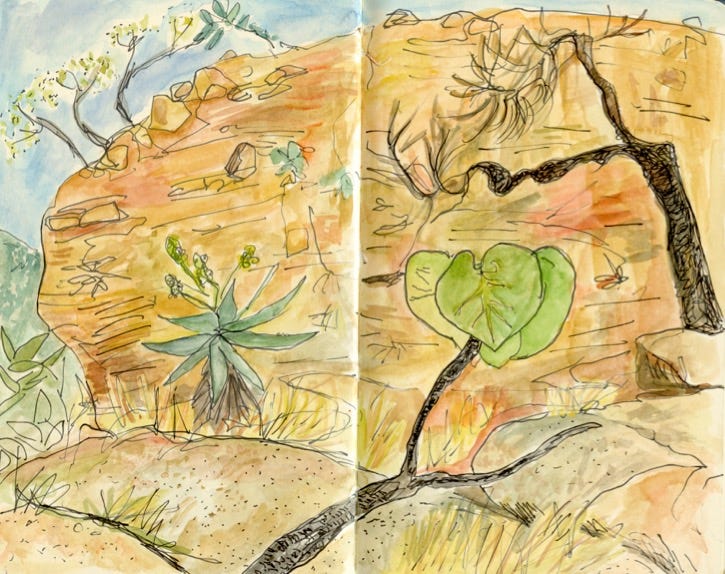
Magaliesberg Mountains, South Africa
Most important is to appreciate your own backyard. It wasn’t until I started drawing Halifax that my career took off.
Was this when you started doing House and Business Portraits? What inspired you to do that?
It was almost forced on me. I had been working on short term contracts as an architect but I deep down felt architecture wasn’t for me. The toughness and entrepreneurial spirit of some of the women I met in Africa inspired me to try something different. I applied for a government program that provided training and mentoring in how to run a small business.
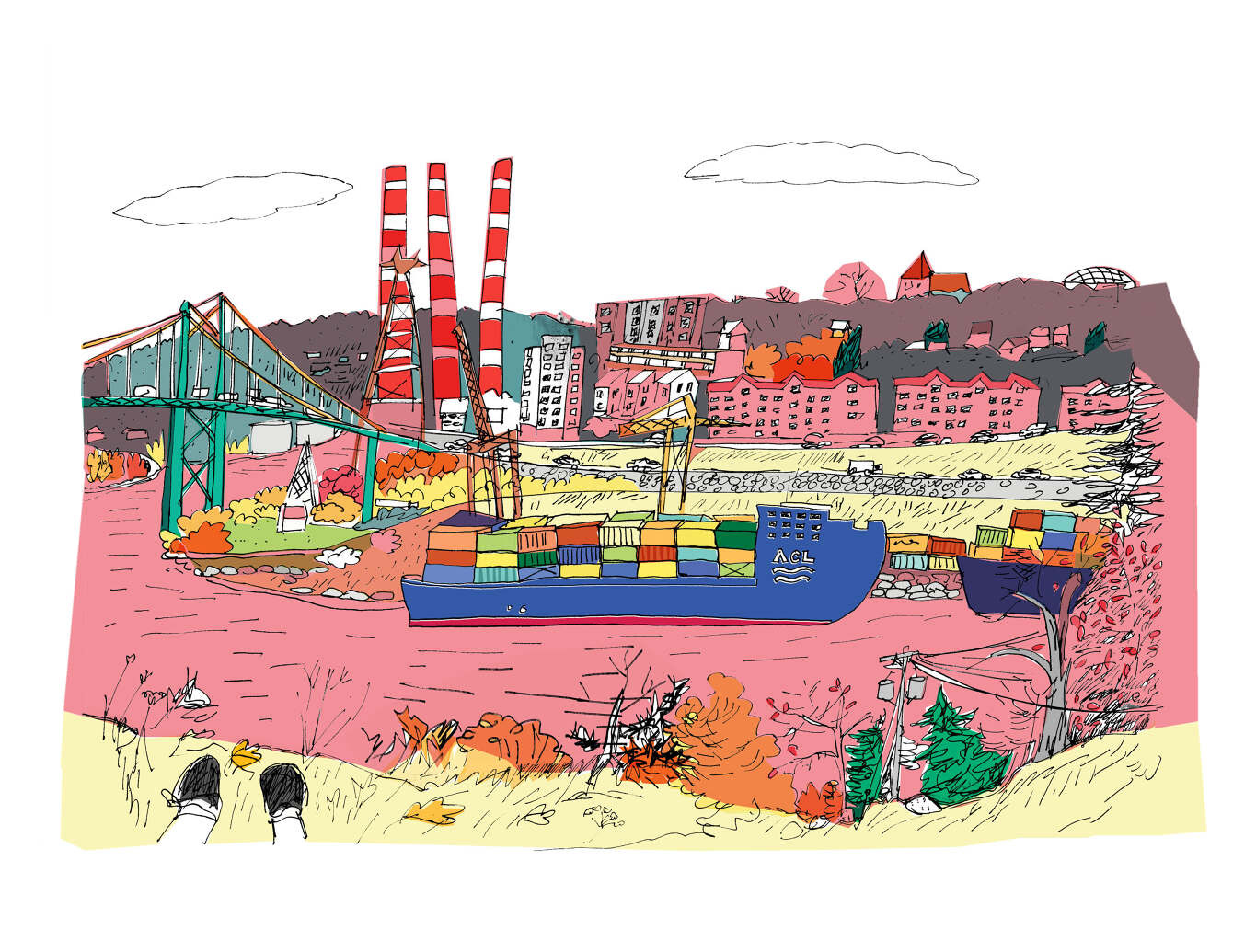
This really helped me take off and I would do portraits of buildings around town for commission. After that came my first book. I went to the Word on the Street book festival and pitched the idea to Formac publishing. That became Hand Drawn Halifax. It sold 10,000 copies nationally.
That’s quite an achievement. Any other projects in the works?
I’m currently working on a book about the life of Rick Hansen. It’s titled The Man in Motion: How Rick Hansen’s World Tour broke down barriers for people with disabilities. Words are by Rick Hansen and Lorna Schultz Nickerson and it’s going to be published by Owl Kids in April 2026.
There’s motion and travelling again! Rick Hansen’s story is very inspirational too.
It certainly is! It’s going to be a picture book for kids, covering the story of his world tour in 1985 to raise money and awareness for people with disabilities. He travelled to thirty five countries including Ireland, also places like Australia, Japan and China. All to show how disability is not a barrier. He’s competed in the Paralympics and is an important promoter of building certification for accessibility. My favourite part of this book is when he’s travelling across Canada after returning from his world trip. There’s a strong sense of homecoming and celebration. This really resonated with me because I love Canada but love to travel the world as well.
Can’t wait to read it! Thanks for sharing your own story of travel and art, Emma.
No posts
Comments
Nothing yet. Say the first thing.
Sign in to join the conversation.