
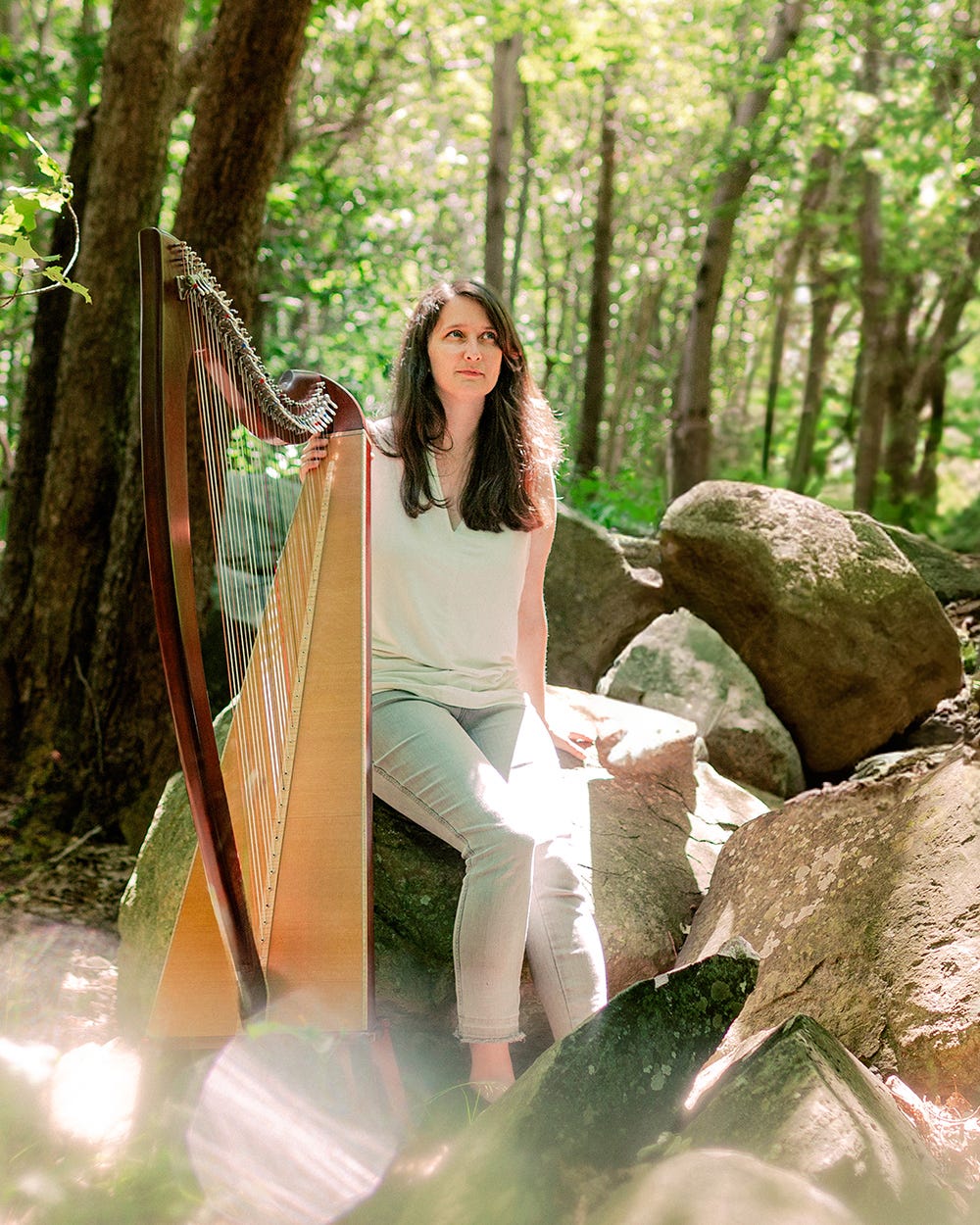
Photo by Jamie Kronick
Ellen Gibling is a harpist based in K’jipuktuk/Halifax, Nova Scotia. She holds a BMus in classical harp performance from McGill University, and an MA in Irish traditional music performance from the University of Limerick.
Her recent solo harp album The Bend in the Light (2022) has been described as “bold and beautiful” (Celtic Life International) and “enchanting” (Folk London). The album garnered Ellen a nomination for the Canadian Folk Music Awards’ Instrumental Solo Artist of theYear, as well as for Music Nova Scotia's Traditional/Roots Album of the Year.
Ellen was kind enough to sit with me before a music session at the Oxford Taproom. We touched on a number of things about playing traditional music on the harp both here in Nova Scotia and beyond. We started the conversation discussing the impact of streaming music services on a musician.
Ronan: As a musician, do you do well on Spotify?
Ellen: Well, not really. I do have one song that for some reason is very popular. Maybe it’s on a playlist like “Calming Celtic”. A few times a year, I get about $30 from that.
Ronan: And how many listeners would that have?
Ellen: 200,000 or something, I think.
Ronan: That's shocking! So if you had that many singles, that would be huge. Right? That’s unfair!
Ellen: It’s just luck of the draw for something like that to get chosen for a playlist.
Ronan: It’s like they don't care. How are we going to reward people for producing music?
Ellen: I know.
Ronan: Do you find that traveling and touring is the most lucrative part of being a musician?
Ellen: To be honest, it's more creative stuff. For example, if a theater company wants to create some music, that can be more lucrative.
Ronan: It must be fun too.
Ellen: It is really fun. Plus there’s no performance pressure, so it’s really nice.
Ronan: Is it always just composing?
Ellen: Sometimes it's only improvising. It’s often arranging things they bring in for you. And then doing big group workshops at festivals. This would be the other thing that's more lucrative.
Ronan: That involves a bit of travel, I imagine. Where’s the furthest you've been?
Ellen: Where have I gone? The Huron Harp Festival is not that far away. It used to be in Goderich, Ontario. Next year it’s Port Elgin
Ronan: Sounds nice. And, of course, you’ve been to Ireland.
Ellen: Yes, I studied at University of Limerick for a year in 2018
Ronan: They have an excellent World Music program, don’t they? Where did you hear about it?
Ellen: I think it was Maxim Cormier, the Cape Breton guitarist. He was talking about going and I just looked it up. At that time, there were only two master's programs in traditional music. The other was in Scotland. Now there’s one in Maynooth, County Kildare as well. I think at that time, it was just those first two.
Ronan: Let’s talk about your most recent albums. I thoroughly enjoyed The Bend in the Light. It’s a lovely eclectic collection of tunes. I spotted a set of slides there composed by our friend Jeremy Finney (interviewed on this substack recently). I also saw Colemans and Boys of Ballisodare. I didn’t recognize them though!
Ellen: Oh, that’s because they're all hop jigs.
Ronan: Hop jigs, I’m not familiar with those.
Ellen: I didn’t know any either until I went to University of Limerick. They’re slightly different from slip jigs. My teacher Alisha McMahon was very into them. So when I was recording, I guess I was in a Hop Jig kind of mood!
Ronan: Very cool.
Ellen: Yeah. Also Ryan Molloy had recorded a set of Hop jigs on piano that I really really love. Including one of those tunes, I think.
Ronan: Lovely. You have a very poetic title: The Bend in the Light. Was there a theme there joining all these tunes together?
Ellen: It was a very loose theme but I was thinking about the trajectory of traditional music: How it passes through people and sometimes it passes straight through…
Ronan: Like through glass!
Ellen: Yeah! Then you're hearing the same thing on the other side. And sometimes it skews one way or another. So I'm just aware that when I play this music, I'm not coming from a background where I've been steeped in it since infancy or anything like that. So I have no doubt the way I play is shaped by my experience as somebody not from Ireland.
Ronan: That’s a great explanation. When did you get into Irish music?
Ellen: I got into it when I was a teenager.
Ronan: Was it just you heard something somewhere or was there somebody’s playing you liked?
Ellen: Actually, I can't remember the order of things, but I had a friend in Montreal who played Irish flute. We met at a contra dance, I think. And he took me to a private session because I told him I knew maybe one tune! And he said, “That's enough! That's all you need.” But then, I'm not sure, perhaps I heard people playing in the Old Triangle before that. It's hard to remember as the two things happened around the same time when I was a teenager.
Ronan: And had you been playing the harp classically?
Ellen: Since I was a kid. And my teacher would give me a book of tunes for the harp, and some Irish stuff would be in there. It's such a part of the repertoire—tunes like Smash the Windows. I had no idea what that meant as a kid but I liked the sound.
Ronan: But why the harp? As a child, I mean. What was it about the instrument that grabbed you? It's a big instrument and, let’s be honest, not super popular.
Ellen: I never set out to play the harp initially. But I did like the idea of it. And I played a little piano, which is similar in a way. I'd seen a few pictures of harps, and I was taken by them. Then Cheryl Reid O'Hagan moved into town, and she started a little studio and rented out instruments. And Scott McMillan was a friend of my parents. Scott suggested I take lessons with Cheryl because he remembered I said I liked harp!
Ronan: And that’s how it all began…Was there anything about Ireland in your interest? It’s the symbol of the country, you know. Growing up there, there were ads for coal with someone playing the harp by the fire. Was that any part of it? Any connection to Ireland?
Ellen: No, I didn't have any sense of it back then.
Ronan: That’s very interesting. Even a vague kind of Celtic sense of it?
Ellen: Not really, I still don't even know what Celtic means.
Ronan: I know. Apparently the term is on shaky ground historically. Although I think some people do come to it from that. Culturally, I mean.
Ellen: Yeah. I was mostly coming to it aesthetically. I thought it was cool. It was a fun dexterity challenge and I liked how it sounded. But I didn't have any sense at all of the cultural context. Where it came from or anything like that.
Ronan: No, that's totally fine. I think part of the appeal of the music is how people all over the world can pick it up. There’s something special about that.
Ellen: But I did feel, the more I learned about it, how much better of an experience I would have if I had come to it through a context that made sense. If I had had people around me who understood the tradition.
Ronan: I suppose I have a bit of that from growing up in Ireland when I did. But it was all flute, fiddle and accordion. The harp wasn't really there as much. Even though you have the composer O’Carolan and all the history. And it's supposed to be the symbol of the country but it is pretty niche. Did you find that when you were over there?
Ellen: To be honest, I did see quite a few harps. But I also know my perspective is a bit skewed because I was going places specifically to see them. So it's hard for me to tell. I did see 300 harps playing in the same room once!
Ronan: That must have been amazing. When did you decide to study harp formally? When did you think, I'm going to stick with this one. This is what I want to learn.
Ellen: After high school, I went to King's College for a foundation year. And then I thought, hmm, I wonder if I could get into a music school. I thought I'll just try it and if I get in, I get in. And I got in!
Ronan: And what program was that?
Ellen: That was McGill. It was the harp performance Major.
Ronan: And how many years was that?
Ellen: That was three more years. It was all classical. But I was going to that private session with my friend while I was also taking the program.
Ronan: So you had a sense of the other side of things, outside classical.
Ellen: Yes, And there was a fiddler, Sarah Burnell, on the course as well. I was in her band for a little while.
Ronan: So you were in bands early on then?
Ellen: She was playing, as I recall, mostly Scottish fiddle along with singing. We toured a little bit. It was fun.
Ronan: And you were still studying at that time?
Ellen: At the time, I didn't feel like I was playing that music from any kind of knowledge. I was just messing around. I wasn't listening to it myself.
Ronan: Like you do now?
Elllen: Yeah.
Ronan: So even early on you were accompanying and collaborating? I didn't realize. I wanted to ask you more about that because you've done a lot of different collaborations. What do you find about collaboration that's appealing? What's the fun part there?
Ellen: I mean, socially, it's fun. You know? It's kind of a way to get to know people without having to do all of the usual social obligations!
Ronan: (Laughing) That’s true! But would you also say the harp is a good instrument for this? For accompaniment?
Ellen: I don't think it's especially better or worse. I usually find when people are asking me to play, it's not because they necessarily really want harp. They just think maybe we'll be good to work together. It's more of a personal thing.
Ronan: Is there a preference for the instrument you might collaborate with?
Ellen: Not really, but I seem to work with a lot of fiddle players!
Ronan: I was going to say that. You’ve done a lot with fiddler Adrianna Ciccone, most recently on The Pear Tree album. Do you guys have anything coming up?
Ellen: Nothing huge, but we do plan every year to do another Christmas track. Just one. Maybe one day if we'd actually do that for long enough, we'll have a second album.
Ronan: That’s a great idea and it's a really nice album. It's a lively and refreshing twist to traditional festive tunes.
Ellen: Thank you.
Ronan: How did you guys do it? How did it come together?
Ellen: So we actually met not too long ago, during COVID. And they were having the Novalea Market back then. It was one of the few places you could play outside. We got to know each other there. I'd say we're a little similar in that we both love the same kind of music and live in the same neighborhood. So it all came together from that.
Ronan: So here’s a technical question, for the harp specifically, how do you approach playing it as part of Irish music?
Ellen: Yeah. That's a good question. I can say maybe this: I really love the sound of DAGGAD guitar. I also love the sound of pipes droning. So when I'm just accompanying, I try to use harmony, that is drawn from that. I'm trying to try to steal those sounds!
Ronan: Oh! I would never have thought of the harp in that regard. I just think of it mostly as a melody instrument.
Ellen: I’m trying not to think so much about chords like “C” and “G”. It’s more like trying to think of the drone and how I can add color to the drone that supports the tunes.That's my favorite style of it.
Ronan: That's really neat, I'm glad I asked that. Okay, another kind of technical one: Is there a relationship for you between playing and composing? Does one lead into the other?
Ellen: I definitely don't think of myself as a composer. I've never sat down after being hit by an idea. That's never happened. Once or twice, I've forced myself to do that, and every single time, it's a disaster. Usually, I end up writing something that already exists or something I hate. It is much better if someone gives me a prompt to work on. Then I find it really easy. Or if someone gives me a tune to arrange.
Ronan: Like a seed, almost?
Ellen: Yeah. Some starting point that someone else has created and then I like to go with that. When I’m playing, I do a fair bit of improvising. Which, at its best, is spontaneously composing.
Ronan: Would you say the session stuff led to that? Because there’s a lot of memorizing these tunes, but you're not getting them perfect.
Ellen: It probably was a good stepping stone. I couldn't have gone from pure classical music directly to free improvising music without finding something looser.
Ronan: Speaking of genres, do you have a preference?
Ellen: The one that feels the most comfy is definitely trad music. I could do that all day long. I still love classical music and I play it quite a bit. But there's always a certain level of stress involved with it that I never feel with traditional music. Especially orchestra playing. The stakes are so high when you’re there.
Ronan: Right. And you've played in orchestras quite a bit.
Ellen: Yeah. But it's to the point for me where when I listen to that music, I can't fully enjoy myself because part of me is stressed imagining I'm up there.
Ronan: I can imagine that would be quite stressful. However, it's an ensemble. Right? It's like twenty plus people.
Ellen: Yes but I’m almost always the only harp player. You'll be sitting there for, like, six hundred bars and suddenly do a big solo. Yeah. It's a lot.
Ronan: What would be the main things in the classical repertoire that are harp?
Ellen: I guess in the orchestra world it's known for more impressionist music. Maybe lots of Ravel and Debussy. Mahler has a lot of really nice harp parts. I really like playing Respighi.
Ronan: Pines of Rome…
Ellen: Yes. There are lots of good harp parts out there.
Ronan: For sure. Do you have anything of that nature coming up, with the symphony or anything like that?
Ellen: Nothing with the symphony, they’ve finished for the summer. I do have some flute and harp recitals coming up in the next few weeks.
Ronan: I meant to ask earlier about Jeremy's Cat Slides on The Bend in The Light. Why did you pick those?
Ellen: I think I was interested in finding tunes that were written by people I knew. As I was saying before, I love Irish traditional music but I'm always aware of not feeling like I fully belong to it. But I identify most with tunes like Jeremy's that are written here.
Ronan: Fully Nova Scotia Irish tunes!
Ellen: Yeah. It felt I was more fully involved with it. Specific to here.
Ronan: That's really great. I know there are these purists who think you have to be a ninety year old farmer on the side of a mountain in County Kerry to play the tunes. I don't agree with that at all. I think the strength of the music is because it has (like the Irish) traveled so much. And speaking of travel, you were just in Western Canada, weren’t you?
Ellen: Yeah. In Manitoba.
Ronan: How did it go?
Ellen: It was really fun. It was fourteen shows. One school show and then thirteen house concerts. They had it set up so every night you have a show. And we did get one day off in the middle, I think, just by chance because someone backed out. And you have a different billet in a different town.
Ronan: So you went to all these different towns? That must have been pretty busy.
Ellen: In the end, we had two in the vicinity of Winnipeg. It was fun. I’ve also played on the trains with Via Rail. I used to go as far as Montreal playing for people but they’ve stopped that program since Covid.
Ronan: That’s too bad. It must have been a lovely way to travel. Would you ever go back to Europe?
Ellen: I'm going in the Fall actually.
Ronan: Oh, yeah. Where are you going?
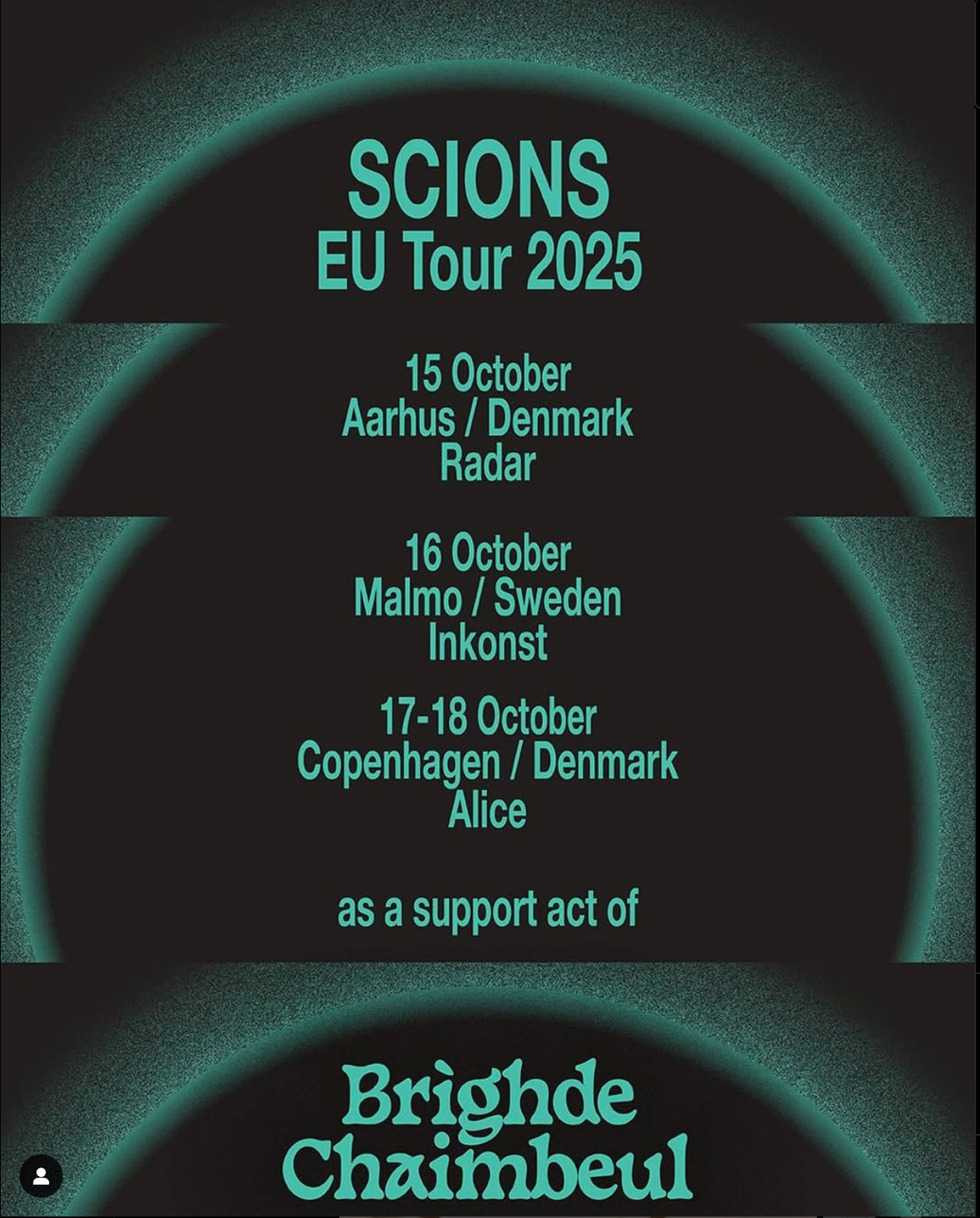
Ellen: It’s with a group called Scions. We have four shows. Two in Copenhagen. One in Malmo, Sweden. And one in Aarhus. Also in Denmark. We're opening for Brìghde Chaimbeul. She’s a Scottish piper from the Isle of Skye.
Ronan: Wonderful! Have a great time and thanks for chatting with me Ellen. This was really fun.
Ellen: Thank you!
No posts
Comments
Nothing yet. Say the first thing.
Sign in to join the conversation.