
I've recently written an article about the benefits of self-hosting which was well received. Read more here:
This motivated me to write about services I'm hosting that you might have never considered.
Boring stuff
I will not write about stuff you probably already run on your home lab such das Home Assistant, Speedtest Tracker or Monitoring like Beszel or Grafana.
Services
I'm running all services in a Kubernetes cluster on Talos OS. I currently don't plan on publishing my Kubernetes configs because much of it is straight forward but maybe hit me up, write a mail or leave a comment if you're interested in this and I'll get in touch.
Location Tracking
I've explored many projects that allow me to self-host a server & frontend to record my own location history. Currently I'm only ingesting geo data via my phone but I plan on installing a GPS tracker in my car because BMW recently shut down third party access to their API. I will definitely write an article about that in the future.
psst, there's a RSS feed.
OwnTracks
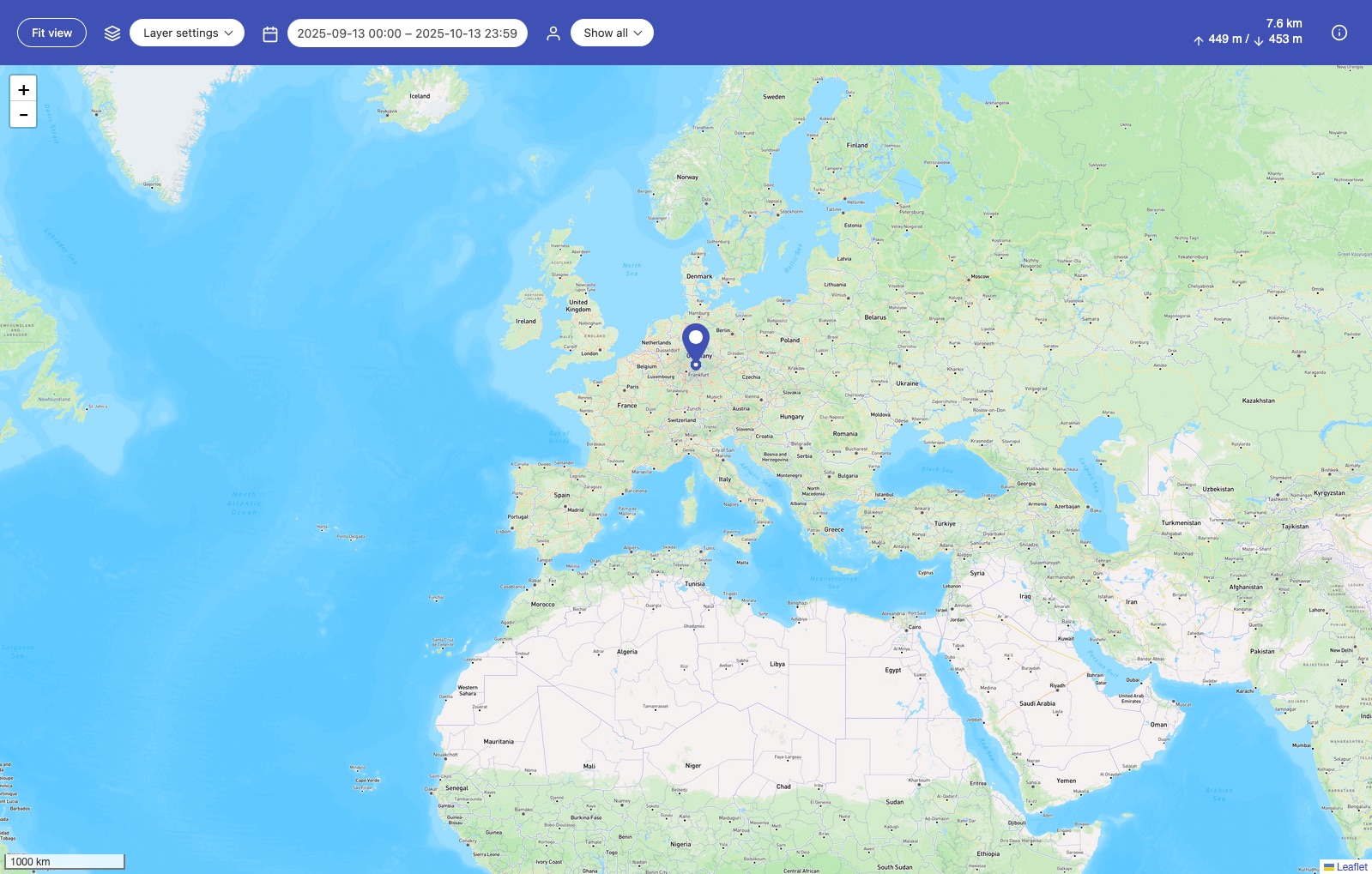
My favorite self-hostable project for GPS tracking yet is OwnTracks. It offers the best app experience - at least on iOS - and was very easy to deploy. OwnTracks comes with a barebones web UI but also offers a separate frontend which you can easily spin up in a container.
OwnTracks allows you to see your current location and history including a heatmap. Any map tile provider with a standard API can be used.
The single downside for me is, that there are no user accounts or authentication. Every user can see all devices and their location. Not that important to me yet, but a fact to consider.
Traccar
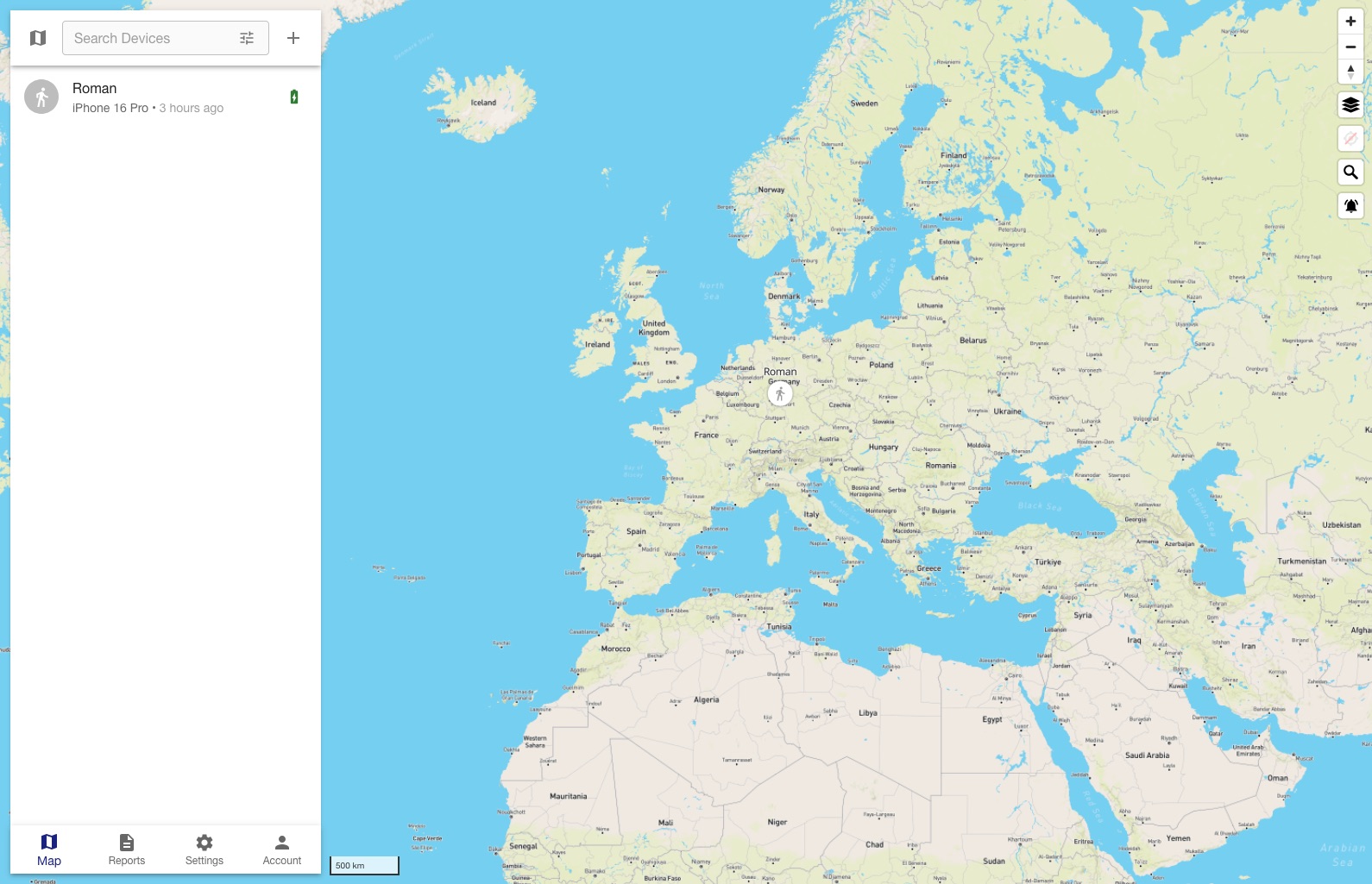
Within the car / GPS device tracker community, Traccar is very popular. As the name suggests this service is optimized towards tracking cars and offers huge compability with many GPS trackers.
One major downside for me is, that the web UI does not offer a location history other than the recorded position changes since you've opened the page. Not sure if there's any way to enable that but I haven't found it yet.
Positive to note, Traccar offers separate user accounts with their own devices and trackers.
dawarich
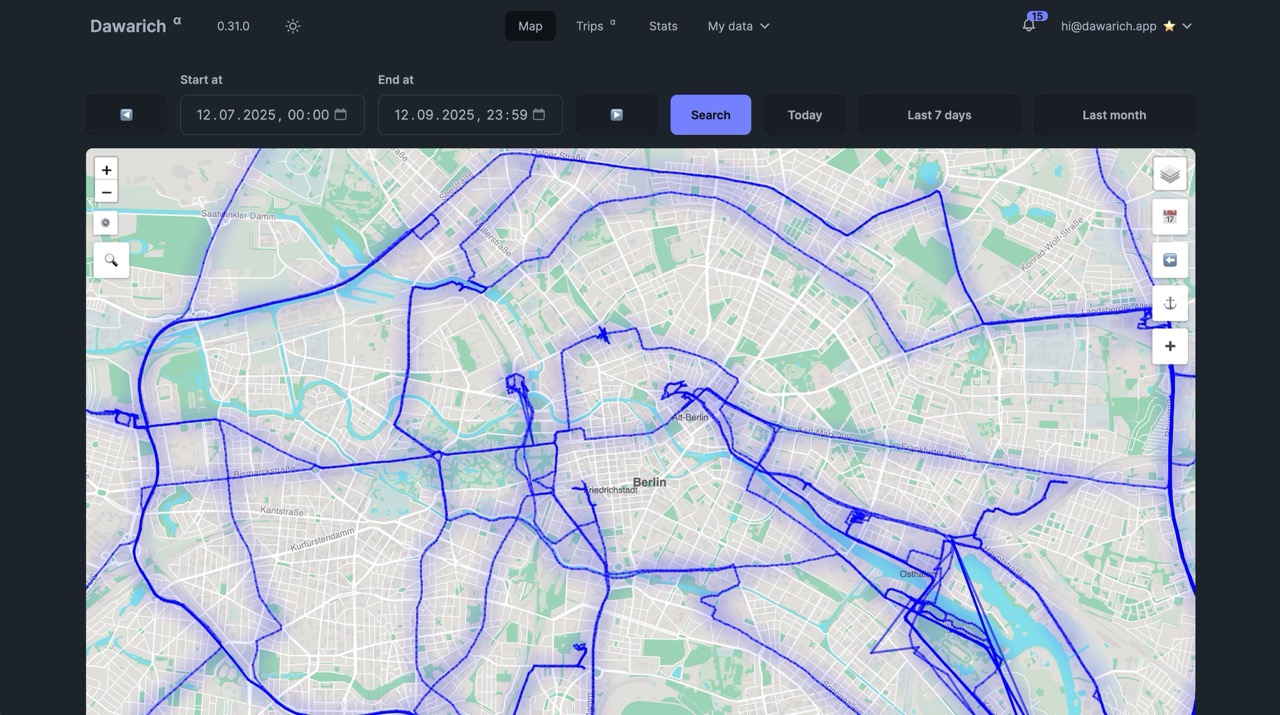
dawarich was my first choice because I liked the look of the web UI and the project seemed more modern. But looking more into it and using the service, I found many things that annoyed me. For one, it requires multiple containers of the app to process geodata which all operate on the same volume. That caused some difficulties for me.
Also the documentation and sample Docker Compose files did not line up. Possibly because much of it is vibe coded.
iSponsorBlockTV
I am already subscribed to YouTube Premium on my YouTube account - this removed display and in-video first party advertisement but not sponsors. You can start a discussion about the ethics of this - I will not.
Similar to the Sponsorblock Browser Extension, there is a hostable application called iSponsorBlockTV which will block sponsorings on any TV that runs the YouTube app (also includes Apple TV). As far as I've inspected, this also works for devices that are not on the same network.
You will need to create a config - this is independent from the platform you'll deploy the app on. Simply execute the
docker runcommand to create the config file (Instructions)Now you can deploy the service on Docker, Kubernetes, UNRAID or whereever you whish
To verify everything works, inspect the container logs while starting to watch a video with a known sponsor segment.
Image Hosting
Occasionally I need to send an image over a conferencing system or chat which does not support attachments. Before I've sometimes used imgur who now block requests from certrain IP ranges which they identify as VPN traffic. I don't want to be at the mercy of a random company.
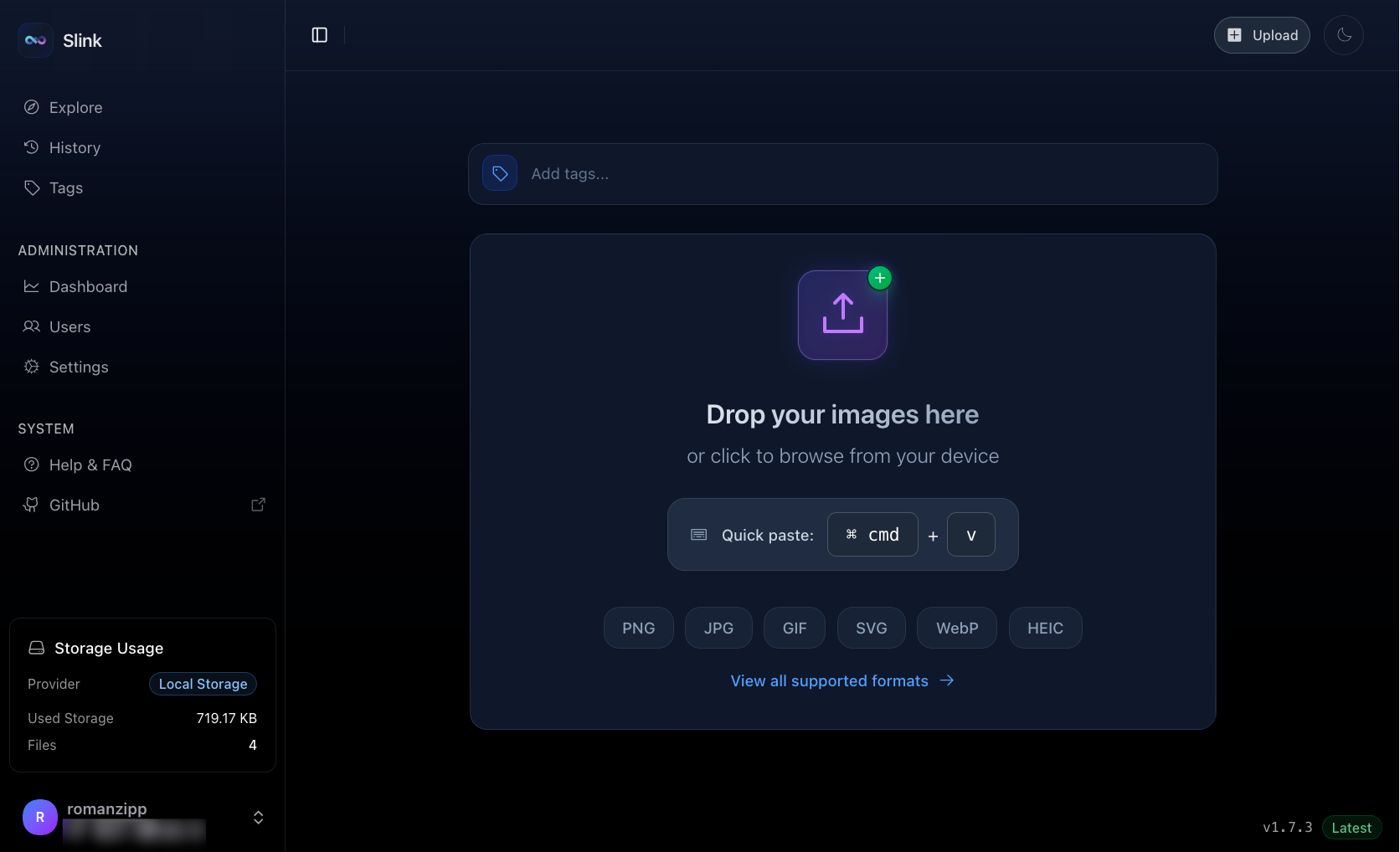
This is where Slink comes to the rescue. It has nearly too many features for my taste but you can configure it to your liking. Those are some of mine environment variables:
# Whether to allow unauthenticated users to access public routes
USER_ALLOW_UNAUTHENTICATED_ACCESS=false
# Whether to allow unauthenticated users to upload images without creating accounts
USER_ALLOW_GUEST_UPLOADS=false
# Whether to strip EXIF metadata from the uploaded images
IMAGE_STRIP_EXIF_METADATA=true
# JPEG compression quality for uploaded images (1-100, where 100 is highest quality)
IMAGE_COMPRESSION_QUALITY=100
Pair this with DDNS and Cloudflare as reverse proxy and you can share locally hosted images anywhere!
Calendar & Contacts
I've already written about why you should host your own CalDAV / CardDAV server.
There are many different projects from which to chose, here are some of the most popular I've tried so far:
Project
Language
State
Multi-User
Authentication
PHP
active development
yes
yes
Python
active development
no
yes
PHP
maintenance
yes
plugin
Python
active development
no
no
PHP
active development
yes
yes
The reason why many projects don't ship with built-in authentication is that the CalDAV / CardDAV standard works with Basic Auth that can be realized with any web server that operates before the DAV server.
I went with Baïkal becuase it is fairly light-weight and matched all of my criterias. If I had already deployed a Nextcloud instance that would probalby be my choice.
Comments
Nothing yet. Say the first thing.
Sign in to join the conversation.