
Whatever you do today, make time for this blockbuster Atlantic essay by Tyler Austin Harper, titled “Confessions Of A Token Black Professor.” It is absolute dynamite, from the first sentence to the last. Douthat said it will be remembered as a defining essay of our time. He’s right.
A bit of background: Tyler is a real socialist, but he’s definitely anti-woke. We met a couple of summers ago as invited guests at some Soros confab in Vienna. Everybody in the room was a conventional liberal, except for Tyler and me. We came at the libs from both sides, and ended up going to dinner that night, just the two of us. What a great evening it was! We discovered that even though he is a black socialist and I’m a white conservative, we had a lot in common. We had both grown up in Flyover Country, and had the same suspicions of the mindset of power elites. And he’s just a nice, everyday guy who loves fishing.
In his Atlantic piece, which could not have been more perfectly timed, given the Arday scandal, Tyler talks about how he came to be hired at Bates, a pricey liberal arts college in Maine. He arrived in 2020, thinking that conservative complaints about the wokeness of academia were overstated. And then reality hit him upside the head like a cast iron skillet. The first blow came right after he and his wife moved to Lewiston, Maine, where Bates sits like a well-manicured oasis within a declining postindustrial swamp. “Ava” is the name he gives his then-neighbor, who is also black, and who was a DEI administrator at Bates:
As I got to know Ava, I was surprised to discover that she viewed central Maine as a Stephen King–esque hell, a place where ancient prejudices and violence lay just beneath the friendly college-town facade. She regaled my wife and me with stories of alleged racial offenses, both major and minor, and generally made it clear that she thought Lewiston—an island of diversity in an otherwise famously homogenous, if not notably reactionary, state—was a hub of white supremacy. One evening, Ava confessed to me that when she drove through town and spied the local “crackers” sitting on their porches (not unlike the very porch we were sitting on), she sometimes thought to herself that these townies would probably like to kill her.
I didn’t know what to make of Ava’s views. I won’t pretend that my sensibilities were inflamed by the word cracker, but the epithet also didn’t seem like one that a college administrator should be using—especially at a school that admits a not-insignificant number of white, working-class Mainers. I also had a difficult time taking seriously the idea that I had moved to a place with would-be Klansmen around every corner. I grew up outside Harrisburg, Pennsylvania—another deindustrialized, permanently revitalizing urban center—and Lewiston felt familiar to me. The people I met were nice, hardworking; they minded their own business. I don’t think it ever occurred to Ava that I could have come from a similar place and similar people.
Tyler is a real socialist, which means he focuses on the material aspects of political economy. When all the Social Justice Warriors in the Bates administration tried to quash a unionization effort by the college’s employees, that set him off:
All of this social-justice rhetoric also felt wildly hypocritical. The same October day that the dean promised to abolish “retardants to progress”—including classism—adjunct faculty and staff announced that they were starting a union drive, citing “low pay, and poor working conditions at the college.” The union was intended to be “wall-to-wall,” meaning that it would include not just non-tenure-track faculty but also people working in facilities, the dining hall, and other nonacademic roles on campus. The administration’s skulduggery started almost immediately.
Just over a week after the unionization push became public, the student newspaper took down an article about it from its website when a college spokesperson requested that it do so, citing inaccuracies. (The student journalists denied being pressured by the college to remove the article and said that they wanted to ensure that it was accurate.) Shortly thereafter, a new version of the story appeared with talking points and edits suggested by said spokesperson. The college declared that it would not remain neutral during the unionization drive, and by November, Bates had hired the same consulting firm that was helping Amazon crush labor organizing on Staten Island.
I began to develop a case of political vertigo. There I was, joining my colleagues in sifting through our curriculum like anti-racist truffle pigs; assigning an Afro-Caribbean graphic novel, Marshallese ecopoetry, and the like to diversify my syllabi; and organizing a “Decolonization and Liberation”–themed MLK Day celebration meant to honor a civil-rights leader who had been assassinated while supporting sanitation workers agitating for basic labor rights. Meanwhile, the college was paying ungodly sums to corporate mercenaries to ensure that it could continue exploiting its most vulnerable employees. But if administrators felt the least bit sheepish about their hypocrisy, they didn’t show it.
Starting to see how Jason Arday happened yet? The ruling-class elites — most of them white liberals — are caught up in an ideological fantasy in which their unjust and anti-white racist beliefs have lasting impacts upon the lives of real people. Never mind the deserving white scholars never given a shot at a job; after seeing how the DEI sausage was made on faculty hires, Tyler talks about how their racism made him start wondering who among his black colleagues at Bates were incompetents hired only because they were black.
Key graf:
I never stopped believing in affirmative action in principle, but I slowly stopped believing in it in practice. I’d understood the spirit of affirmative action to be about recognizing that people from historically underrepresented groups often face additional barriers, about affirming that talented minorities who may be less connected and superficially less refined can nonetheless rise to the occasion if given the opportunity. It seemed to me that the Bates administration’s push to diversify at all costs had led some of my colleagues on the faculty to internalize the opposite idea: that it is not especially important to find minority candidates who are capable of being held to traditional academic norms. Justice and anti-racism required a two-tiered system, a sort of woke Jim Crow, in which radically separate standards were applied to white and nonwhite candidates. In short, I came to see Bates College, self-styled beacon of progress, as an institution that was deeply, incorrigibly racist.
Read the whole thing (it’s a gift link, so you should be able to). It’s one of the most important things to be published this year.
Yesterday I wrote in this space about how the Arday scandal gives me more sympathy for the deeply un-conservative “tear it all down” sentiment among Zoomercons. You wonder how on earth institutions as profoundly (intellectually) corrupt at Cambridge and Bates can be reformed. They didn’t become this way overnight, but arrived at this nadir as the result of the Left’s Gramscian “march through the institutions.” Well, now they’ve gotten what they wanted. There are relatively few conservative professors on campuses, and, it seems from reading Tyler’s piece, relatively few actual liberals, or even socialists who oppose DEI on grounds of intellectual integrity and justice. Those who still exist have in many cases had to learn to keep their mouths shut to avoid being set upon by the mob.
I’m not an academic, so I have no idea how reform should be carried out, or even if it’s possible. One thing we can do is stop sending our children to DEI madrassas like Bates (where a single undergraduate year costs $95,000). What kind of education can happen at a place so hysterically compromised by woke ideology? Most state public universities, I’d wager, are pretty liberal, but I’d bet you’d have a far better chance of getting a more balanced and legitimate education there, and at least you wouldn’t be going deeply into debt to have your mind wrecked by Ibram Kendi Thought.
If wealthy Americans who donate generously to their now-woke alma maters would redirect their donations to start-ups like Ralston College and the University of Austin, or to established colleges that are bastions of old-fashioned excellence, contra wokeness (e.g., Hillsdale), things might stand a chance of reforming. Problem is, this wokeness thing has been an unaddressed problem in academia for so long that one wonders how many younger academics there are whose minds have not been pulverized by ideology. Do any of you academics who read this newsletter care to hazard a guess?
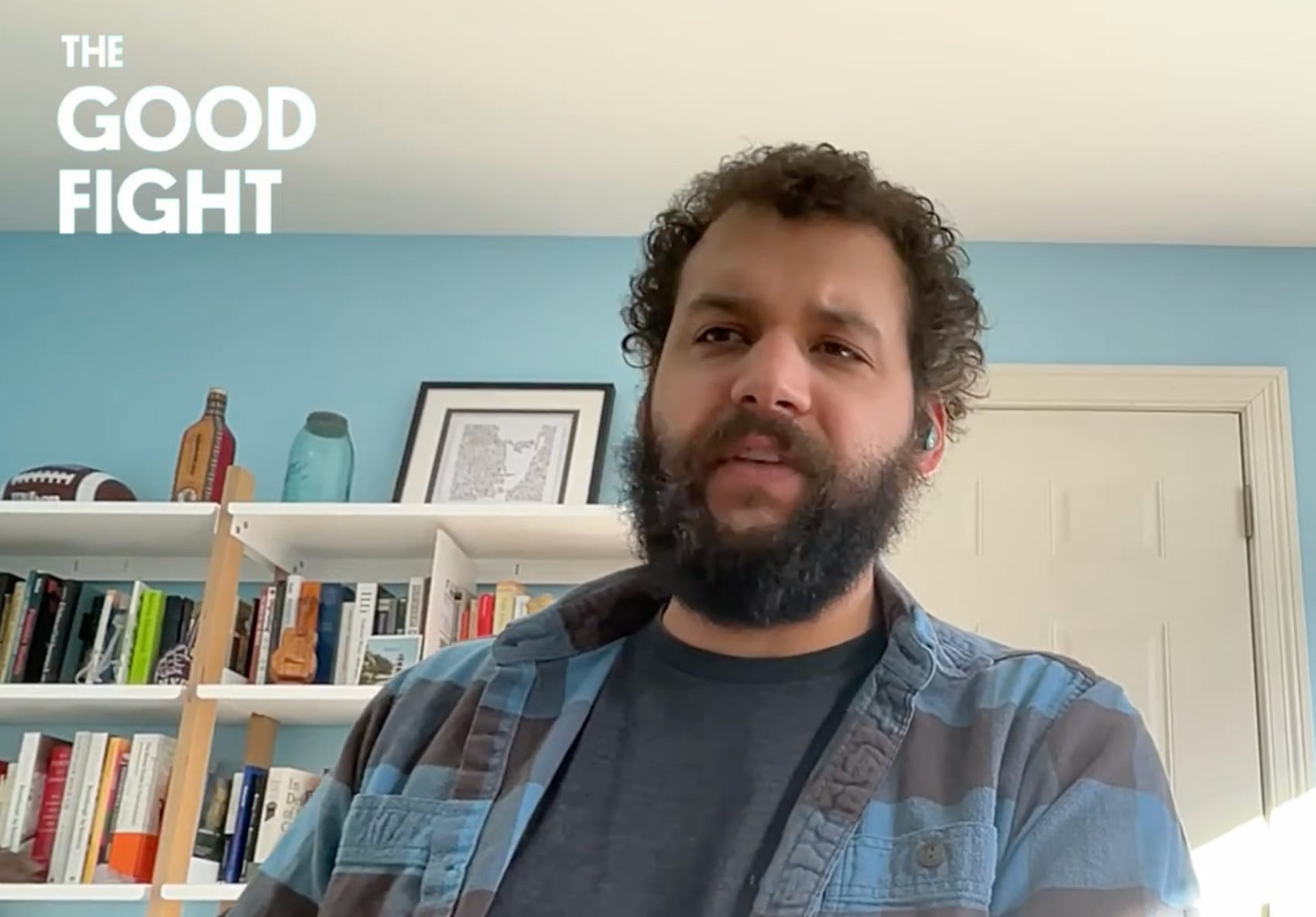
I took the image above from this podcast TAH did with Yascha Mounk; it’s billed as TAH giving his ideas for how to fix academia. Gotta listen to it later.
Harper reveals as an insider how academia rotted from within because of race-obsessed identity politics. Evan Barker does the same thing regarding the Democratic Party.
I’m talking about Barker’s much-discussed new book, Nothing Left: Confessions Of A Democratic Party Operative. I read it in a single sitting yesterday — it’s a real page-turner for someone like me. I won’t say a lot about it here right now, because it has inspired an idea for a Free Press essay for me that I’m going to start as soon as I post this newsletter. Still, I have to give you an idea of why this book is so important — even for us on the Right.

Barker was a professional Democratic Party fundraiser, before she exited the party in disgust. In her introduction, she writes:
I’ve worked across the spectrum of Democratic politics on and off since 2008. For the last five years of my time as a Democrat, I built my name as a ruthless fundraiser who taught progressive politicians and organizations how to raise money. I wasn’t just an eyewitness to the Left’s takeover of the party; I was a live player who helped progressive insurgents infiltrate from within. Many of the stories in this book Democratic staffers would be embarrassed to admit out loud, but all of them know it’s true. It’s time someone said it.
As a disclaimer: This book is not a piece of propaganda on behalf of the Republican Party. I did not leave one path of partisanship to join another. My story is at times absurd, sometimes heartbreaking, but, most importantly, it is fair and true. It is the story of how the Democrats fell out of touch with ordinary America—and how the Left lost me.
In this book, I am going to break every single rule and write as if everyone I know was dead—because, in some ways, they are.
Barker grew up working class in the Midwest, in what we used to call a “broken family.” She got involved in progressive politics because she was born with an incurable genetic condition that affects her lungs, and could kill her. She needed health care. Universal health care — or at least better health care for all — became her driving passion. And then she was taken with Bernie Sanders, and went professional.
She found out she was really good at raising money from donors. One of the pleasures of this book — if “pleasures” is the right word — is Barker’s discussions of how the sausage really gets made in American campaigns. This could have been boring, but Barker tells it in a lean, straightforward way that almost makes you feel sorry for members of Congress. You might think you’re going to Washington to Change The World, but you and your staff are going to be forced to raise money all the time.
And this is a big part of Barker’s tale of how the Democratic Party lost her. She reveals a party that has been ideologically captured by its wealthy donor class and its identity-politics-obsessed activists. Because raising money is absolutely vital to the process, the people who give lots of money have de facto control over the party. And because among the Democrats, those donors align with the young, ultra-woke activists, people like Barker — a progressive (note: not a liberal) whose left-wing passions come from material concerns — get pushed out. I mean, she became a Democrat, and indeed a progressive, because she wanted to make life better for the working class, like the family she comes from. But she realized, eventually, that the Democrats hate people like her and her family.
Early in her process of disillusionment, Barker, who worked her butt off raising funds for progressive Congressional primary candidates, saw how the Washington party sabotaged Bernie Sanders-aligned candidates.
That was the night I experienced my first brutal beating from the Democratic machine, getting a true taste of what the establishment will do to fight against dissenting voices. The experience made me bitter and rageful against the mainstream party, and their desire to stamp down and control candidates who don’t do what they tell them to. Now I understood why progressives had such disdain for the establishment. They felt like all their hard work to turn out grassroots support was being actively suppressed by shadowy figures who threw money at races and recruited empty candidates.
I had been skeptical of the stories going around progressive circles that Washington Democratic insiders had sabotaged Bernie for Hillary’s sake. Not any more.
Barker was thrilled by the rise of Alexandria Ocasio-Cortez … until she paid her first visit to the progressive poster girl’s Bronx headquarters:
That day in AOC’s office, I saw a bunch of crumpled-up American flag stickers at the bottom of a trash can. When no one was looking, I scooped them out and put them into my backpack. To be honest, I felt a pang of anger seeing them there. I decided I’d take them to Charles’s two children, who lived in Virginia.
Charles was her brother, a Navy man who died in a ship accident while serving. After his death, she writes, “I became deeply patriotic.” Seeing these NYC socialists throwing away American flag images pissed Barker off.
The scales gradually began to fall from her eyes:
It was becoming clearer that most of the other people I met in politics, who had coveted jobs working for prestigious DC-based organizations, came from a similar background. They were usually from upper-middle-class or wealthy families, typically coastal, and lived in power cities like DC or New York. Most of them had gone to private school; many of them went on to the Ivy League. Sometimes their parents led NGOs and other political-adjacent projects. Often their parents were donors themselves. If they weren’t involved in politics through work or donating, then their parents were usually professors or lawyers. I was a rare bird.
Barker writes about how the party workers of her generation (she’s now 33) were obsessed with guilt over their “privilege.” But Barker’s mom and grandmom lived together in a trailer to save money. She didn’t grow up with privilege, or the self-hatred that obsesses most white leftists involved in Democratic politics:
I felt bad when any fellow human was suffering or had an injustice done to them, but I didn’t view life through a lens of “race”; instead, I viewed things as simply right or wrong. At this point, I suppressed these thoughts, but later, I felt great resentment toward people who peg all white people together, as belonging in one solidified homogenous culture, because I have little in common with many of the white people I know, especially those who grew up in two-parent homes, were raised by lawyers, and make fun of themselves as having no culture. They might feel they have no culture, but I don’t.
The higher she rose in the Democratic machine, the more she recognized what she was working for:
I was seeing the destruction of the party of the working class in real time. The Democrats were now run by people who had zero cultural connection to the people the party had long represented. I just didn’t know it yet.
Basically, Barker talks about how the Democrats abandoned economic populism for the culture wars and identity politics. Here’s how she got red-pilled on how rich people fund crazy left-wing candidates and policies that make people’s lives worse:
Most of the people I encountered in progressive politics, but especially in the criminal justice reform space, came from extremely privileged backgrounds, like Chloe. Their personal wealth insulated them against the consequences of the policies they promoted. The public might have an instinctual sense that the progressive movement is connected to the defund-the-police movement, given the rhetoric and policies supported by the Squad. But they may not realize that they are also heavily financed by the same people. And at that time, no name resonated as loudly among progressives as that of George Soros.
Identity politics came to infect everything in Democratic thinking and messaging:
Healthcare went from the primary issue to a secondary one. Now every issue had to justify its relevance by appealing to identity. If someone wanted to talk about housing costs or veterans’ issues, they had to talk about them in racial terms. I began to wonder whether donors were excited about race politics because it allowed them to avoid the harsh economic realities facing American workers. The average American worker has only $1,000 saved for retirement. Identity politics and social justice issues were a good distraction for us all.
Barker explains that the Dems began framing everything through “Race Class Narrative (RCN).”
It trained politicians to think of every issue as an identity issue first and foremost. RCN was an entire intellectual framework that reduced every agenda item on the progressive wish list to racial politics. Here are a few examples: When Bernie Sanders wrote on Twitter: “Raising the minimum wage is not just about economic justice—it is about racial justice. Nearly half of Black and Latino workers in America make under $15 an hour. We must end starvation wages and give 32 million Americans a raise by increasing the minimum wage to $15 an hour.” This is RCN.
The Summer of Floyd and its aftermath led Barker to a breaking point:
Even though all of this had been building up over the last year, it took me until 2021 to finally realize the destruction it caused. It took me until 2021 to fully admit to the reality I was now living in. I was no longer working for the same Democratic Party I had dedicated my life to in 2008. I was no longer helping the progressive movement I first found when I worked on Brent Welder’s campaign. This new iteration was very different. It seemed to have one, singular goal: punish all white people and demean anyone who wasn’t “oppressed.” When things first started changing, I tried to do what I was asked. I was told I needed to “do the work,” so I got to work fast. I pondered my own internal biases and confessed my sins. There were things I didn’t like, and there were times it felt unnatural to me given I was assertive by nature, but I wanted to be helpful in the movement, so I pushed all that aside.
The kind of race obsession — indeed, anti-white racism — that Tyler Austin Harper encountered at Bates College was exactly what Evan Barker saw in the Democratic Party for which she worked. Even though she was by the early 2020s a seasoned professional who had proven her ability to raise money, none of that mattered within the party machine:
Eventually, I figured out I was playing a game I couldn’t possibly win. My skin color would always mean I was guilty, implicitly racist, unable to ever be fully trusted, and permanently the problem.
If you wonder why so many men — especially white men — have abandoned the Democrats, well, Ms. Evan Barker has your answer. “It seemed extremely difficult to “make it” in progressive politics as a white man. They were often blocked from professional opportunities.” She has examples. Women, especially minority women, had immense power over the careers of men, especially white ones. The only ones who survived in this system were those white men who totally surrendered.
So many of the women I encountered in Democratic politics were downright hateful toward men. If I were a man, I would’ve done the exact same thing to protect myself. At this point, my daily professional life felt like a never-ending mudslinging fest against white people and men. One day, a friend confessed to me: “It feels like the cancel walls are closing in.” My friend was right. The “cancel walls” were close, indeed. But they weren’t the only walls closing in on us. The pressure from donors to place identity over everything was completely overwhelming.
And:
The public did not realize how there was a systematic push to discriminate against white people from within the party from the highest levels. This was never publicly announced. And it was something no one could talk about with honesty inside or outside the party.
She goes on:
The Left has been run, almost entirely, by brown and black millennial girl bosses. These numbers are nowhere near reflective of the demographics of the United States. In fact, they are completely skewed, inverted versions of reality. When hiring decisions are based on immutable characteristics, it often sets the stage for significant challenges. It can lead to situations where leaders overlook critical data and evidence, eager to support initiatives that validate the reason they got the job. Leaders become “identity experts,” not political operatives.
Barker’s point is that the party has systematically engineered a cocoon for itself that keeps out any information that doesn’t confirm its extreme ideological priors. She brings up the shocking case of David Shor, a data analyst whiz kid who was so good at his job that he worked for Barack Obama in his early twenties. He was cancelled by the party for telling them that the polling data historically shows that race riots — like the ones that had wracked some US cities after the Floyd killing — end up hurting Democrats at the polls. (Ezra Klein tells the story in this 2021 column.)
It’s an old story: any system in which information vital to that system’s survival cannot reach decision-makers is one that is bound to fail. If a white man stops your car in a storm and tells you to turn around, because the bridge up ahead is out, and you drive on anyway, angry that a white man tried to tell you, a woman of color, what to do, then you should not be surprised when your car plunges into the flooded river. This is not just a Democratic Party problem. It’s a human one.
What infuriated Barker at this point was that she really did want to build a progressive movement that improved conditions for her people. But the nitwits who ran the party and progressive organizations were making that impossible:
It made me angry. It made me feel like the progressives were playing Russian roulette with my life and the lives of my struggling family members. I wanted to live in a country where I could always get healthcare, where hollowed-out towns in the middle of the country were booming again, where there was a strong floor for times of struggle but opportunity as well. I knew we’d never get there because the progressives around me would never build a movement that could appeal to my family members. That’s not what they were interested in. David Shor seemed to be the one person in my peer group to get it, and most of my peers couldn’t stand him.
Naturally, her working-class family members back home in Kansas and Missouri had come to hate the party that thought of itself as representing them:
I once asked one of my uncles if he thought the Democratic Party looked down on people like him. He is a bricklayer, construction worker, member of a union for over forty years, Navy veteran, a guy who owns over eighty guns, and a lifelong Democrat. But since 2016 he has voted for Donald Trump.
He laughed. “Do Democrats look down on me? They don’t even look at me at all!”
Of course not. These are white men, and therefore the Enemy.
Barker stepped back from politics after she married and had a baby. She and her husband lived in San Francisco. As many people discover, having one’s first child often changes one’s perspective. It did mine, as a young conservative living in NYC. It’s a natural thing: you begin to realize that you have a greater stake not only in the present, but in the future. More Barker:
There was also something about having a white male child that made everything I had just experienced while working in leftist politics feel much more real. To them, my innocent baby was public enemy number one. Having witnessed white men become so denigrated in the progressive movement gave me a very real fear of the world my son would grow up in. It made everything more impactful.
And then, the contempt the coastal Democrats had for Flyover Country got on Barker’s last nerve:
Once, I went to a neighbor’s house for dinner, and after I told her where I was from, she said: “Oh, Dumbfuckistan! The part of the country that elected Donald Trump!”
I’ve met others who’d apologize when they learned where I was from. “Kansas?” they’d question, with horrified looks on their faces. One lady physically grimaced. Another asked me if rednecks were evil people.
… “Dumbfuckistan” isn’t dumb at all. They are just fed up with the Democrats and want a party that truly represents the working class without being woke.
The 2024 Democratic National Convention broke Evan Barker. Though she had been deeply involved in Democratic campaigns for years, she had never been to a DNC. It was her first, and her last. For her, the Kamala Coronation Festival crystallized everything she had come to hate about the party:
“Please welcome to the stage, Oprah Winfrey!”
I was sitting in the media section, and I watched as members of the press clapped for her and other speakers. So much for being impartial, I thought.
Everything from the previous three days came to a head. Oprah’s condescending and empty words. The smug speakers who shouted out “joy.” The donors. Everyone who had lost connection to the American experience. They didn’t know how expensive groceries were, or that, despite a high GDP, people like my family were struggling. They were clueless as to how much racial division and animosity they’d created.
It clicked. All at once. I finally confessed to myself: This is not the party I once supported, there is nothing left.
And then she went to a Trump 2024 rally:
Before Trump took the stage, the atmosphere felt like a UFC fight. The Democrats’ events were always so manicured and controlled, with Beyoncé songs and a parade of inspirational speakers who sounded in every speech like a professor speaking to students on the first day of class. At this event, which was hosted by Turning Point USA, there were pyrotechnics and Hawaiian dancers. Another startling difference—in my years working for Democrats, I had never seen that many people of color at any Democratic event, not even at Barack Obama or Bernie Sanders/AOC rallies. Latinos, Asians, and black people made up half the audience. When Trump took the stage, it surprised me, but so much of what he was saying, I had hungered to hear Democrats say for years.
She voted Trump that year. Of course he has disappointed her too, and she did not become MAGA. (“Ultimately, Trump is not the answer I wanted. But neither is the modern Democratic Party.”)
She goes on:
Democrats should take the best parts of MAGA and the best parts of Bernie and marry them. The way forward is genuine economic populism, coupled with cultural moderation—the magic winning recipe for both parties. Progressives must realize this. No economic populist Democrat has won in a red or swing district without culturally moderating, too.
And:
Democrats of all stripes must face the reality that voters of all races feel disenfranchised by the left-wing professional class’s obsession with identity politics. They want Democratic politicians to once again focus on the economy and healthcare, not which race or ethnic group or gender is suffering the most.
The Republicans, in Barker’s view, are still captive to their own rich donor class, which favors free-market fundamentalism. (She doesn’t say it, but for all his talk about helping the working class, Trump 2.0 has been more about helping himself and his rich cronies.) Barker’s general advice:
Whichever party can figure out how to get every American healthcare while protecting our borders, reshoring our industrial base, and putting America and its citizens first, will become the permanent party of the working class. Economic populism and cultural moderation are where many American voters are. We need a party that meets them there.
… Whichever party can rein in illegal immigration and expand healthcare while making life affordable for the bottom 50 percent of our country will establish a ruling coalition that lasts a generation.
I believe J.D. Vance could become the FDR-like figure that Barker longs for. But he has some work to do. I’ll save all that for my Free Press column. Meanwhile, I strongly recommend reading Nothing Left — and not in a “we told you so!” sense of right-wing triumphalism. Yes, we did tell them so. But if you think this book is only about the Democratic Party, you’re wrong. It’s about the danger of identity politics and epistemic closure, both among party elites and activists, to actual success in the world. The GOP’s problem is not precisely the same as the Democrats’ problem. But it rhymes.
I’m not making this up. This is actually on Tucker Carlson’s webpage now:

See, this is why Arendt said that a rise in anti-Semitism is a sign of deep political decadence. It’s not about Jew-hating per se, as awful as that is, but rather that it reveals how people have surrendered their judgment to conspiratorial thinking. Post-Fox Tucker Carlson is a perfect example.
I am making this up: my plan to get invited on Tucker’s show:

No posts
Comments
Nothing yet. Say the first thing.
Sign in to join the conversation.