

There’s a new iOS app called Carrier Pidge that delivers text messages at the speed of real carrier pigeons. If you’re texting someone in England, for example, it could take the text over a day to deliver. And 0.2% of all texts don’t deliver since some carrier pigeons would get lost or die.
In other words… it’s been one hell of a ride, iMessage. To the clouds we go.
Move over, Palantir.
In just a handful of months, a new company has become the prime target of commentators, politicians, and influencers. So great is the uproar around its practices that it’s now announcing new limits on its own products.
The company is Flock Safety. Is the panic justified?

New polls suggest that for the first time in years, Americans trust Democrats more than Republicans with the economy.
One poll, released last week and commissioned by the Financial Times, found that roughly two-thirds of registered voters thought the economy was going in the wrong direction. More than two-thirds of independents and one-third of Republicans felt that way.
Trump’s net approval rating among Republicans fell eight points compared to the previous month; however, most self-identified Republicans expressed continued support for him. Independents did not: Among that group, 61% expressed disapproval over the economy (versus 21% approval); 70% over inflation and the cost of living (versus 12% approval); and 61% disapproval over tariffs and trade (versus 19% approval).
A week prior, a Reuters/Ipsos poll found that more Americans preferred Democrats on the economy for the first time since at least 2017. Three weeks before that, a Fox News poll found that 54% of respondents thought Democrats would be better for the economy, versus 45% for Republicans.
The question here, though, is whether the polls can be trusted. As Max Towey wrote here last week, “The last five polls in Wisconsin’s Democratic primary for governor showed Francesca Hong winning by margins of +22, +18, +25, +29, and +20. Yet she lost the race.” Pollsters also predicted a landslide for Abdul El-Sayed in Michigan’s Senate primary, yet he barely won.
It’s possible these polls are as wrong as those; however, general opinion polls tend to be more reliable than ones forecasting specific election results. At a minimum, with midterms less than three months away, it seems that Republicans won’t be able to coast on the economy.
–Max Frost
Enjoying our reporting? Upgrade your subscription here to support Roca’s journalism and get access to all of our content, including the latest issue of the Roca Mag.
The latest test of the Democratic Socialists’ influence will take place today in Florida, where three Democratic Socialists running for Congress will be tested in the Democratic primaries.
The biggest of those races is the Democratic primary for Senate. State Rep. Angie Nixon, a DSA member, is facing Lieutenant Colonel Alexander Vindman (the military official who testified about Trump’s “perfect call” with Ukraine during the 2019 impeachment hearings).
While Nixon is trailing in the Democratic primary polls, a statewide poll showed her having better odds against the Republican nominee Ashley Moody than Vindman. Representatives Rashida Tlaib (D-MI), Ilhan Omar (D-MN), and Maxwell Frost (D-FL) (not to be confused with Roca’s own Max Frost) have all appeared at her rallies and endorsed her. At a recent rally, she declared, “It does not have to be this way. We deserve the opportunity to be healthy, to be prosperous, to be safe, to experience joy.”
Two other Democratic Socialists are running for Congress in Florida: Oliver Larkin and Elijah Manley (note: he’s not an official DSA member but identifies as a “Democratic Socialist”). Both Larkin and Manley are underdogs in their races but have double-digit chances of winning according to leading prediction markets.
While none are favored to win, how these three candidates fare in the Sunshine State will be the latest data point in the national debate about the “Insurgent Left.” The Democratic Party, stuck at a crossroads, will surely pay attention.
–Max Towey
Yesterday’s Question: Does the private conduct of an executive/executive’s spouse affect how you view a company?
For the most part, yes. Let’s say a company’s CEO (or any other high rank) was caught at the “I <3 Kicking Puppies Convention” then I don’t think I’d want to support them at all. I know it’s an extreme example, but you get the point.
If someone acts in a way I just wouldnt support, I wouldn’t want to support their company. I don’t want to support companies that have people who cheat on their spouse at the top, or people who actively work against regular people living good lives.
-Mason from Pennsylvania
It does, especially in this case. The porn industry is utterly morally bankrupt and has so little regard for human dignity, especially that of women. Knowing that top level decisions in the AI world are being made by people tied to this industry bodes *so very* ill. It increases my corners about the entire industry, since every AI company is competing with every other in what appears to be a race for the bottom.
-Dorothy from Maine
I think whether or not the private conduct of a spouse of an executive impacts my view of a company is very circumstantial. It seems that Cami Clark’s interactions with Jeffrey Epstein were of a business nature attempting to get production funds from him - and if you’re a stone cold businesswoman focused on profit why wouldn’t you try to get someone with Epstein’s wealth and reputation to give you money for porn? Based on the details mentioned, she doesn’t allude to any illegal activity. Epstein’s case has clearly impacted high net worth individuals all over the world and impacted any associated businesses or companies - but exchanging emails asking for money and being flown to his private island are two different things. So no, Cami Clark’s conduct doesn’t negatively impact my view of Anthropic, but the fact A.I. is horrible continues to impact my view of the company. That all being said, if the spouse of an executive wants to remain as private as possible I think that’s their right, especially given high profile individuals - but if she inserts herself into Anthropic’s business to the degree that she seems to then she’s no longer a background person, she puts herself in the spotlight.
-Roberto from New York
Today’s Question: Do you trust political polls or prediction markets to tell you what voters think? Why?
Reply to this email with your response!
In Other News
President Trump threatened to bomb US ally Oman if it interferes with US talks with Iran over reopening the Strait of Hormuz.
Opening statements began in the Las Vegas murder trial of Duane “Keffe D” Davis, charged in the 1996 drive-by shooting of rapper Tupac Shakur.
White House adviser and President Trump’s son-in-law Jared Kushner met Israeli Prime Minister Benjamin Netanyahu on Monday, a day after meeting Hamas leader Khalil al-Hayya in Egypt, as the US pushes forward with its Gaza peace plan.
Happy Hour News
Air France has permanently shut the sauna in its Terminal 2E business class lounge at Paris Charles de Gaulle after guests used the private suite for sex.
A new iOS app called Carrier Pidge delivers text messages at the speed of real carrier pigeons, meaning cross-country texts can take nearly a full day to arrive.
Senator Tommy Tuberville (R-AL) said he passes time on long Alabama drives by talking with ChatGPT, quizzing the chatbot aloud about Medicare and Medicaid.
Roca’s paying subscribers fund our journalism. If you’d like to support our important work, upgrade your subscription here:
The Roca Mag
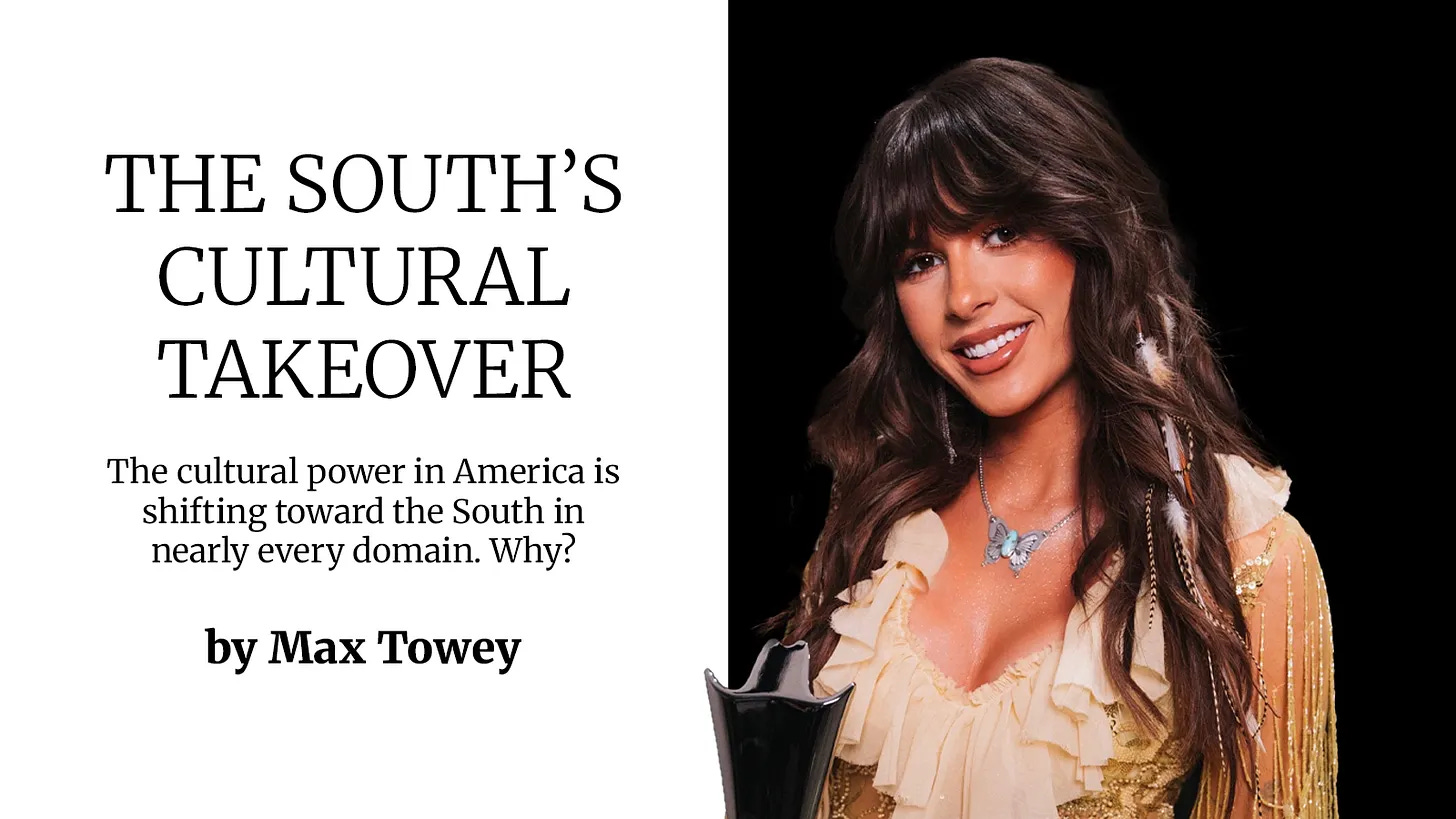
Binge-reporting from the Rust Belt over a six-month period in 2024 left us with a habit of writing in the past tense.
The ghosts of yesteryear loom large in that once-thriving region of the country. Empty storefronts, abandoned factories, shuttered bars, and dilapidated homes force you to confront the reality that the glory days in these towns were long ago. Steel left Pennsylvania; the auto industry shrank in Michigan; and Ohio saw both leave. The shockwaves from each industry’s departure are still, decades later, reverberating.
I recognize that reporting that the Rust Belt lost industry isn’t exactly breaking news. Everyone knows about deindustrialization, and if you’ve been following Roca for a while, you really know about it. In fact, at risk of sounding cocky, I’m not sure there’s a single outlet that’s covered the on-the-ground realities of Rust Belt life – both the good and bad – in greater detail than Roca.
To date, we’ve mainly dwelt on the economic aspects of the Rust Belt’s decline. But recently we’ve come to appreciate the cultural ones, too. Indeed, the Rust Belt didn’t just make our cars, steel, and rubber; it made our culture. Or, at least, it produced the people who made our culture.
It seems that every mid-size Rust Belt city we visited – from Michigan to Connecticut – produced an icon of culture. The ex-steel city of Steubenville, OH, made Dean Martin. The struggling auto city of Bay City, MI, produced Madonna. And Gary, IN – the Rust Belt embodied – gave us Michael Jackson.
The list goes on: Latrobe, PA, the blue-collar town where I spent my middle school years, somehow produced Arnold Palmer, Mister Rogers, and, allegedly, the first banana split.
As the steel went, so did the people: Most of these cultural icons have died out. But many of these towns’ inventions and brands remain – Hershey, Wendy’s, Kellogg’s, Heinz, Procter & Gamble, Macy’s, the list goes on. And they are pure Americana.
This begs the question: Where has the culture gone? Who produces the icons of today? Is there any part of America that doesn’t require you to report in the past tense?
Now, we have our answer.
Upgrade your subscription here to continue reading and to gain access to the full Roca Mag.
Final Thoughts
I’m starting to think we should use Carrier Pidge for this newsletter. “Honey, did you hear that Vladimir Putin invaded Ukraine last April?”
We’ll give it some serious thought.
—Max and Max
Comments
Nothing yet. Say the first thing.
Sign in to join the conversation.