

Last month, I passed through several TSA Checkpoints and watched my suitcase reveal itself to a total stranger. My red hardcase suitcase slowly passed through the CT Scanner, a device similar to a medical scanner, with low-dose X-rays that reveal a 3D image of its contents. We’ve relinquished our suitcases to scanners since 1973, after the FAA issued an emergency mandate in 1972 in response to the increase in hijackings and other terrorist attacks. After 9/11, when the FAA required all baggage to be screened through a new federally-created program called the Transportation Security Administration (TSA), we all became accustomed to baggage restrictions and regular scrutiny of our baggage.
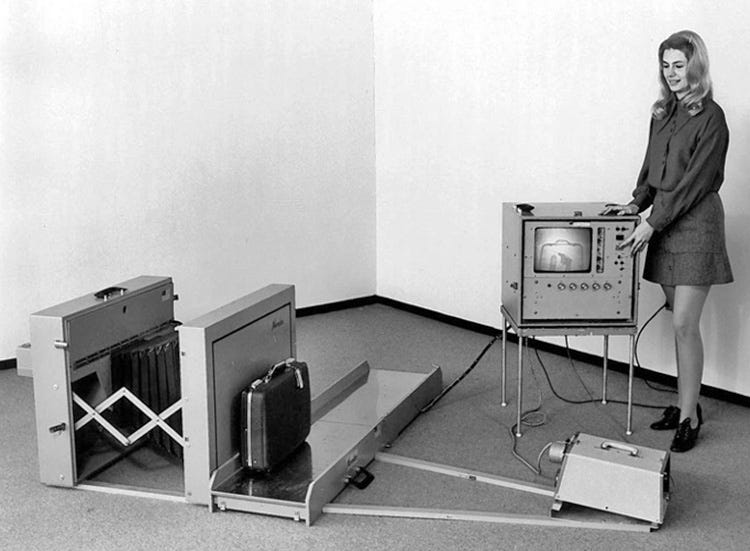
Since I’m working on a suitcase-contained museum these days, I began to take a closer look at suitcases, their history, and how we use them. And, there’s no closer look taken than an X-ray scanner. Think of a suitcase as a book that contains your story, reflects who you are, where you’ve been, and where you’re going.
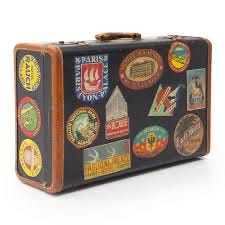
Think of a suitcase as a book that contains your story, reflects who you are, where you’ve been, and where you’re going.
When you go through a TSA Checkpoint, strangers take a look at all of that…not that they are interested in who you are. They want to know what you are taking into an airplane. They want to know if you packed a bomb or explosives. Of course, if they found those items, they would surely know who you are.
You can find limited examples of TSA X-ray images on the internet, so I began to gather interesting scans. The images are colorful.
Comments
Nothing yet. Say the first thing.
Sign in to join the conversation.