

In Silicon Valley robotics startups are focused on building right now. Across the United States the broader issues remain. Can we create a local robotics manufacturing ecosystem? If so, where and what resources do we need? What are some strategies to support innovation and commercialization of robotics technologies?
Is it always true that where the US innovates, China scales? What do you think?
Via Manufacturing Dive article by Nathan Owens - Aug 7 2026
Following the Trump administration’s move last week to block the sale of advanced industrial robots from all countries outside of the United States, experts are mixed on the outcome, but ultimately supportive of what this could mean from a supply standpoint.
The Federal Communications Commission on July 28 updated its covered list to include imports of mobile robots, such as humanoids and quadrupeds, as well as connected power inverters, citing national security risks.
Products meeting those definitions can no longer receive FCC equipment authorization and cannot be imported, marketed or sold in the U.S., making them essentially banned. Affected companies can apply for a conditional approval.
The sweeping action, which immediately took effect, came amid growing concern over China’s ability to surveil customers and obtain sensitive data around the world from devices assembled in the country. However, it also looks to address another issue entirely — the U.S. falling behind globally in terms of robot production and deployment.
“Domestically, we need help,” said Robert Little, a business development advisor and former chief of robotics strategy at Novanta.
At first glance, Little said he thought the move was necessary for cybersecurity reasons. But after looking at the FCC’s similar action regarding drones and drone parts, he said the recent ban was also a mechanism to drive domestic production of humanoids and mobile robots, as well as incentive for foreign suppliers to build their supply chains in the U.S.
“That’s its ultimate purpose,” Little said. “And I think it can be effective.”
The U.S. is considered one of the global robotics leaders when it comes to investor capital, fueled by surging interest in AI, foundation model research and robotics systems. However, there is a widening gap between the number of robots manufactured by U.S. companies versus Chinese competitors. China installed 295,000 robots in 2024, representing more than half of the world’s market share, according to the International Federation of Robotics. While preliminary 2025 numbers have not been released yet for China, the group estimated that installations are about ten times higher than the U.S.
To address the issue, the Association for Advancing Automation has urged Congress to consider adopting a national robotics strategy that includes subsidies, tax incentives and other means to drive domestic adoption and production of U.S. robots.
The FCC’s move, which only applies to new products, creates a runway for domestic companies to become more competitive, Little said. Then if the restrictions are lifted in the next few years, “they’ll be in a much better place.”
Erik Nieves, founder and CEO of Plus One Robotics, said he knew the Trump administration would put restrictions on China’s robots, but was surprised by the breadth of the FCC’s ban. Rather than just target China, the move affected robotics from all other countries, including trade partners in Japan, Germany and South Korea.
“We would have preferred to see it be more circumspect, but you don’t control what the government does,” Nieves said. “If it’s true that every action is an overreaction, that’s what this is.”
He also pointed out that the impact of the ban depends on the complexity of the conditional approval from the U.S. Department of Defense. Nieves said the details are unclear about the exemption process, adding that if it’s more than just a simple check, then the U.S. could be “excessively hampering partners that we really would not rather do that to.”
Some say the ban doesn’t go far enough. In a recent LinkedIn post, Standard Bots CEO Evan Beard said that fixed industrial robot arms should be part of the FCC’s covered list because, similar to mobile robots, they have a networked, sensing, actuated system and raise security risks.
“If you can’t trust the components, you can’t trust the robot,” he wrote. Standard Bots, based in Glen Cove, New York, claims to be the largest AI-native industrial robot manufacturer in the U.S., with a focus on robotic arms.
Autonomous mobile robots, known as AMRs, are a different story. These robots are widely used in warehouses to move objects from one place to another. U.S. companies are using AMRs from China and Europe, in part because it’s cheaper to buy them from abroad, Little said.
The AMR market will see some disruption, he said. But the ban only impacts new products from other companies, not mobile robots currently in place with FCC licenses.
“They can continue to sell the old model while they maybe open up a manufacturing center in the U.S.,” Little said. But if they see “it’s not worth it, they’ll just continue to sell the old model and the [U.S.] won’t have access to the new model.”
Whether the current administration expands its restrictions on robotics made in other countries remains to be seen. Earlier this week, China tightened its exports on drones to the U.S. and sanctioned multiple U.S. companies in retaliation to the FCC’s update.
Nieves said he wouldn’t be surprised if the administration directed more appropriations and funding to bolster the domestic robotics supply chain. Meanwhile, legislation targeting a ban on all Chinese robots is gaining traction in the next National Defense Authorization Act.
Read full article here
Via The Information article by Qianer Liu, Steve LeVine, Juro Osawa and Rocket Drew -Aug 7 2026 (first three readers are free)
On a muggy morning in April, a venture capitalist from San Francisco arrived in China’s southern tech hub of Shenzhen with a long shopping list. His friends at U.S. robotic startups had asked him to bring back humanoids and various robotic components from China.
He headed to Shenzhen’s Huaqiangbei district, the world’s biggest electronics bazaar. At one store, he bought humanoids, which he arranged to ship back to the U.S. He then went upstairs to component floors—a labyrinth of countless stalls barely larger than walk-in closets—to pick up robot parts that control motion, manage power and carry signals. Instead of shipping those components as freight, he packed them in a suitcase and took that with him on a flight back to San Francisco.
….
“The big difference between U.S. companies versus Chinese companies is the location of the supply chain. If you look at a Chinese company, everything is in driving distance,” said Jeff Cardenas, CEO of Austin, Texas–based humanoid developer Apptronik. “If we want to compete in the next phases of this race, we need to start to colocate that supply chain and start to build up regional manufacturing zones similar to what we see in Shenzhen.”
Read full article here
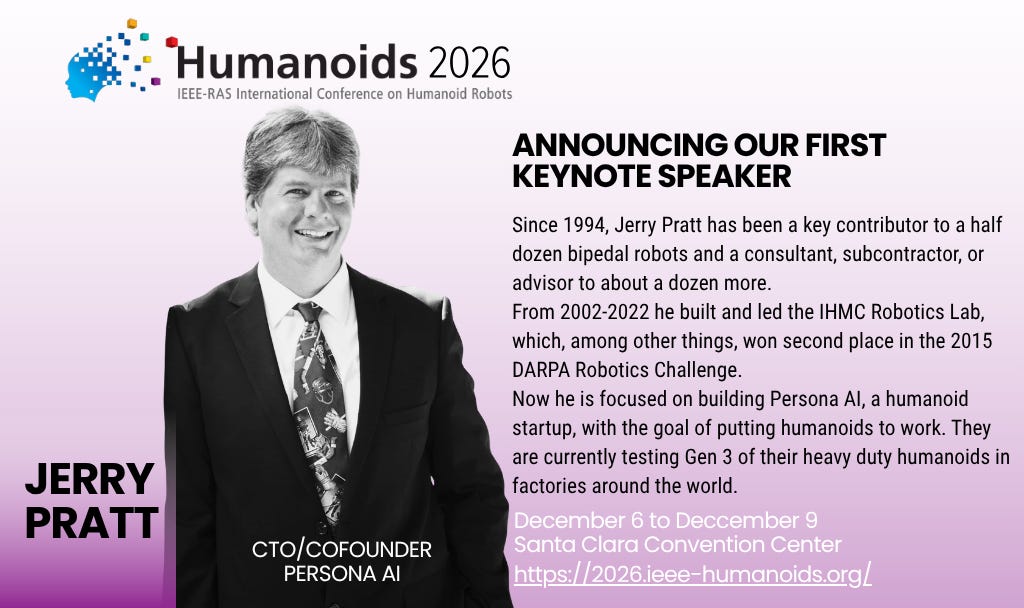
General Chairs IEEE Humanoids 2026 :
Andra Keay : andrakeay@gmail.com
Ross Mead : ross@semio.com
https://2026.ieee-humanoids.org/
Dec 6th - 9th at Santa Clara Convention Center, California

Mar Yvette from Robots, Good or Bad
On why hardware being hard is a feature not a bug for robotics:
“Not only are robots the tangible embodiment of AI, allowing us to better understand issues and advantages of the technology, ” she says, but they’re also “slower to scale and deploy, slower to make inroads on our daily lives and it’s more obvious if there are issues.”
That slower pace gives society more time to understand the technology, identify problems, and adapt as robots become more common.
It’s an observation other roboticists have made, too. When I interviewed Dr. Samuele Vinanzi about artificial trust, he pointed out that while AI seemed to catch most of us off guard, we still have time to think through how we want robots to fit into our lives.
Read the full article here
Unitree IPO Turns 36-Year-Old Founder Into China’s First Humanoid Robot Billionaire - Forbes
Luis Sentis: “In robotics, humans must always be at the center.” - laCaixa
Walden Robotics Partners With Toyota on Practical Humanoids - IEEE Spectrum
Waymo co-CEO explains why physical AI can’t follow Silicon Valley’s ‘move fast and break things’ mantra - Times of India
LG’s Koo Kwang-mo to Head to Silicon Valley Next Week... Meets Jensen Huang to Collaborate on Physical AI - Maeil Business
Wonder Takes a Gamble on Robots, Drones and AI-Generated Menus - WSJ
Video Friday: Drones Go Heavy in DARPA Lift Challenge - IEEE Spectrum
How the East Bay is leading California’s most innovative industries - BizJournals
Are you a startup fundraising atm? Fill out our “For Investors Eyes Only” sheet.
These investors write checks anywhere from angel and seed stage to $5-50 million.
Feedback from the startups - high quality inbound interest from investors.
Feedback from the investors - incredible depth and range of robotics startups.
If you’re an accredited investor and haven’t already signed up for the spreadsheet - Sign up here for great robotics deal flow!
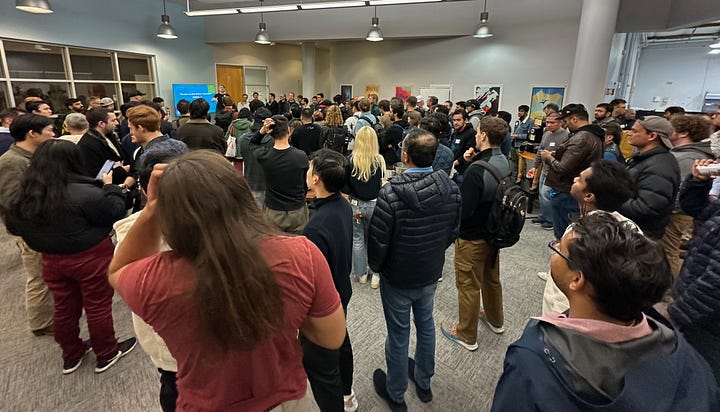
Send us your photos! Here’s some great pics from Wednesday’s Silicon Valley Robotics Bots, Bevs and Devs at Nomadic AI in San Francisco. Apologies to everyone stuck on the wait list - we were at full capacity. You’ll get first invites to the next event! Subscribe to the Silicon Valley Robotics event calendar for updates.

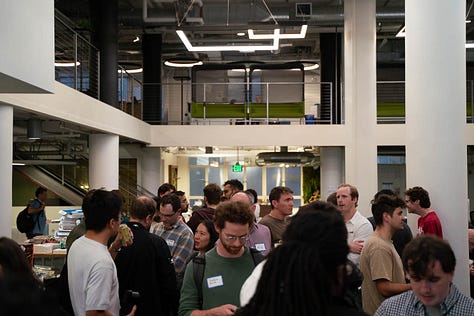
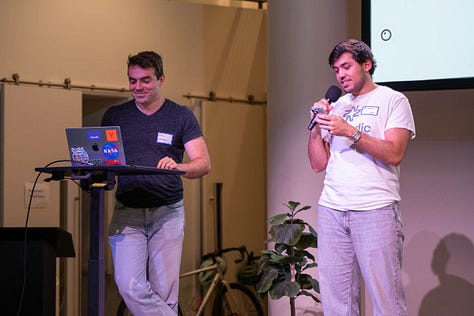
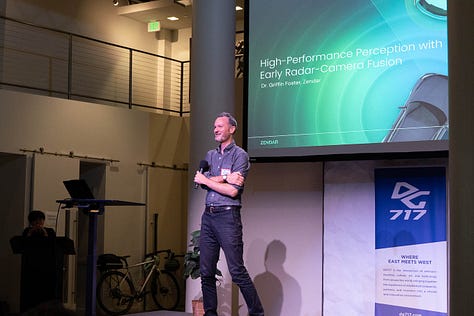
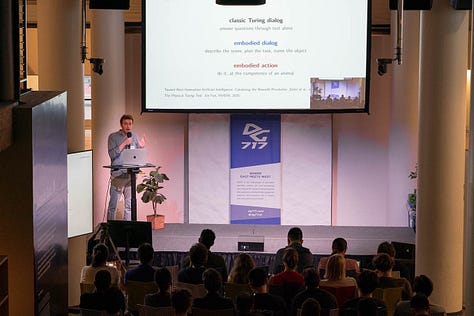
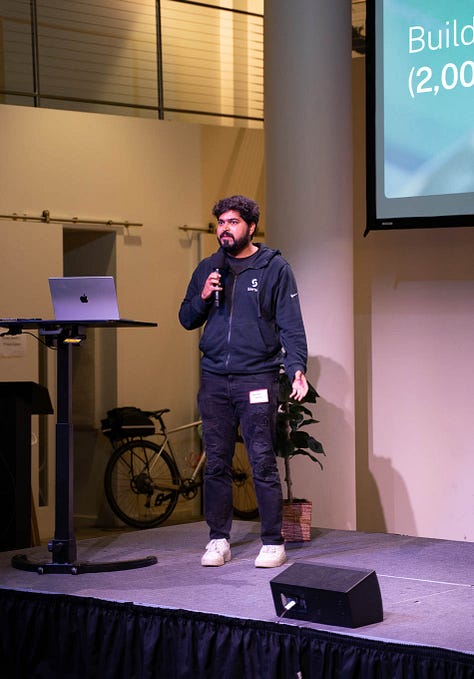

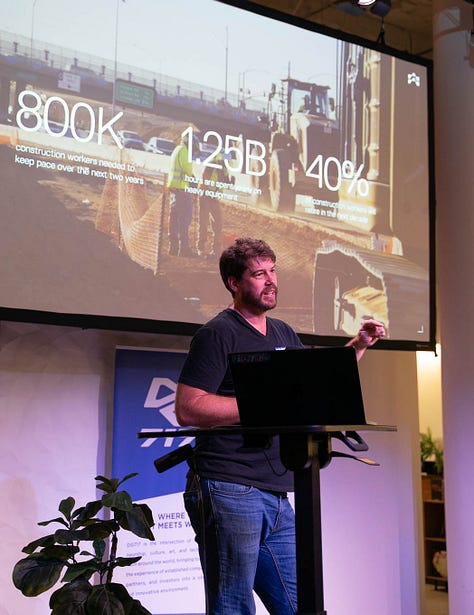
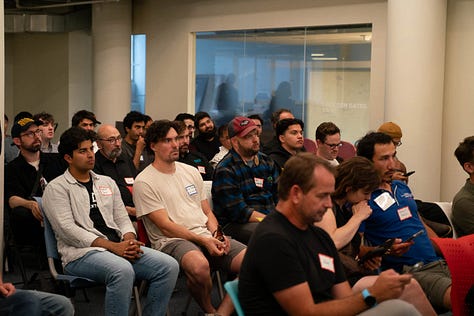

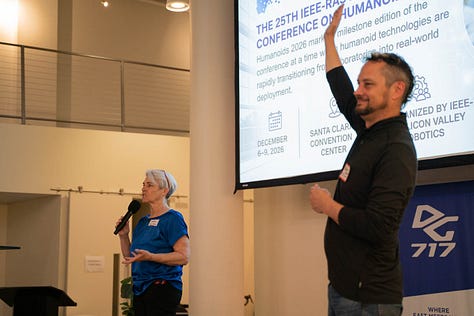

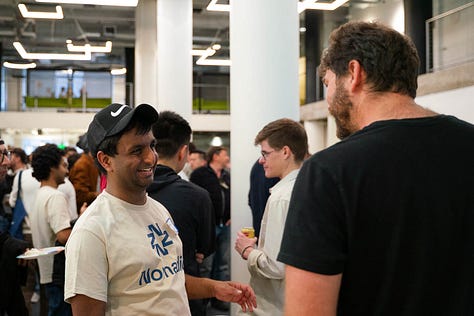
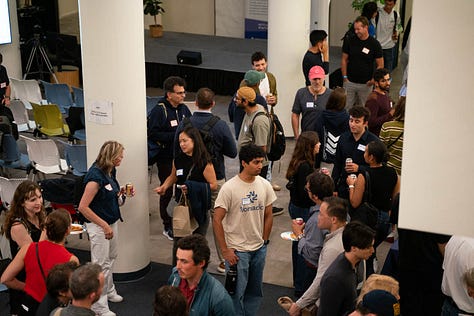
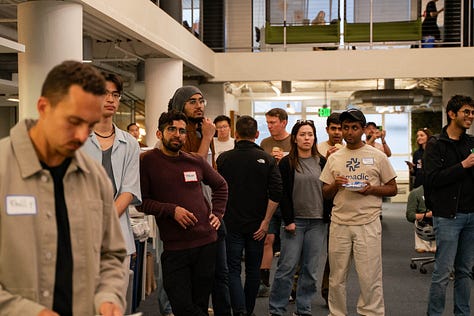


Many companies are reaching out to Silicon Valley Robotics about hosting events, outreach or hiring and we have a great community network, of people looking for work, of investors interested in deal flow and of technologists interested in learning about the latest advances.
Would you be interested in hosting the next Bots, Bevs and Devs? Or something customized specifically for your goals? Reach out here!
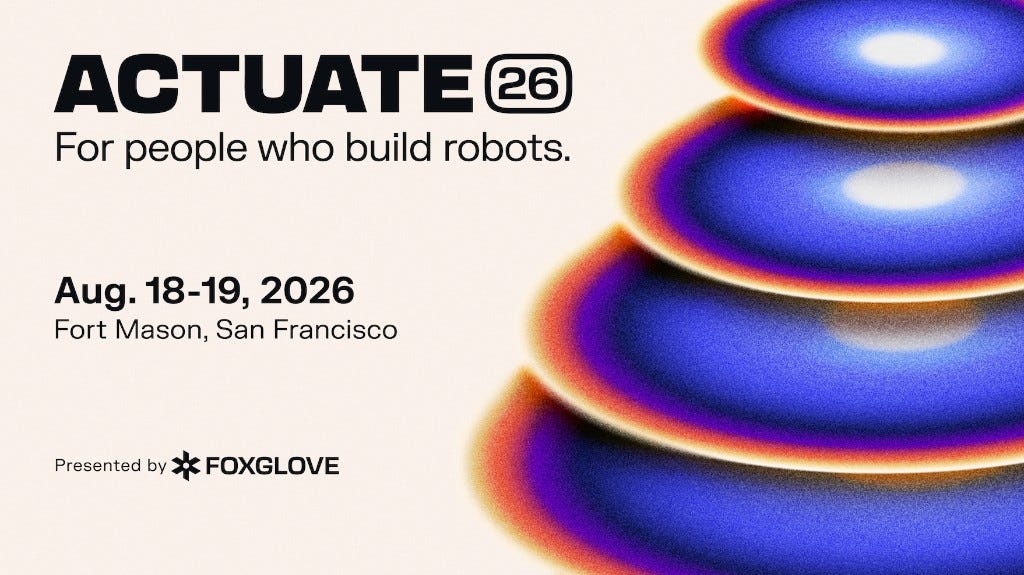
Actuate - San Francisco - Aug 18 - Aug 19
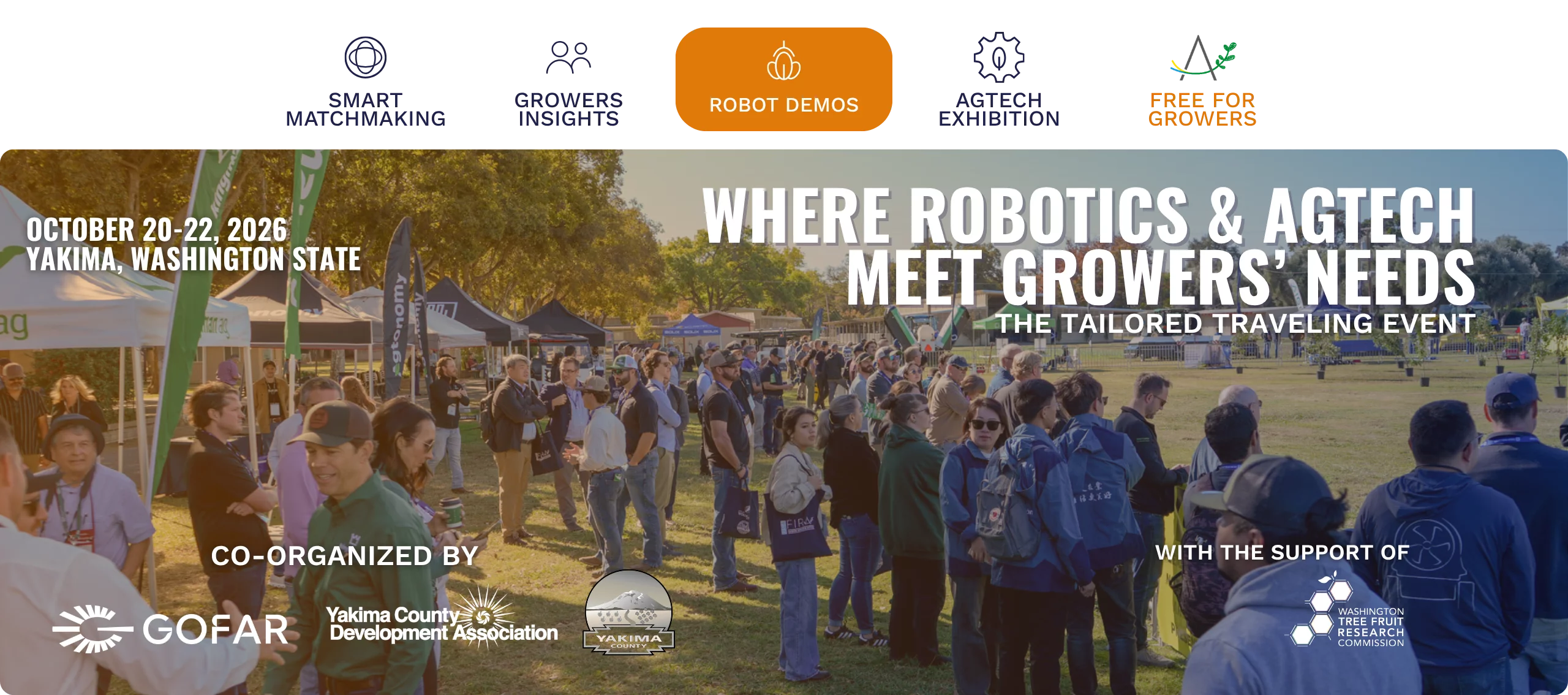
Ruggedize - Salinas - Aug 26 - Aug 27
Bots, Bevs & Devs - tbd - Sep 2
SVR Investor Summit and Manufacturing Workshop - tbd - tbd
ROSCon Global - Toronto - Sep 22 - Sep 24
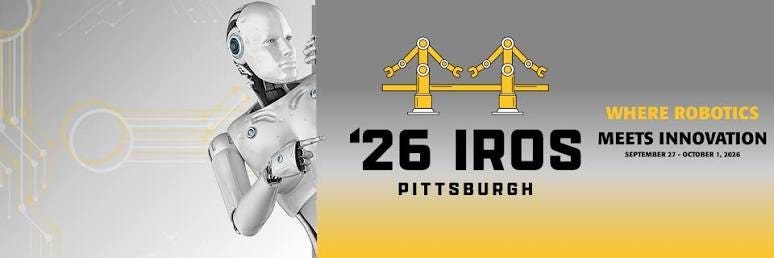
IROS 2026 - Pittsburgh - Sep 27 - Oct 1
Bots, Bevs & Devs - tbd - Oct 7
Bots, Bevs & Devs - tbd - Nov4
Bots, Bevs & Devs - tbd - Dec 2
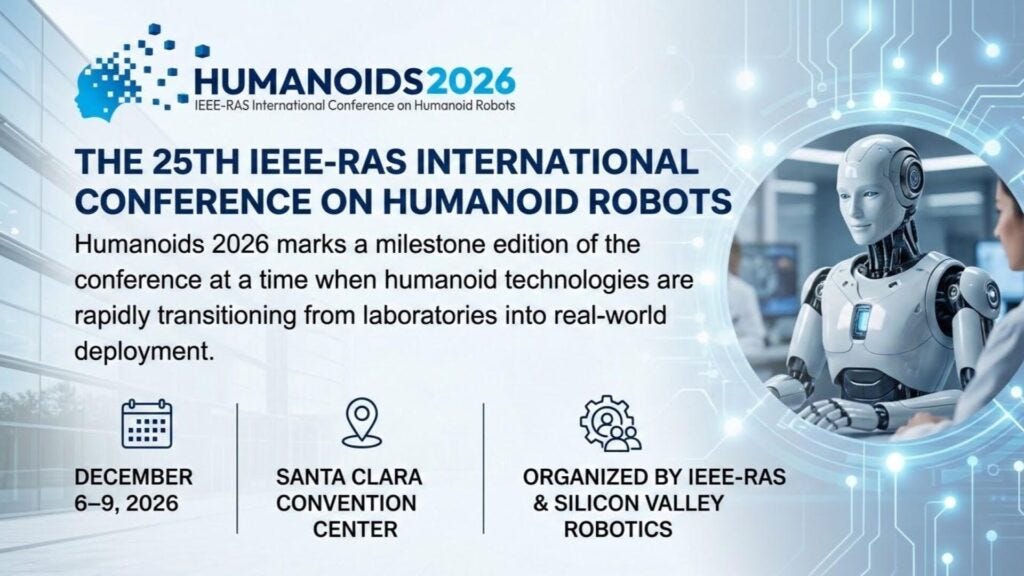
IEEE Humanoids 2026 - Silicon Valley - Dec 6-9
The annual IEEE-RAS International Conference on Humanoid Robots is the internationally recognized prime event of the humanoid robotics community. The conference is sponsored by the IEEE Robotics and Automation Society and coordinated by the Technical Committee on Humanoids.
Send me your 2026 progress, plans or posts for potential inclusion in Robots&Startups. Or join the organizing team at Silicon Valley Robotics - bots&beer@svrobo.org

Comments
Nothing yet. Say the first thing.
Sign in to join the conversation.