
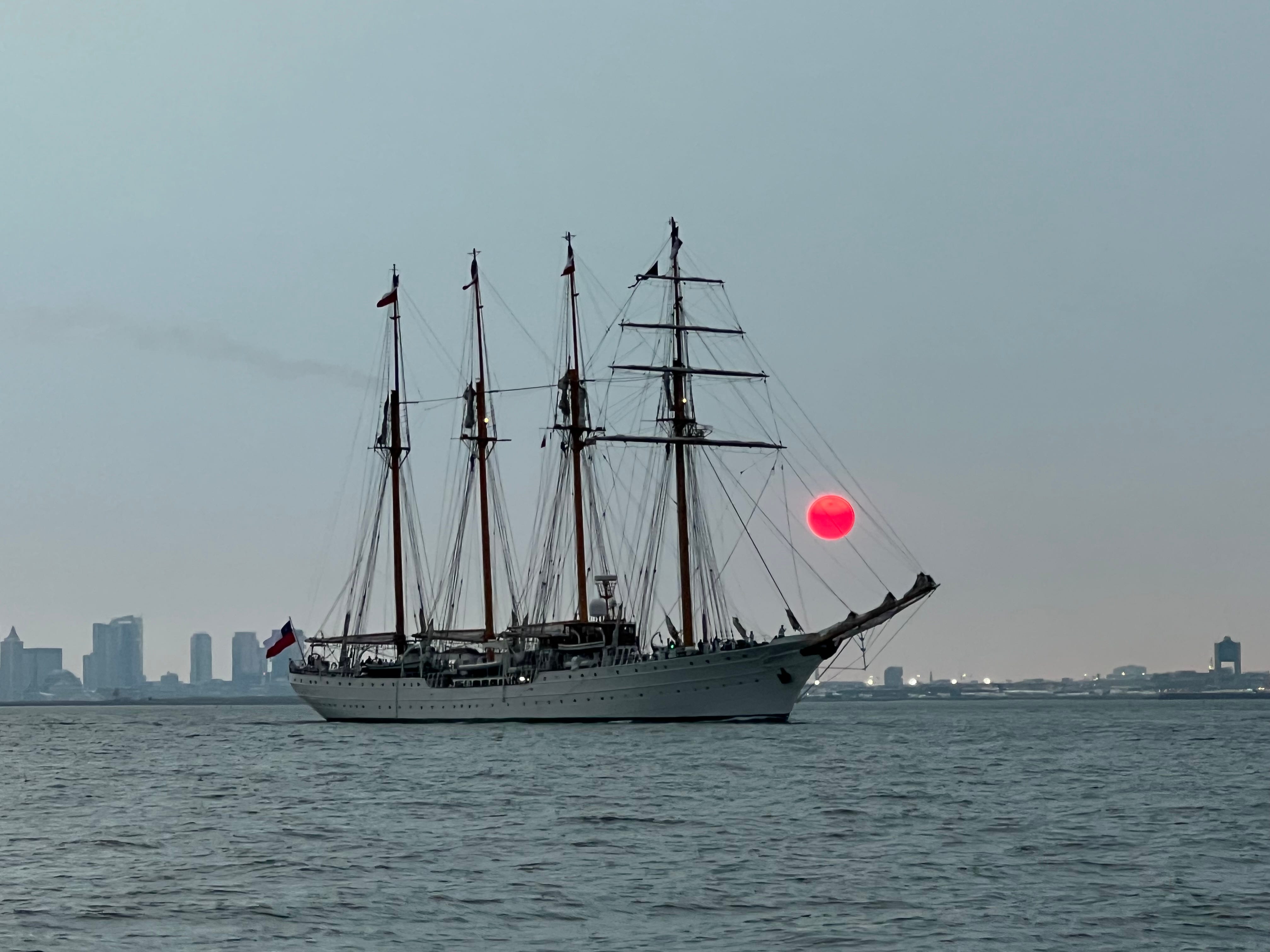
Sailing home past Nix’s Mate, a rocky ledge near Deer Island, I watched the Colombian tall ship Gloria leave Boston Harbor to starboard beneath a crimson sun, its light filtered through smoke from distant wildfires. Then I noticed something unexpected. The lights along Boston’s waterfront shone brighter than the sun.
It was an unsettling reminder of how much wildfire smoke had dimmed the evening sky. Yet it was also a reminder of something else: the remarkable transformation of Boston Harbor over the past half century.
The waterfront belonged largely to industry when I began working to restore the harbor. Sewage fouled the water and access was limited. Too often, the docks were little more than places to park cheaply before heading elsewhere. People turned their backs on the harbor.
Today, visitors wander among the Tall Ships. Families stroll the Harborwalk and linger on the piers. I watched a man in a trench coat cast a line into the harbor, pull in a handsome striped bass, and walk away as though this had always been possible. Fifty years ago, it wasn’t.
As president of Save the Harbor/Save the Bay when the Deer Island treatment plant came online in 1995, I witnessed one chapter of that transformation. Equally important, though less celebrated, was insisting that new waterfront development include public access—and yes, public bathrooms—so the harbor truly belonged to everyone. A clean harbor matters little if people cannot reach the water.
Walking the new wooden piers in Charlestown this week, I realized why they matter. Wood changes the experience. Beneath your feet, it recalls the wharves that once lined this harbor. Even when the ships are steel, the timber quietly returns you to the age of sail. It reminds us that history is something we can inhabit, not merely remember.
Boston Harbor remains what it has always been at its best: a working port that welcomes people as well as ships.
My great-grandfather came to East Boston to build ships at Donald McKay’s shipyard. For him, the harbor was the city’s front door. Somewhere along the way, we forgot. Today, watching families stroll the Harborwalk and anglers fish from the piers, it feels as though Boston has found its way back to the harbor.
Perhaps that is why the waterfront lights struck me so powerfully. They shone brighter than the smoke-dimmed sun because they represented something profoundly human: not our ability to overpower nature, but our capacity to repair what we have damaged.
Fifty years ago, Boston turned its back on its harbor. Today, Bostonians have rediscovered the water’s edge.
Thank you, Boston.
Thanks for reading Clam Chowdah Narratives! This post is public, so feel free to share it.
Comments
Nothing yet. Say the first thing.
Sign in to join the conversation.