
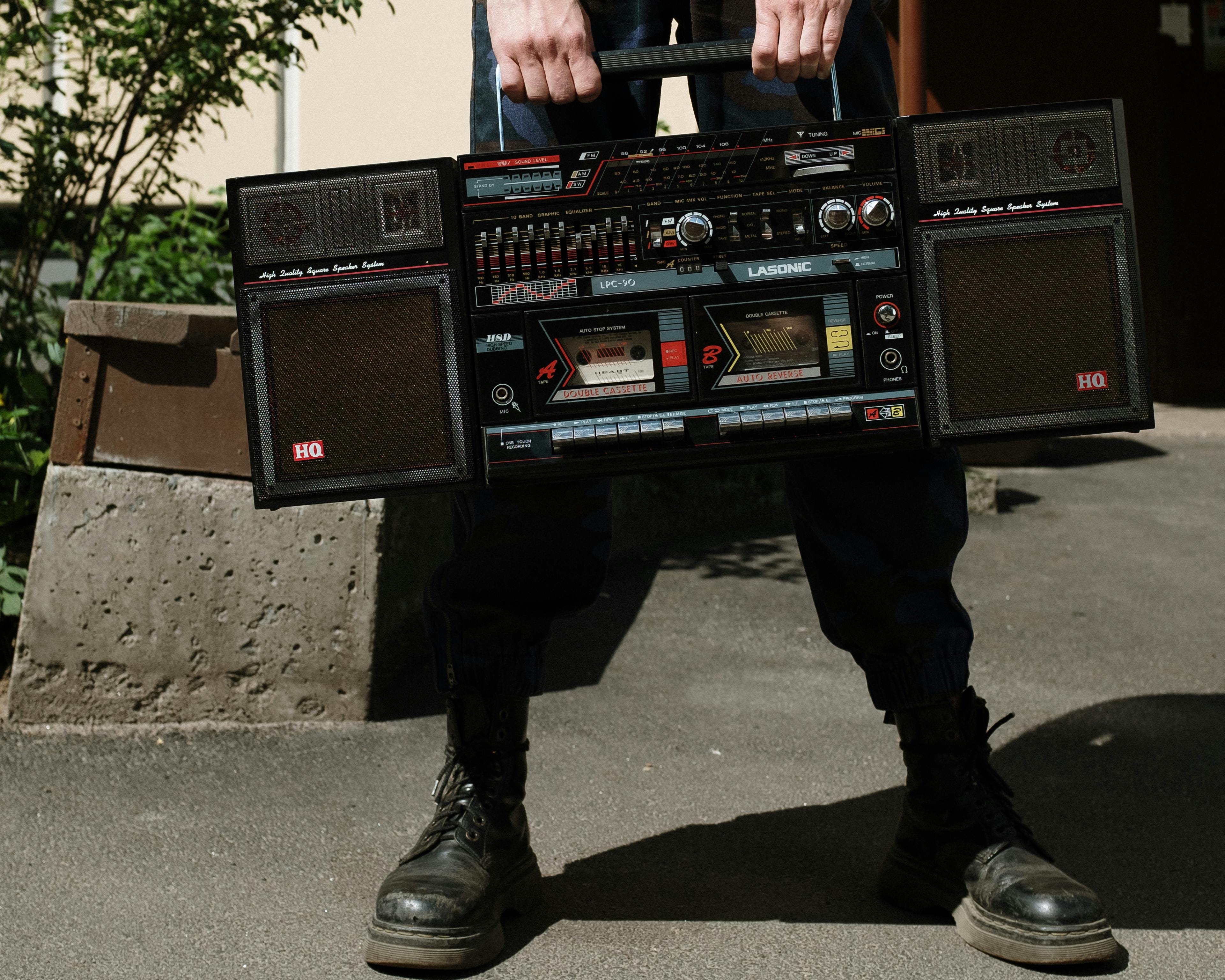
Music is a powerful medium for cultural conditioning. When I was young, music was my culture. I didn’t follow all the others into sport or violence as their language, I followed music around and it followed me, literally.
I was known in my neighbourhood as the kid with the music. Everywhere I went, so did my cassette player. Usually, it had the latest rock and roll blasting out. My favourite group back in the 70s was Bachman Turner Overdrive. In fact, my first buzz box for my electric guitar was an Overdrive; could that thing scream the house down.
Other kids would follow me around; they became part of the culture that was emanating from my noise maker. A neighbour, around the corner, had two lovely girls. They were both older than me by about five years. But they used to encourage me into their house to play them the latest thing I was listening to. I always remember when Carly Simon’s big hit, You’re So Vain came out, we would listen to it over and over again. Playing it dozens of times in a row. Someone actually picked up that it was Mick Jagger singing back up vocals on it.
We had a cult. A group, all fused together by the language of our music. To my parents and most other kids’ parents, the music we played was dangerous. It had a manifesto that screamed we are different and want to be respected for who and what we are. Few parents were listening. But some music, especially protest songs changed the way people heard and respected the music of my youth.
Songs like War by Edwin Starr, Imagine by John Lennon, Big Yellow Taxi by Joni Mitchell and The Revolution Will Not Be Televised by Gil Scott-Heron brought about social and political change. These protest and revolutionary songs stirred people into action, they created countercultures and inspired people to stand up for what they believed in.
Our music amplified our emotions. And the music blasting from my box did just that to the people who heard what it was saying. To others, it was just noise, a distraction from the mundane lives they were trying to lead and enforce on their kids.
But when music has a manifesto added to it, like protest songs do, the two combined can scare a nation. Even for what might be considered “normal” music by some, the legal ramification of playing or writing certain types of music in several countries can get you the death penalty.
All non-religious and even musical instruments are not publicly allowed in Afghanistan. North Korea has put people to death for listening to K-Pop. Protest anthems are banned in Hong Kong. Hip Hop and some western music is frowned upon in China and outlawed in Iran and other countries. But the weirdest banning ever goes to Chechnya, where music slower than 80 BPM or faster than 116 BPM is forbidden, as a way to not say, western music is banned. Pity about their national anthem fitting that tempo.
How shocking, all those naughty composers and music creators destroying the harmony of their ideologies.
That said, by most measures, there is some music that does deserve to be banned. Songs that incite hatred and racism are not designed to change, but to destroy.
Because music binds individuals through shared emotions, the issues between generations and social ideas, when expressed through music, does create an us versus them mentality. This shows you the power of the union between music and words. Together, words and music have a far greater impact than they do singularly. Together they enhance things like memory retention; it’s great, unless they are ads.
The combination of music and words activate both the left and right hemispheres of the brain. Not that they are separate by any means, but they sort of join the brain together, helping to create a cohesive thinking experience.
This combination needs further exploration, especially with things like lyrical messages that become earworms, which can be the hardest thing to shake. Advertising companies know and use this well.
Which all goes to prove that music is not just for entertainment. But I wonder, how many of us know this today? What I knew, aged fourteen, walking the streets of western Sydney with my cassette player, feeling like I was carrying something important that could change things, there was one thing I knew, it was changing me.
No posts
Comments
Nothing yet. Say the first thing.
Sign in to join the conversation.