
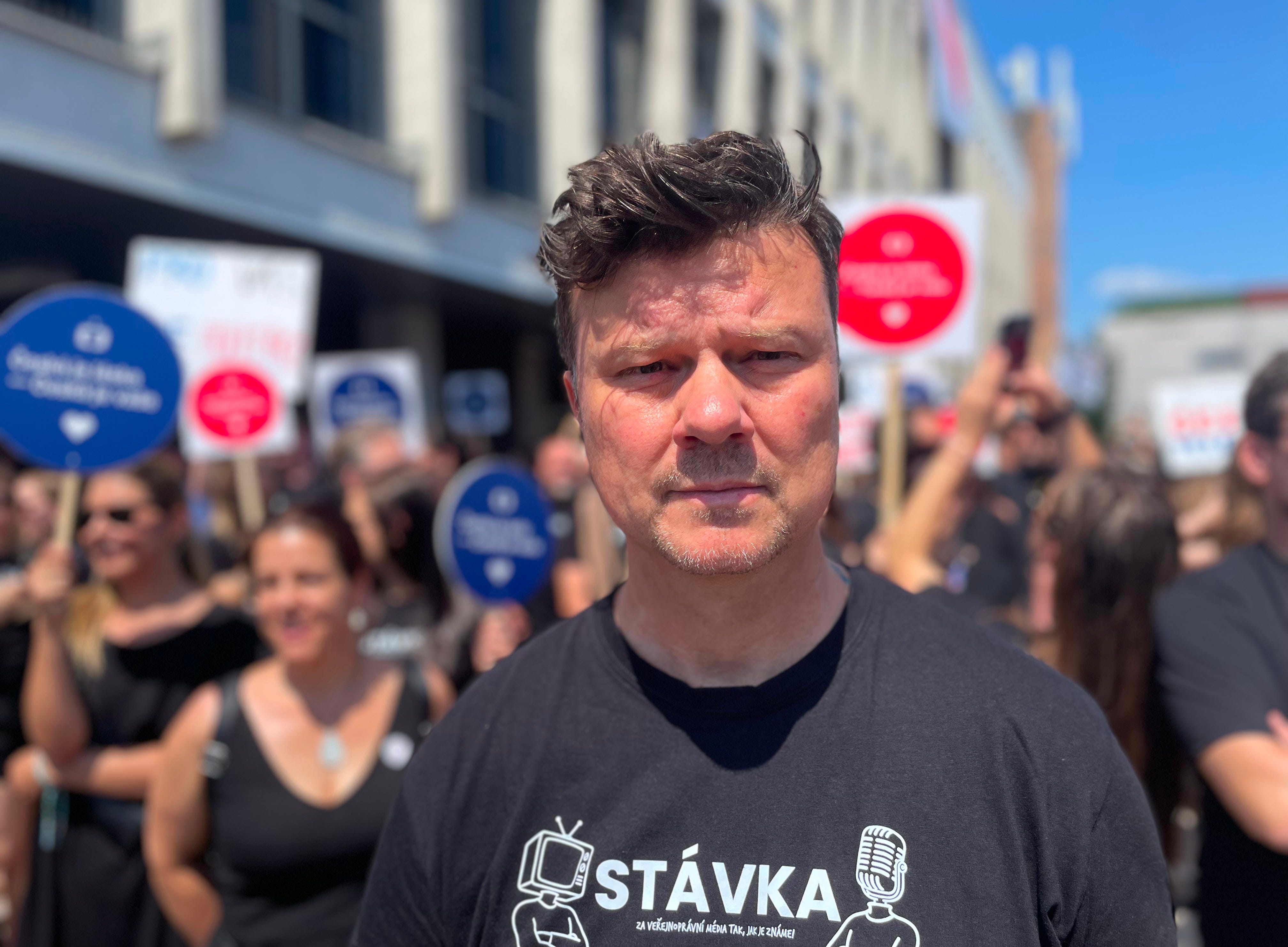
Journalists at Czech Television and Czech Radio are convinced that plans to scrap the licence fee are a thinly veiled attempt to bring the country’s public broadcasters under tighter political control.
They fear the government of Andrej Babiš will use direct state funding - planned from January 2027 - to exert greater influence over editorial output.
Their fears are shaped not just by the government’s assurances, which they say offer no meaningful guarantees of independence, but also the case of neighbouring Slovakia.
There, many of the public broadcaster’s critical voices have been dismissed.
“You have to react to the first slap,” one of them told me.
It was hot.
This is not news, and perhaps unworthy of comment in an article about the value of journalism.
But it was hot. Really hot.
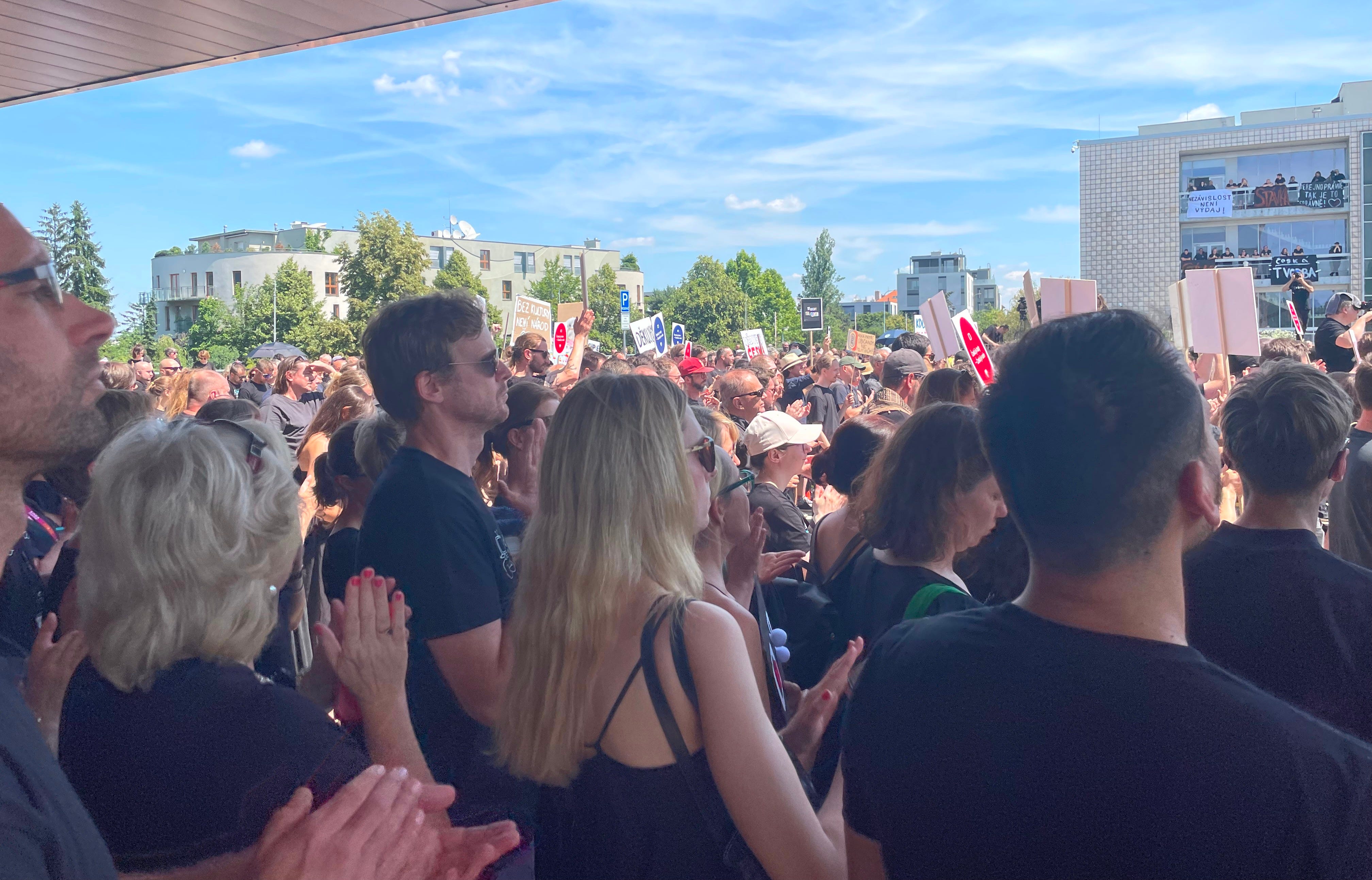
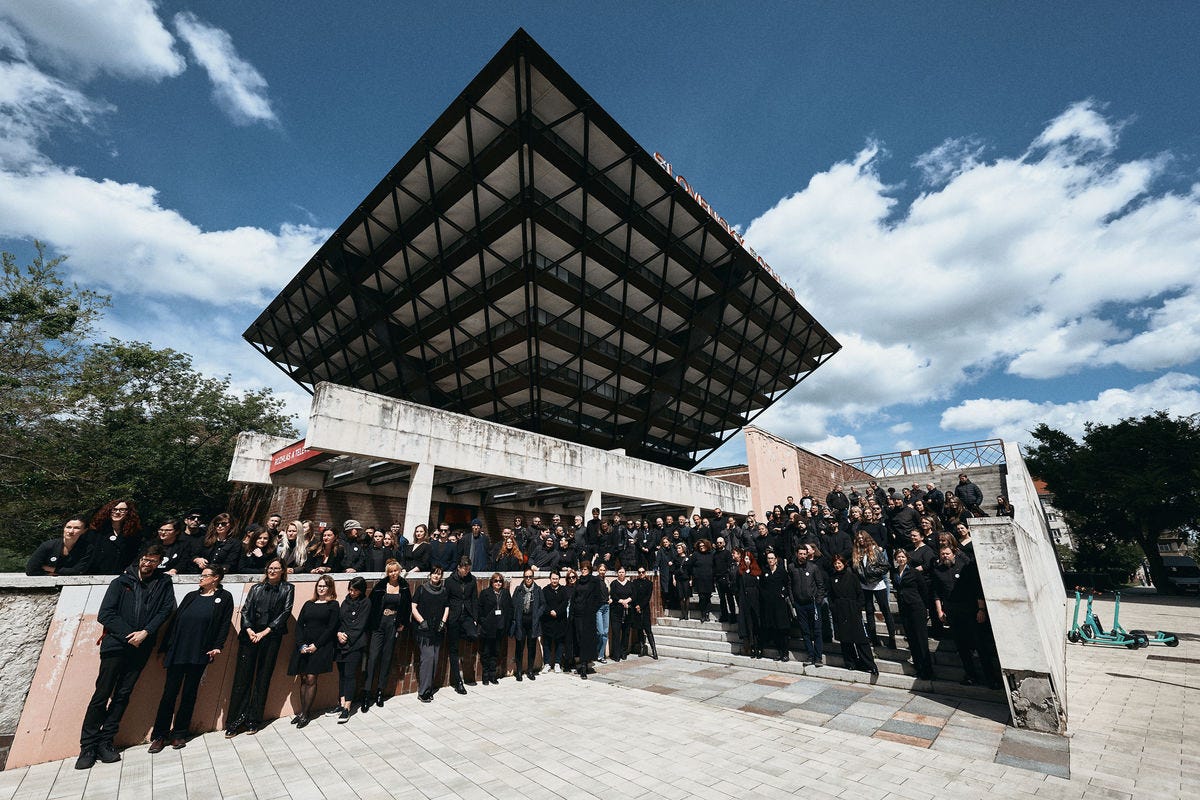
The midday sun beat down on several hundred black-clad journalists, producers and technical staff outside the headquarters of Czech TV’s news building at Kavčí hory, the concrete wasteland in Prague 4 that the broadcaster calls home.
“Andrej Babiš says he has no intention of meddling in the work of the public media,” said Jan Moláček, a leading figure in Czech Television’s strike committee.
“So why is he opposed to providing some sort of guarantees against that?”
“We believe changing the way public media is financed in the Czech Republic has only one purpose and that is opening the door for political influence in both television and radio,” Jan told me.
Perhaps ‘strike’ is too strong a word for what unfolded on Monday. The 24-hour industrial action stopped short of taking Czech Television and Czech Radio off the air.
Instead, as I reported for Deutsche Welle, journalists delayed programmes by one minute, scaled back online services and staged demonstrations outside both broadcasters.
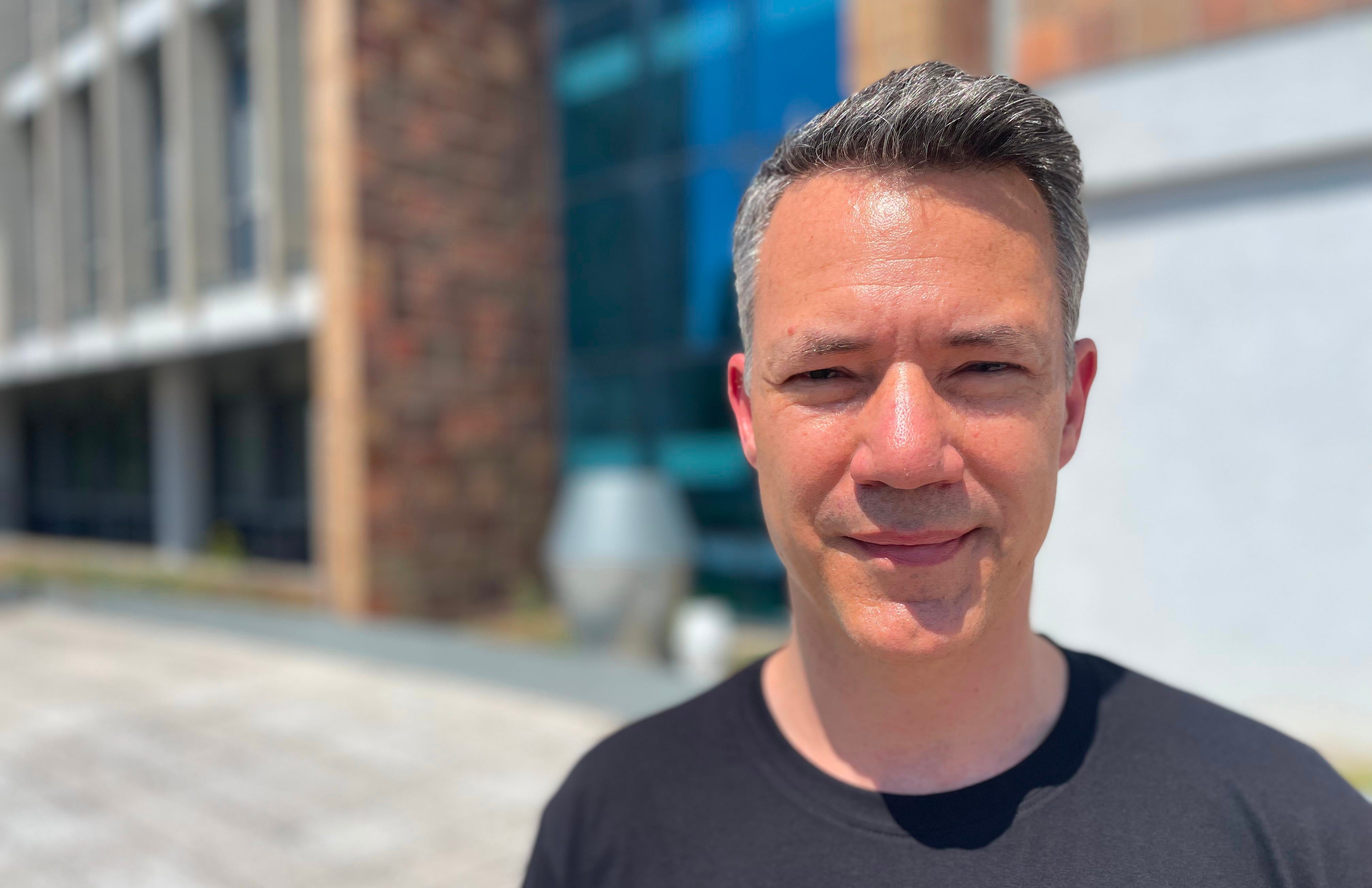
“Public media is part of our democracy. It’s part of our DNA,” said Martin Řezníček, deputy editor-in-chief and head of foreign news at Czech TV.
“It’s one of the democratic pillars in society. If you take this away, it’s like taking away one leg of a four-legged stool. It’s going to tilt,” Martin told me.
“That’s why even for people who don’t support this, people who don’t watch Czech TV or listen to Czech Radio, I think it’s important to live in a society where these two media are strong.”
Martin also said it was remarkable that scrapping the licence fee - saving each eligible citizen the grand total of 205 crowns (eight euros) per month - was the first proposal unveiled by the right-wing populist government when it came to power last year.
“It wasn’t housing. It wasn’t inflation. It wasn’t education. It was funding for public media.”
Like so many of the best broadcast journalists in this country, Martin cut his teeth in the Czech Service of the BBC. We sat in the same office in Opletalova street, until the service was closed down in 2006.
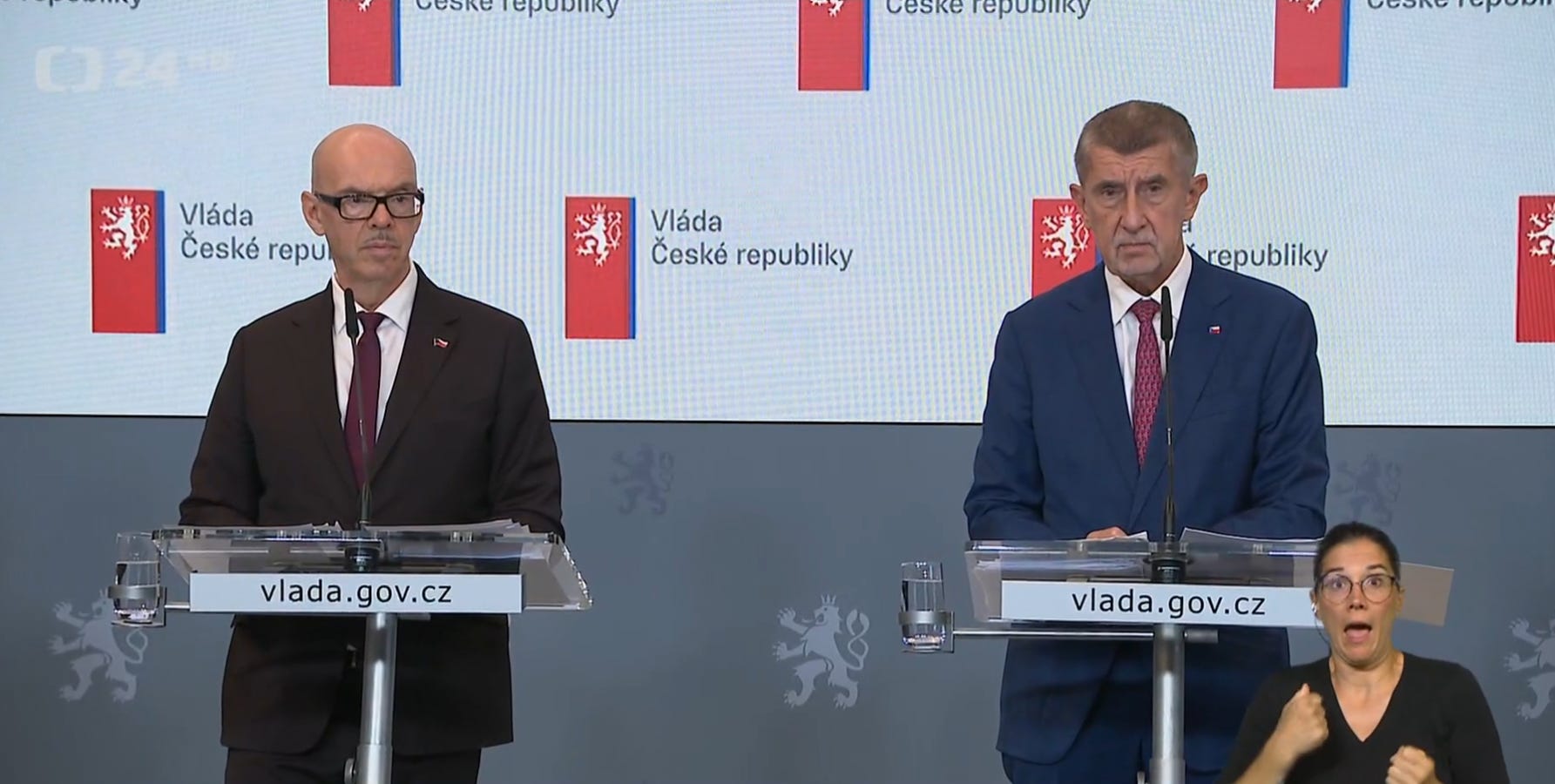
“We believe neither institution has shown any real interest in saving money,” Prime Minister Andrej Babiš told reporters as the changes were unveiled.
“The whole of Europe is tightening its belt. We could spend a long time talking about how many people the BBC is laying off, how German public broadcasters are reducing the number of stations they operate, how France is cutting costs,” he said.
“Everyone is saving money. These two media organisations aren’t.”
And indeed much of the focus has been on money.
The broadcasters - consistently amongst the most highly respected in Europe - say the changes will amount to a funding reduction of about 15 percent overall. That’s enough, they argue, to cost hundreds of jobs and force cuts to programmes and services.
(Radio Prague - the international service of Czech Radio where I began my career in 1999 - is likely to disappear altogether. It’s fully funded by the Foreign Ministry, which - as part of the changes - plans to reduce its contribution to zero from January 2027).
But the quarrel over cash has at times risked obscuring a wider debate over the role of public media in an age when more and more people get their news from YouTube or Facebook.
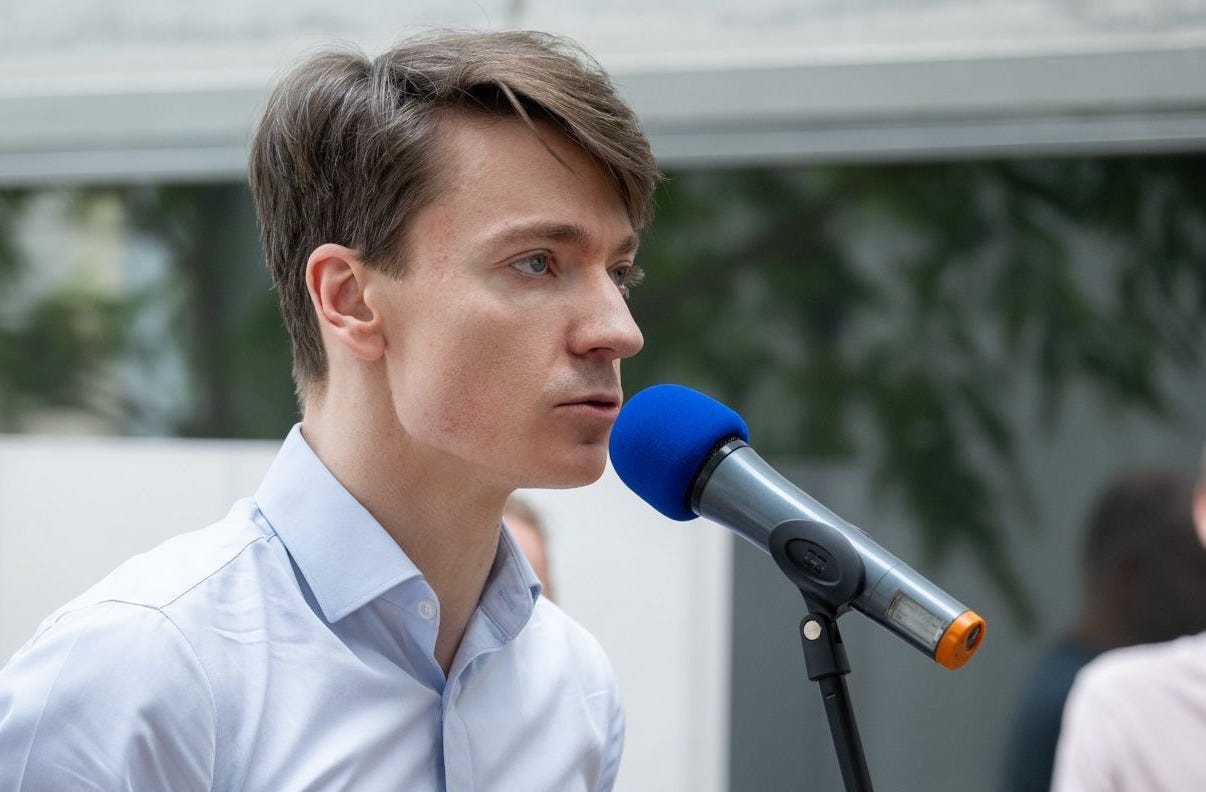
“I agree we’re in a world where social media is becoming more important and traditional media is playing a less important role every day,” said Lukáš Matoška, a presenter for the news and talk station Czech Radio Plus.
“So I think it’s absolutely a legitimate debate to ask what this means for public media and the different ways they’re funded,” Lukáš added.
“But we’re not having that debate in the Czech Republic.”
“What we have are proposals from the government without any debate with experts or interested parties whatsoever.”
His colleague sitting next to him pointed out that a similar reform in Sweden was preceded by four years of expert consultation with input from the public.
Here, the legislation was unveiled 10 days ago. Andrej Babiš wants it to become law by January 1st.
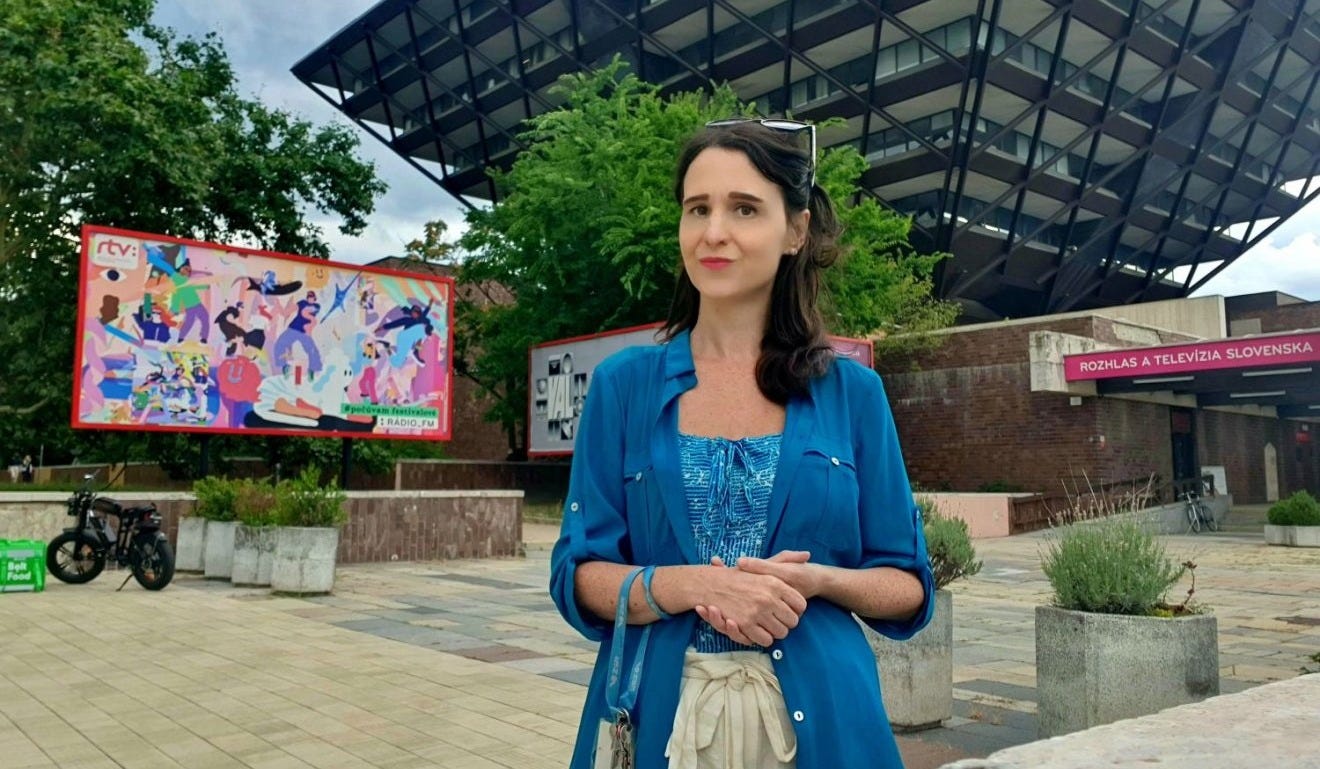
Many have drawn parallels with neighbouring Slovakia.
The licence fee had already been scrapped by a previous centre-right cabinet when populist Robert Fico returned to power in November 2023.
The ultra-nationalist Culture Minister Martina Šimkovičová gleefully set about dismantling the country’s public broadcaster.
She said the aim was to remove what she said was liberal bias and make it more ‘Slovak’ and more ‘national’.
It’s since been reinvented as a more government-friendly station.
“When I interviewed survivors of the Nazi and communist dictatorships, they always told me the same thing: you have to stand up to evil at the very beginning. You have to react to the first slap,” said journalist Soňa Gyarfašová, whose contract with Slovak Radio and TV will be terminated on July 31.
“In Slovakia, the first slap was the abolition of the licence fee. It caught everybody by surprise. People understood it could seriously weaken the broadcaster’s position, but everyone was paralysed by the speed with which it happened,” she told me via Zoom.
“Later we tried to catch up, but by then it was much more difficult.”
Soňa had specialised in recording the testimony of Slovaks who had suffered under totalitarianism. She was taken off air and ultimately made redundant for organising similar protests to those currently underway in Prague.
“I think the Czech Republic has made a very good start by reacting immediately to the first step,” Soňa told me.
“That is exactly when people have to speak out.”
If you know someone who would enjoy this, please send it to them.
The man responsible for overhauling the funding of Czech public media - Culture Minister Oto Klempíř - caused uproar earlier this year when he revealed his Slovak counterpart had advised him on what ‘pitfalls’ to avoid. Read what she has done to Slovakia’s cultural institutions:
Description of a struggle
·
Feb 13
Bit of a cultural tip this week: if you want to know what happens when you put far-right populists in charge of your cultural institutions, check out the Prague City Gallery’s House of Photography in Revoluční.
No posts
Comments
Nothing yet. Say the first thing.
Sign in to join the conversation.