
I’ve been playing with this idea for a few days.
In a week, the Earth will be hit by a meteor, almost wiping us out, but leaving a few thousand people to restart civilization. Your government wants to make a book to help the people restart, so they call as many experts as they can to give the core lessons from their field.
You’re called to help with art. The most critical of all the world’s fields.
Space in the book is scarce, so you’re kindly asked to please say as much as possible with as few words as possible. What’s your lesson?
My attempt is this: a good idea, well done.
In a way it’s vague and useless, but I find it can be a helpful reminder.
Many artists ignore the first part, a good idea. Most renders I see are style with no substance. Fair enough, if that’s what you care about. But it will never capture me.
Some artists ignore the second part, well done. These are the idea guys. If they’re successful, they’re art directors. If they’re unsuccessful, they make conceptual art from found trash.
What is a good idea? I think it’s anything that teaches me to view something in a new way. That can be a story that teaches me how not to deal with grief or it can be an image that shows me that my mind can be confused by shadows.
What’s well done? I think it’s your ability to make me believe it. You know when a story just doesn’t feel real. Weirdly, we can accept a world with ghosts and magic, but if a character does something unmotivated, we lose immersion.
Often, a work being well done means technical perfection. But we shouldn’t forget that the perfection is in pursuit of something. It is for convincing the audience that the core idea is true.
Discuss this post on Substack.
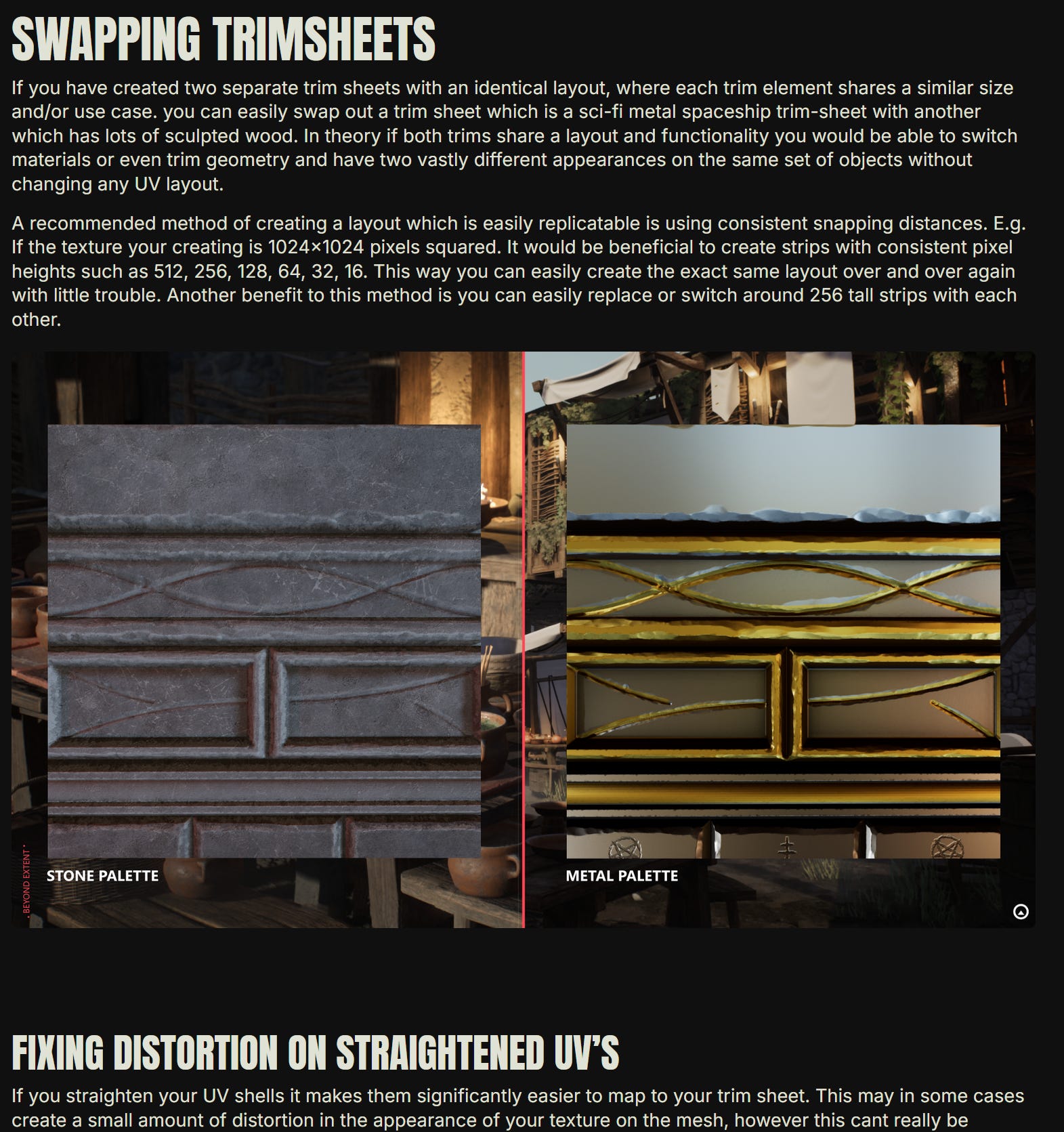
This article explains how to use trim sheets. Trim sheets are very common in video games, but I don’t see many people using them for renders. That’s a huge missed opportunity.
Benefits of trim sheets:
You can get a lot of interesting detail with little work
You force yourself to make some important creative decisions
Your scene automatically coheres more easily
You save a lot of memory in rendering
You can iterate designs very quickly
I don’t know if I’ve recommended the Imperfectionist newsletter before. I may, because I love it, and I’m doing it again, because I love it.
I had a long phase of nerding out over productivity. I really obsessed about systems and workflows and timers and such. (As shown by my post on time tracking) Oliver Burkeman had the same obsession, and got out the other side.
The Imperfectionist is about getting things done without fretting over the details. In large part, it’s about accepting that you can’t do it all.
For particularly driven artists, I’ll recommend his book, which goes deeper. For the right kind of mind, this will really help calm down.
Start here. Quote:
There aren’t many hard-and-fast rules of time management that apply to everyone, always, regardless of situation or personality (which is why I tend to emphasise general principles instead). But I think there might be one: you almost certainly can’t consistently do the kind of work that demands serious mental focus for more than about three or four hours a day.
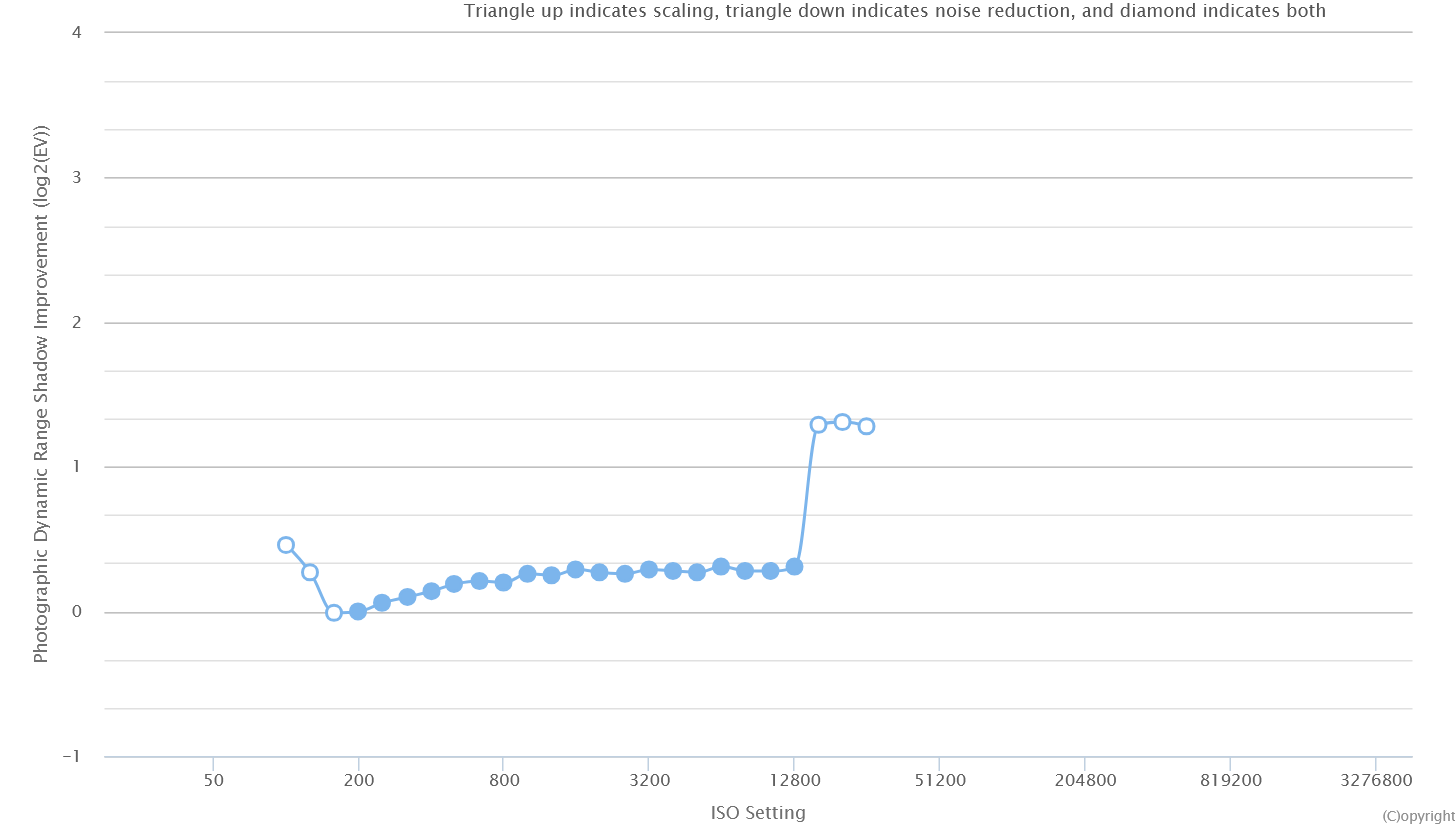
This is a pretty niche one. I often film my own footage, and this blew my mind.
It’s an ISO improvement chart. The graph above is for the Lumix GH4. It shows that as you increase ISO from 100 to 200, the quality drops (predictably.) But then it slowly rises until 16,000 where it shoots up.
This happens for a couple of reasons, explained in this video by minutephysics. Basically, some ISO settings are a bit fake. And reading this chart for my camera, I learn exactly what ISO settings actually give me worse and better quality. If there is no improvement from increasing ISO, then it’s the same as shooting lower and increasing exposure in post.
No posts
Comments
Nothing yet. Say the first thing.
Sign in to join the conversation.