
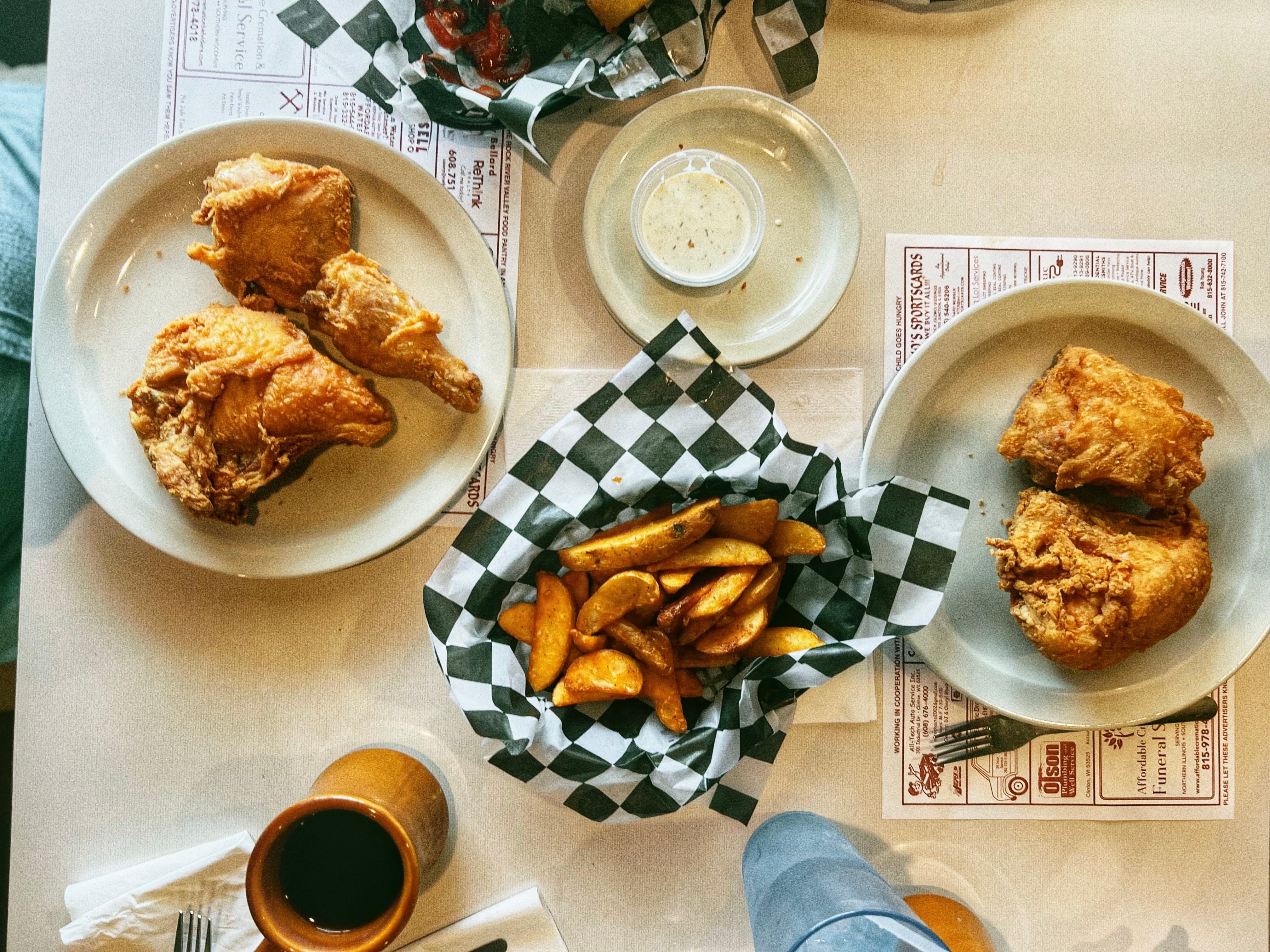
Open the menu at any supper club in Wisconsin and you’re bound to spot a few staple entrees. There will be a rib eye steak; I doubt it’s legal for a supper club to open without offering a rib eye. On Fridays, there will be a fish fry—usually perch, sometimes walleye if you’re lucky; cod, if you’re not. And, as often as not, there will be broasted chicken.
That’s not a typo. It’s “broasted,” not “roasted” or “broiled.” The neologism refers to several things: a method of cooking; the machine used to make the chicken; and the Beloit, WI, company that invented the machine and the method.
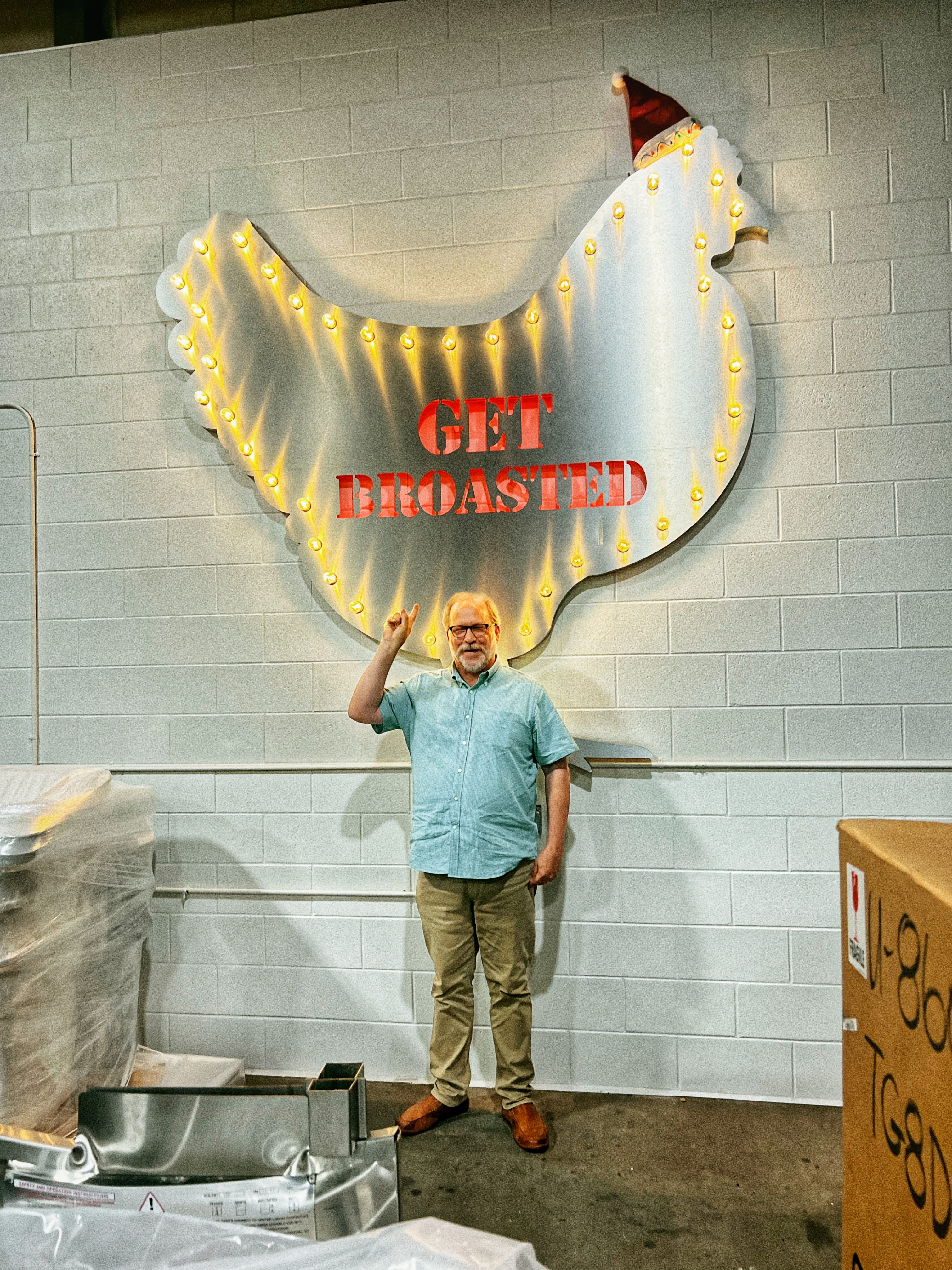
That’s the Broaster Company. It has been doing business out of Beloit—which is located on the southern border of Wisconsin, near Illinois—since 1954. It sells broasting machines to restaurants and bars, as well as the marinade and coating products needed to create the custom broasted-chicken-flavor profile.
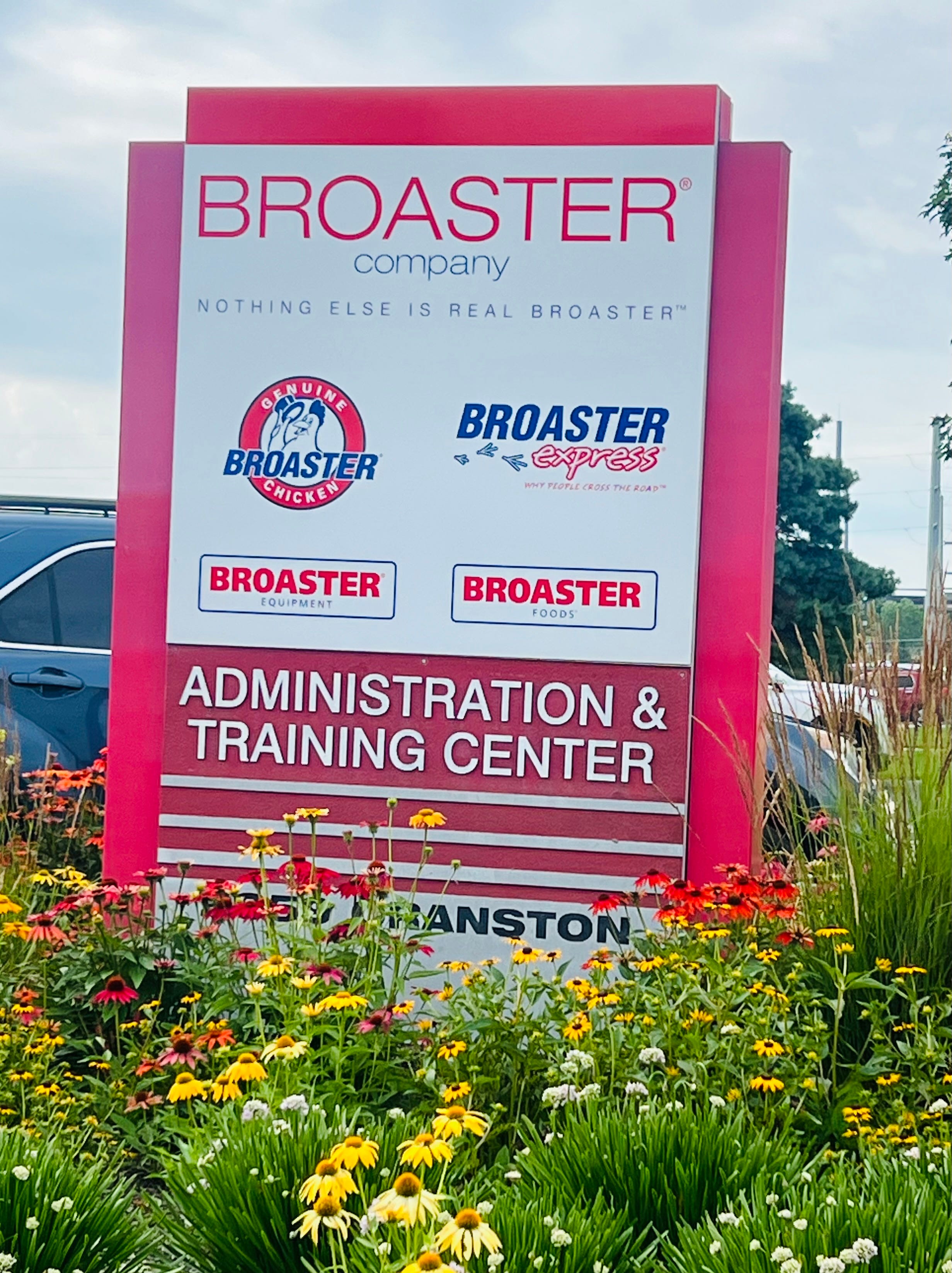
I thought for many years that broasting was a generic term for a particular method of preparing chicken. I was not alone.
“We work with a trademark attorney,” said Jay Cipra, President and CEO of the Broaster Company, during our recent visit to the company headquarters. Whenever a restaurant touts broasted chicken on its menu, but does not own an official Broaster pressure fryer, “we try to switch them our program. If they don’t, what we ask them is to just take our name off of their menu.”
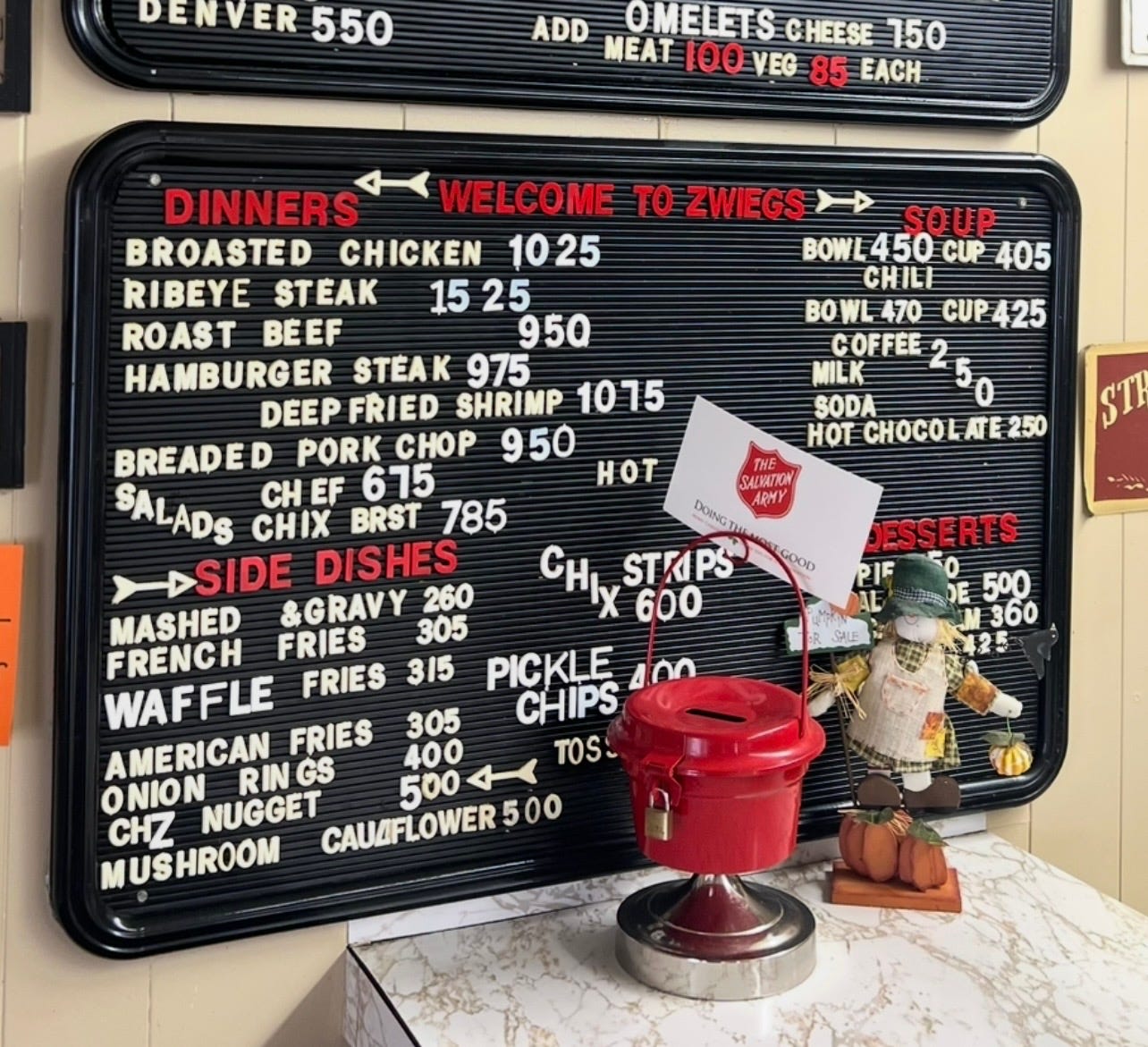
If you are dining in a restaurant that lists broasted chicken on it menu, and you doubt the truth of that claim, there’s a way to find out. The Broaster Company has furnished the public with a handy tool that will help you find out if it’s the real McCoy. On their website is a store locator. There, you can type in a restaurant’s name and learn if it’s an official broasted chicken outlet or not. There are 4,000 or more Broaster accounts out there. But there are a lot of fakers, too.
So, what is broasted chicken, anyway? You’re forgiven for thinking it’s a mashup of roasting and broiling, or roasting and braising. The confusing name seems to indicate that.
“It doesn’t make sense,” Cipra admitted. “That’s what many people have said.” But “broaster” is the name coined in 1954 by the appliance’s inventor, L.A.M. Phelan, and the company is stuck with it. Why Phelan coined that term is unknown. “Unfortunately, through the ownership changes, those stories have been lost,” said Cipra.
(Phelan was an unusual character. To learn more about him, read the sidebar article below.)
But Broaster is a term that works. Some years ago, the Broaster Company entered into a partnership with the Bob Evans fast food chain. Bob Evans toyed with the idea of changing the name, so they conducted a marketing test. “They got 70% more interest when they called it ‘broasted’ to when they didn’t,” said Cipra.
A broaster is basically a pressure cooker combined with a deep fryer. Phelan created it as a way for restaurants to make fried chicken faster.
“In 1953, he’s a big supper club guy, a big Midwest guy,” explained Cipra. “They always had their fish-fry night, their fried-chicken nights. He said, ‘This is great, but it takes 20 minutes. How do come up with something quicker?”
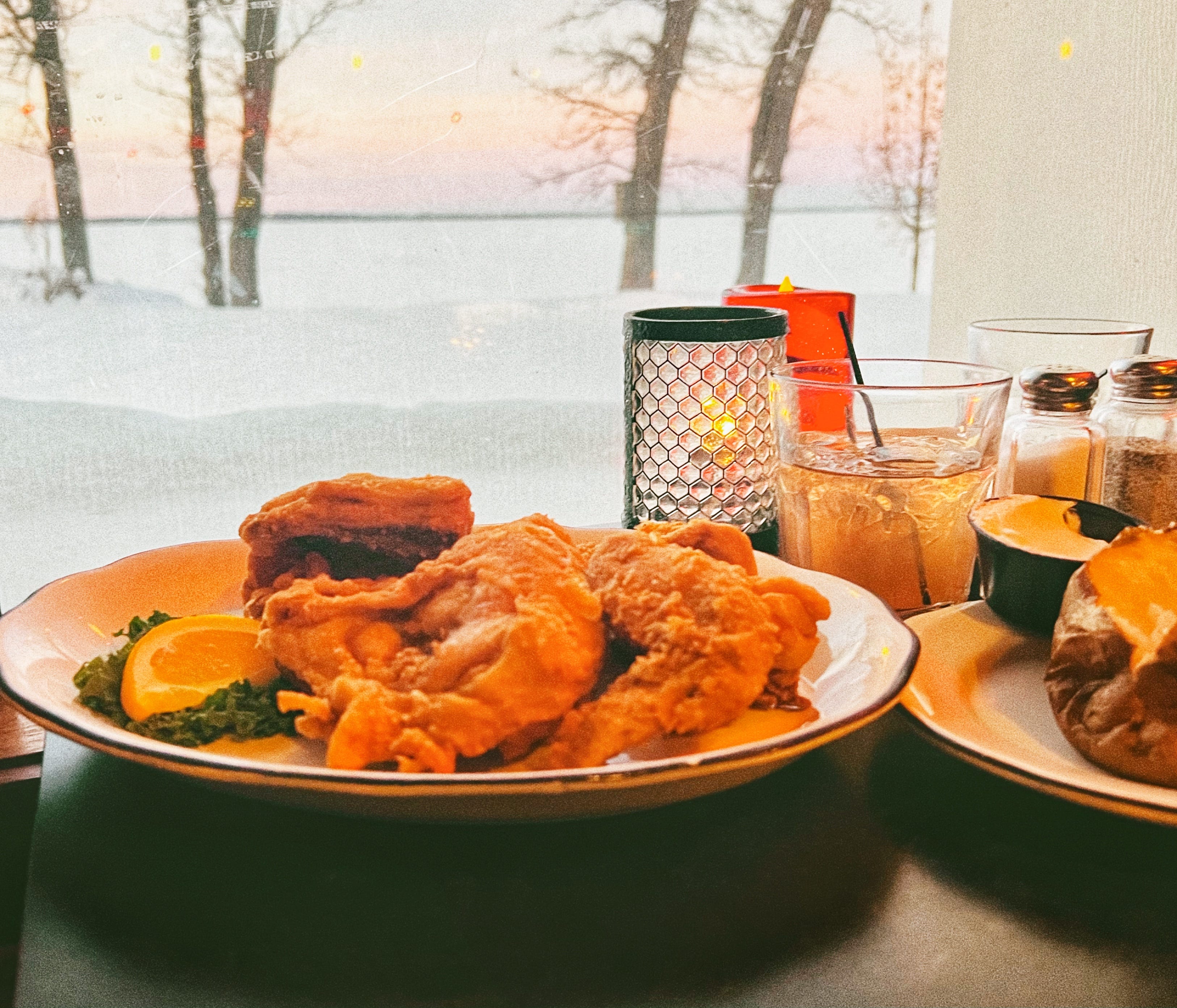
Broasted chicken, because of the pressure cooker aspect, takes 10 1/2 minutes. The process keeps the meat inside juicy and moist, while rendering the skin golden, crispy and flaky.
As a lifelong consumer of broasted chicken, I can testify as to the consistency of the product, as well as its unique deliciousness. The textural contrast between the meat and the skin is quite remarkable.
“It’s been known as a champion menu item,” said Cipra. “That’s pretty much how it’s been known within the supper club community.”
Aside from supper clubs, official broasted chicken is typically found in diners, pizza joints, convenience stores and family-style restauarants. Some of these are quite humble, and 90% of them—just like the Broaster Company itself—are independent operators.
“That’s something that’s unique to Broaster,” said Cipra. “Our strength is in supporting the independent operators. And, as tough as it is, we still see growth, both the existing ones as well as the new ones.”
The Broaster Company also has a very defined territory. Sixty percent of its accounts are in the central United States.
“Our strongest areas are basically from the Dakotas to Ohio,” said Cipra, “down into Kentucky/Tennessee. That is where we’re the strongest. That U-shape.”
Most of these restaurants own one or two Broaster machines. But there is a place outside Fort Wayne, Indiana, called Das Dutchman Essenhaus, that does such bang-up business with its chicken buffets that they have 14 Broaster pressure fryers standing side by side in their kitchen.
The Broaster Company occasionally rewards its best-performing operators with an honor called the Golden Chicken Award. This has been going on since at least the 1980s. Among the more recent honorees are Crandall’s Restaurant In Hebron, IL, a family business that goes back to 1959. There is a tradition there that, if the local football team wins on Friday, they get to go to Crandall’s on Tuesday for all-you-can-eat broasted chicken. Another recent honoree was Father and Son’s Pizza, just outside Detroit. (The name doesn’t refer to a family business relationship, but to the Holy Trinity.)
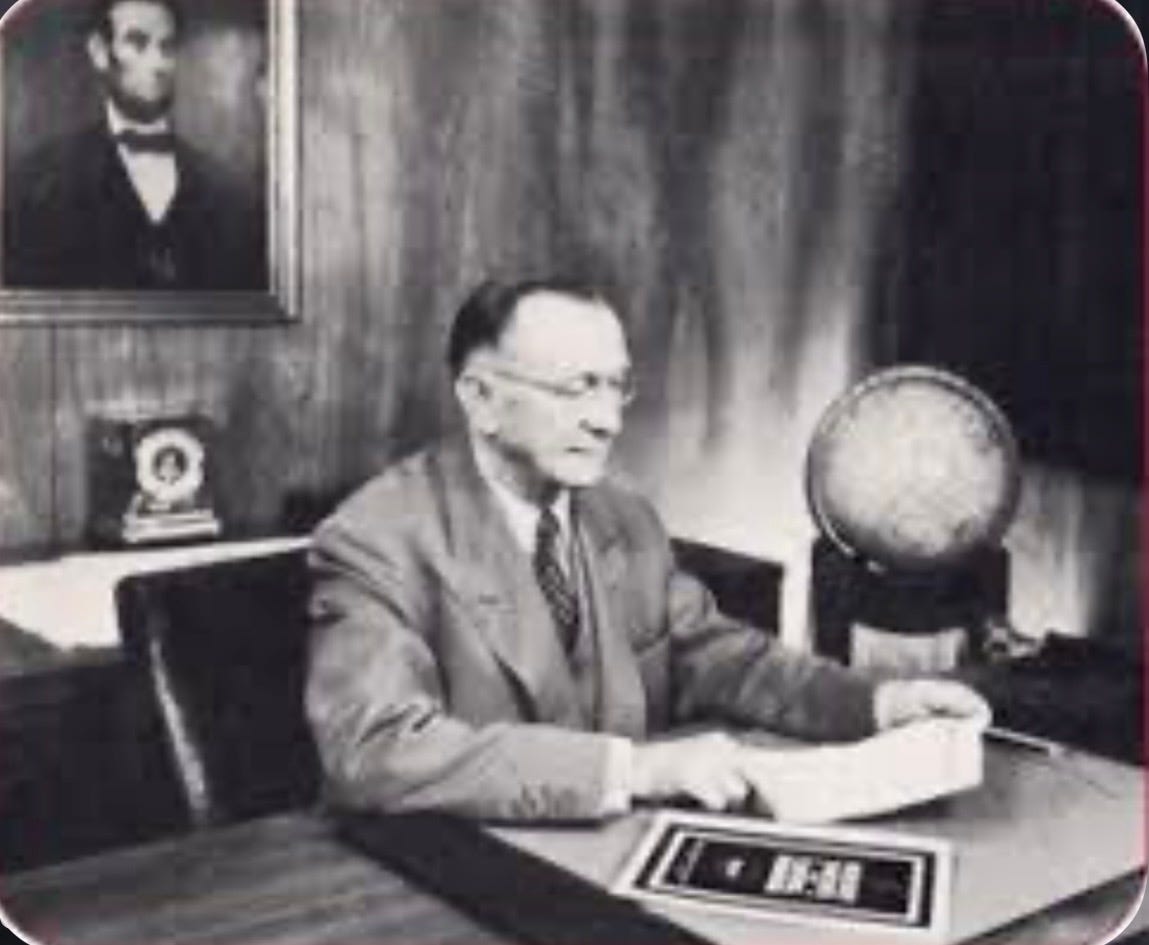
The world first heard of broasting in 1954, when a promotional article hit the pages of several national newspapers. The article read:
Flavor Fast Foods, Inc., Rockton, IL, is manufacturing a machine it says it expects to revolutionize the restaurant business.
The machine, called the Broaster, broils, roasts, sears and bakes meats in a single operation. The firm says it will cook chicken thoroughly in three to five minutes, pork chops in three minutes and shrimp in one minute.
L.M. Phelan, who developed the Broaster, says, “the broasting process is a revolutionary and evolutionary development. It’s basic unit is called the Broaster, which essentially is a pressure cooker containing hot, deep fat.”
In technical terms, broasting is a fast means of injecting British thermal unites through high conduction, high convection, radiation and high penetration.
The article said Phelan had applied for a patent, and expected to market broasters for home use within five years. (That obviously didn’t happen. The cooking times also obviously changed over time.)
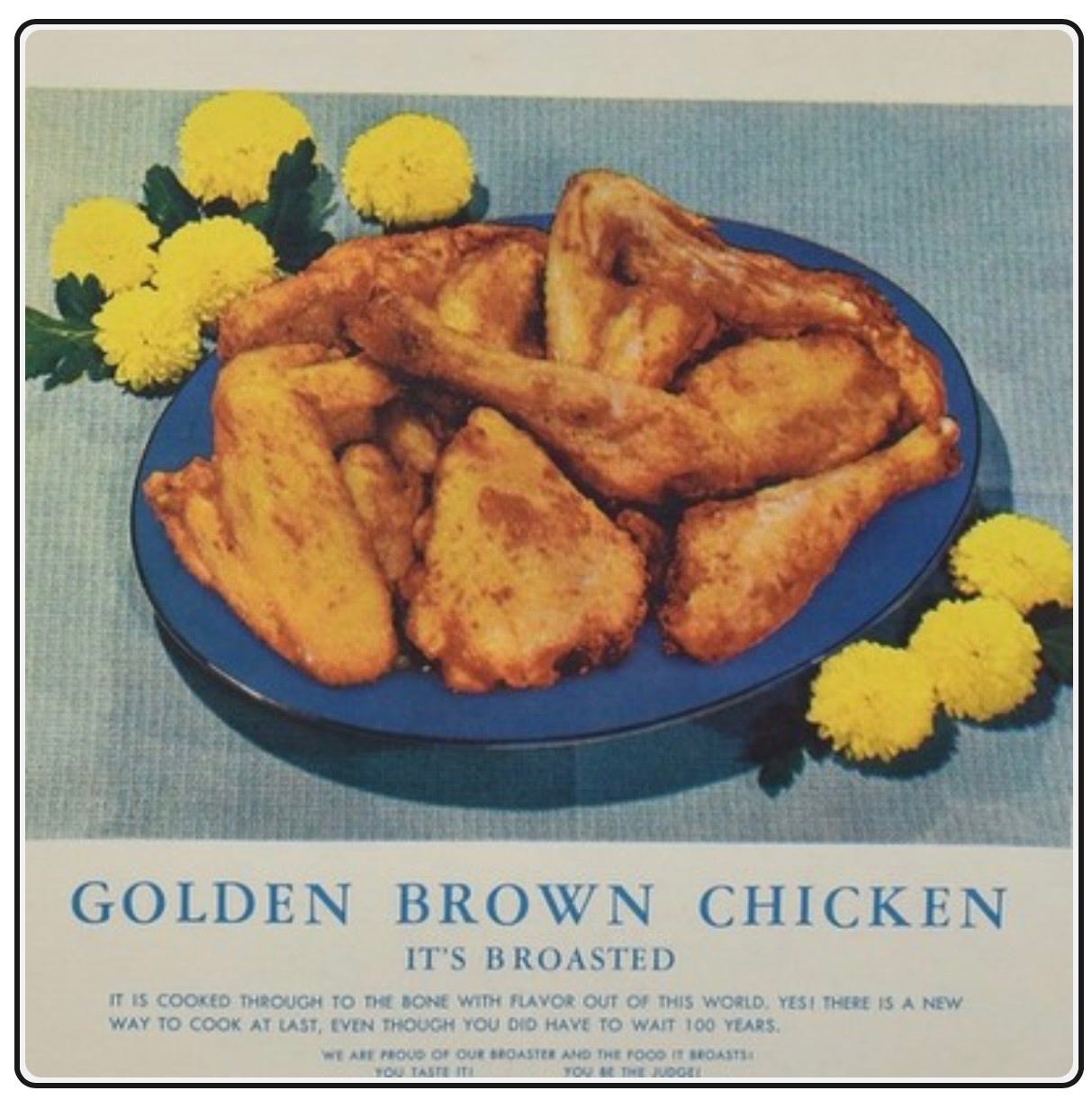
After that, broasted chicken spread across the country. There were frequent ads taken out in newspapers in a wide variety of states. The ads typically announced the opening of a new restaurant and said that that restaurant would feature chicken cooked with the revolutionary new method called “broasting.”
These ads were evidently thought necessary in order to school the public on the unfamiliar new cooking method for chicken.
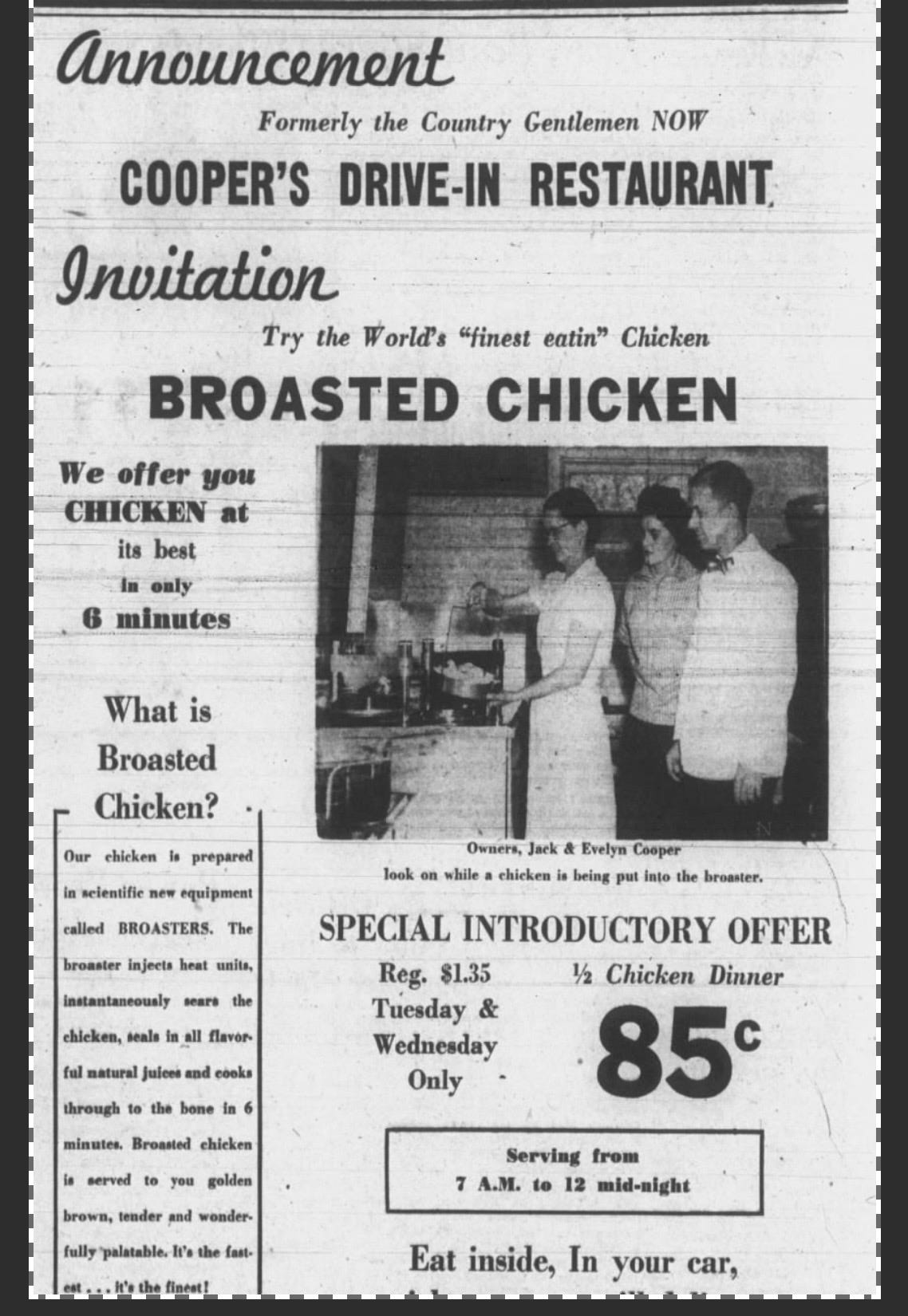
The ads also typically featured a photo of the restaurant owners operating a broaster. Repeated taglines included, “The Finest-Eatin’ Chicken in the World” and “We’re boastin’ about our broasted chicken.”
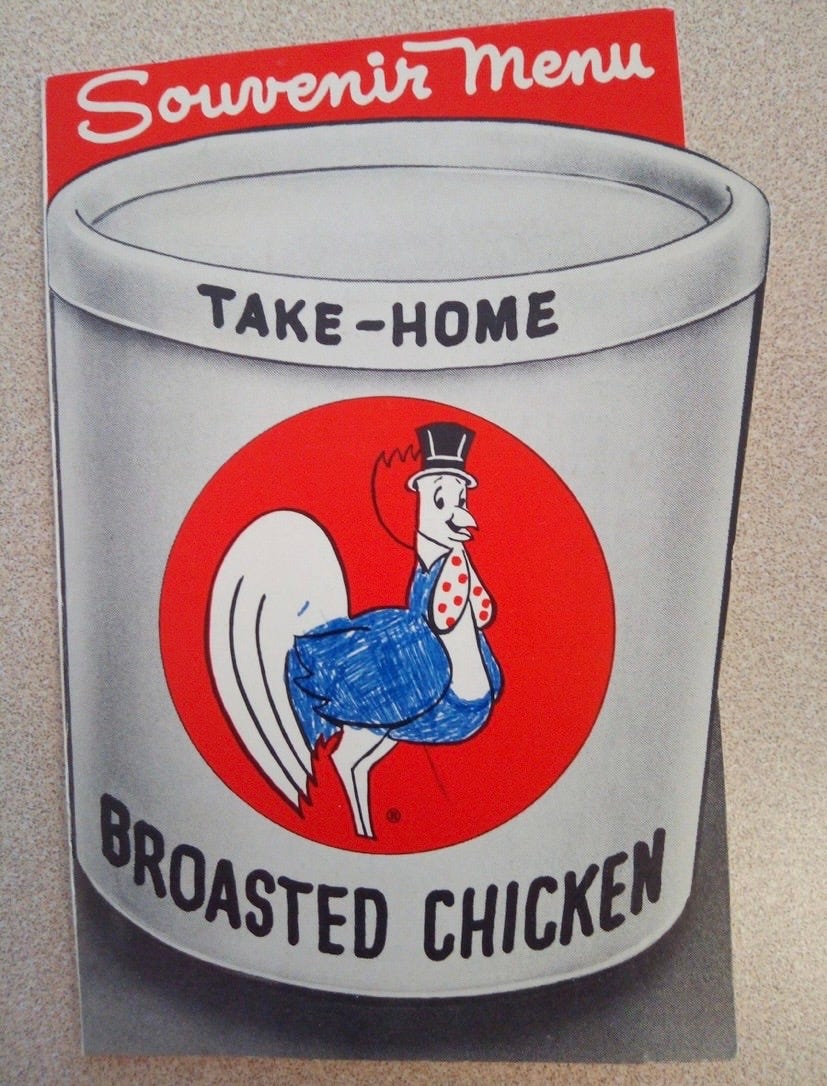
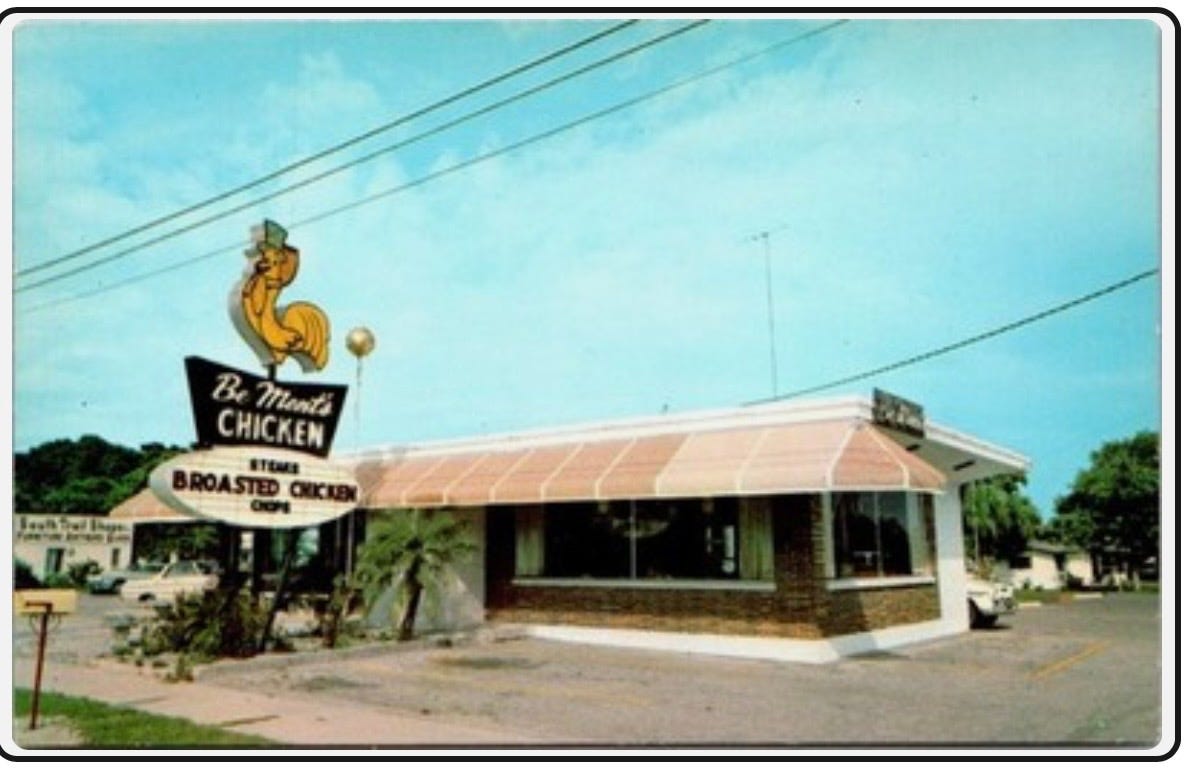
An early mascot for the company was a chicken dressed in a suit, stiff collar, neckerchief and top hat.
Cipra said Phalen owned the company for about 10 years, before moving to Florida. After that, there were a series of owners. The current proprietors, a private investment group, bought it in 1991. Cipra has been with the company for 22 years.
They have never thought of moving the company to a different state or larger city.
“No, we’re a Wisconsin brand,” he said. “That’s what we’re known for.”
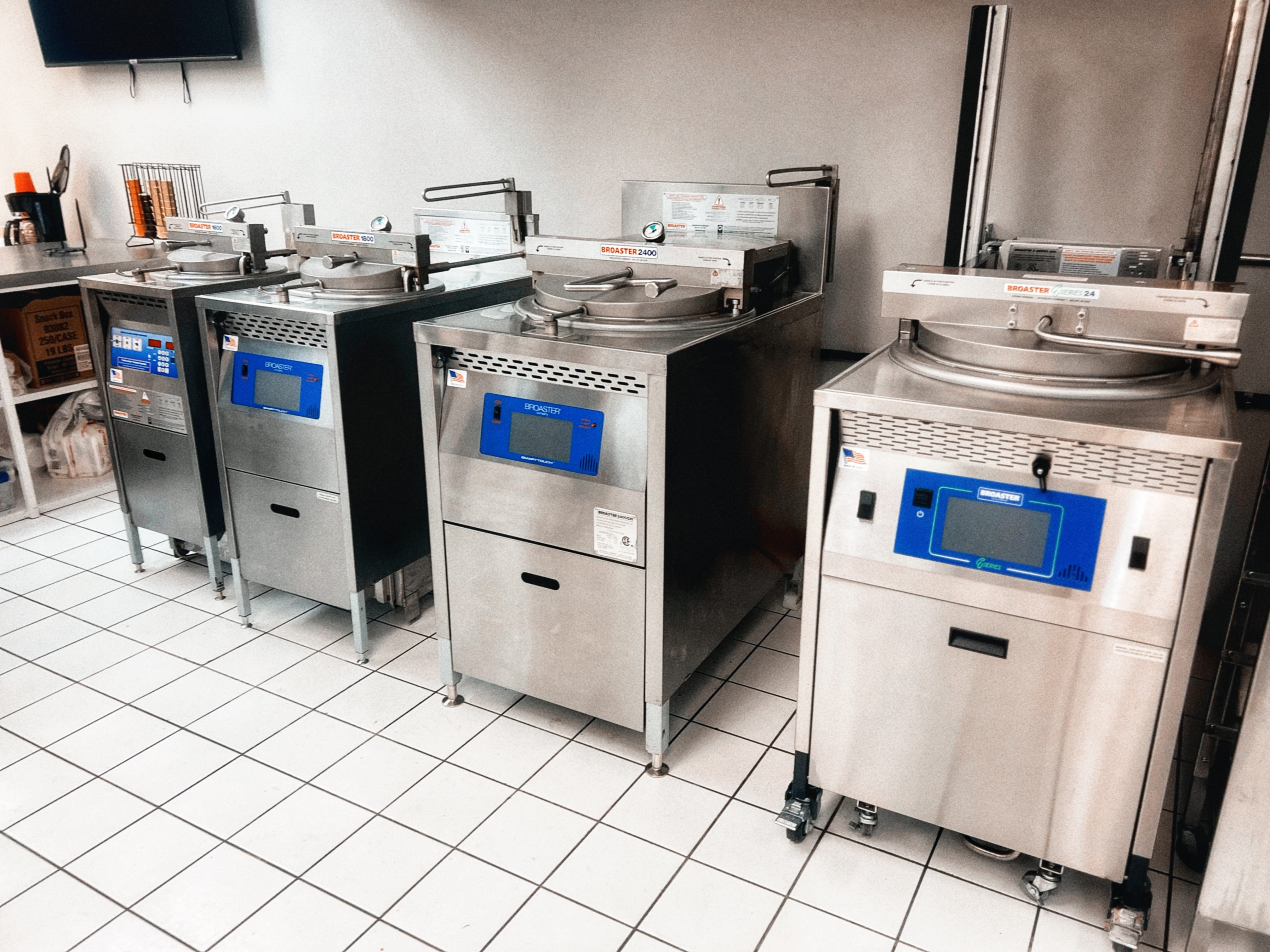
The Broaster Company offers four different models of pressure fryers to clients. There’s the Broaster 1600, 1800, and 2400, and the newer E-Series 24.
“We have marketing genius behind our naming,” Cipra joked. The 1600 is 16 inches wide; the 1800 is 18 inches wide; and the 2400 is 24 inches wide. You can fry 16 pieces of chicken at a time in the 1600; 32 pieces in the 1800; and 64 pieces in the 2400. The 1800 is the most popular model. (There are some broaster units out there that have been operating for 30 years.)
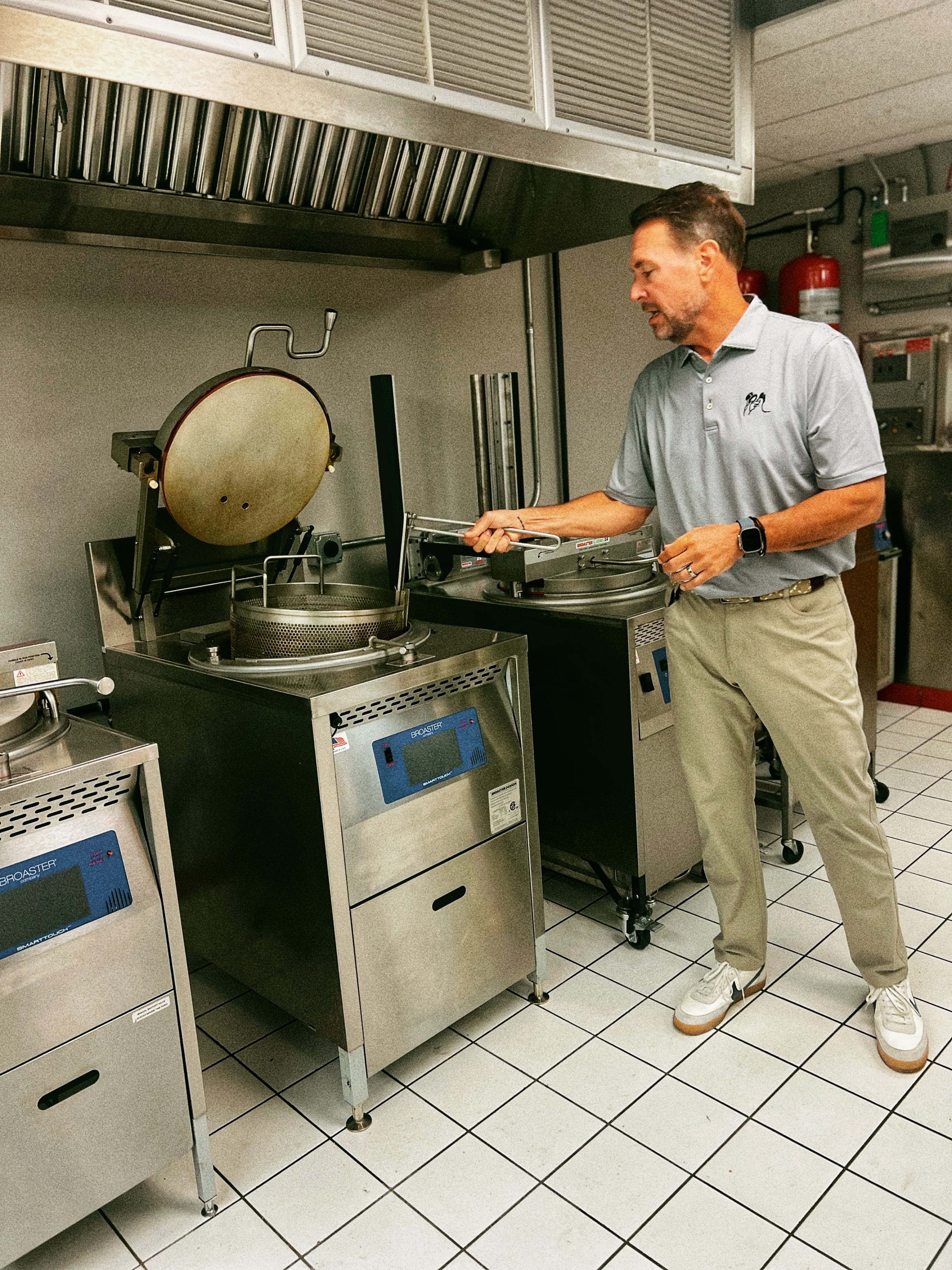
Then there is the E-Series 24, which features an auto-lift that hoists the fry basket full of chicken out to the oil automatically. (A basket of 64 pieces of broasted chicken can be heavy!)
To be a bonafide broasted chicken outlet, you not only have to use one of these machines, but also the company’s special marinade and coasting mixtures. These are called, respectively, Chick-Lite and Slo-Bro. (Gotta love that mid-century American corporate nomenclature.) These, too, were invented by L.A.M. Phalen and the recipes have not changed over the years. The company also has its own brand of cooking oil, called Bro Oil (seriously).
“The traditional method is 12 hours, an overnight soak, in a typical marinating bucket or tub,” explained Cipra. “Put it in the refrigerator. Let it marinade for 12 hours. Take is out of the marination, let it drain. Then you coat it in our Slo-Bro or one of our other blends of coating that we make. You then let it sit in that coating for about 8 hours. Let is set up and get tacky. They drop it in the pressure fryer for about 10 minutes.”
Some larger broasting operators devote entire rooms to the marinating process.
So, next time you enjoy a meal of broasted chicken, know that it took two days of prep work getting to you.
The Broaster Company’s reach goes beyond broasted chicken. You can, after all, cook a great many things in one of its pressure fryers.
“You can broast almost anything,” said Cipra. “We’ve done ribs—very good. We’ve done pork chops—very good. Turkeys. Friday fish fry. I’ve even heard of people frying Twinkies in there. We’ve done hot dogs.”
They also sell a series of Ventless Countertop Fryers for taverns and bars that want to serve chicken, but don’t have a hood system. And, in 2017, the Broaster Company bought the Smokaroma Company of Boley, OK. Like Broaster, Smokaroma was founded in 1954, and has a signature cooking device. In this case, it’s a smoker that cooks under pressure. It will smoke ribs in 45 minutes, and a brisket in 2 hours instead of 12. (There is currently no online store locator for the Smokaroma.)
Broaster is unusual among American companies in that almost everything they sell—the machines, the mixtures—are made in the Beloit factory by a staff of 65 people.
What the Broaster Company doesn’t have is a device that can be used in the home. All of its business is commercial.
“I know we’ve been asked to,” said Cipra. “The problem is we’re cooking at 8 pounds of pressure at 360 degrees. That could be a dangerous situation.”
That said, Cipra has one at home and occasionally rolls it onto the driveway to cook up a meal. This usually draws the attention of his hungry neighbors.
Jay Cipra used to have a custom license plate that read “Broasted.” This occasionally drew attention from his fellow drivers, like the time a young guy in a car pulled over, looked at Cipra and drawled, “Broasted, man!”
That plate likely wouldn’t get the same reaction in California or New York.
“I would say the awareness is still in the Midwest,” he said of the broaster. “That’s primarily where we’re known. A lot of people say they’re heard to it but don’t know what it is.”
Still, the Broaster Company business continues to grow every year, with new clients gathering quarterly in Beloit for training sessions. But for the most part, this evidence of growth is on a small, human scale. Broasted chicken is a small business delicacy. And small businesses are patronized by regular folk, who have been known to serve the chicken at family reunions, graduations and weddings.
“It’s not a family business, but it feels like a family,” said Cipra. “Not only here within the organization, but outside, the broaster opearators and broaster consumers.”
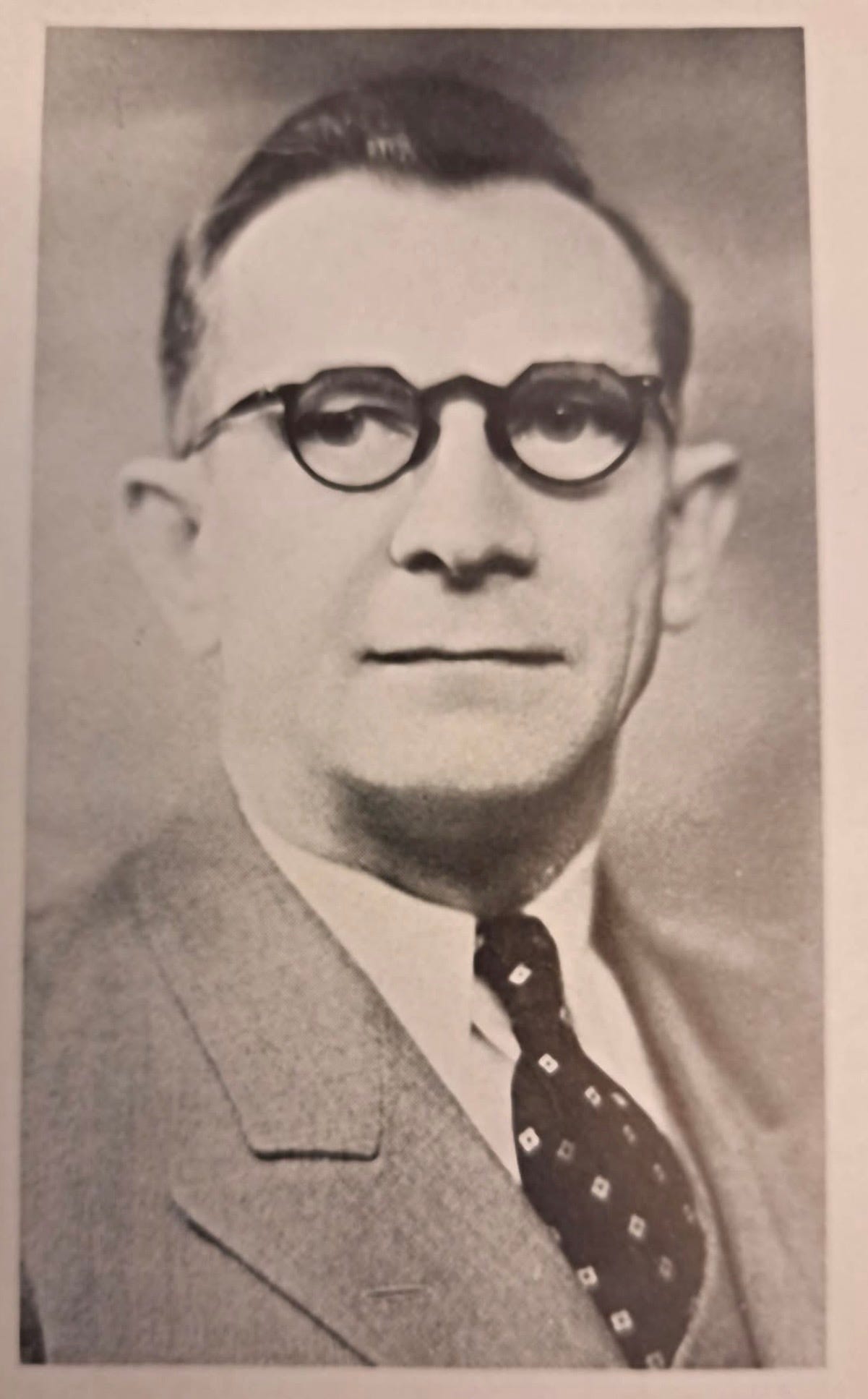
Louis Austin Merritt Phelan was born on Feb. 10, 1884, in St. Louis, Missouri. He was an inventor from an early age and found success as such throughout his life, going from business to business, most of which were built around his inventions. In fact, the Broaster Company seems to have been his final adventure as an entrepreneur.
The first thing you notice about the man is his unique handle. All his life, he was fussy about his top-loaded name. Those middle initials were important to him. In newspaper accounts, he is referred to variously as Louis A.M. Phelan, L.M. Phelan and L.A.M. Phelan. He favored the latter in late years.
During the first couple decades of his employment, he worked for such companies as American Car and Foundry Company, Monsanto Chemical Company, Panama Canal project, Allis Chalmers Company, and Goodyear in the fields of invention and development.
During the 1910s, he invented the non-deteriorating mercury switch, which is used in thermostats. Unlike most inventors, who sell or license their ideas, Phelan had the habit of building businesses around his work. In 1920 he created the Absolute Con-tac-Tor Corporation for the production and sale of the mercury switch. The company moved from Chicago to Beloit to, finally, Elkhart, Indiana.
He sold Absolute in 1928, becoming a wealthy man. Absolute merged to become the Time-O-Stat Controls Co., which was later bought by Honeywell. He traveled the world a bit, before returning to Beloit to take over the Taylor Freezer Corporation, which was founded in 1928 by Charles Taylor in Rockton, Illinois, which is just south of Beloit.
He tried to get into the fast food franchise business, launching in 1945, through Taylor, the Zesto chain of custard stands, which used his Zest-O-Mat freezers. The idea was people would buy a Zest-O-Mat, which would allow them to open a Zesto franchise. Once, Zestos were found in 32 states. The effort didn’t last long. Taylor abandoned the enterprise in 1955. After that, the franchises were on their own; many closed. (About 30 Zesto stands still survive today, all as independent operators.) Taylor still exists. It’s best known for supplying the McDonald’s chain with its ice cream machines.
Combined, the remaining Zesto stands and the restaurants that use broasters amount to Phelan’s most lasting legacy.
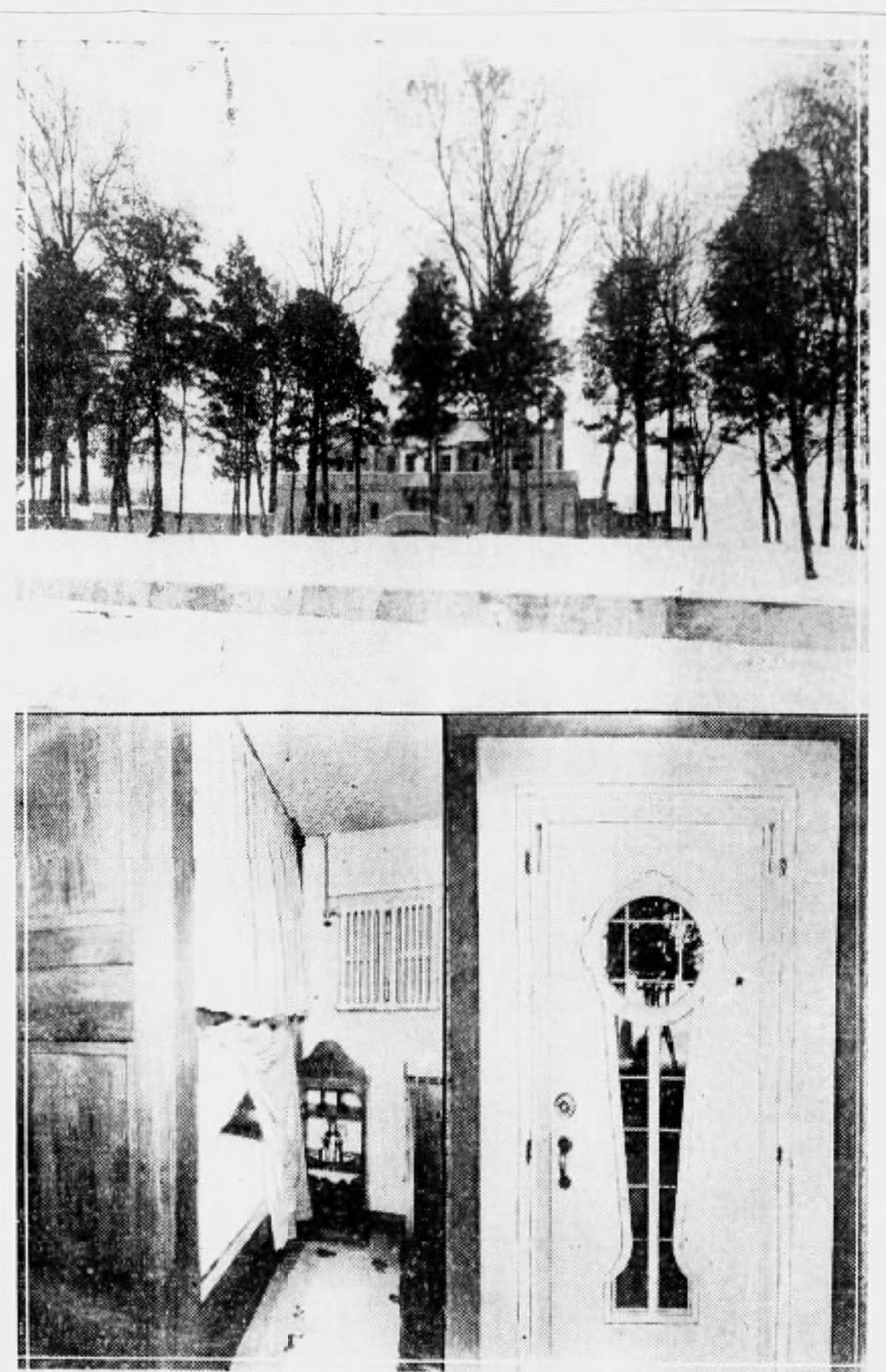
Inventors are usually odd birds, and Phelan was no exception. In 1928, he built a house just outside Elkhart, on East Jackson Boulevard, spending $100,000 (about $2 million today). It was built into a hillside, and looked onto the St. Joseph River. The two-story domicile was filled with Phelan’s own inventions and contraptions:
…electrically heated, silk curtained beds set in walls, in which one sleeps without any clothing, and garage doors that open automatically in response to the honking of one’s automobile horn are some of the new features of the home which Mr. and Mrs. Louis A.M. Phalen have just completed
The floors were patterned cork, the lighting fixtures and rugs imported. The glass in the front door was made to resemble an Egyptian mummy case. A ship’s bell near the door, when touched, triggered an electronic door bell inside.
The Phelans had a rocky relationship. She was Harriet Snow, but went by Hattie. (There was an earlier wife, Rose, about which I could find little information.) They married in 1924, but separated in 1930, when Mrs. Phelan filed for divorce. She said that Mrs. Phelan “is of a quarrelsome, sullen and morose disposition.” She also asked for $500,000 in alimony, half of what she said was her husband’s net worth.
Louis Phelan responded by issuing a statement that said, in part, “Mrs Phelan is of most excellent character and behavior, deserving of the greatest respect and consideration. The present contingency is the result of misunderstandings and the worst side of a man turning face up.”
Whatever their problems, they reconciled. Then, in spring 1931, Mrs. Phelan filed for divorce again. But they must have patched it up again because they remained married until Louis’ death in 1971 in Pompano Beach, Florida. The two are buried side by side.
There is a conference room named after Phelan at the Broaster Company.
As for the crazy home-of-the-future in Elkhart, they barely lived in it a few years before selling it. It changed hands a few times. The last mention of it I can find is in 1946. It is unlikely it still stands.
The divorce drama garnered Phelan a lot of unwelcome press. After that, you don’t see him quoted in the papers much. Perhaps he had become press-shy.
Before that, however, on March 10, 1929, he gave what was probably his most expensive interview with the Indianapolis Star. The newspaper was writing a feature about his unusual house. He said:
I think that after a man makes so much money there is nothing gained in continuing to pile up greater fortune. I am but 45 years old and I intend from now on to live my life in accordance with my own ideas. I am going to study, travel and broaden myself. I hope to be able to lend a helping hand wherever I may in the matter of advice. Or course, I will continue electrical experiments.
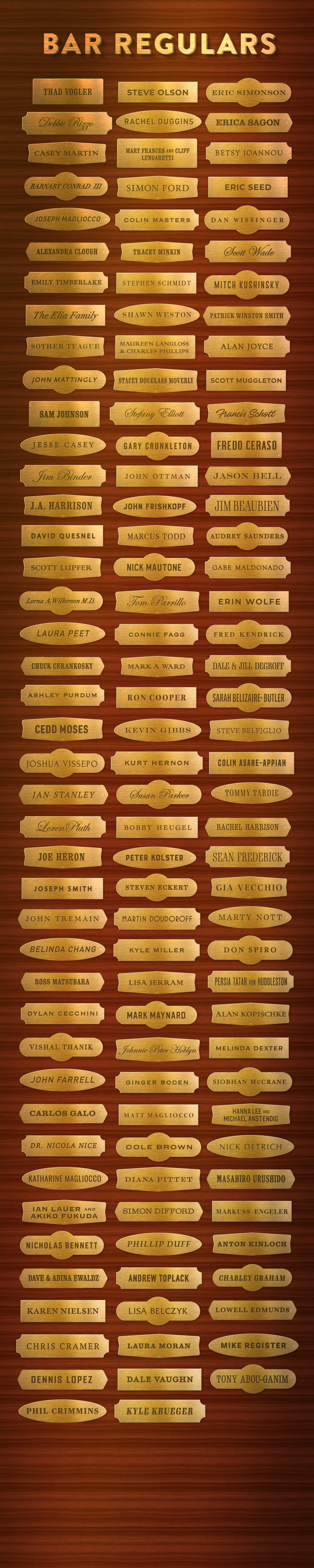
Welcome to the new Bar Regulars! Thank you so much for making The Mix with Robert Simonson possible!
Well, it’s been quite a year, with things only amping up more and more over the next five months! We’ll be at Tales of the Cocktail next week—anybody going? We’d love to check in with you.
Then it’s pretty much all systems go, until The Martini Expo in September, from the 13th through the 20th in Chicago.
Finally, from October 12-December 7, we’ll be on a book tour to celebrate Robert’s new book, Bourbon and Rye Cocktails, The History of American Whiskey in 73 Cocktails.
So far, the states we’ll be in are Kentucky, Ohio, Pennsylvania, New Jersey, New York, North Carolina, South Carolina, Tennessee, Oklahoma, Indiana, Michigan, Missouri, Illinois, Connecticut and of course, Wisconsin! Let us know if you’d like us to stop in and have an event with you!
If you are a Bar Regular, please make sure to update your address for where you want Robert’s book to go next fall. OR, if you’re in one of the states we’re heading to and you’d like us to get your book to you personally, we can probably arrange that!
See you soon,
Robert and Mary Kate
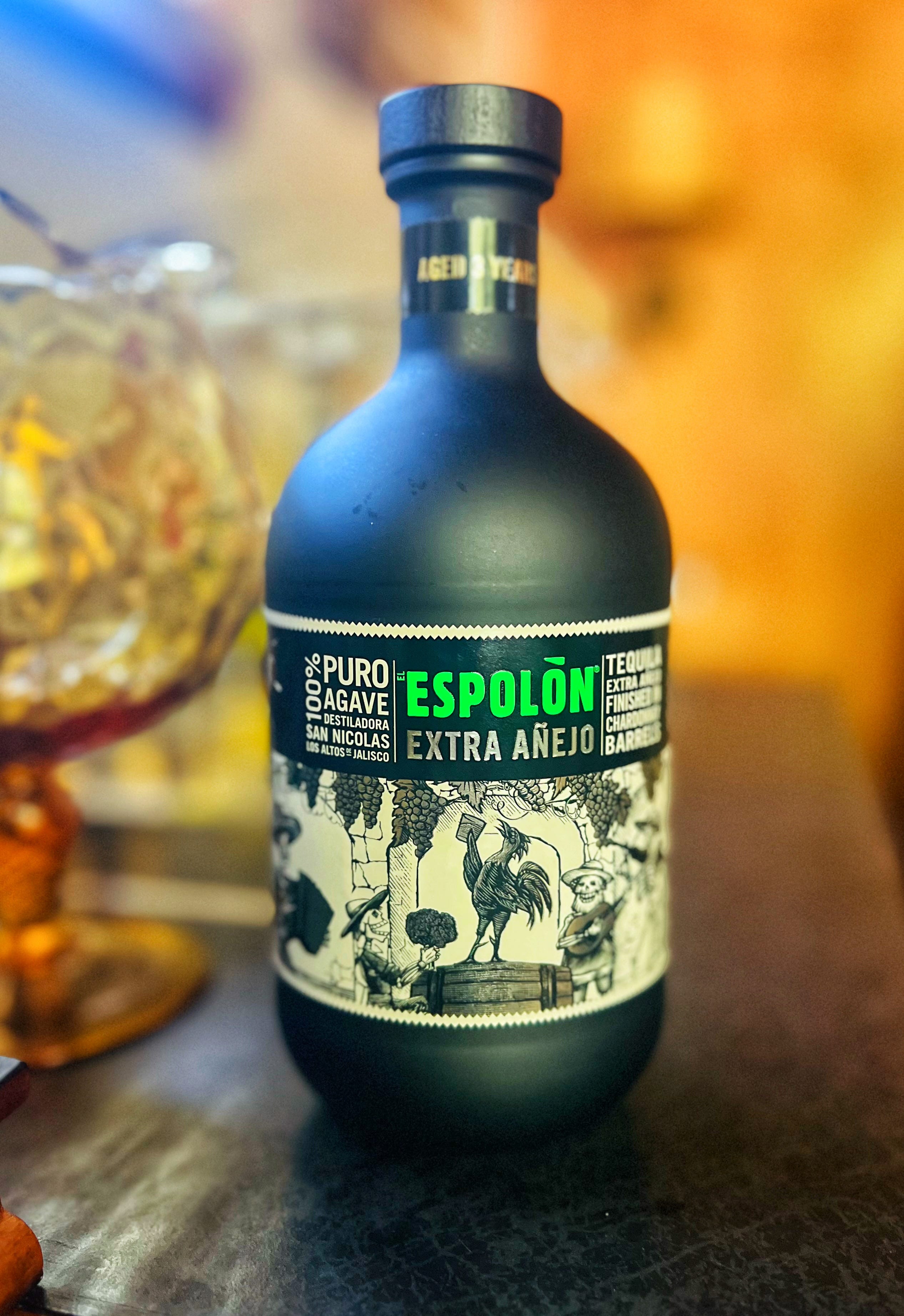
Espolòn Tequila has been a steady presence on the international market since the late 1990s. But it has taken the brand this long to introduce an Extra Añejo. It arrived on shelves in June. It sells for $69.99.
The brand has tried something a little different with this. Most Extra Añejos age their Tequila in American oak for the three-year-plus duration. This version is aged for two-and-a-half years in American Oak and then they switch it up, finishing the juice for 6 months in French chardonnay casks.
The color is a muted amber. You can really smell the Chardonnay on the nose. There is also pineapple, cantaloupe, apple, and agave. It’s a strong nose that travels all the way into your throat. The palate starts with a sharp wood note, but then quickly softens into lots of vanilla icing, apple, caramel and a little smoke. It’s not a harsh woody experience like you would expect from an Extra Añejo. It’s unexpectedly silky.
The brand suggests you try it in an Old-Fashioned. They’re not wrong.
Philip Duff interviewed Toby Maloney and Emma Janzen about their new book on his podcast…. The Los Angeles Times listed their 20 hot dog picks to enjoy this summer… At Tales of the Cocktail, on Tuesday, July 21, 3-6 p.m., Heaven Hill will present “Living Legends: A Guided Journey Through Cocktail History” at the Merchant House, 1150 Magazine St. The immersive experience, which takes attendees through five room representing different eras of cocktail history will feature then talents of Angus Wincester; Bernie Lubbers; Camper English; Danil Nevsky; Dave Wondrich; David Arnold; Erick Castro; Franky Marshall; Giulia Cuccurullo; Iain McPherson; Jeff Berry; Jeffrey Morganthaler; Julie Reiner; Lynn House; Natasha Barahami; Nico De Soto; Philip Duff; Sam Ross; Shannon Mustipher; Sother Teague; Steve Schnieder; Tess Postmaus; Tiffanie Barriere; Toby Maloney; Tracey Franklin and myself! Look for me in Room 4!… On Wednesday, July 22, at Tales, I will be one of the judges at the Procera Gin cocktail competition. The judges will include myself, John Gakura, Anna Sebastian and Alessandro Palazzi. This event is invite only. But who knows? You might be invited!… For tips on where to drink in New Orleans during Tales, listen to this episode of Radio Imbibe, in which Paul Clarke interviews three NOLA bartenders.
No posts
Comments
Nothing yet. Say the first thing.
Sign in to join the conversation.