
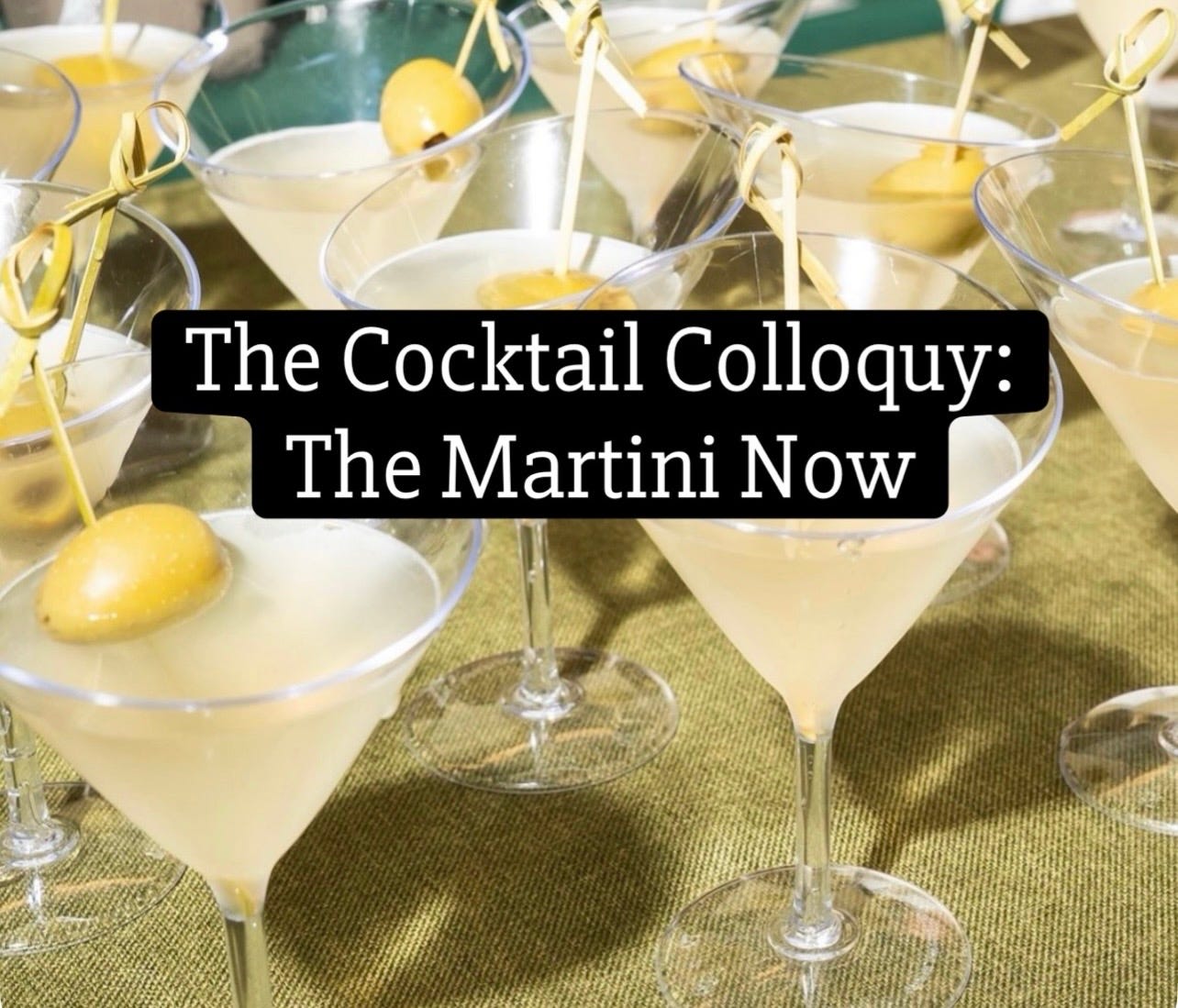
This is the second edition of a new essay series we are calling The Cocktail Colloquy: The Martini Now. We asked a collection of writers and thinkers who we respected—people with a track record of writing about the Martini (and one who doesn’t, but whose thoughts are welcome on any topic) if they would contribute an essay to The Mix.
We will publish one essay every Monday for the next several weeks leading up to the beginning of The Martini Expo on Sept. 13. The series kicked off last week with an essay by Lowell Edmunds. (Tickets to the Expo are now available on Opentable.)
For this contribution, we turned not to a scholar on the Martini, but a scholar in quite a different kind of adult beverage: beer.
Garrett Oliver is the well-known, long-serving brewmaster of Brooklyn Brewery, having taken that position in 1994. His accomplishments in the beer sphere are almost too numerous to mention. He has hosted more than one thousand beer dinners in 17 countries, including ones at world-famous restaurants like Eleven Madison Park and Noma. He has served as a judge for the competition of the Great American Beer Festival for twenty-four years and has been a perennial judge for the prestigious Great British Beer Festival competition and The Brewing Industry International Awards. He is the author of The Brewmaster’s Table: Discovering the Pleasures of Real Beer with Real Food and the editor of the 2011 Oxford Companion to Beer.
Unlike most beer bigwigs, Oliver can frequently be found in the company of cocktail professionals. He has, in fact, often collaborated with mixologists and cocktail writers on special limited-edition, cocktail-oriented beers. It makes complete sense, then, that he had a Martini story to tell. Here it is.
Tequila tends to be the culprit. At least that’s what they say. Certainly, Tequila looks guilty—all those associations with our commonly misspent youth, all those margaritas, all that great Mexican music and food, the undeniable and infinitely exportable party culture…surely it should have been Tequila.
But Tequila never got me; I escaped. Oh, I drank it, of course, and over decades my genial relationship with Tequila eventually segued into my modern expensive mezcal affliction. Even cheap Tequila, if not overtly adulterated, has always held a relatively unblemished spot in my heart.
Gin, however, utterly destroyed me. To myself, and those who were there, it is simply known as “The Incident.” The Incident occurred in April of 1982 at a house party at 500 Park Drive in Boston. I was in my third year at Boston University, pursuing my degree in Broadcasting & Film. My household was made up of brilliant miscreants, each smarter than the last (and most certainly smarter than me; Dave was doing a double major in computer science and physics, all while leading our intramural football team; I’d have hated him if he wasn’t so nice).
The less said about The Incident the better, to be honest. You only need know the final details. By the end of the evening, about 3:30 a.m., we had run out of alcoholic beverages…except for the “gin.” And I do place “gin” in quotation marks because said gin was made by the firm of S.S. Pierce, the patron saint of broke college students, who bought it by the plastic handle, a receptacle better known for bleach.
So infamous were Pierce’s ghastly spirits that we had a word for a hangover induced by them—they were called “Pierce-overs,” and they achieved a floridity of misery that few other hangovers could match.
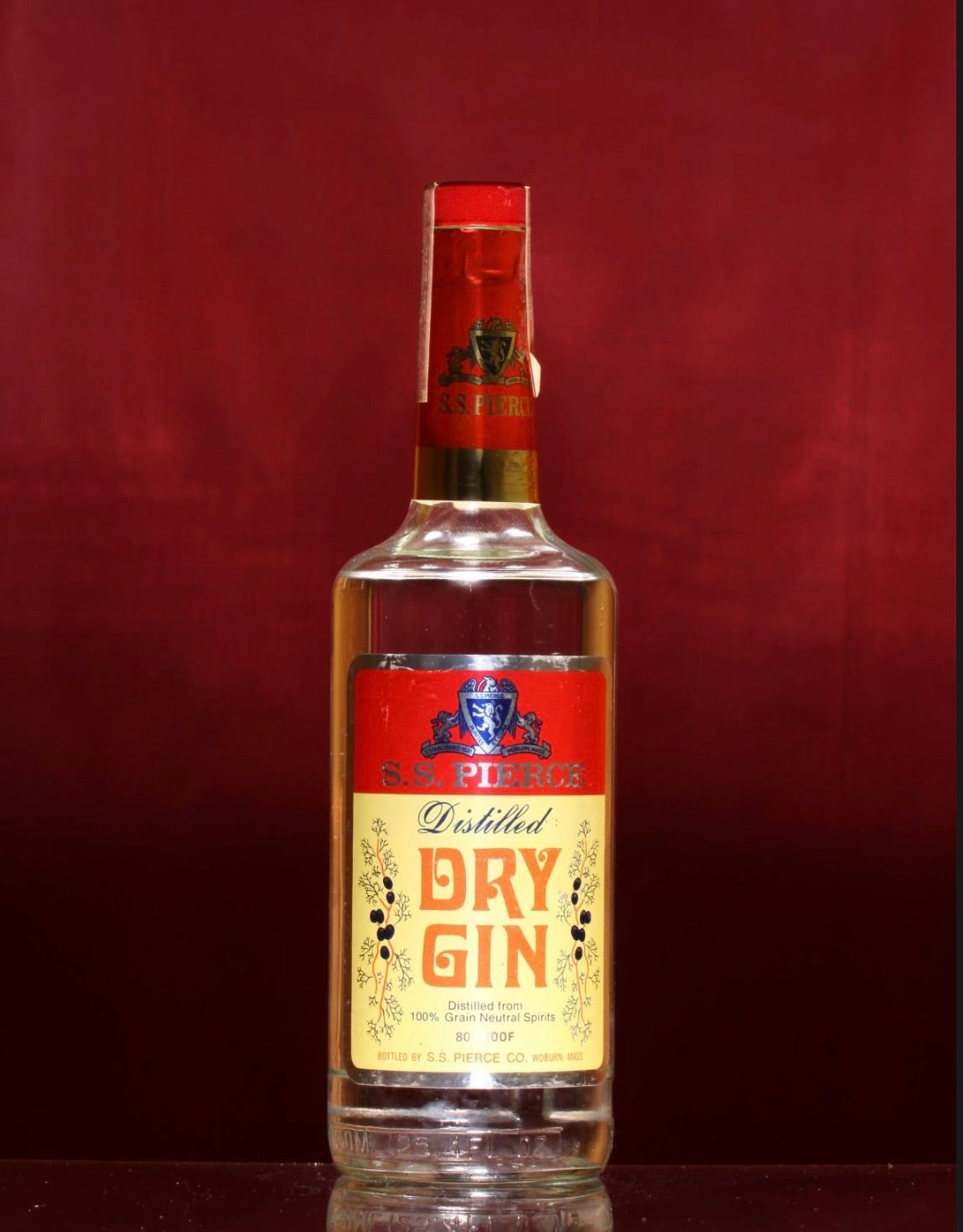
By 3:30 a.m., aside from the gin, we had no mixers left…except for Rose’s grenadine syrup. Oh, and there was no ice either. At some point I became peckish, and at 3:45 a.m. went across the street to the redoubtable Store 24 and bought a fateful shrink-wrapped Italian sub. Upon my return, I washed it down with my warm grenadine and gin “cocktail.”
From here, things become uncertain. What is known is that mid-afternoon Dave walked into my bedroom and peered down at me judgmentally. Dave, a good-looking and cheerful fellow, had lost all his sunny aspect. He looked ruined. He said, “You know, Garrett, I feel worse than I’ve ever felt in my entire life…but I feel really sorry for you.” Frankly, I didn’t know what he meant. But I soon found out. The hangover slid out from under my bed, revealed itself and then bloomed, expansively, fractally, even somehow creatively; it found parts of me that I hadn’t known were there, and it hurt them. I fell out of time and space; the sun and stars wheeled overhead. My punishment lasted for three long days; I was nineteen.
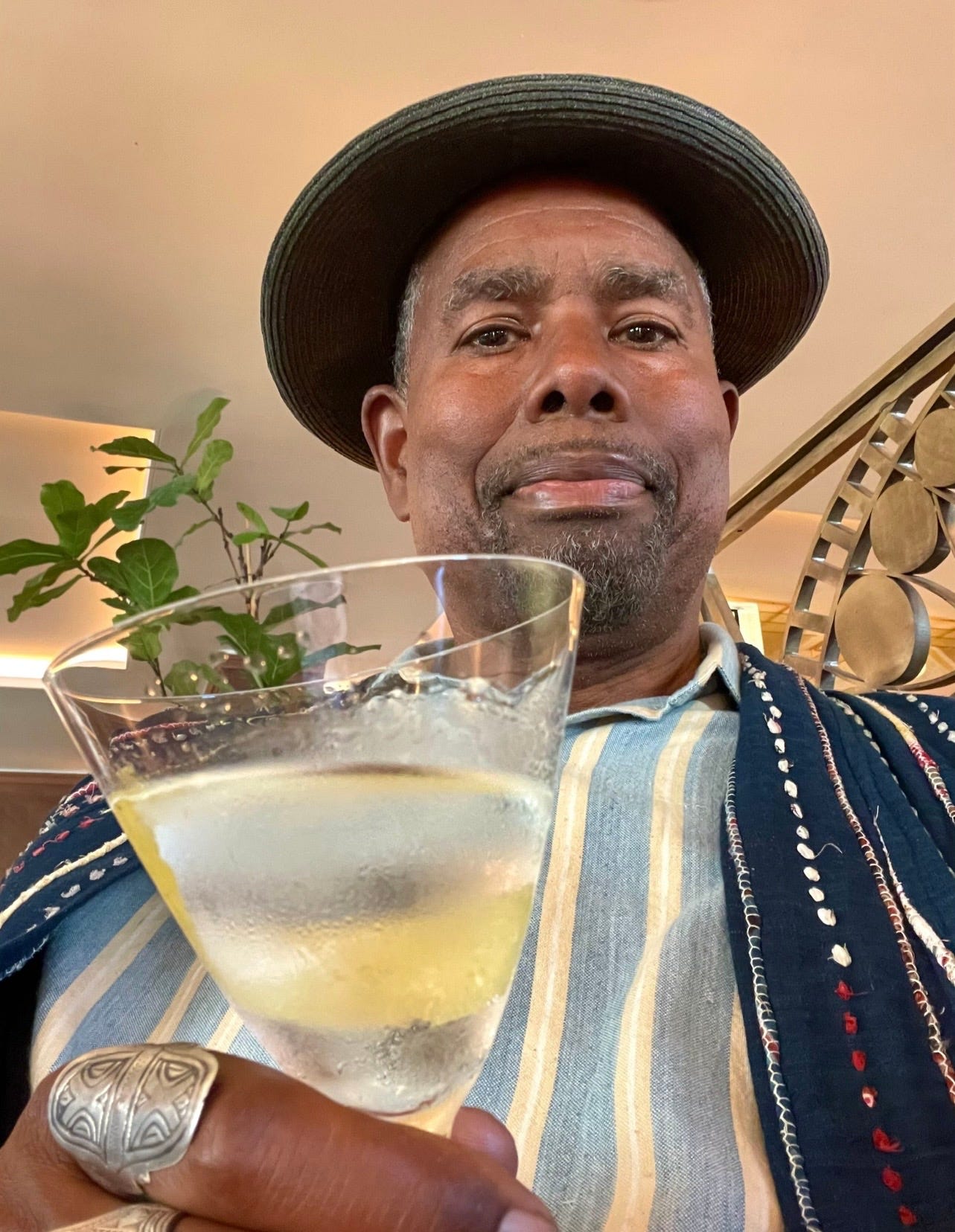
I did not drink gin again for 30 years. The tiniest whiff of juniper, detected even across a room, would send me reeling. Dracula would sooner have eaten a bowl of pesto than I’d have considered a Martini. Then, in 2012, my old pal, the great cocktailian and now-distiller, Allen Katz, came to my house with his new Dorothy Parker Gin from the then-recently-opened New York Distilling Company. He proffered his gin; I demurred. I related the dark tale of The Incident. Undeterred, he set to work and concocted a foamy gin drink, the White Lady. I knew instinctively that this was a fine drink, so I bent my mind to it and made my way through. But the demons still clung.
The next few years would bring the occasional Negroni; I did not make them at home, but when out among friends I did not turn them away. Campari can hide many sins. But the naked Martini was a bridge I feared to cross, even at truly great establishments. And then, only a few years ago, I had a breakthrough.
My old friend Simon Ford, he of Fords Gin, was bringing Agostino Perrone of the Connaught Bar in London to do an event in Brooklyn with Dan the Automator of Handsome Boy Modeling School. They were releasing a collaborative album, Music To Drink Martinis By. Did I want to come? It would have been churlish to refuse just on account of the cursed juniper, and besides, I knew that “everyone” would be there; the sound system at the place was brilliant; and this would be fun. Then again, The Incident was meant to be “fun,” too. My mind clouded over.
Everyone was there. Ago appeared, his eyebrows confident, his tuxedo sleek; it was not off the rack. And he wielded an impressive, chromed dolly of armaments. Ago was reputed, by very staunch persons, to make “the best Martini in the world .”
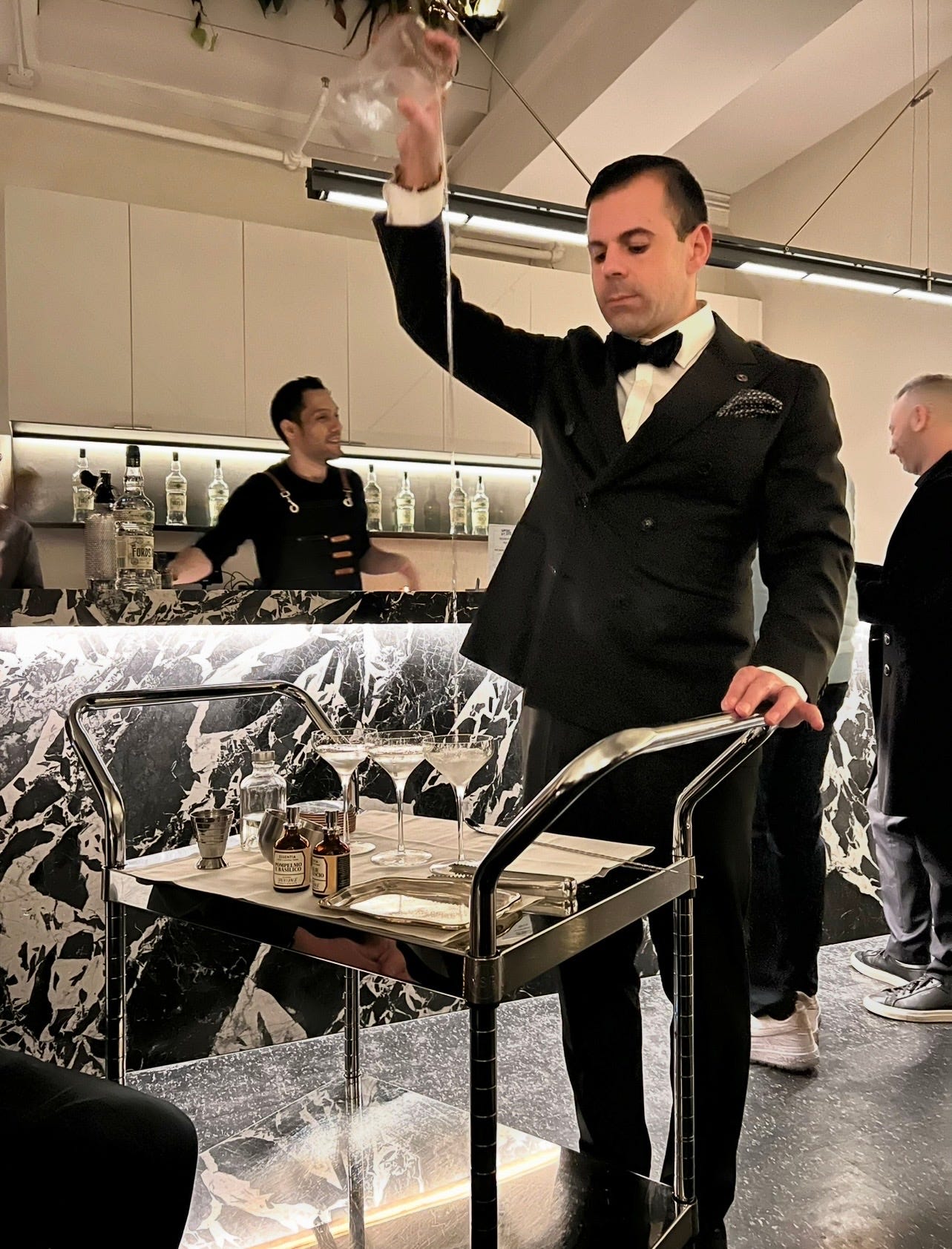
Well, then. When Ago rolled the cart up to me, I did not flinch; I bid him strike me with his finest opening gambit. I watched attentively. Perhaps one part of vermouth in six; a crucial drop of bitters, some citrus aromatics all his own, stirred briskly and delivered with a strip of zest in a small frosted-over glass.
I sipped the wunder-Martini…and a door opened somewhere in my mind. I experienced my second sunrise of the day as the splendors of this little drink wrapped themselves warmly around my brain stem. I suddenly felt exceedingly pleasant, all my cares abruptly sent packing. This drink did things that other drinks only promised. When Ago came by again, a half-hour later, I knew what to do. From that moment I strode off into a wider world.
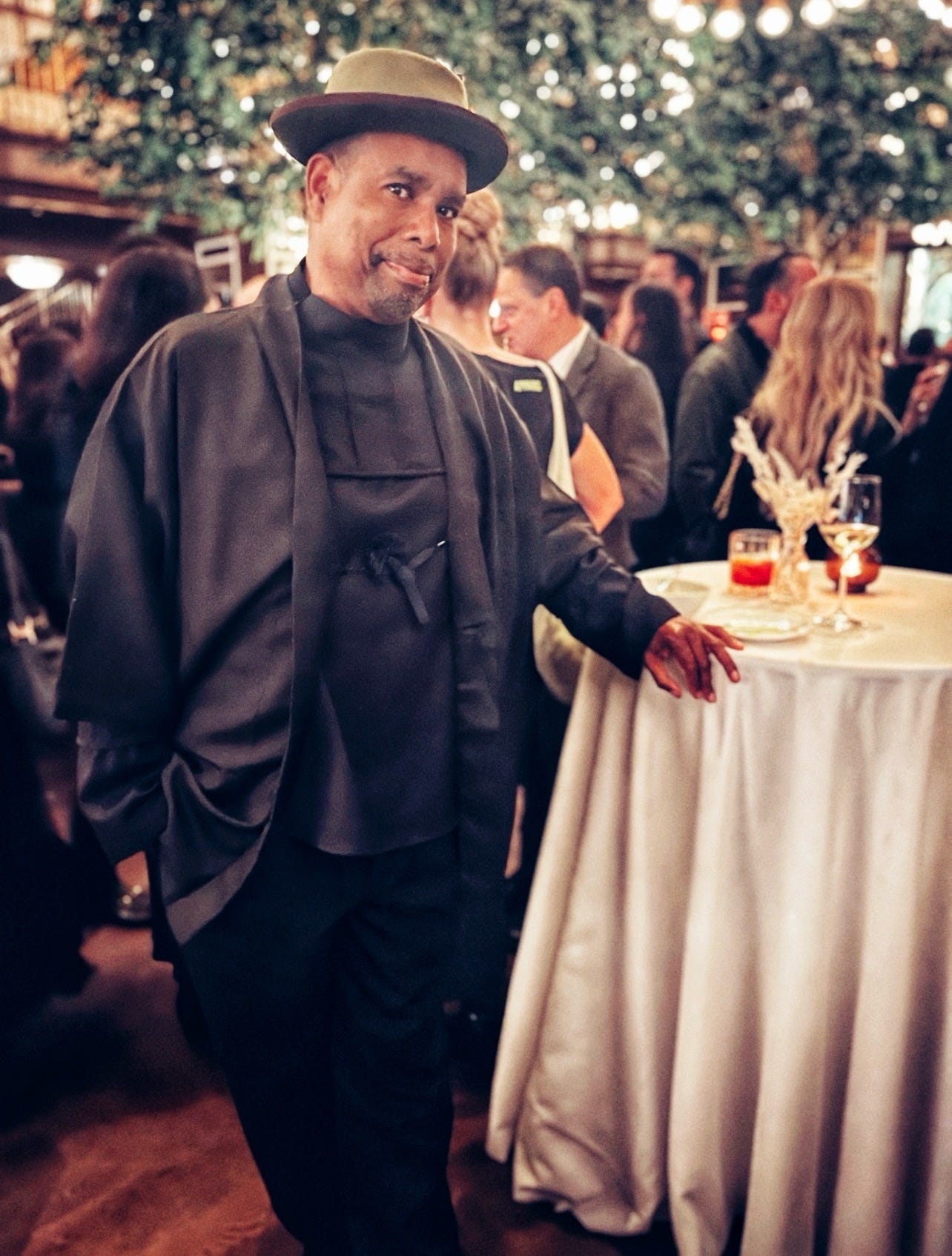
Nowadays, I do not play. The Martini has become a serious thing. I do not order Martinis from folks I don’t know or at least know of; I have seen the Way and I stay upon it. The Martini glass and the heavy glass graduated pharmaceutical beaker, both of 1880s vintage, are in the freezer, with the silver stirrer. The beaker comes out of the freezer first, along with the ice. One part vermouth (usually Dolin Blanc), five parts Fords Gin, a goodly dash of Fee Brothers Orange Bitters. The ice is added and makes approximately fifteen fast orbits of the still-frozen beaker. The glass comes out of the freezer, the ice is given one final revolution, and I strain the nearly viscous drink into the frosted glass, holding back the ice with the spoon. Lemon peel is expressed and laid therein. The glass remains translucently frozen, the lemon rind only faintly visible from the side. It is surely not Ago’s Martini, but it is a sporty and well-liked cousin thereof, and that’s close enough.
If it is cold or raining out, I repair to the velvet couch. If the weather is clement, I repair to the roof garden. And then, relatively quickly, forty-four years after The Incident, I once again set the world to rights. Hallelujah.
Garrett Oliver is Brewmaster of Brooklyn Brewery, bestselling author, ideator, and man about town.
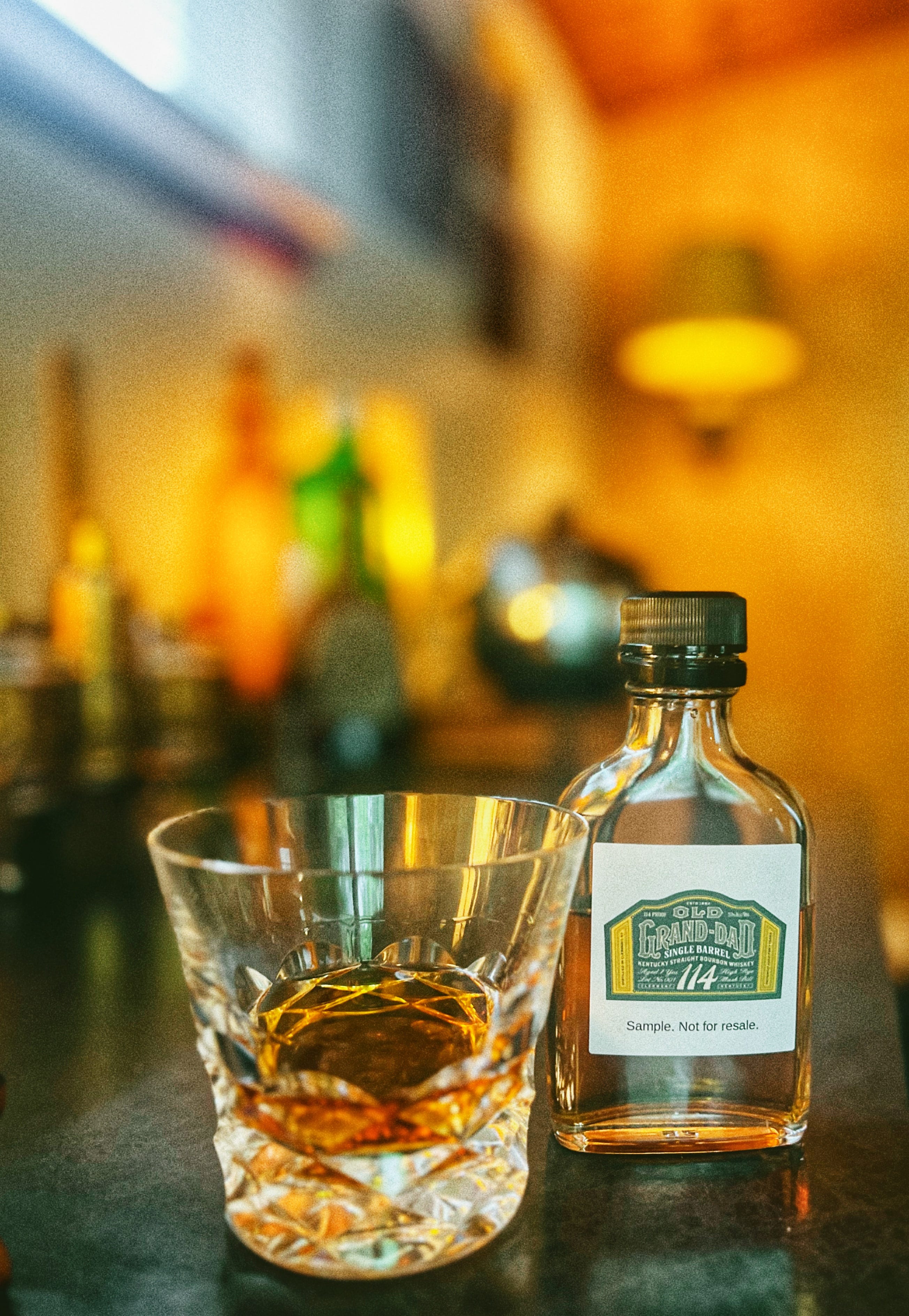
The Single Barrel trend has finally come for Old Grand-Dad 114, one of the elder statesmen of the overproof Bourbon world, having been introduced in 1980. The 7-year-old expression will be an annual release. At $49.99, it is still a bargain, as is everything in the ever-undervalued Old Grand-Dad line.
The whiskey has a wonderful, entrancingly classic nose of wood, caramel and vanilla. On the palate, there were surprising fruit notes of orange and cherry, though the woody and vanilla notes come back quite quickly after that. There is no hotness on the palate. It is a smooth, relaxing sip. A fine addition to the OGD family.
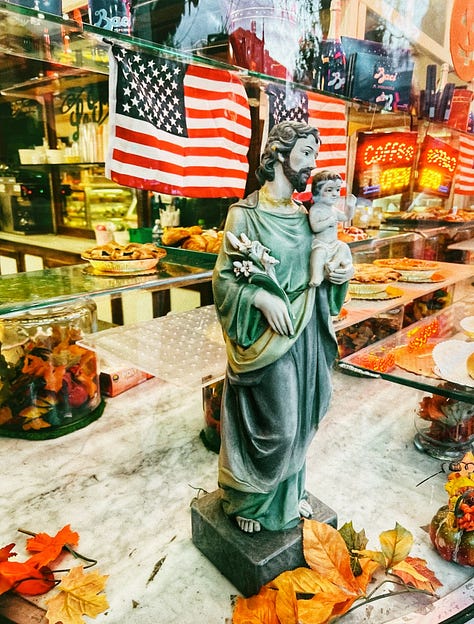
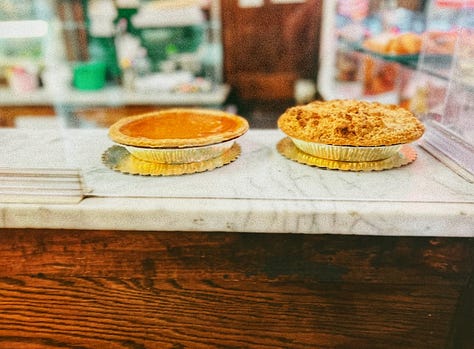
In Memorium: New York City continues to lose culinary icons at an alarming clip. The latest visit is La Guli Pastry Shop, a landmark in Astoria, Queens, since it was opened in 1937 by Paolo Notaro, an immigrant from Palermo. Until it abruptly closed last week, it was run by Paolo’s son Rosario and his granddaughter Maria. Rosario actually grew up in the apartment just above the bakery. The elegant storefront and beautiful interior woodwork, shelves and terrazzo floor are all original. Those elements, according to the New York Post, have all now been stripped away.
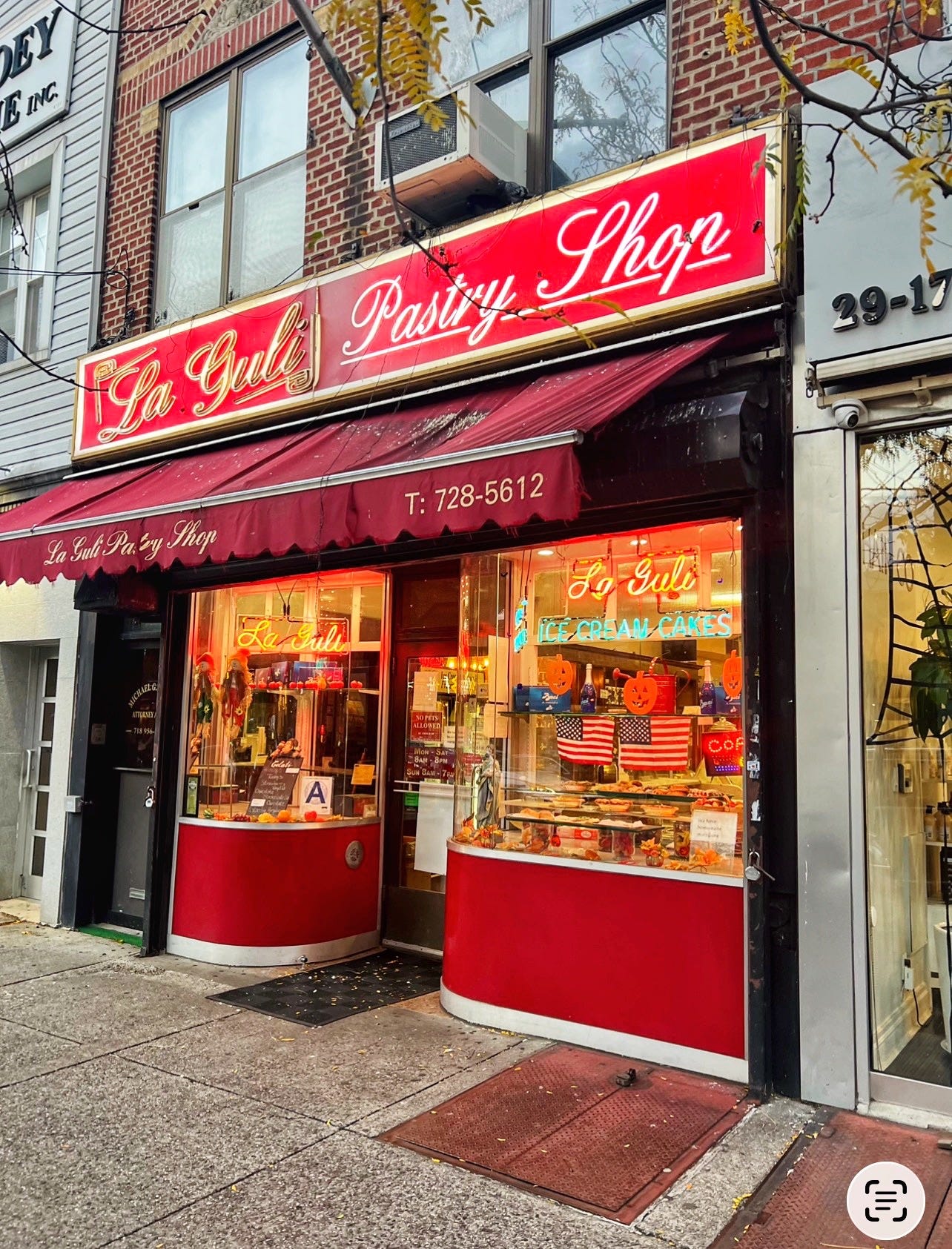
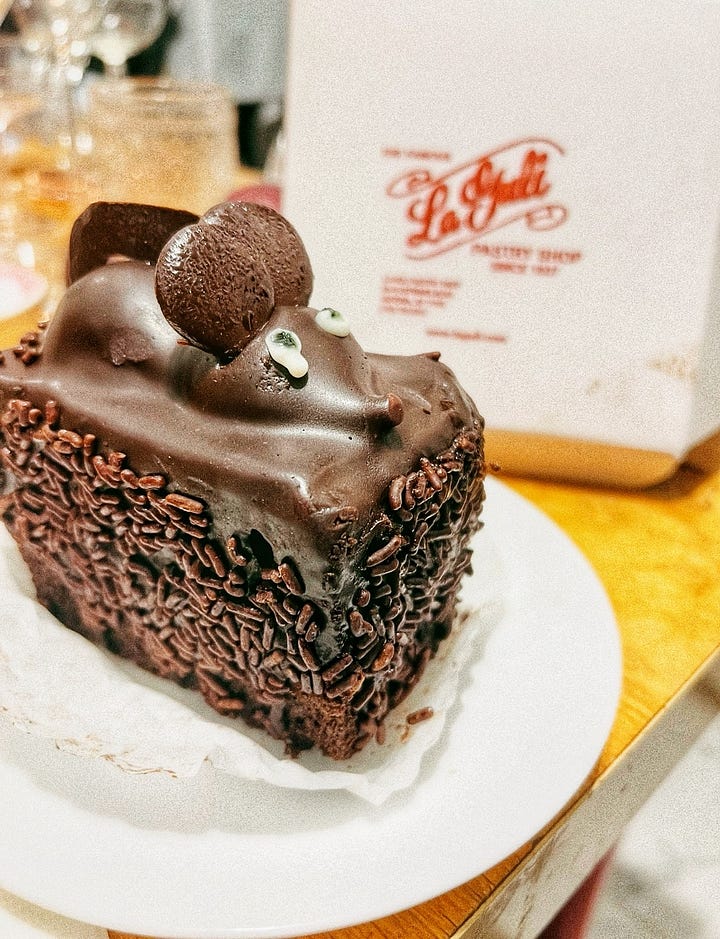
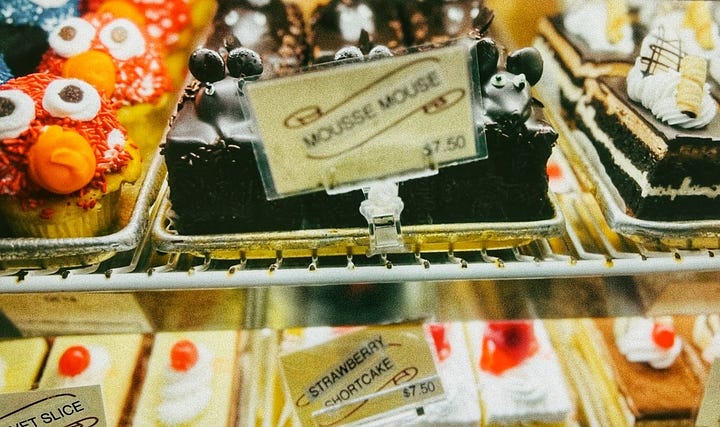
The bakery presented a particularly attractive facade to the street, what with its curving windows, attractive displays and delicate neon signs advertising Gelato and Spumoni. I could see from old pictures inside that the store did lose, at one point, a marvelous neon sign that sat directly above the store. It was replaced by an awning. We were there just last fall on the trail of pontikaki, a mouse-shaped chocolate cake specialty… Chef Dan Martello, one of the founders of the restaurant and bar Cure in Rochester, is stepping down after 14 years. Will Cornfield will take his place. Partner Charles Cerankosky, who handles the cocktail side of the operation, will continue with Cure… Pearson’s, the longstanding candy company in St. Paul, MN, which was founded in 1909, is shutting down its factory there. It’s parent company, Promise Holdings, says the plant is no longer financially sustainable. Pearson’s makes such treats as the Nut Goodie and Salted Nut Roll.… Vinepair rounded up several of the best bar hot dogs in New York City. Not praised, but pictured, is our own Simonson Dog at PDT!… Chicago Food Magazine wrote about The Martini Expo, which is coming up in September… Raines Law Room in Manhattan, one of New York’s most famous cocktail bars, reopened on Aug. 1. It was closed for five months following a building fire.

No posts
Comments
Nothing yet. Say the first thing.
Sign in to join the conversation.