
Rob Murphy(00:00.674)
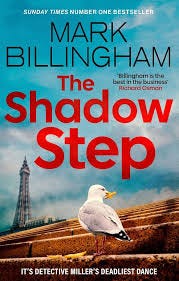
Mark Billingham, thank you so much. And many congratulations on Shadow Step. Now this podcast is about where crime and culture clash. And I guess the origins of this story is where a kind of a true crime and culture clash, in that it started in a park with you and your dog, didn’t it?

Mark Billingham (00:20.088)
Did start in a part with me and my little dog. my wife and I were walking our little dog, Ruby, and the park over the road. And she’s a she’s a funny little dog, she’s a sausage dog, miniature brown sausage dog. And she’s wobbly. in fact, at one point I had a big battle with my publisher about trying to call this book the wobbly dog, but they wouldn’t have it. so she had a back operation, she had an injury in a back operation, so she has a little wobble. And we’re walking in the park and she was attacked by two XL bullies. These huge dogs just came running from nowhere.
And they would they picked her and they were shaking around. It was horrendous. But we managed to get her off these dogs. And then the owner of these monsters came ambling over like nothing was happening and was like, Yeah, what? And I went, Keep your effing dogs on a lead. At which point he threatened to stab me. and what my wife and I did was obviously back away and go, This guy’s un you know, dangerous and went away and called the police and he got away and nothing happened. So I thought, I’m gonna write about this.
But the ending’s not gonna be the same as it was in that park. he’s gonna get what’s coming to him.
Rob Murphy(01:18.978)
Ha ha ha.
Rob Murphy(01:23.008)
Yes, and he gets what and that’s what I loved about this story. He gets what what’s coming to him really quickly, doesn’t he? straight from the
Mark Billingham (01:30.978)
Yeah, really really quickly in a and in a vaguely comical way. you know, involving tripping over his own dogs and all that kind of stuff. Yeah, he I mean it’s not a spoiler, he ends up stone dead in a lake. and then a person believes he’s responsible for that and confesses to the crime, but Miller knows straight away that he’s
Rob Murphy(01:50.286)
And you’re talking of course about Barry Cheshire there. Barry Cheshire who is extremely we’re sick we’re extremely sympathetic to him because life’s dealt him a bit of a a bad set of cards. He’s his wife leaves him, her lovers stay away.
Mark Billingham (02:07.636)
Leaves him his wife leaves him for for another man and he’s currently living in the basement of his own house, you know, with sort of a camp bed and a and a grotty old microwave and a little portable telly while his wife and her new lover are romping around in his in his house upstairs. And he’s you know, he’s he’s traumatized from his ex services. Yeah and he’s come back after, you know, several tours in the army. So no, his life is not is not going as well as he expected, to put it that way.
Rob Murphy(02:37.45)
And why did you think this would make a Declan Miller book when this happened to you and you thought, Well, this is a story. What was it about this that made you think, Yeah, this is a Declan Miller one, it’s not a Tom Thorne one?
Mark Billingham (02:49.464)
Well, it it’s funny though. I mean, I d I don’t think I thought that straight away. I don’t think I went home after this incident in the park thinking, here we go, this is the start of something. But it stays, you know, that stuff stays in your head rolling around. And when it came time to start this Miller book, and starting is always the hard bit. Yeah, it’s always a hard bit. that just popped popped back into my head. in the same way that the the the first Miller book, The Last Dance. Again, I hadn’t really got a way to start sorry, the second Miller book, the wrong hands. I hadn’t really got a way to start it. And then I remembered this thing I’d written.
before my first book was published, so twenty-six years ago, I started to write a sort of more comedy crimy book. And I wrote, you know, ten thousand words of it and then put it aside in favor of what became my first book, Sleepy Head. And I went back to look at it and I went, hang on a minute, that’s that’s all right. That’s not, you know, not as horrendous as I remember it. I could tart that up a bit and instead of setting it in the toilets at Birmingham New Street Station, which is where it was originally set, I’ll set it in the toilets at Blackpool Station. And that was the start of the second book.
That nothing is wasted. Nothing is wasted.
Rob Murphy(03:51.154)
You can repurpose anything, can’t you? Of course you can. And so Declan Miller as well. Talk us talk to us about him, please. He I mean he is a gear change, isn’t he, from what you’re originally so well known from, Tom that Tom Thorne. and these books are, you know, they’re they’re funny, aren’t they? So, so f funny. Was that I hope so. Yeah. why why why this why this change? Why why
Mark Billingham (04:11.925)
Yeah.
Mark Billingham (04:17.227)
It is a it is a gear change. I I’d felt I felt like it was about time to to hit pause on Thorn for a couple of books. and I’d been, you know, my background is in comedy and my my in stand up and my my first instinct is usually comedic. You know, somebody tells me the most horrific story and I’m like, where’s the gag? You know, where’s the joke? Nothing is off limits. but you know, and there is humor in the Thorn books, but it’s a sort of dark gallows humor, you know, that cops use. But I wanted to put humor front and center.
And I was invited to create an original detective drama for television. This is, I don’t know, five years ago now. and I came up with this character, Miller. They they wanted it, they wanted ballroom dancing, this company. because I think the the the show was originally devised as a vehicle for an actor and comedian who may or may not just have won Strictly. Okay. So I started developing this thing. And, you know, in the way television works, wrote a dozen drafts of this script and it got nowhere. And I
Eventually ran out patience and and you know started to not care about it and took it away. Just took it away and thought, I’m gonna write these books because that’s the difference in television. You never know if it’s gonna happen, right? However enthusiastic everybody is, so many people are involved, you just don’t know. Whereas I’m I’m in a fortunate position of knowing that if I write a book, it’s gonna be published. So I took it away. By this time I’d been living with Detal Miller for, you know, a year and a half. I knew him really well. I knew him much better than I ever knew Tom Thorne when I started writing about it.
So boom, I just I just wrote the first Miller book. But I did I did you’re write a change of gear. I did think it was time to to write something that reflected my belief, my very passionate belief, that humour and seriousness are not mutually exclusive. You know, you can write about very serious things in a humorous way. If you if you don’t have humour in books, that’s not real life. No. You know, life life is unbearably bleak and horrible and hilariously funny, often at the same times. And that’s the sort of tone I wanted to try and create with Miller.
Rob Murphy(06:15.082)
Wha how you describe this book, there’s a passage there’s a sentence, it’s like Coronation Street meets the wire with extra sausage dogs.
Mark Billingham (06:22.72)
Yeah, yeah. There’s there’s a little there’s a little bit of that going on. Yeah, I like that. Coronation Street meets the water. Did I write that? Very
Rob Murphy(06:28.95)
It was good that But it’s really moving as well. The passages the pas passages with the ex-wife the ex-wife, the dead the dead wife, Alex are are really moving, aren’t they? As well. She’s funny, but it’s also light as well.
Mark Billingham (06:44.534)
Yeah, I mean I you know Miller is somebody whose life is is defined by grief at the minute, you know. He’s gone back to work arguably much too early after his wife was murdered. and he’s grieving, but his way of dealing with it is through this the fact that he just doesn’t care. He doesn’t care who he upsets, what he says, he can’t read a room. he’s forever coming out with these terrible jokes and saying absolutely the wrong thing at the wrong time, which makes him a joy to write about.
You know, I would write Tom Thorne books and a stupid gag would pop into my head, but I would have to put it to one side because that’s not Tom Thorne. If a gag occurs to me when I’m writing Miller, it comes out of Miller’s mouth. and I did want those scenes with Alex. They’re very important to the books because I wanted the reader to know what it was Miller missed. You know, she’s not a ghost. She’s only in his head. I make that very clear. and you know, some of the times they’re just talking about the state of his grill pan or the fact that he’s hasn’t taken the bins out. But you know, that’s marriage.
You know, and I and I w I just wanted a picture of what their life together had been like. And yep, if it’s moving, I’m very happy.
Rob Murphy(07:46.112)
It is and it’s very, very grounding. And there’s lots of things in the book that are really grounding as well. her daughter is a you know, is a a serious drug addict, isn’t she? Yes. And you know, you you it’s funny you but you’re not shying away from anything, are you, that will affect people’s lives. Again, th really moving scenes where you’re trying to where he’s trying to get her help, you know.
Mark Billingham (08:04.694)
Yeah, well I mean I’ve written about addiction quite a lot and it’s something I’m very interested in. My closest friend is a is an addict, a former addict. and so he’s my he’s my technical advisor. and it’s something that affects so many people, you know, from so many different backgrounds. It doesn’t matter where you’re from, who your parents are, whatever, anybody can become an addict or suffer from from the disease of addiction. So I just I again I wanted to write about that, but I didn’t it’s not
You know, I didn’t want to write some sort of tub thump thumping, bleak, serious. You know, the relationship he has with Finn is often quite funny one, you know. And she’s his eyes and ears on the street at Blackpool, so he uses her as a kind of unofficial snout. Yeah, yeah.
Rob Murphy(08:45.606)
Intel so I mean this is a this is a bit of a time for you as well, isn’t it? Because as we’re recording this next week you’re picking up the the diamond dagger. I am which is the highest accolade pretty much in in global crime writing, one could argue. If you look at the list of people who’ve won it before
Mark Billingham (09:06.658)
I know. What’s that like? It’s astonishing. well, this is happening next Thursday, and I’ve got to say it’s a it’s a day I might have a drink or two, because it’s the day the Shadow Step comes out. Yeah, it’s the day I get the dagger, and it’s my birthday. These things have all just ha happened, you know, to to on the side. So I may have a drink or two that night. I’ll wait until I’ve got the award and made a speech and then start drinking heavily. yeah, you look at that list of of of former recipients of the Diamond Dagger, and it is just astonishing.
You know, Reg Hill and P. D. James and Ruth Rendell and Elmore Leonard and John LeCarey, Lee Charles, Val McDermott, Ian Rankin, McHerran. I it it it’s an incredible club to be joining. So I’m not gonna pretend for one second that I’m blase about it. It’s absolutely thrilling.
Rob Murphy(09:49.816)
When you mention those names, they’ve each got their own they’re all it’s all crime fiction, obviously, but they’ve all got their own unique take, isn’t it? Well, you when you’re reading a Val McDermott book, win a McCarron book, win a John Lacare book, and also a Mark Billingham book. What is it that’s so distinctive about these and g and of the authors who haven’t won it as well do it too some, but what is it about you guys, this sort of people at the top of the mountain?
what is it about you guys that you’re able to do that, to write within a genre, but also to have your such your unique imprint and it’s just you.
Mark Billingham (10:25.73)
Well, I think we’re all storytellers. All those writers you’ve mentioned are storytellers. And that really is where crime fiction, I think, differs from a lot of other areas of the of the literary world. Our f our first duty is to tell a story. obviously there are other things crime fiction can do. I you I banged the drum for crime fiction for a long time and would and would claim, you know, argue with me if you want that it’s the kind of social fiction of our time because, you know, detectives can go anywhere, they can talk to anybody across the whole of society.
so you can look at what’s happening in the world. If you make that the agenda of your book, you’re gonna write a bad book. You know, a book shouldn’t have an agenda. Story is is first and foremost. But within that, you can do all sorts of things and get all sorts of things off your chest. and you’re absolutely right, all those writers could not be more different. You know, you’d never mix a Mick Herron book up with a John LeCarey book or a Lee Child book. but what they’ve all done is tell stories very regularly. you know.
Every year in a lot of those cases. and and they’re and none of them are limited by the genre because it isn’t a limiting limiting genre. One of my pet hates is the phrase transcends the genre. This is a book that transcends the genre. That just makes me want to puke. Because firstly, it isn’t a genre that needs transcending. It’s perfectly fine. Thank you very much. Nobody is making us write crime fiction. We all love crime fiction. you know, we don’t have a gun to our heads. It’s it’s what I want to write. I’d
I’d be uncomfortable writing anything else. I could try and write a lovely slim literary novel and after ten pages I’d just have to kill someone, you know?
Rob Murphy(11:57.346)
What is it about Mark Billing? What is it about you that has connected with readers, millions of them, for twenty five, twenty-six years?
Mark Billingham (12:04.312)
God knows, Robert. If I you know, it’s probably best I don’t know that. You know, I think it’s probab well, it’s like anything else. You don’t want to see how sausages are made. It’s probably it’s probably not a good idea to have you know, because if if there’s some kind of formula, if there’s a Mark Billingham formula, then I’m writing I’m being formulaic. I don’t I don’t want to do that. Which is why I I very much changed tack a few years ago and started writing these Miller books. Because, you know, I know plenty of brilliant writers, by the way, who’ve written, you know,
in one subgenre very strictly bo book after book for a long time and they’re wonderful. But I I’m I’m a bit more restless than that.
Rob Murphy(12:38.071)
and we’ve got to say as well as Tom Thorne and Declan Miller, you’ve written standalones. Is it five or six? And I think you might be working on one as we speak too.
Mark Billingham (12:45.442)
Yeah, which is what I’ve done it’s it’s the book I’ve just finished as a standalone. And it’s always nerve-wracking because there’s always part of you that goes, you idiot, why don’t I just put Tom Thorne and Phil Hendricks in a room and they can have a curry and they can, you know, all those things that readers of the series like. Because I’m like anybody else when I I’m a fan of series fiction. And when I read it, I want those little I want those ticks. I want those comf comfort moments where your favorite characters are in a familiar location talking about things they always talk about. You know, when we go and see bands we like.
The last thing you want to hear is hear some songs from our new album, right? You want the hits.
Rob Murphy(13:17.528)
So when you were growing up, what what inspired you? Was it crime fiction? Because obviously you’re you you know, you’re so steeped in comedy too. w what what was it? What were you reading when you grew up? What what are you what were your foremost inspirations?
Mark Billingham (13:29.57)
Well, it’s weird because there’s and I’ve spoken to a lot of writers about this and and and we we seem to have this in common. There’s no there’s no there seems to be this jump from these these harmless books you have to read at school to suddenly reading, you know, whatever it might be, Sven Hassel or, you know, Alistair McLean or these for me there were two big books that I read back to back one summer and I guess I’d have been thirteen, which were The Godfather and and Jaws. Right. Right. And obviously I’d not, you know
Didn’t know anything about these books, didn’t know anything about the films because I was 13. But I read these books and went, bloody hell. You know, I didn’t know a book could do that. These were two, you know, monstrous titans of popular fiction, but I didn’t know that at the time. you know, the vi the way the violence was described. Both the both the books also had dirty bits in, I should say. which is probably quite important when you’re a 13-year-old boy. Because again, you don’t get that when you’re reading To Kill a Mockingburg and an Animal Farm at school.
So those the so I I read those books and then a few years later, I guess when I’m when I started being a student and stuff, I started becoming obsessed with American hardboiled fiction. So Raymond Chandler and Dashel Hammett, and on James Kane and all that, Ross MacDonald, all that stuff. and from that it was crime fiction from then on. You know, I I guess the bit I’ve missed out here is the the probably the the fuse was lit by an old teacher of mine, a maths teacher, oddly, not an English teacher. No, he was a maths teacher of
Rob Murphy(14:55.062)
Okay.
Mark Billingham (14:57.216)
Really curious old fellow called Len Bowles, lovely man. and he would get bored in his own maths lessons. He would get he’d get twenty minutes in and go, God, this is this is tedious. And he had an old bat battered cricket bag which he took everywhere with him, and he would pull out a copy of The Adventures of Sherlock Holmes. And he read a Sherlock Holmes stories in maths lessons.
Rob Murphy(15:15.33)
How’d you doing your math how’d you doing your maths exams? Were you going two two one B?
Mark Billingham (15:19.528)
Squeaked through, but you know, I think to d to this day that’s why I love crime fiction, but I can’t add up. He would read these amazing stories. And, you know, I can’t remember all the details of these short stories. There’s poison and snakes and all that stuff, but the character, you know, that character stayed with me, this incredible character is socially completely sort of inept and and you know, borderline psychotic, and would sit shooting bullet holes in the walls as he tried to solve cases and the music and the drugs and all that, you know, we haven’t come too far.
From Sherlock Holmes to, you know, the modern detective and all their foibles. But yeah, that’s that’s probably what lit the fuse for me.
Rob Murphy(15:54.146)
And just for people, and I know lots of people listening to this will know you and know your story, but for those who don’t, after you were a student you went into acting, and this is gonna be a bit of a if and onto TV, and if I’m not as old as I look, life’s been hard to me. But if twelve and twelve, thirteen-year-old me said you’d be interviewing Gary from Maid Marion, I that’d be a proper pinch me moment there. That’s
Mark Billingham (16:20.718)
Best best job I ever had. I mean, I I I wanted to be an actor. That’s all I wanted to be at that time, you know, mm mm getting through school and then training and doing drama at university. and I did for a bit. And I would be getting bit parts in TV and theatre and this and that. And then I walked into an audition for this job made Marion and a Merry Men, and that’s what I did for the next five years. And it was just a brilliant job. written and created by Tony Robinson. although it was ostensibly a kid’s show.
There was lots of stuff in it for adults and students. Yeah. in fact, when they showed it in America, they showed it back to back with Blackadder at like midnight. I don’t think they knew even knew it was a kid’s show. and by the end of it, I was involved in writing it. because Tony knew I wrote. And and and me and Tony would and the other guy, David Lloyd, who played Graham. We would sit around between takes just telling filthy jokes and whatever. And when Tony got busy and they wanted an end extra episode, said, do you fancy having a crack at this?
So I did, and by the time Mar Mariam finished, I’d become a writer by default. It was just a complete accident. But God, I’m glad I’m glad he did.
Rob Murphy(17:24.942)
And how what responsibility did you feel as the script writer there? ‘Cause you know, you you were had been part of the casting crew, but to know that you’re responsible for the gags, for the story, for the and other and also you know, it’s comedy as well. You can’t get comedy wrong. Comedy fails quicker than anything, doesn’t it? So
Mark Billingham (17:41.806)
It does, it does. I d I think I suppose what I remember most is trying not to give myself all the best lines. but also it was an episode, this particular episode was featured this that I wrote featured this parody of the crystal maze. Okay. So so we’re running around inside this, you know, medieval maze, just getting covered in custard and feathers, and it was so unpleasant. I thought, why did you write this, you bloody idiot? but it’s and I mean I I
went from there to writing for television for a few years and I have to say now looking back largely hating it. Really? Largely hating it. For some of the reasons I hinted at when I was talking about the you know, the genesis of Miller. It’s just the wheels grind so slowly and you’re getting notes from a hundred different people and a dozen different countries. I used to do a lot of animation for the Cartoon Network and write, you know, and it was good stuff, but
You’d get notes from Lithuania and France and Russia and w and they’d all s conflict with one another. And again, you’re 15 drafts in for a half hour animated comedy and you don’t care about it anymore. and obviously the thing the thing with the books, once I made that leap, I can I’d be a fool if I didn’t listen to what other people said when I’m writing the books, my editor notably. But at the end of the day, I can say, Do you know what? I think I like it the way it is. I can. I have that power to do that, which is kind of
But you know, you that’s not a power you want to give away.
Rob Murphy(19:07.51)
And so y you got in your first book was now twenty six years ago, twenty seven. You started writing Sleepy Head? And you’ve had a special edition out this year, haven’t you, I think? Was it last year?
Mark Billingham (19:13.496)
Yeah. Yeah, two thousand one.
Mark Billingham (19:18.232)
Two special editions, I had a special edition on the twentieth anniversary and and Little Bram put another one out on the twenty-fifth. And it’s great. On the twentieth I had a lovely introduction from Lee Child, and for this special edition, Mick Heron wrote a lovely introduction. So yeah, they’ve they’ve they’ve been nice little landmarks.
Rob Murphy(19:34.848)
And how important it’s a silly question really, but it’s only to elicit the answer. has Tom Thorne be been to you? because he has changed and and developed, unlike some other writers’ characters over the years, there’s been a a slower aging process, hasn’t there, than
Mark Billingham (19:52.6)
There’s been a slower aging process because I’m an idiot because I I made him the same age as me when I wrote the first book, thinking I was going to age him in real time. And after four or five books, I started going, hang on, you’re gonna run out of road very quickly here, mate. So I just slowed it up because even though there’s a year between the books, there’s not necessarily a year between the cases, you know. Book twelve can kick off two weeks after book eleven finishes. So he’s aged, he’s still aged, you know, he’s not charging around
kicking indoors or whatever, but he’s but he’s younger than I am now. He’s he’s aged rather more slowly. and I and I and I’m glad you said that he’s changed and developed because how can these characters not? Yeah. I mean that there are, you know, there’s room in this world for the James Bonds of this world. or or Jack Reacher. Nobody’s a bigger fan of of Jack Reacher and Lee Child than I am. And Lee would be the first to admit Jack Jack Reacher doesn’t evolve emotionally.
Awfully much. You know, that’s not what he does. That’s not what readers want. They want Jack Reacher doing what Jack Reacher does. but when you put people through the violence and the loss and the pain and the grief that crime writers tend to do with their central characters, they have to change or else it’s a cartoon. and he’s not the same at the end of one book, so God knows how different he is at the end of 19 books.
Rob Murphy(21:08.494)
Yeah. And as you’ve been writing these for for twenty odd years, twenty-five years, how how has the writing changed? How’s the j genre changed? how who has been consistently with you on this journey in terms of writers, who who you respect, you like, are inspired by?
Mark Billingham (21:30.296)
Well, there’s right I mean I mean there’s writers I’ve always read. and I like I say I was a big fan of series of of series fiction. So I you know, back before I was published, when I was interviewing writers and trying to write reviews and stuff, I interviewed Ian Rankin, I interviewed Michael Connolly. You know, these are pals of mine now, which is still gobsmacking to me. so they’ve stayed with me. There’s writers whose whose proofs I will beg for early from from publishers.
you know, you just want them straight away. John Connolly, who’s another mate of mine who I think is a wonderful writer. American writers like James Lee Burke, George Pelicanos. those people will always and then and then the new writers that come along, the slightly more recent writers like Mick Heron, who just is sickeningly brilliant. I wish he’d write one bad book, just one. But I still wanna re you know, I I’m still a passionate reader of this stuff, and I don’t I don’t see how you can write it without without not being.
Rob Murphy(22:14.754)
Very good, isn’t he?
Mark Billingham (22:25.1)
Yeah, you know, and and reading new writers, reading new authors that write astonishing books, not just it makes you want to spit feathers, thinking how can you be that good that straight out of the traps? that’s great too. You’ve got to be reading the people that are raising the bar, whether they’ve been doing it for twenty years or ten minutes.
Rob Murphy(22:40.6)
I know we talked about the genre a little while ago, but what is it about crime that you think readers are enticed by?
Mark Billingham (22:48.684)
Well, I think it’s because it’s such an enormous umbrella, Robert, honestly. There’s so there’s crime out there for everyone. I mean crime fiction will tell you a story, as I talked about earlier. There will usually be a resolution of some kind. you know, so there there’s chaos and there are problems, and then this detective comes in, whatever kind of a detective he or she is, a private amateur sleuth or a copper or whatever, and will largely put the world right again. that formula has been around for an awfully long time.
But within that, there are so many subgenres. You know, there are crime novels set in space, or in the 14th century, or in the 17th century, there’s, you know, there’s cr crime that’s dark as bloody burnt toast, or there’s crime that’s incredibly cozy. There’s everything there. You see it, you know, when you go into a mystery bookstore in America. these bookstores that just sell mystery fiction. And there’s golf mysteries and cooking mysteries and golf and cooking mysteries. There’s dog mysteries based around particular breeds, you know.
real estate mysteries. There’s everything out there, if crime happens to be your bag. and as I say, I do I do think it kind of reflects the world. At its best it reflects the world we live in, you know?
Rob Murphy(23:58.56)
And right at the beginning of this interview we touched upon for want of a better word, well, a phrase, a a real crime. But what real crimes have inspired you over the years or have led to characters or storylines?
Mark Billingham (24:12.492)
Well, only one really. I mean, I sometimes you read a little thing in a newspaper or hear something on the radio and it’s a tiny thing, really. You know, if you’re writing about the front page news, then you’re probably on hiding to nothing, because so will ten other writers or you know, you but a little story tucked away on page twelve, and you go, Hey, what? Just something that makes you ask questions because you can start with that and the readers will be asking questions, which is all you need from a kind of opening of a book. The only time I’ve actually written about
Been inspired by a real case. It was horrendous. I wrote a book called Love Like Blood about so-called honor killing a few years ago, which was inspired by the horrific murder of this young girl called Banaz Mahmoud, who was murdered by her family. a bunch of them. I mean, a whole bunch of them. There was a kind of conspiracy, and they hired killers. They brought killers over to murder her, and it was absolutely horrendous. and while I was writing the book,
While I was halfway through the book, the young man she was in love with, which is why them killed her, he, Ramat Suleimani, he took his own life. He took his own life halfway through the writing of that book, which is why that book’s dedicated to the two of them. I think that’s the only time. And and it’s weird because I don’t think I’ve ever been angrier writing a book. The more I looked into this, the more research I did, the more you just thought, this is monstrous. You know, it’s one thing for the likes of me to make up these.
bloody pattern serial killers and all that sort of stuff. you know, thankfully there’s not too many of them running around. But this is something that happened, that is still happening. and it, yeah, it just b boiled my blood. And while I was writing it, I thought this could be terrible because I’m I’m feeling so emotionally involved in it, or it could turn out okay. Thankfully I think it turned out okay. But
Rob Murphy(25:57.708)
What what what would your guidance be to people listening to this and someone who’s got the diamond dagger, who’s been there, seen it, got the t shirt? In fact, I think there’s some something hanging up behind you there.
Mark Billingham (26:08.75)
T-shirt, do you that? Do they give me t-shirt with diamond dagger winner? They should do. I’m gonna insist on a dagger. Bugger the prize, I want a t-shirt. You want
Rob Murphy(26:16.066)
the t shirt. What would your what would your advice be to up and coming writers?
Mark Billingham (26:22.656)
It sounds so bloody obvious, Robert, but read. I mean, I know I I I’ve met so many aspiring writers who tell me they’re writing a book or they’re really keen to write a book. And I go, okay, fine. So who do you read? And they go, I don’t really read. And instantly you just go, it’s not gonna work for you. you know, how could you be a chef without eating food? You’ve got to read. and you’ve got to finish whatever it is you’re writing. That sounds really obvious, but you know, people give up. People give up far too easily.
Every writer I know, all the amazing writers we’ve spoken about in this interview, all of them have got 10,000 words into a book and thought, this is rubbish. You know, they all have that self-doubt, however many books they’ve written, they all have imposter syndrome, but they get it finished and it turns out all right. Every year I go downstairs and I say to my wife, this one isn’t working, this is the one I’m going to be found out. And she goes, Shut up. You’ve said this 26 times. You know, you get a you’ll get away with it. But you’ve got to finish. That’s really important.
Rob Murphy(27:20.344)
What is it about what you do that that makes you want to carry on doing it? What gets you to your laptop every day?
Mark Billingham (27:27.5)
Well, this this this sounds incredibly shallow of me, and that’s because I’m very shallow. But I’m I’m a you know, I’m I come from a performance background. I’m a big show-off. The book for me is a performance. Writing a book is a performance. It’s a different kind of performance, but I’m trying to entertain the reader, keep them engaged. So one of the things I love, and I guess this is because I’ve long ago given up stand-up, so I don’t get those performance jollies anymore. I love the stuff that goes with being a writer. I love having a book out and promoting it.
And some writers would rather stick needles in their eyes and stand up on stage and talk about their book. Bring it on. I mean, that’s that’s what I want. I want to travel about showing off at festivals and in libraries and in bookshops. You know, I got a bunch of that stuff coming up because of the new book coming out and I couldn’t be happier. I you know, so it’s the the job, you know, the job is sitting down and putting your ass in the chair and writing the book. The perk of the job is I get to go out and show off about it. And and if I didn’t have a book out, I don’t know what I’d do.
Rob Murphy(28:24.222)
And a few technical questions. You’re not a planner, so do you is it literally idea, this happened in the park opposite and after some kind of period of time you get something in your mind, you think, actually I could do a book with this, it’s gonna be Declan Miller and you just sit down and type or is it and and you you just start off on the journey and you don’t quite know which way the
Mark Billingham (28:44.278)
Yeah, it is. I mean I’ve got a notebook and it and it’s sitting next to me. you know, book twenty six, twenty seven, Miller three, where I just scribble, you know, I might have a few scribbled ideas, but there is no I I b I once bought a whiteboard and I put it on my office wall thinking it was going to be covered in post it notes and, you know, a plan and never, never used it. it’s just it’s it is just an opening. You need a strong opening. And at the end of which those questions I mentioned, I don’t know the answers to them either.
So I will find out the answers at the same speed as Thorne does or Miller, you know.
Rob Murphy(29:16.664)
But when I was reading the Shadow Step, this is what I found really intriguing. And having since found out that you’re a a planner, not a plotter. sorry, you you don’t plan or or plot, but you but it’s a four hundred page book. But at the end of page a hundred, there’s a big twist. Sit halfway through, there’s another big twist. Three quarters of the way through, there’s another big twist. It does fall really into that four act structure.
Mark Billingham (29:42.124)
Well, I I I wish I could tell you how that happened. it it’s like, you know, somebody once described writing something like this, like a crime novel, as like driving through fog at night and you can only see as far as the end of your headlights. You’ve got a destination in mind. Now you could just put it in the sat nav, you know. but that’s boring. You know, I don’t want to do that. I wanna be able to wake up one morning and go, I could kill him. Or maybe she’s the killer, you know.
I’ve got a better idea than this plan I’ve I’ve spent months working out and then I’m gonna have to stick to slavishly. so it it is just you take a lot of wrong turnings, I tie myself in knots, and then I have to step away for a few days until I’ve solved the problem. but I’d rather I’d rather have those problems to deal with, you know, and the end of one chapter kind of suggests another. I wrote that opening in the park and I it ended. And I thought, well, I’m obviously I’m gonna go to Miller now and see where he is and catch up with him and you know.
By the end of that, or just a conversation between two characters that I haven’t planned out. One of them will say something and it’ll spark something else off. it’s a it’s a strange way to do it. I mean, the standalone that I’ve just finished, or I’m just finishing, I had nothing. I had absolutely nothing, other than this this horrific thing that happens in the first two pages. and I knew it was gonna be the main character was gonna be an undercover cop or an ex-former undercover cop. And that’s it. I’ve literally just been.
By about halfway through you know where you’re headed. and even though I don’t know exactly how a book is gonna end and I don’t know the last line un until I g I get there, I know, and this is the best way I can think of to put it, I know the taste I want to leave in the reader’s mouth. I know how I want them to feel at the end of it.
Rob Murphy(31:21.728)
And do you how many drafts will you do?
Mark Billingham (31:24.406)
I’m I’m very I I’m a bit I’m a bit anal about this stuff. So that by the time I deliver it to my publisher and editor, I’ve I’ve redrafted, you know, I can’t write chapter two until I’m really, really happy with chapter one. Right. Okay. I’m not one of these people that bangs through it and then goes back and starts again. Everything is rewritten and rewritten as I’m writing it. So by the time I’ve I’ve got to the end of that, I then do an a my own copy edit.
Because I know I know the phrases I I overuse and sometimes it’s frightening. Absolutely frightening. In fact, here’s the here’s the copy edit on the book. So this is how many times have I used the word actually in this book? That many bloody times. So I note them all down and then go through, you know, taking most of them out. So I do my own copy edit, I check for typos. You know, if my editor finds a typo in the in the draft I deliver, I’m I’m heartbroken.
Rob Murphy(32:04.462)
Right.
Mark Billingham (32:19.266)
So he I will then get notes from my editor or I will work on on usually one more draft. It’s usually one more draft. And then the copy editor has a go and tells you where you’ve gone wrong and says, Well, if it’s Tuesday in chapter seven, it’s gotta be Friday in chapter twelve, you idiot. Or if he was watching Doctor Who then it would have been Peter Davidson, not Tom Baker, you know, that kind of stuff. but it’s it’s pretty quick. From the from the time I’ve I’ve gone, here’s that’s the first draft, usually one more.
Rob Murphy(32:46.75)
Good stuff. So we know that you’ve got a big week ahead and by the time this goes out this will probably may have just happened. The the dagger, your birthday importantly, and the book coming out. And the book coming out. And you’ve got a tour coming out as well. So if people want to see you, how can they how can they come see you?
Mark Billingham (33:05.014)
best way probably is to look at my website which has all the all the events. I think I think there’s a well there’s a there’s a section of my website called showing off which is just clips of me doing there’s a Marion clip. I think it’s a there’s a clip of that of me getting covered in custard on there. but in the eva there’s an events page which will basically tell you where I’ll be rocking up to show off anywhere near you in the foreseeable future.
Rob Murphy(33:28.466)
Mark Billingham, many, many congratulations on your many achievements over the years and awards and Sleepy Head a great book. Many Sleepy Head and The Shadow Step as well. So from from there to there, thank you so much and thanks for your time today. Thank you.
Mark Billingham (33:44.462)
Thank you for having me.
Comments
Nothing yet. Say the first thing.
Sign in to join the conversation.