
Welcome to Second Story, a newsletter for people who love old houses and beautiful gardens. New here? Subscribe below! Or tap the heart at the bottom of the page to boost this post on Substack. Thank you! — Robert
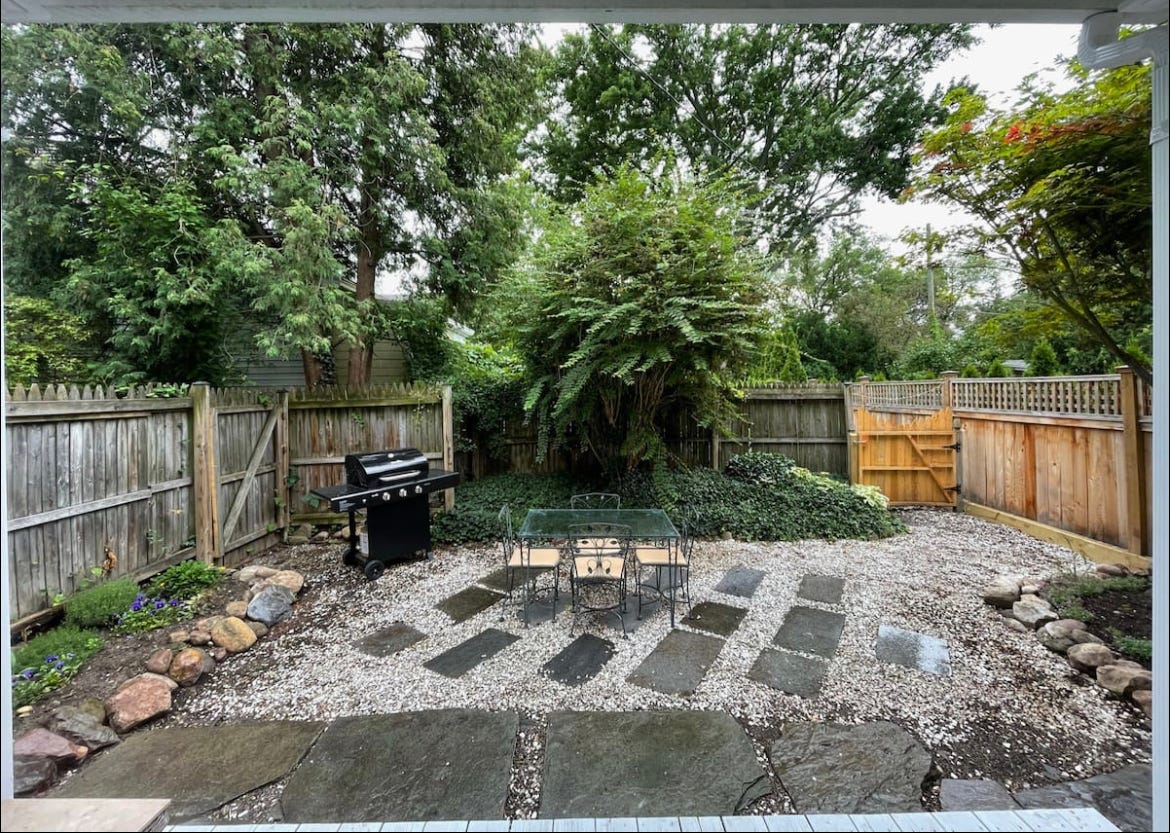
Ever since my partner John and I bought our house in the Finger Lakes, I’ve fantasized about transforming our shallow front beds and postage-stamp of a backyard with a bountiful array of perennials, shrubs, and flowers. It’s a wonderful way to distract from other, more unpleasant, aspects of old-home maintenance like determining how to repair crumbling masonry.
But here’s the thing: I find a beautiful garden equal parts inspiring and intimidating. And I know I’m not alone.
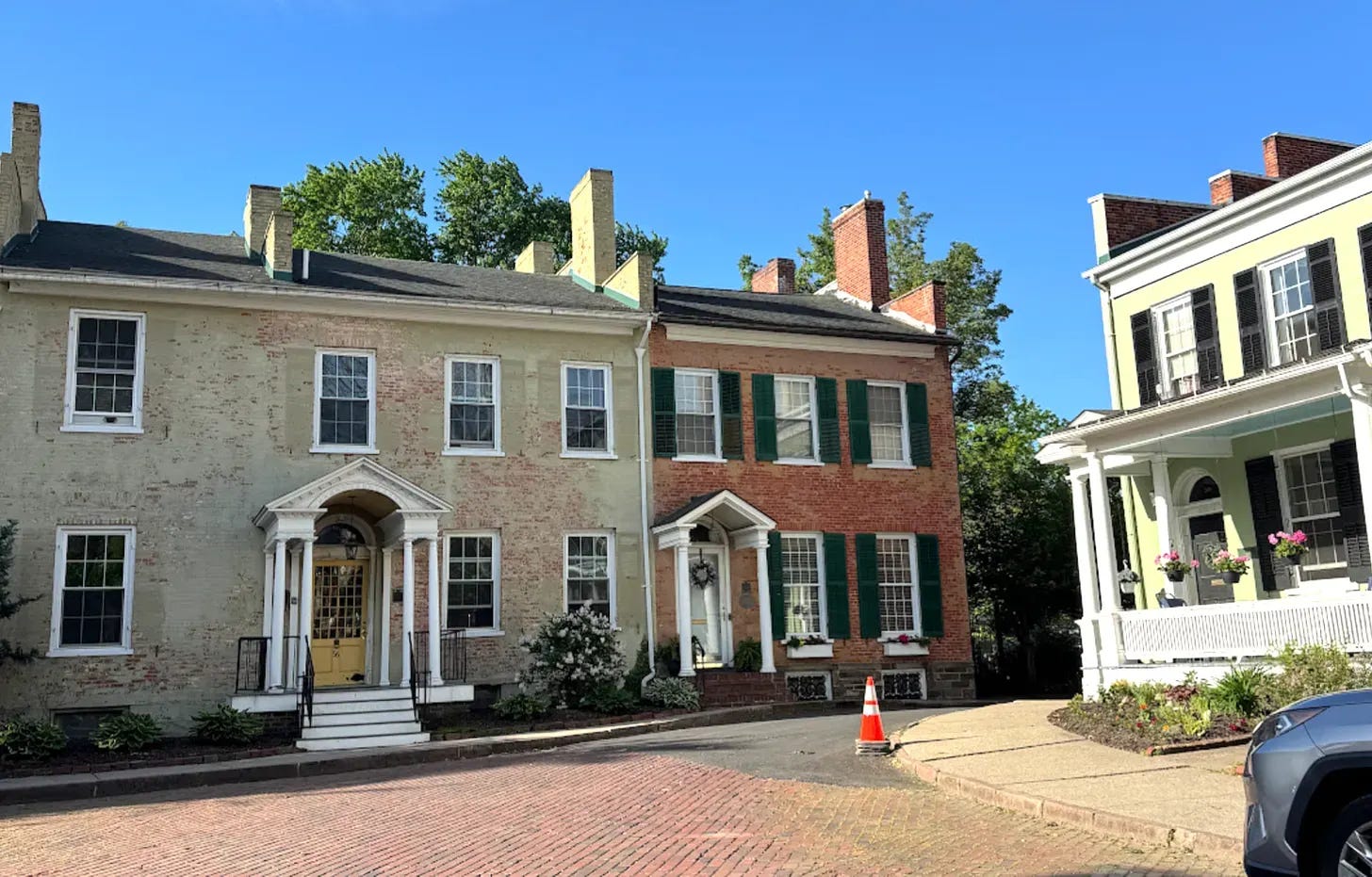
Just a few weeks ago, one of my best friends was telling me about how thankful she was that her mother-in-law, who has an exceptionally green thumb, could accompany her to a local nursery as they picked out new plants for my friend’s Capitol Hill backyard.
Which would work? Which wouldn’t last more than a few weeks? Full sun? Shade? There’s a difference between part sun and part shade? How does the sun come over the neighboring houses? Is the soil acidic? What zone are we in again? It’s like gardening is a science with a technical language unto itself that’s so easily mistranslated.
Not to be deterred, I knew just who to call: Garden coach Jess Zander, aka YouCanDoItGardening on Instagram and TikTok, whose calming and empowering videos with her Boston-area clients leave viewers feeling like they’re just one easily divided hosta away from getting that dream landscape started.
“Identify what’s already there,” Jess told me. “It’s especially important to understand if anything in your yard is a threat or a liability.”
Something like an overgrown rhododendron can just be pruned easily. Focus on if anything looks unhealthy or, most importantly, if it’s invasive.
“I speak with my clients a lot about control,” Jess added. “In my own garden, I’m noticing bittersweet, black swallowwort, and tree of heaven. I know what I’m looking at and can deal with it very efficiently. For a beginner, it may not be so easy, and something that could be dealt with in 15 mins can suddenly become a multi-hour endeavor. You want to assess what needs action, because it can quickly get out of hand.”
Once you understand what you’re looking at, and the plants are under control, you can consider what time and budget constraints you’re working with and what you’d like to fill the space with. Jess emphasized that every garden is highly situational, and that it’s best to be very realistic with yourself about what you can handle.
“Assess the light. You can’t make something that’s in full shade a sun garden and vice versa,” Jess said. “The saying is, and I didn’t make this up, ‘right plant, right place,’ and that’s absolutely true.”
“Right plant, right place” effectively translates to: Fit the natural needs of the plant to the conditions of your yard. You may want a side bed overflowing with lavender, but if that bed is mostly shady, you won’t get the desired outcome.
In terms of soil, Jess says that getting a soil test is really only worth it if you’re moving into a new build—which are often finished with soil that leaves a lot to be desired—or are planning a similarly large-scale landscaping project where you’re starting from a blank slate.
“If you’re spending thousands of dollars to fully overhaul an area, you should get a soil test. Otherwise, I’m just tweaking here or there, doing one area at a time, adding compost as I go along.”
Jess’s Top 5 Plants for Sun and Shade
Sometimes, you just want to be told what will work.
“People get overwhelmed by choice,” Jess said to me, a person who easily gets overwhelmed at the nursery. “That’s why you offer a toddler like, do you want vanilla or chocolate? I think sometimes we’re all toddlers!”
If, like me, you’re a toddler when it comes to plant selection, here are perennials Jess often recommends.
Sun Perennials
Mountain Mint
Hummingbird Mint (agastache),
Black-Eyed Susans,
Aromatic Asters
Catmint
Shade Perennials
Coral Bells
Wild/Fringe Bleeding Hearts
Astilbe
Solomon’s Seal (native variety)
Impatiens (for a pop of color through the whole season)
The basic principles: Put larger plants in the back, and smaller ones in the front. If you’re going to have a perennial garden, add interest through varying color and height. Once you have a group of plants you think works well together, repeat that same grouping down the length of the bed.
The key is to start small, in one area, and then grow—literally and figuratively—from there.
“You need to think about not only various heights but how big will something get in the future,” Jess said. “You don’t want to put a tree right next to a house or something that’s going to grow tall right under a window.”
When planning for the future, make sure you’re spacing plants—especially large plants like shrubs and trees—adequately. Pay attention to the estimated full-grown size usually on the tag at the garden store.
“I’ve walked into so many properties where gardens are overcrowded and over-planted, which means somebody, at some point, overpaid. Now they’re left with a problem that requires more resources to fix.”
In short: You may not need as many arborvitaes as you think you do! You may just need to be patient and see how they fill in.
“I’ve found over the years, you make mistakes, and that does cost some money—that’s just part of gardening!”
But gardening doesn’t have to be an expensive endeavor: “Divide what you already have, buy small, and be patient. Save what’s there as opposed to ripping good things out and starting from scratch. There are always economical ways of doing this.”
And if you’ve realized you made a mistake—whether that means the color isn’t right or the light is wrong or the plant just doesn’t match your personal taste—don’t feel like you have to live with it for any length of time before changing course. “I could plant something and dig it up the next day,” Jess said. “That has happened more times than I can remember. I’ll just think that’s not quite right—and out it comes.”
“I’ve gotten rid of many hydrangeas, and I have one remaining big leaf hydrangea at our cottage in New Hampshire that I’m planning to dig up,” Jess added. “It typically gets just two or three blooms and it’s unreliable. I’m pretty hardcore about acknowledging when something isn’t working and to get rid of it. You owe it to yourself—life is too short!”
Comments
Nothing yet. Say the first thing.
Sign in to join the conversation.