
“I see a lot of unfunny comedians, I see unfunny TV shows, I see unfunny awards shows, I see unfunny movies — because everybody’s scared to make a move. And that’s not a place to be … now you got a place where people are scared to talk … especially bizarre in America” — Chris Rock
Laughter evolved as a form of play in mammals. It began as a way to practice predator-prey interactions —a training ground for when the threat stops being make-believe. Humor emerged later, alongside language in humans, and is still, at its core, risky play. A good joke is a high-speed collision between what we know and what we think we know and helps us accept our flaws, imperfections and contradictions. It’s easy to learn to savor the sublime and the orderly, but it takes a certain madness to learn to delight in the ridiculous and the unexpected. Humor takes the messy contradictions and paradoxes that haunt the dreary intelligence of our species and extracts from them pure joy. By giving us space to be what we are—confused primates high on our own delusions—a good joke lets us stop pretending we’ve got it all figured out and take life (and ourselves) a little less seriously. It forces us, often against our will, to confront the stupidity of it all—bursting our bubble of self-importance, puncturing the illusion of control, and letting a little air in the place.
That’s why comedy has always been more than entertainment. It’s a socially sanctioned way of pointing out incongruities that don’t make sense and acknowledging the screws that stay loose without getting exiled for noticing them. Good jokes spoil our simplistic concepts of good and bad, the sacred and the profane, and frustrate the rigid categories devised by reason, emotion and social custom. They’re dirty, inconvenient and irreconcilable. Good people have bad thoughts and supermodels take nasty dumps—the very stuff we suit-wearing apes evolved to laugh at.
In an anxious culture that turns partisan narratives into sacred beliefs and rewards branding over sincerity, comedians used to be among the last people still allowed to say what everyone else was thinking. Their job was to notice everyone marching in lockstep and break the spell. But in a nation where partisan politics consumes everything in its path, tribal orthodoxy has started to affect Americans’ sense of humor. Onstage, you can feel the tension as the audience nervously checks whether a bit is safe, has been pre-approved by the joke police, or whether the comic is on the right team. Norm Macdonald called it a crisis of “clapter”: a humorless age where jokes are rewarded with polite applause instead of genuine laughter. And although the populist right is probably the greater and more immediate danger, the social justice left better captures this era’s zeitgeist—a nation of anxious primates competing for online status relieved only by the empty babble of smug chuckles.
Politics kills comedy by turning jokes into identity tests and loyalty signals. It moralizes and sets certain beliefs apart as inviolable, while humor thrives in the grey areas between the sacred and the profane. When Chappelle mocks untouchable cultural totems, like the etiquette around gender identity, he’s doing something extraordinary that very few people in the world can pull off. When he’s lecturing his audience about racial justice, he’s just another self-righteous scold doing something anyone can do. And when late night collapses into “Trump sucks,” it stops being comedy and turns into propaganda.
Comedians used to be contrarians. They were allergic to tribes, bristled at authority and made fun of mawkish sentimentality. They were Patton Oswalt’s brother, Matt, at the Hollywood Bowl on Christmas eve, screaming “Fuck you!” at the screen in the middle of Jerry Maguire’s “cynical world” speech. The best were equal-opportunity offenders. Their target wasn’t left or right; it was whoever was doing the policing or pretending. When the Moral Majority was telling everyone what to say— that’s who they went after. When the woke scolds did it—they mocked them too. They embodied Groucho Marx’s motto: “Whatever it is, I’m against it” and their goal was to expose the hypocrisies of whoever was in charge.
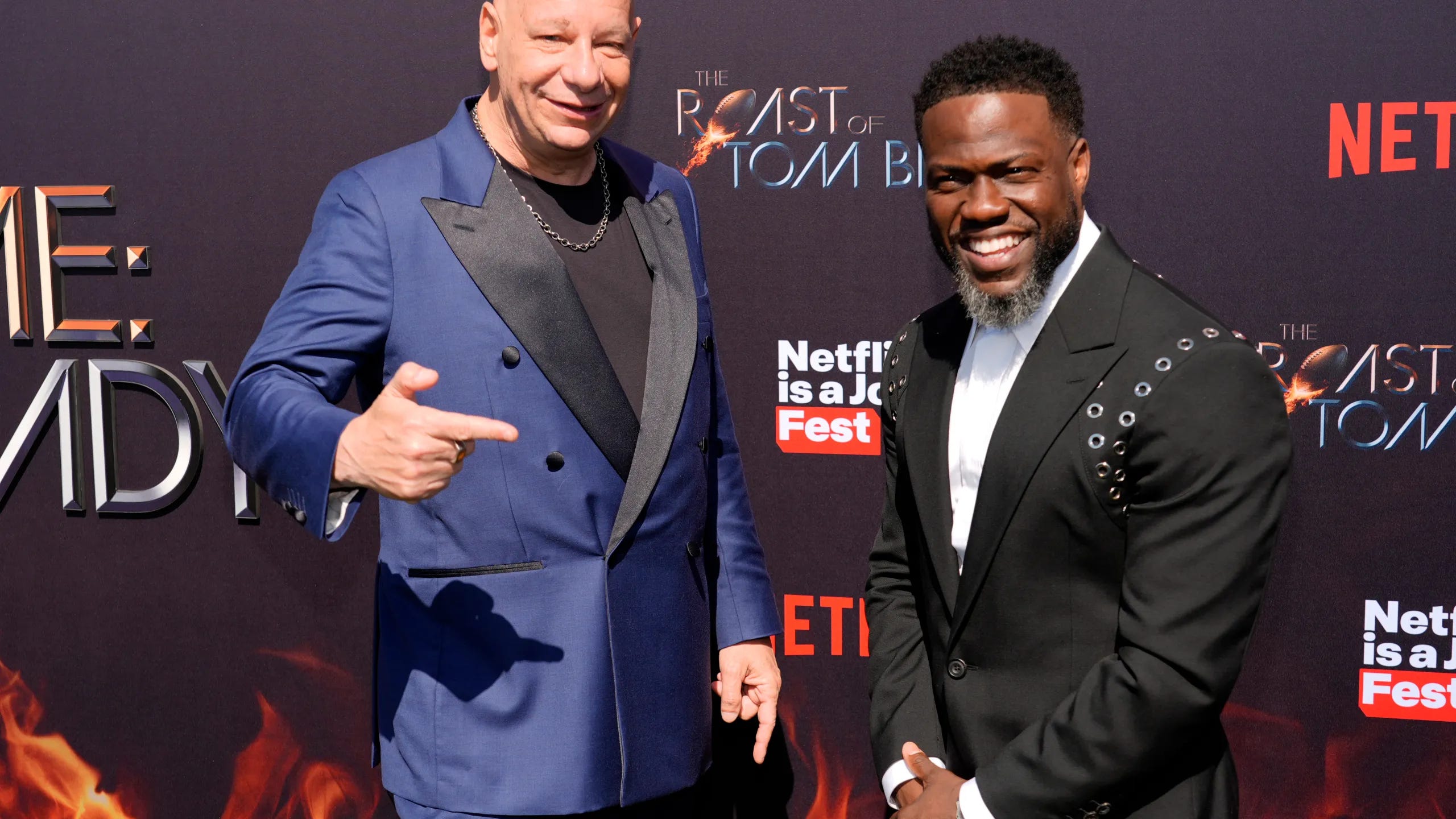
American humor was always anti-elite. Its mission was to upset hierarchies, not reinforce them, and few things were more offensive to comedians than bootlicking. One of my favorite moments from The Roast of Tom Brady was when the host, Kevin Hart, caught Jeff Ross quietly apologizing to Brady for jokes he’d just told. Hart ripped into him:
“Wow…. Wow…. Stop being a bitch, Jeff. Just sit down. Stop kissing his ass. You okay? You okay, right, Tom? It was just jokes…. Such a bitch. Jeff, you’re so fucking… Bitch. I heard you over there, you bitch….Tom, you all right?”
Hart was reprimanding Ross for doing what is the most offensive thing a comedian can do—suck up to the most important person in the room.
He was enforcing an old ethic in comedy: don’t apologize for your jokes. It was a throwback to an earlier era, when comedy clubs were places where people were allowed to stress-test the culture without being hauled before Human Resources. More and more, however, audiences have stopped asking “Is this funny?” and started asking “Is this allowed?” Tribalism gets the press, but the deeper threat is what it produces—within-group conformity and a shrinking tolerance for dissent. And although both sides celebrate their free-thinking iconoclasm, loyalty is strictly enforced. On the right, it’s “don’t tread on me” policed by a culture where one criticism of Trump can end your career. On the left, nobody’s in charge, but everyone is policing everyone else—so many rules about who can say what about whom that you need to consult a moral spreadsheet before you can make a joke. On both sides, Americans have lost the ability to think beyond their own performance. The whole charade bears the mark of arrested social development—me-centered and self-serious; the nervous conformity of a society stuck in adolescence.
So why does so much “comedy” now feel safe and pandering instead of risky and funny? The old danger was bombing. The new one is being cast as a bad person. When the cost of getting a laugh gets high enough, comedians start optimizing their bits for approval. Never before has every half-drunk joke, every stumble of language, been so on the record; never before has the moral climate been so skittish—so quick to litigate tone, ignore intent and presume motive.
America was once the funniest place on earth. But as our culture turned life into a branding exercise and started treating discomfort as danger, we lost our tolerance for risky play. And as audiences increasingly confused what a comedian thinks, with what he thinks is funny, the incentives shifted from surprise to safety. American humor has always been a tool for questioning orthodoxy, challenging certainty, and keeping tribes from mistaking their sacred stories for reality. When that function collapses and every joke is screened for loyalty, society loses one of its best safeguards against tribal conformity. Clapter is what that loss sounds like. Real laughter belongs to a culture willing to admit it might be wrong. A society that can’t tolerate being offended forfeits one of the clearest ways it has to signal that it hasn’t turned its beliefs into idols. When we can’t laugh at ourselves and comedians are no longer willing to risk offending us, there’s nobody left to break the spell.
No posts
Comments
Nothing yet. Say the first thing.
Sign in to join the conversation.