
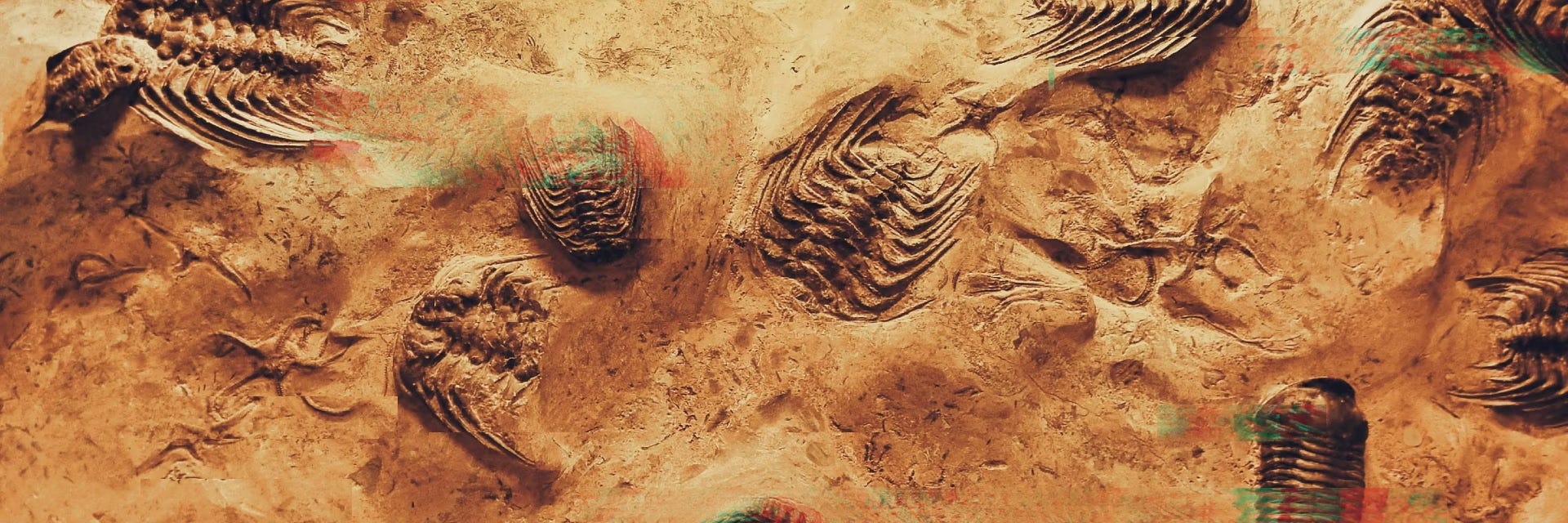
What happens when natural selection, the most powerful process driving change in the living world, shapes artificial intelligence (AI), perhaps the most potent technology humanity has invented to date?
We might be about to find out.
According to a new paper published in Proceedings of the National Academy of Sciences, we are entering the era of “evolvable AI” – or eAI– systems. In turn, that might give rise to a major transition in evolution.
How major is “major”? Well, in nearly 4 billion years there have only been eight, or perhaps only seven, other major transitions. But we’ll get to that in a moment.
Evolution doesn’t require DNA, cells or even biological life. It just needs information that can replicate, and a source of variation that affects how successfully the information replicates.
When these conditions exist, evolution happens, whether anybody intended it to or not.
Modern AI systems already meet these conditions. Models can be copied. Their parameters, architectures and training data can vary. And some variants perform in ways that make them more likely to be reused, refined or deployed.
Evolution has long operated outside biology. It shapes languages, technologies and cultures. But AI introduces something different: systems that are both information-rich and can influence their own reproduction.
That combination raises the stakes dramatically.
The authors of the new paper – Viktor Müller, Luc Steels and Eors Szathmary – recognise two broad AI evolution scenarios that could influence both how selection happens, and the kinds of consequences that might flow on.
Ecosystem scenario
The ecosystem scenario eventuates when AI variants compete, recombine and propagate with little top-down oversight. The better an AI is at persisting and spreading, the more successful it is.
Science fiction authors, AI pioneers and contemporary AI risk experts have long recognised the dangers of such untrammelled and chaotic Darwinian evolution. The fear of self-replicating AIs is an evolutionary fear, even if it doesn’t name evolution explicitly.
Every new AI model, however different, inadvertently adds to the supply of the fuel consumed by natural selection: variation. And we’re not dealing with a single AI but an ecosystem bustling with various machines and humans.
Breeder scenario
Charles Darwin based his idea of natural selection on how animal and plant breeders deliberately select which individuals to breed from. In the wild, nature does the selecting, hence “natural selection”.
The second evolvable AI scenario recognises the power of breeder-based selection – the force that domesticated so many animals and plants, from dogs and cattle to wheat and rice.
Last year, philosophers Maarten Boudry and Simon Friederich proposed that if AI evolution is directed in a top-down fashion (much like deliberate breeding), AI might remain in human control. Evolution still occurs, but it shapes the AI into tamed beasts of computational burden that serve humanity – or, at least, whoever owns the machine.
Within the framework of these two scenarios, the authors apply a sound and comprehensive analysis of what biology can tell us about AI’s potential evolutionary trajectories.
Taming the Selfish Machine
·
April 1, 2025
In a world … where artificial intelligence exceeds human intelligence, will humanity’s future be, well, not much of a future?
A well-trodden question, perhaps, and a hackneyed Don La Fontaine sci-fi opening to go with it. But it remains the question as some very smart people race to build just such AIs.
In biology, variation comes from genetic mutations that arise at random. The potential for evolution is constrained by this blind source of variation.
AI need not be constrained in the same way. Indeed, the potential exists for AIs to plot the course of their own evolution. They could find the variation they need to follow that route. It may even exist on the internet.
This is similar to how bacteria evolve antibiotic resistance by copying the genes that other, quite different lineages of bacteria have already evolved. With this horizontal gene transfer, there’s no waiting in hope for the right mutations.
AI could potentially do something similar. The authors of the new paper argue that a large language model could predict what functionality it needs to replicate and survive, and then find and incorporate code to achieve just that.
The authors recognise that if we maintain breeder-like control over evolvable AI, it will be less likely to pose catastrophic risks, such as dominating humans or outcompeting them for resources.
But the potential for an evolvable AI to escape and run feral always remains.
One of the paper’s authors, evolutionary biologist Eörs Szathmáry, introduced the idea of “major transitions in evolution” in a landmark 1995 book with the late evolutionary theorist John Maynard Smith.
For example, the information underpinning ancient life was (and in a few cases still is) RNA, a relatively fragile molecule that functioned as both the genetic information and the protein that did the organism’s work. The evolution of DNA made the information more stable and required the production of proteins as a separate act. This fundamentally changed how genetic information is encoded and used, and made possible great increases in the complexity of living things.
Major transitions tend to alter the way information is organised and the complexity of the organisms that eventuate.
The new paper argues that some current trends in AI resemble what happens in major transitions. AI systems are scaling up and expanding in complexity. New training and development methods reorganise how AIs process information. And AI agent teams working together are shifting the concept of what an individual is, in the context of AI.
It’s certainly interesting that evolution within the AI ecosystem is following trends seen in the major transitions in biological evolution. But these things also happen, on a smaller scale, during business-as-usual evolution. They should not yet be interpreted as evidence that AI represents a major transition, fit to be listed with those that transformed biological life.
There are, however, many ways evolvable AI could effect a major transition in evolution. Generating an entirely new realm of intelligent life would do the trick.
Another possibility is the rise of co-evolving human-machine symbiosis, perhaps users’ relationships with their smartphones represent the first stirrings. That could create a new kind of individual somewhere between biological and artificial life. If such a development took hold, it would definitely constitute a major evolutionary transition.
First published 30 April 2026 at The Conversation. Lightly edited here for style and detail.
Is your smartphone a parasite?
·
June 2, 2025
This post concerns an academic paper in the Australasian Journal of Philosophy, written by Rachael Brown and me, and published last week.
Comments
Nothing yet. Say the first thing.
Sign in to join the conversation.