
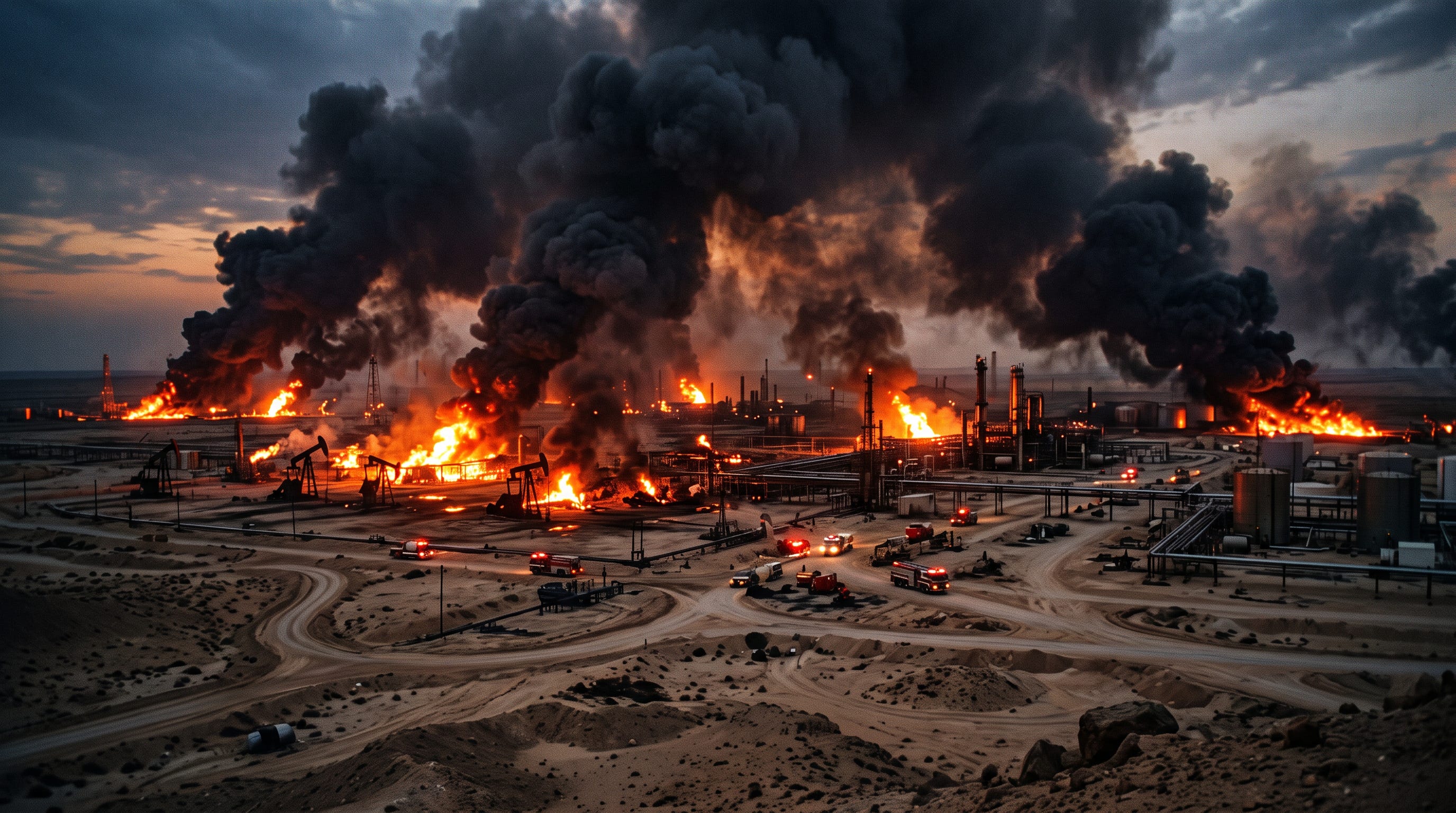
In the contemporary geopolitical landscape, the traditional boundaries dividing global industry have dissolved. We no longer live in a world where energy extraction, financial engineering, and media production operate as separate commercial sectors. Instead, we are witnessing the absolute consolidation of an invisible architecture: The Petro-Media Monopoly.
This monopoly represents the absolute fusion of physical resource extraction and digital informational control. It is a dual-engine system designed to recycle international sovereign wealth, finance over-leveraged technology debt, and construct an un-assailable narrative shield that sanitizes the systemic exploitation of human and environmental metrics.
Recycling the Petrodollar
To understand the sudden, aggressive consolidation waves reshaping Hollywood — symbolized by the multi-billion-dollar corporate maneuvers surrounding Paramount, Skydance, and Warner Bros. Discovery — one must look completely past the traditional studio lots. The capital undergirding these massive media takeovers is increasingly anchored by Gulf sovereign wealth funds and international petrodollars.
Trillions of dollars generated from global oil trade lanes are being systematically recycled to buy up the primary distribution channels of American news, streaming infrastructure, and public entertainment. By capturing these platforms, sovereign entities and family data dynasties secure an ultimate geopolitical mechanism: the ability to influence public opinion, manage regulatory risk, and insulate their parent operations from domestic oversight.
The Infrastructure Debt Core
This continuous pipeline of petro-capital serves a vital structural purpose. It floats the technology sector’s staggering $55.66 billion AI data center build-out. Because these massive artificial intelligence and cloud computing processing grids require continuous, industrial-scale cooling loops, the survival of the digital monopolies directly relies on the systematic, unmetered over-extraction of vulnerable regional water basins.
From the dried-up core of the Yaqui River basin in Sonora to the critically depleted aquifers of the American Southwest, physical resources are being aggressively drained to keep the global processing matrix online. The physical extraction of the water table creates the regional instability, drought, and migration down the line — and the digital media monopolies down the line transform that exact human displacement into a predictable, high-yielding corporate asset class.
Media as a Narrative Shield
This is where the petro-media monopoly locks its perimeter. The exact same conglomerates controlling the physical resources — the oil shipping lanes, the pipeline networks, and the $1.7 billion autonomous border surveillance grids — simultaneously dictate the streaming gates and exhibition platforms.
They utilize media control to sanitize the environmental and geopolitical violence of extraction. By flooding the public square with hyper-insulated commercial content and predictable entertainment formulas, they ensure that systemic resource manipulation remains a hidden, accepted corporate norm. Independent journalism and investigative cinema are systematically soft-pedaled or filed away in developmental queues to prevent the public from connecting the physical violence of resource theft to the digital monetization of human behavior.
Dismantling the Machine
The premium 13-episode format of Racing the Billionaires was engineered specifically to pierce this corporate insulation. Operating entirely outside of over-leveraged studio debt lines under an independent, First Amendment-protected journalistic shield, the series layout treats the landscape and the water tables as the central, living protagonists. Featuring the cold, classical authority of Jeremy Irons as the aging data patriarch and Jeremy Strong as the competitive acquisitions heir, the narrative maps the raw financial anatomy of the petro-media monopoly with absolute fidelity to the ground truth.
We have laid our cards face-up on the center of the board. We are not asking the corporate gatekeepers for permission to tell this story, nor are we requesting an engagement within their compromised loops. We have established our fixed transactional boundaries — including a strict 3-month television adaptation option and absolute copy control over our underlying book archives — and we have left the field wide open. The choice belongs entirely to the lots: they can either back an un-compromised, turn-key prestige engine, or they can sit behind their firewalls and watch the narrative continue to build publicly on our own territory.
###
No posts
Comments
Nothing yet. Say the first thing.
Sign in to join the conversation.