
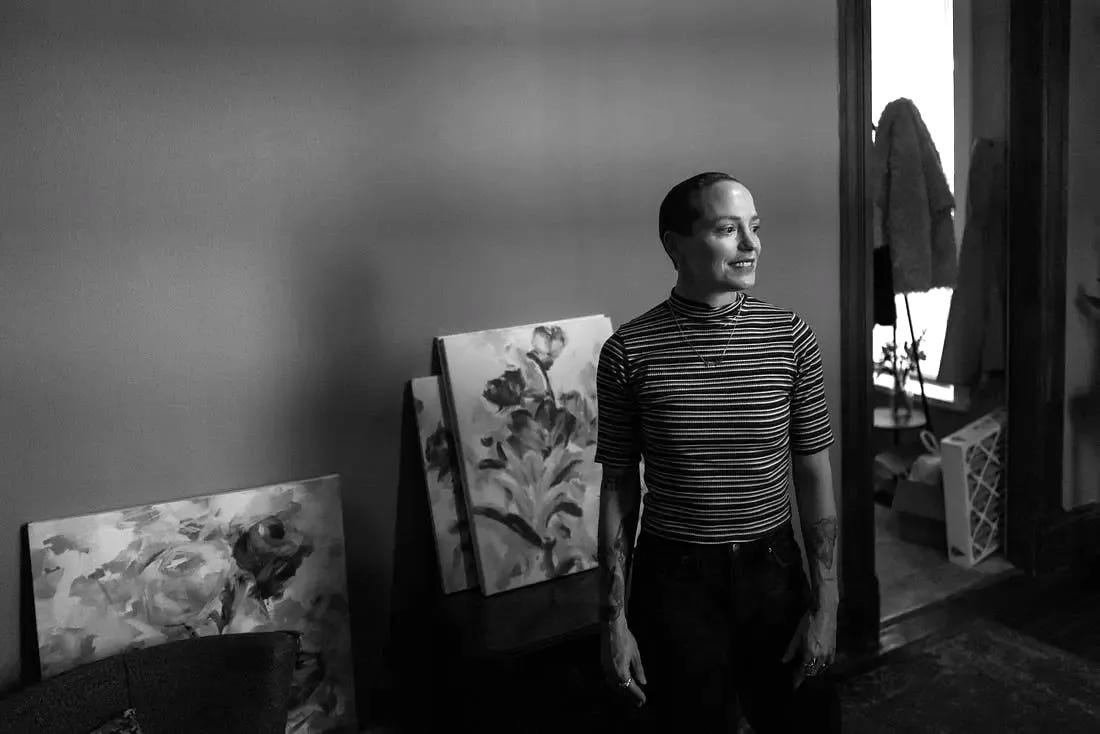
I had a grand time at the Des Moines Book Festival last May. The festival was organized by Beaverdale Books—one of my favorite bookstores. It featured author panels, workshops, book signings, an exhibition room, and children's activities. I was there to be on a couple of panels, including one offered by members of the Iowa Writers Collaborative, of which I’m a proud member. So in addition to participating on the panel, I got to hang out with my friends and other bookish people.
One of those bookish people I met was Jennifer Leatherby. We hit it off right away; what I learned about her in a couple of minutes was fascinating, and I knew that I—no, WE- had to know more about how she is using her art to work for social change.
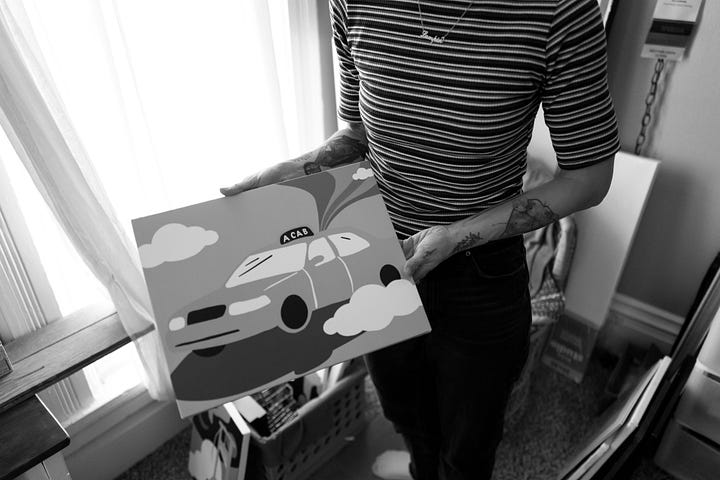
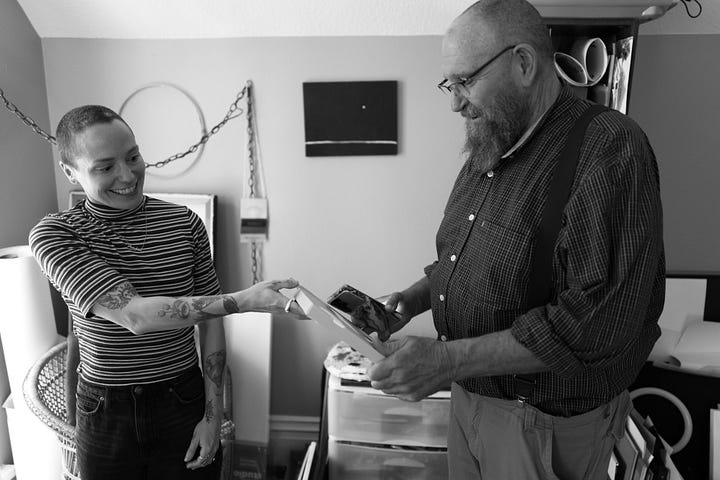
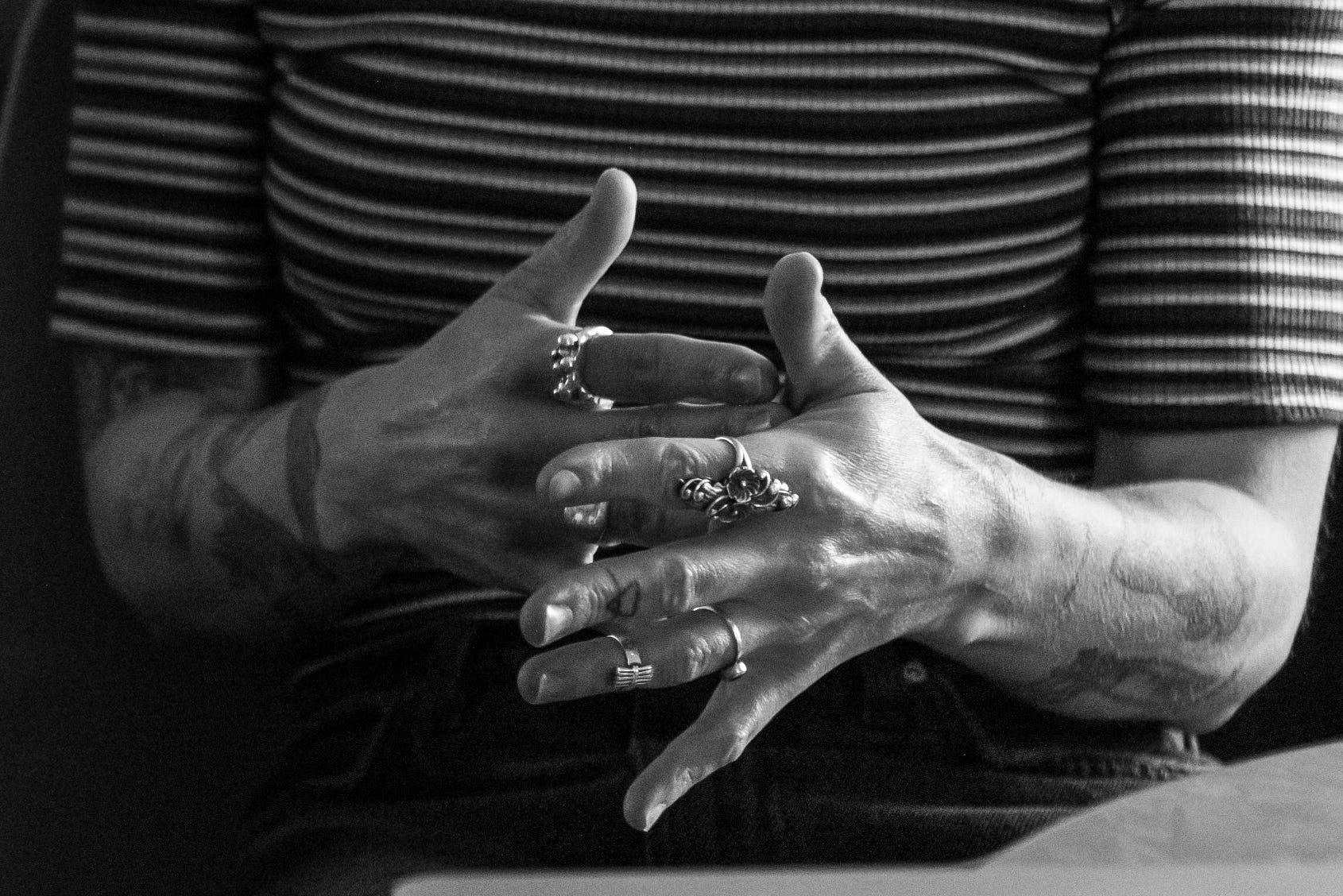
I proposed that my friend and occasional collaborator, Jason Walsmith, and I do a photo essay highlighting how she views the world and her work for our occasional portraits series. Both she and Jason agreed, and this essay is the first in what we are calling our “Portraits of Iowa Creatives” series. Hopefully, there will be many more in the series.
I wrote this narrative, and both Jason and I interviewed Jennifer. Jason did all of the photos and the photo captions. This column is also posted at Jason’s Substack, The Racontourist. Please consider subscribing to The Racontourist, or even better, consider becoming a paid subscriber. Jason is also a member of the celebrated Des Moines band, the Nadas.
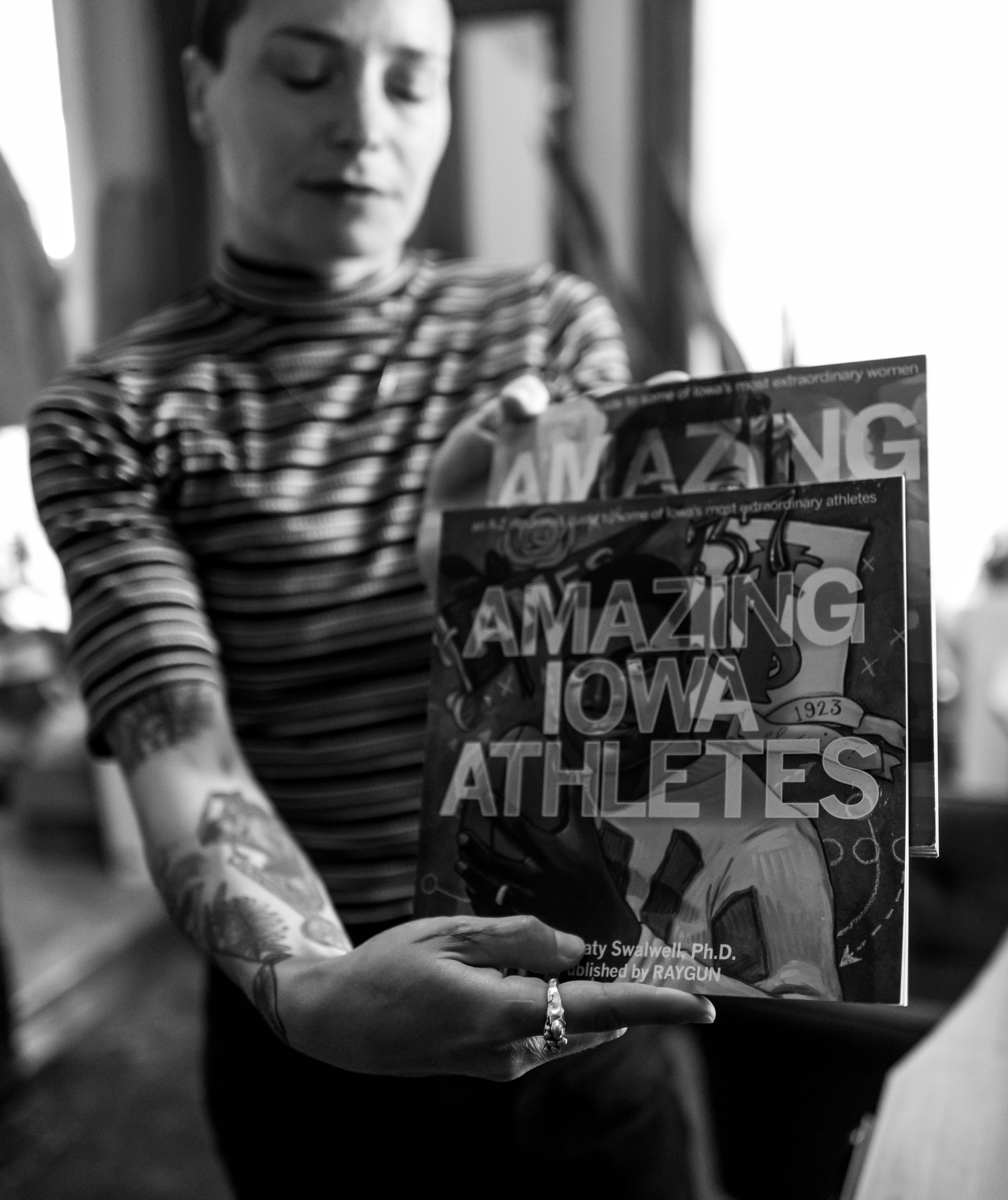
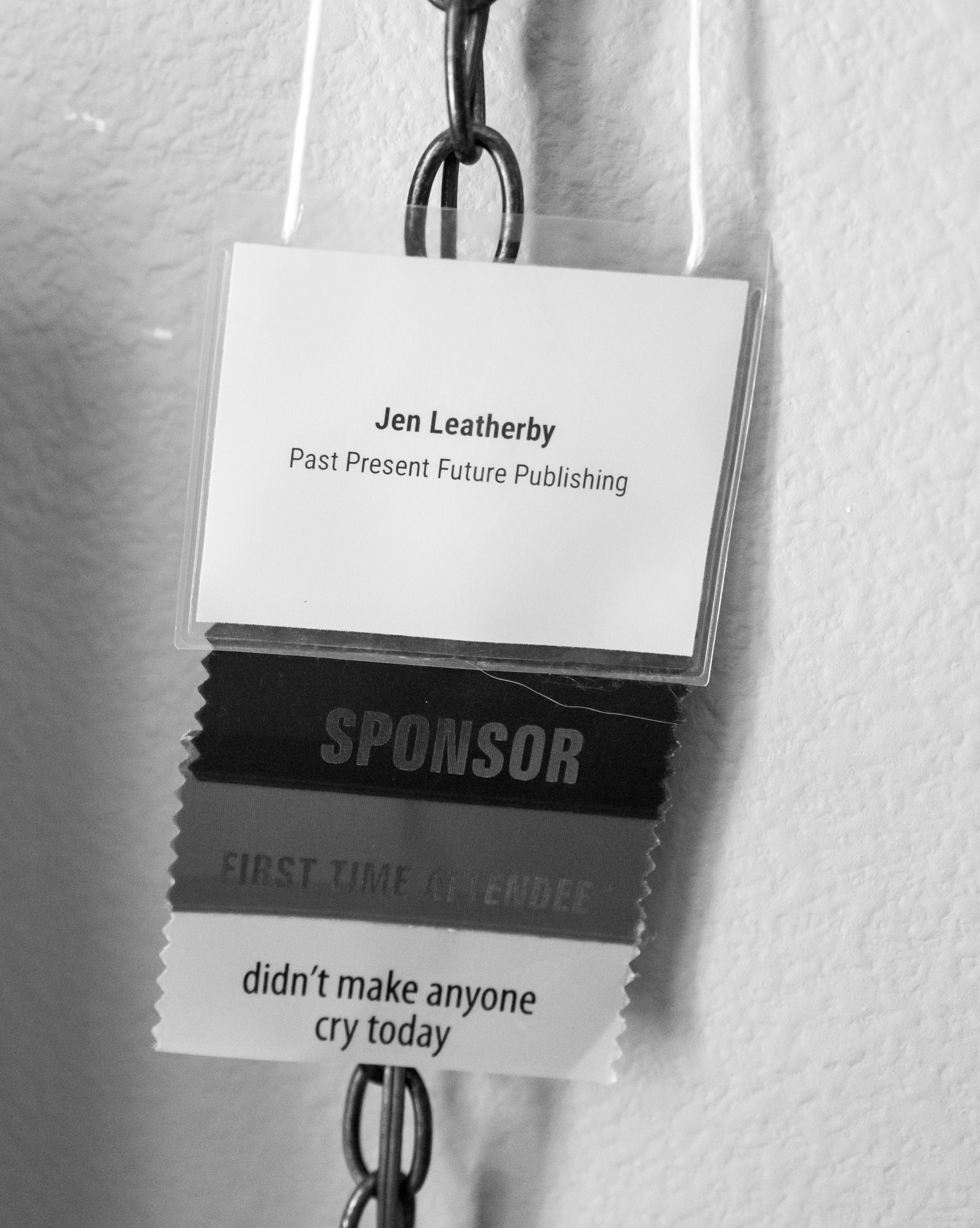
Let’s begin with what drew me to Jennifer in the first place—books. Jennifer is a partner in Past, Present, Future Publishing. From their website:
Past Present Future Publishing was officially launched in the summer of 2023 by longtime friends and collaborators Katy Swalwell and Jennifer Leatherby. After working together on the Amazing Iowa book series, Jen and Katy wanted to continue creating projects for young people, their families, and educators that help celebrate the rich diversity and complex history of their community. The duo also wanted to do what they could to counter the intensifying attacks on BIPOC and LGBTQIA+ people in the state and beyond. Because they love reading, art, education, and activism… why not start a publishing company to create beautiful books that generate profits to be rolled back into youth organizing for justice? They assembled an advisory board of seven incredible Iowa-based community organizers, classroom teachers, and bookstore owners and got to work. Katy Swalwell is a nationally recognized educator, author, and scholar committed to equity and justice in schools. Jennifer Leatherby is a celebrated multimedia artist and educator. Both are based in Des Moines, Iowa.
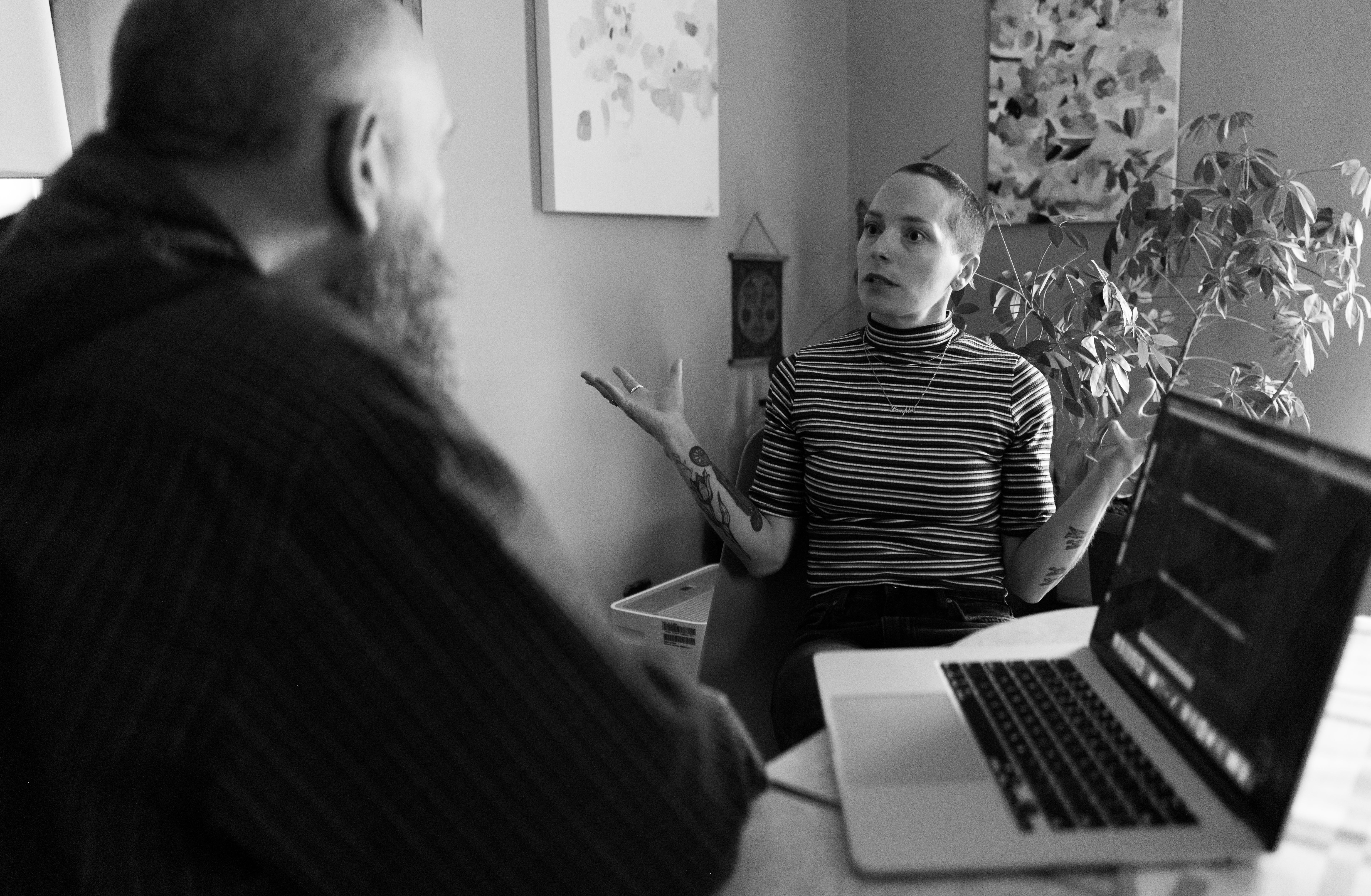
Before the interview began, the three of us wandered through Jen’s house talking and looking at books, artifacts, and her art. We discussed a great many things, and I should have been recording the minute I walked through Jen’s door. But I didn’t. There was a feeling in the house that day that I rarely encounter—the feeling was that the three of us were trying to learn as much from each other as we could before life galloped away from us. To me, I felt that even though Jason and I had just met Jennifer, we had all known each other forever, and held so much in common that much went unsaid, already known.
Below is the audio followed by a lightly edited transcript. I didn’t edit much of the audio because I wanted you to hear Jennifer’s remarkable voice, our pauses, our laughter, and occasional expression of sadness or frustration. I also wanted you to hear me stumble, chasing the right words for a question or comment. I also left in some untranscribed audio at the end where we move on to other topics so you can get a feel of that wonderful day where Jason and I interviewed the remarkable creative and change-maker Jennifer Leatherby.
Please bear with us, as this email is a little long. We wanted to include as many of Jason’s photos as possible. Here we go:
0:00
-30:48
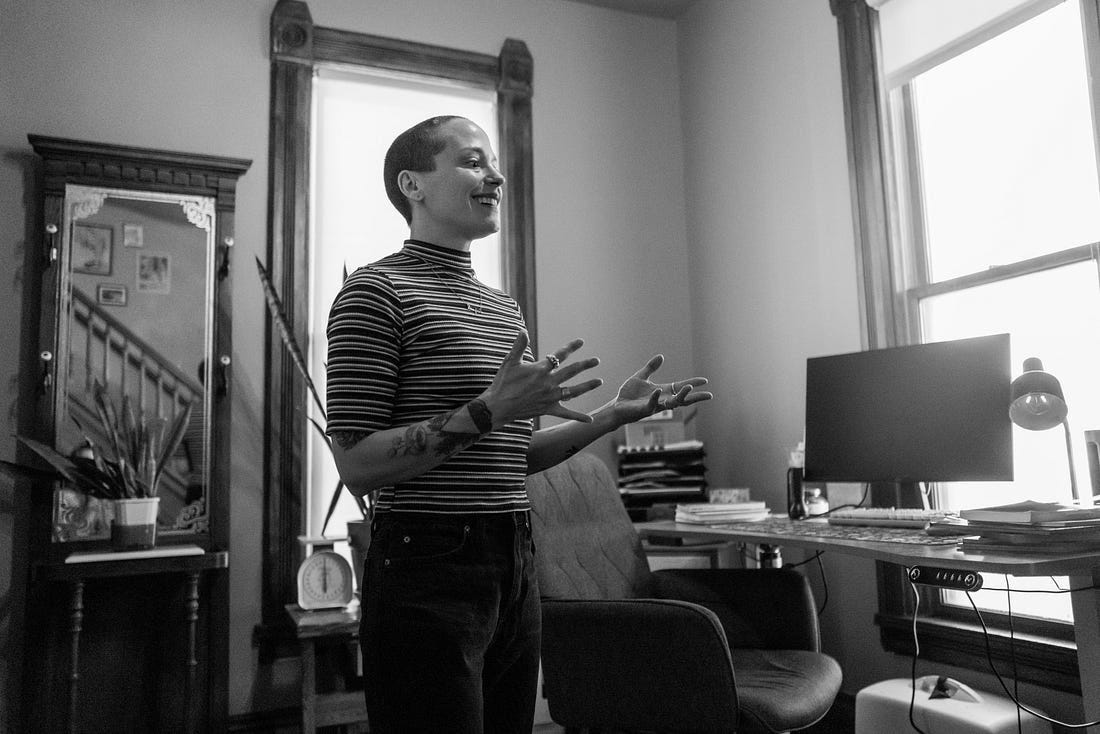
ME: So in talking with you today, it appears that there are two themes that run through everything you do, in no particular order: art and advocacy. Is that correct?
Jen: Yes. Yeah, I think so. Yep.
ME: Can you tell us how they're connected, or do you want to start with one or the other? Do you see the path through them both?
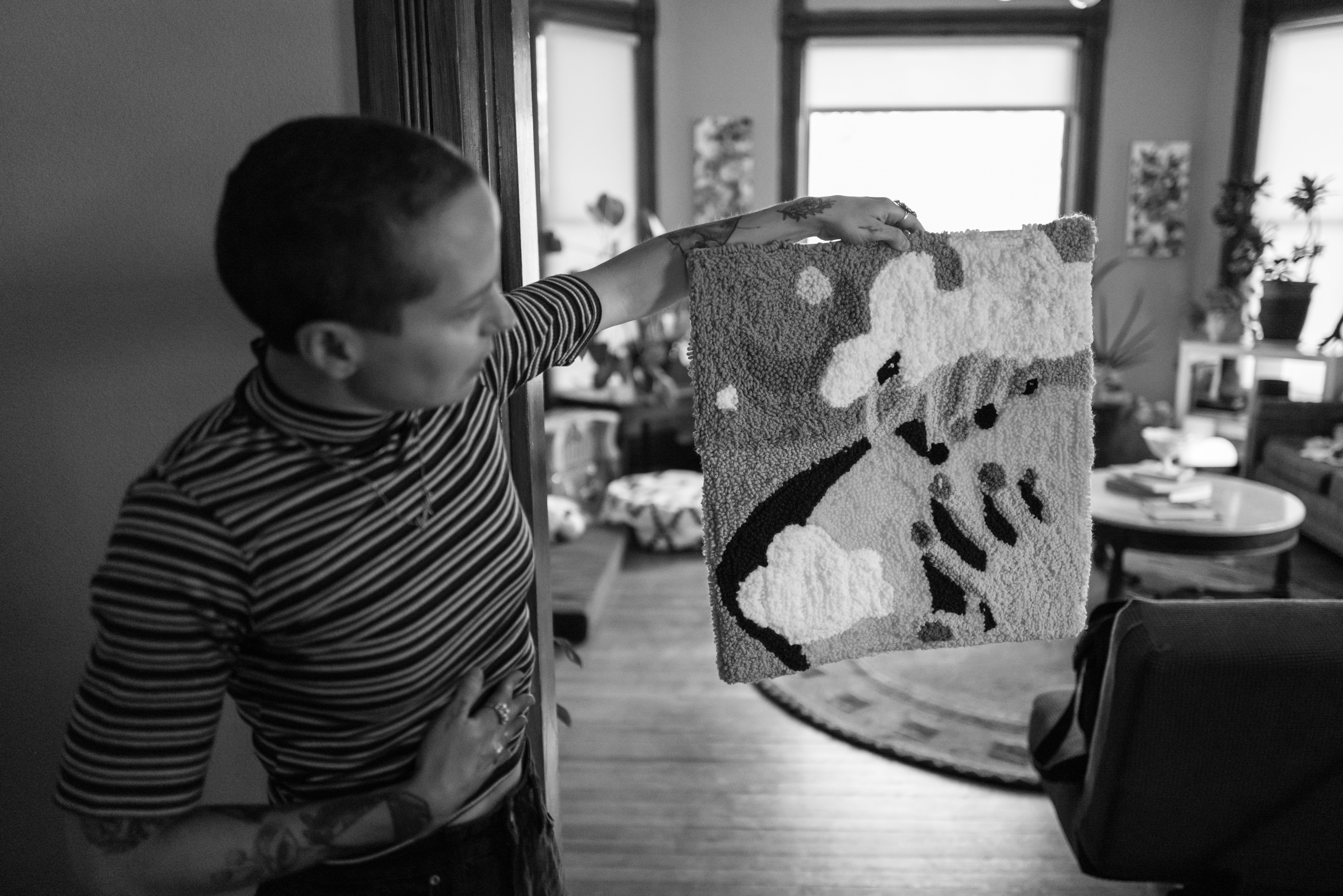
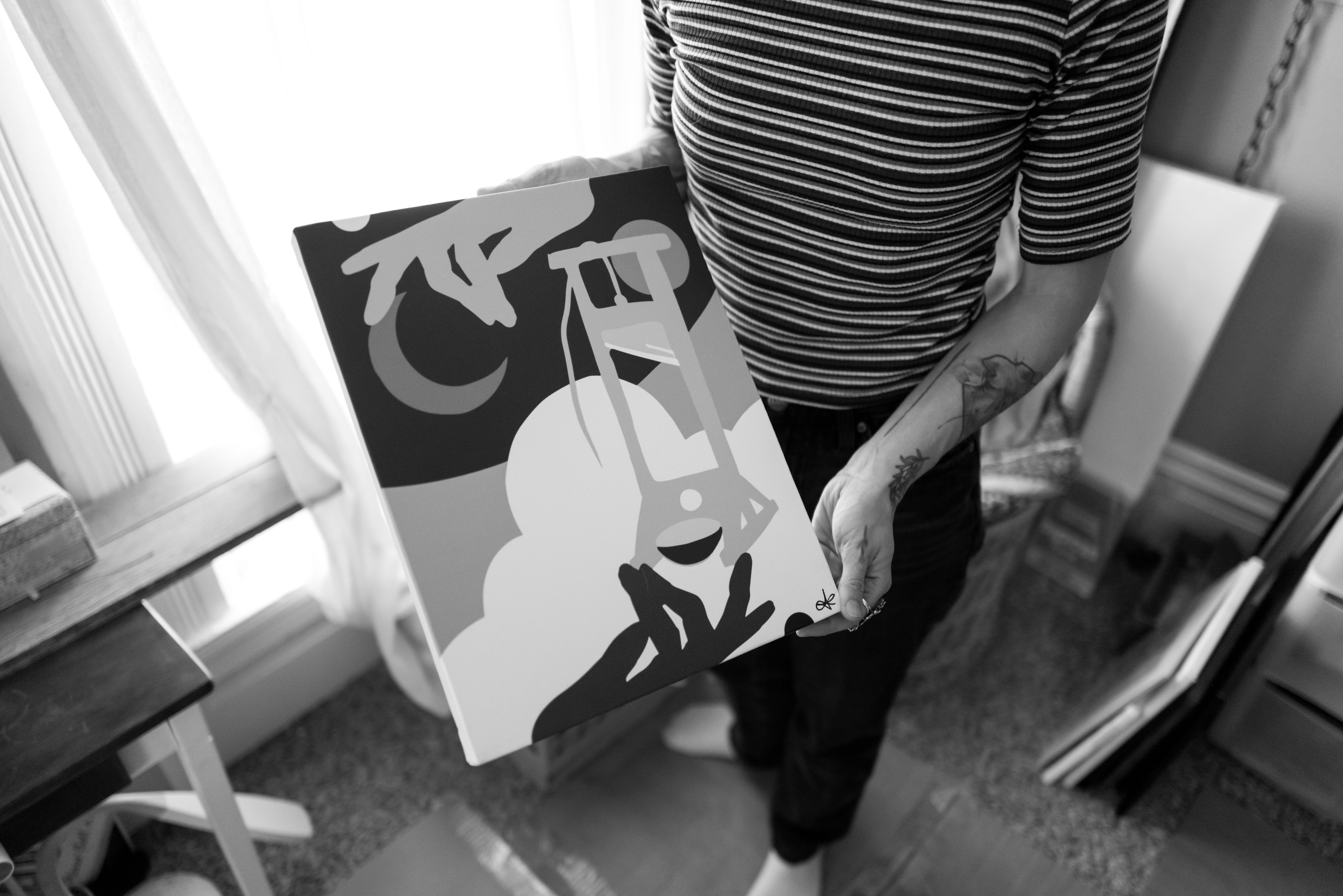
Jen: I think the way that I described it earlier about how I like to find where they can intersect, right? When I can find a place where my inclination toward art and creativity can help in any social cause. Right? So, through my design work of making books about stories that maybe aren’t always told, or marginalized voices, and making sure that those stories are told, or even just creating designs for my mutual aid group to put on social media and ask for more money because we need to buy propane for the winter.
Things like that, but I also find when I paint flowers, it’s more for me, but also hoping that other people will use it to find more beauty in the world.
Because I’m always talking about these sort of maybe darker aspects of life because, in my advocacy, I’m often bringing up, you know, child hunger rates in the US or the number of people on the primary health care waiting list for emergency housing, which I think can feel very dark, right?
But I always need to remind myself that there’s a lot of beauty in the world. So I like to, in reminding myself, show other people that too and try to make beautiful things.
ME: And what’s the name of the group that you’re working with?
Jen: Oh, Des Moines Mutual Aid?
ME: Yeah, okay. Des Moines Mutual Aid.
Jen: So every week on Saturday mornings I go to the church over here, and we do a food rescue program, where we bring in a bunch of food and divvy it up into boxes, and then we’ll put it into people’s cars as they drive up. And that’s through the Trinity Church that’s like two blocks away from here, across from Moulton, where they do CFUM (Children and Family Urban Movement).
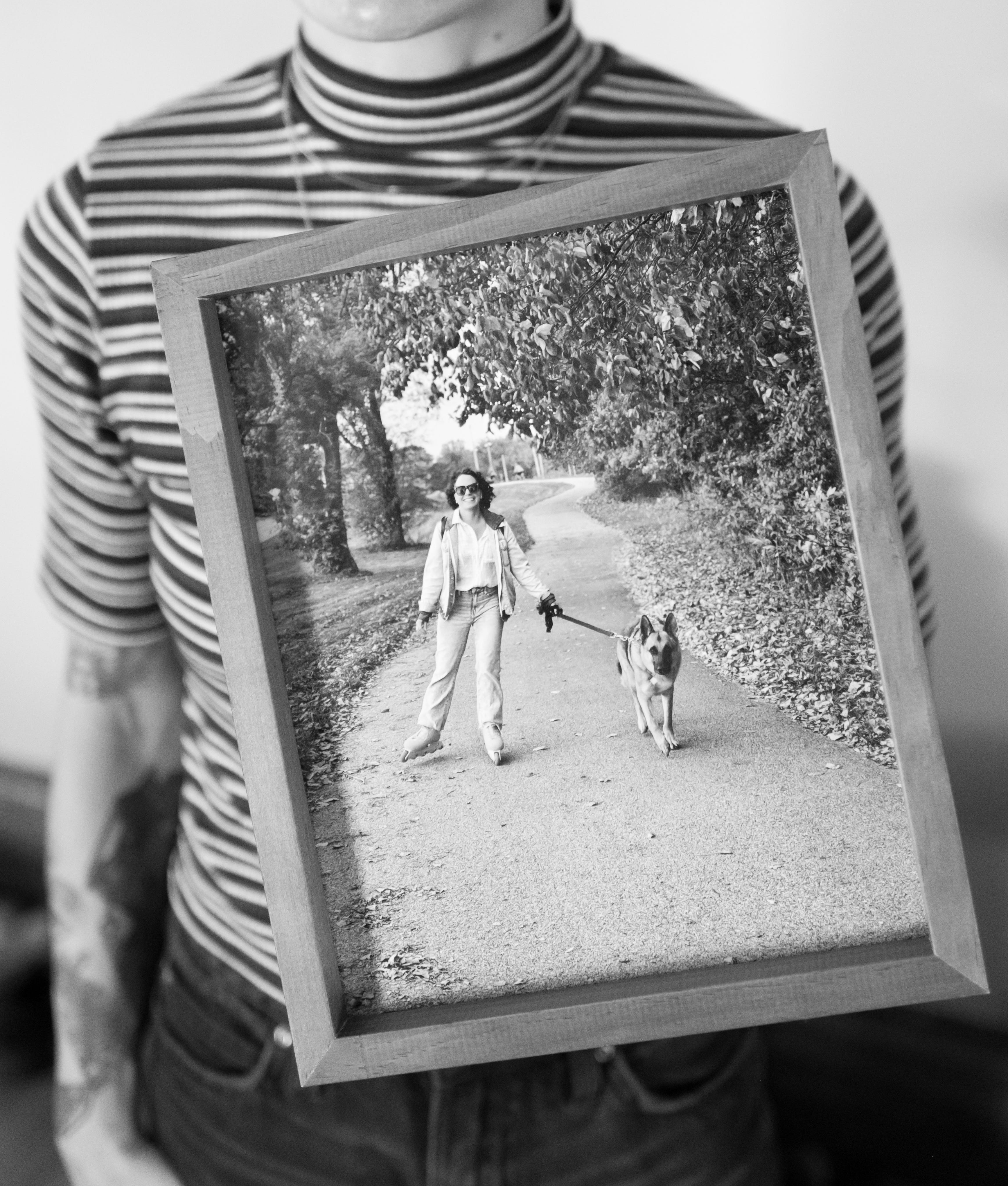
So that’s like a lot of people, I think, who live in this neighborhood go to that. And then every other week on Sundays we go out to the camps and meet with campers. So when it’s cold out, we bring propane, or we will go and collect their empty propane tanks and then go fill them and bring them back. And then in the summer, it’s like water and batteries. We always do water and batteries.
If it’s cold, we do propane as well, and then, if we have extra supplies, we’ll give those away. So we kind of take donations, and we will get sometimes extra food on Saturday morning at that giveaway. If there’s food that comes in that we think would work well to give to campers, then we’ll set that aside, throw it in our fridge, that’s at the friend’s house, and then, yeah, take that out on our routes to give away. We’ll give away like tampons and stuff like that if they’re needed.
Jason: We should do a follow-up sometime and follow her.
ME: Yeah, we should. And we’re here at your home surrounded by art and plants, and you know wonderful things, and you said that you live in the poorest and most diverse neighborhood in Des Moines. Does that inspire you? Do you learn from your neighborhood? What don’t we know about your neighborhood that you would like... that we should know?
Jen: I think that people should know that the folks who are on the street who maybe aren’t functioning as well in society as we are or don’t have access to showers or health care or houses and things like that.
A lot of those people are around here. And a lot of people, I think, are afraid of that, or they feel like they don’t want to engage with it, and it should be like put away, like those people; we don’t want to see them or acknowledge them or ask them if they’re okay, right? Or hear their story?
So I think for me, especially living here, it’s like I want people to know that they should meet those people. They should talk to them. They should hear their stories. And they should know that these aren’t people who are bad. Being in poverty or being houseless is not a result of being a bad person.
ME: No, we had a very interesting conversation if you want to go into this. I think we’re largely in agreement on—what are the circumstances that bring us, that bring humanity here in the United States, supposedly the richest country on Earth. What brings us to that situation where people don’t have, you know, even the opportunities to get what they need to survive, let alone thrive?
Jen: Capitalism.
Me: It’s inherent. Tell us more.
Jen: Is it the root of capitalism?
Me: No, tell us why it’s inherent...no, sure…wherever you want to go with it, but why is it inherent to capitalism? This kind of structure. When people, you know, to say that you’re a proud American or that you’re a patriot, you have to... it seems like capitalism is perfectly intertwined with that. They go hand in hand, yet here we are.
Jen: I think that, I mean, the propaganda machine against communism and socialism worked really well in the United States. People often will talk about communism, and what they’re referring to is fascism or authoritarianism. They’re not referring to an economic model of socialism or communism.
They don’t know that when you say capitalism is bad, that you’re not saying “I hate freedom. You know? Cuz that’s what I think that we were taught, right? Is that we live in the greatest country in the world, we are free. And you know, you get older, and you’re like, “ they kept telling us how free we were...” You don’t usually have to tell people that they’re free if they’re really free, right? You don’t have to keep reminding them.
ME: So the system is broken, and you do your bit, and you do your bit helping real people in the here and now, and you’re, I mean, you’re walking the walk not just talking the talk, you’re just doing something that matters substantively to the people around you where a lot of us can’t say that. And a lot of us probably never thought about doing that. I think a lot of us...that isn’t supposed to be part of what we do... I guess we put a lot of us pay lip service to it, but you’re doing it, and you’re using your art as central to this.
Jen: I mean those are the skills that I have that come easy to me and what I love to do. So I feel like when I am able to do both, it’s like a gift, right?
ME: So, and in this, doing this, you’ve put together a life that has a lot of different components just to put food on the table. Okay? And you’ve said that you’ve been in very difficult economic circumstances before, so you can identify with people that are in that, and you’ve managed to pull together a good life in ways that aren’t very traditional. Can you tell us what the different components of that are?
Jen: The different?
ME: The components that put bread on the table…

Jen: Well, one that I didn’t mention yet: I teach part-time at Des Moines University. A gynecology lab. It used to be a much more involved job, but then they kind of outsourced our program and cut it way, way, cut it way down, so we barely teach at all. But that’s one of the ways that I make money is teaching. I’ve done that teaching for 12 years or something. And then I also will occasionally teach, like elementary art, as a part-time job, done that. And then the publishing company....
I don’t know if you should put that in there, but it’s not very much money, but you know that’s some money, and then tattooing, and I have a Patreon that people are very nice to, nice to subscribe to, so that’s a little bit of money. I don’t…it’s kind of just ...Oh, I do like freelance graphic design for people, so I will design like a logo for somebody or, you know, freelance copy editing or publishing.
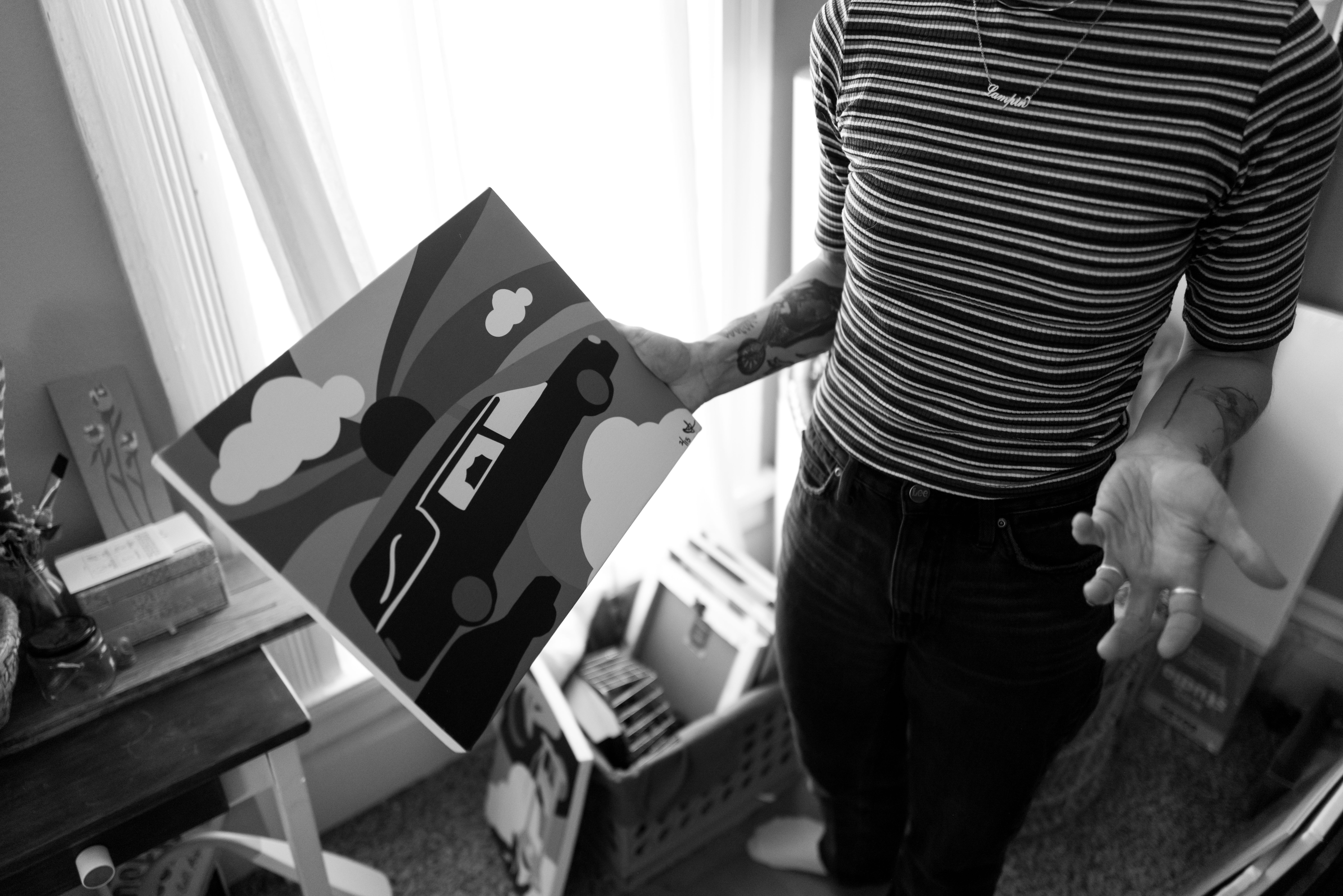
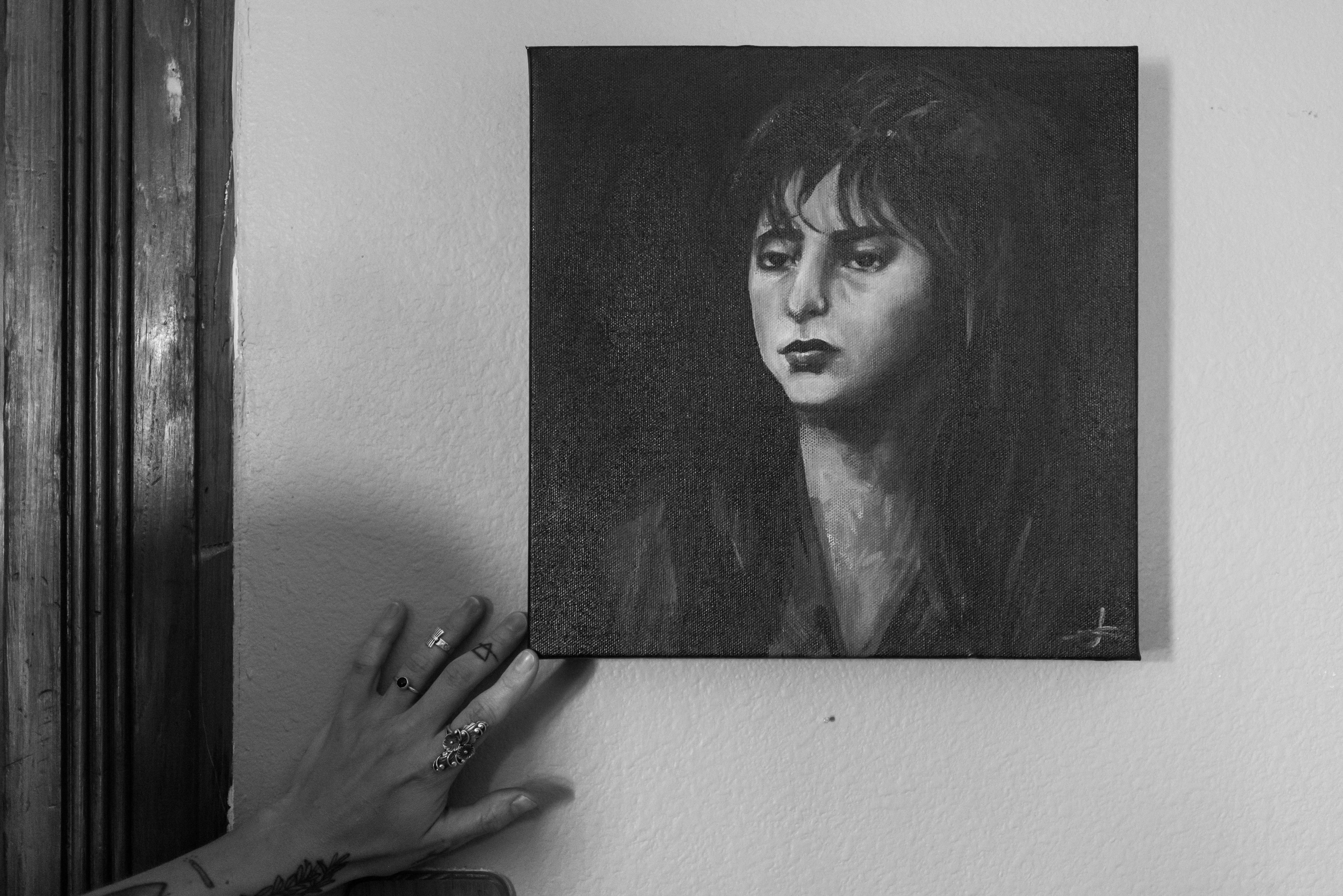
I got... Yeah, so many, so many different things going on and then, you know, occasionally I’ll sell a painting, or a fiber art piece or something, or a print at a market I go… I’ll go to markets and pop up and bring my prints and paintings and occasionally people will buy those.
Me: Very interesting, and…talk more about the publishing...what is the imprint… where can people...people can go to your website to find out about all of this, correct?
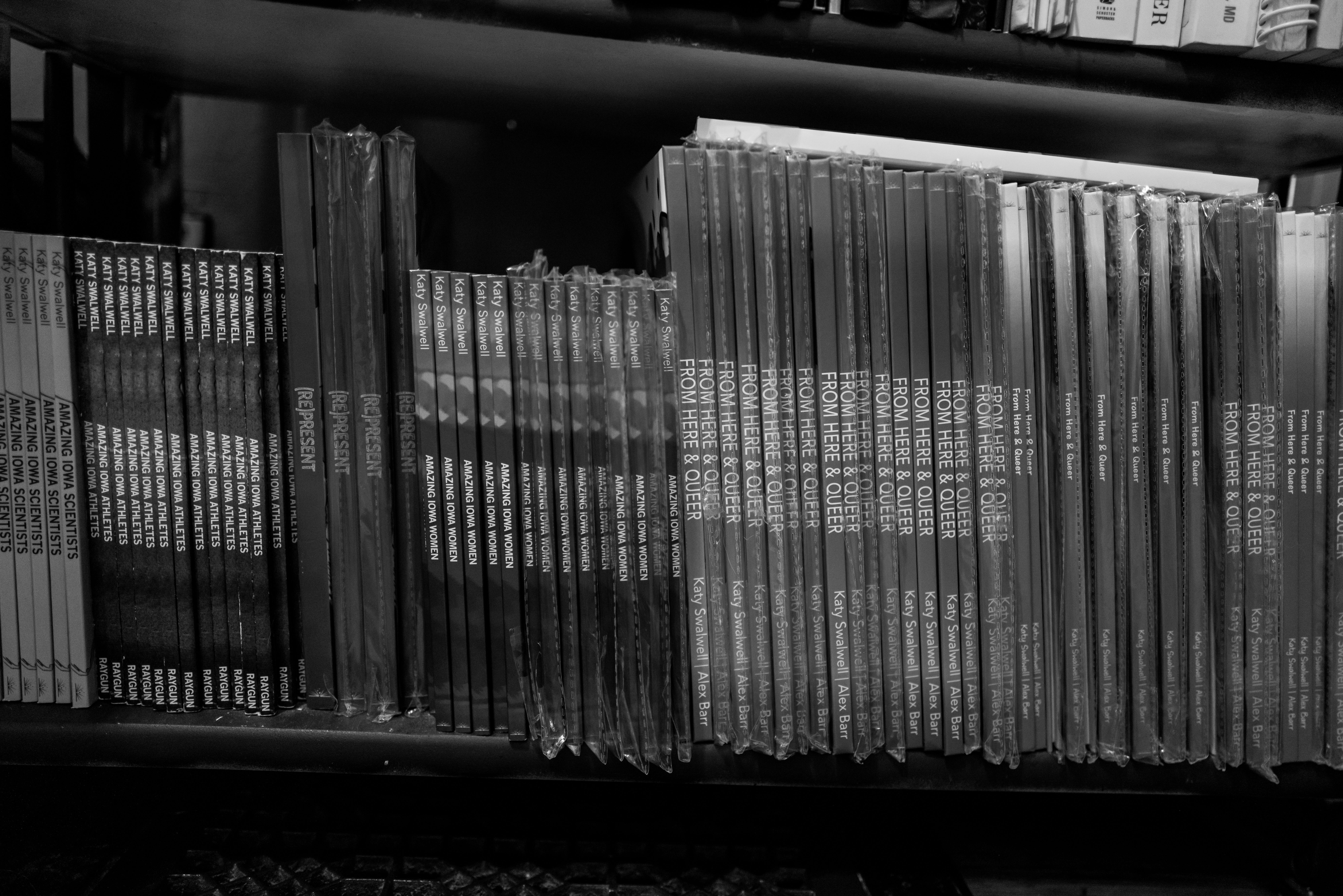
Jen: Yes, yep, so jenleatherby.com is my website, and then past, present, future publishing- no, ppf-publishing.com…. So Katie and I make books about…that are geared toward children, young adults, about Iowa. So, we like to make…we like to tell stories as we say “from the margins.” So, Katie came up in education and acknowledged that in our education about Iowa, it’s usually the stories of white men, right? That are told.
And so she said, “How can we tell the stories of all of the amazing people who maybe aren’t privileged white men whose stories get told all the time? How do we tell their stories? And then how do we give back with it, right? And not just profit off of it. Try to give, like, each book that we make is tied to a different organization that receives some of the profits from the book.
Jen: So yeah, we...
ME: And Katy Swalwell?
Jen: Katy Swawell.
ME: Jason, do you have any questions?
Jason: Nope. I’ve asked a lot of them. I’ve asked a lot of questions….Well, maybe one, yeah, I’m only I’m kind of thinking about myself again. Thinking about how many years I worked in various jobs, and tried to think of how... what I called myself, how I identified as a human, and I would say… I was a musician, I was a photographer, I was a this, I was that, and it was only recently that I started saying I’m an artist. And I wonder how you, how you describe yourself to people? Do you start a list and you start listing all those things off? Or do you say I’m an artist or I’m an advocate, or I’m just… There is no right answer here. I’m just curious.
Jen: I forget at how I worded it. I think I worded it on my, like, Instagram. It’s like artist, educator, and bookmaker or something. So it’s kind of how I most recently dwindled it down. Because I do feel like the activism and that can fall under education because a lot of times it, I do find it’s just me talking about things that I know, and it becomes advocacy because, you know, not everybody knows that 20% of children in the United States face food insecurity. Right? Like, just saying that statement, I think is it educates people, but it should activate people, right? It’s like that’s not right. We don’t want that. Why would that be the case in the richest country in the world?... We’re also free. We’re free to have starving children, I guess.
Jason: Here’s a hard question that I don’t know if that I don’t know if this will fit in or not, but even as I just dip into some of these issues that we just sort of like dip our toe in and let someone tell their story, and then we feel like we’re doing some good by letting someone else tell their story. Even as I dip in, I feel overwhelmed by how big these problems are. Do you ever feel overwhelmed? Or do you just roll up your sleeves and get to work?
Jen: I used to more than I do now. Because I think I was more liberal before, and I was trying to make the way I felt fit within the beliefs that I was told to believe, which is that capitalism can work, that it’s the best thing, right?
And then the more I learned, the more I realized almost all of these injustices can be tied to our economic model. A lot of them, right? We’re not going to fix like people’s bias against women, right? Um, with that, but you can make a lot of difference in the lives of women and children, right? By providing basic necessities and not allowing them to be left on the street.
ME: I feel overwhelmed, like Jason said, but I also feel guilty that I’m not doing enough, that I’m part of the problem sometimes, and that I could do more. And so I just flail about in my writings trying to do more, but I know it’s not enough. Is it ever enough?
Jen: Well, for an individual, no. No individual is going to fix this, right? These are problems that are going to take a long time, and it would require a lot of people to work together and to agree on a lot of things that people don’t agree on anymore, right? Or...
ME: Well, I think a lot of people would agree, except we’ve all been, you know, it’s just like most of what we were taught in American history is inaccurate. And so we don’t know. We’ve represented this as the truth. And we know once we start looking at other perspectives, there’s other angles on it.
And so we’re operating, and what I think a lot of people, you know, are operating without any information or totally biased information that we’ve been spoon-fed to be a part of and be complicit. We’ve been taught to be complicit.
Jen: And I think it’s getting worse as well, as I think the tightening of information is happening and this very... what we think of as like Chinese suppression of information, I believe, is like now very much an American thing. And I think that’s going to make that problem worse, right?
That’s why they attack education to try to stop people from knowing what socialism is or knowing that people feel that capitalism is why we’re never going to have enough houses for those people on that waiting list. Because if we do, a lot of people who make a lot of money off of housing are not going to make that money anymore.
ME: They’ll still make plenty.
Jen: Yeah, but it’s not enough for them.
ME: Okay, if this doesn’t work, I’ll take it out whenever. Let’s end on a lighter note that focuses on one of your arts. And I don’t— maybe we’ve got to know each other well enough in this brief period of time. But I’m wondering if you were designing a tattoo for me and for Jason, if you know what the basic theme would be for a tattoo for us.
Jen: Oooo…The same tattoo for both of you or individual?
ME: No, individual. Individual.
Jen: Well, his feels easy as it like a camera maybe. I don’t know. I haven’t talked to him as much as I’ve talked to you.
Jason: I am tatooless.
Jen: You don’t have any tattoos?
Jason: And my wife has. I don’t know how many- six or seven. And she’s always like, you should get a tattoo, but I’ve lived this long without one, and I think not having one is my individuality. But a long time ago I thought about it a lot, and I thought about and it was it was long enough ago that it was a film strip. You know, like a film strip on my arm with different frames…
Jen: Oh, that would be really cool…They’re super fun…
Jason: So we’re on the same wavelength there…
Jen: Yeah, um, I actually love tattooing. Okay, this is a whole thing, but I realized when I started tattooing a few years ago that there is also an intersection between my end-of-life work and tattooing. Um, what is the quote?
I think it’s a lyric that, I think it’s like Ani DeFranco’s song, but it was like, oh shoot... I might have to look it up. It’s like I had to embrace my own mortality to get my first tattoo.
And I think that’s so so real because I think that in our death-denying culture, we often think that if we stay pure, or if we do the healthy things, that, I mean, a lot of times it is really rooted in fear of dying, right? Fear of acknowledging that something is going to get us all.
And I think embracing a tattoo and saying this body isn’t forever. Like when you say, “Well, your tattoo’s forever.” It’s not forever. Cuz we’re not forever.
And so I kind of love that intersection of how tattooing can help to remind people about their mortality, because this is what we say in our death cafes is that we want to give people the opportunity to make the most of their finite lives. And I think in our death-denying culture, people don’t get that opportunity because again it comes back to capitalism too.
Because if you’re in acknowledgment and fully embracing that you’re going to die someday, all the time. The chances that you’re going to go to work and make some random guy rich is less likely, right? And then there’s the whole industry of money and healthcare, but you know. Where was I going?
ME: You were going to my tattoo...
Jen: Went off the rails. Okay, your tattoo. Gosh, I, okay, I listened to your Substack a little bit. I liked that you showed me that you like to take pictures of flowers. So, I almost feel like something, where incorporating like a floral…something, floral. You love your dog...your dog. Maybe something with your dog, and it’s obviously…
Jason: Sounds like you are going to get a full…body tattoo.
Jen: Yeah, we’re going to do a full sleeve. Yeah, I got it all planned out. We’re going to put your dog on there. We’re going to do some writing, a typewriter. Did you work on a typewriter?
ME: Oh, yeah.
Jen: That’s cool. Yeah. You’re a great writer…
ME: Thank you. I could do 80 words a minute (Fact check! I got caught up in the moment! It was only 30! 80 was frozen in my mind as the goal).
Jen: Yep, on the typewriter? Wow!
ME: High school. Yeah, my sophomore year.
Jen: Wow.
Jason: That’s like, that’s elite, right?
ME: No…(it actually is, and I didn’t come close!).
Jason: Gold Star. I don’t know.
ME: Well, thank you. Thanks for the tattoo idea. Thanks for the interview.
p.s. If you follow Iowa politics, you will appreciate the Iowa Writers’ Collaborative podcast Iowa Down Ballot with Dave Price, Kathie Obradovich, and Laura Belin. I listen and learn every week.
Robert Leonard’s column will always be free, but please consider upgrading to a paid subscription or make a one-time donation here.
We are proud members of the Iowa Writers’ Collaborative. Please check out our recent work here. Robert Leonard also publishes Cedar Creek Nature Notes, about Violet the Dog and his adventures on morning walks at Cedar Bluffs Natural Area in Mahaska County, Iowa.
Robert Leonard is now on TikTok as a member of the Iowa Creator Corp, believe it or not. Here you go.
Jason Walsmith is based in Earlham, Iowa. He is well traveled and always looking for a new story to tell. Jason has spent the last 30 years taking pictures for publications and companies as well as touring North America in a rock and roll band.
You can find more from Jason here:
And hey, please consider joining us both in September at Lake Okoboji, at Julie Gammack’s wonderful Okoboji Writers and Songwriters Retreat. We would love to see you there!
No posts
Comments
Nothing yet. Say the first thing.
Sign in to join the conversation.