
Hello and welcome to the April issue of the Peripatetic Historian. I’m your host, Richard J. Goodrich, and once again we gather around the loom to weave history, travel, and photography into a coat of many colors.
This Month:
Peripatetic Field Report: Hiroshima
The Writer’s Corner
An Opportunity Lost
Ready? Let’s dive in:
In the annals of history, the name ‘Hiroshima’ is linked to horror. Here, on August 6, 1945, an American B-29 dropped a single bomb on the sleeping city, inaugurating the nuclear age and the use of weapons that may eventually end our species’ tenure on earth.
This was my frame of mind when, during the recent trip to Japan, I traveled to the city. I expected the worst from my visit. I anticipated a flood of horror and remorse. And yet, as a fast ferry carried us up the Motoyasu River, I could not stop thinking, “what a beautiful city.”
Hiroshima defied my preconceptions. I expected charred, twisted ruins, apocalyptic smoke still rising into the sky, radioactive hotspots kept behind signposted barriers. Instead I found a place that reminded me of Paris on a spring morning.
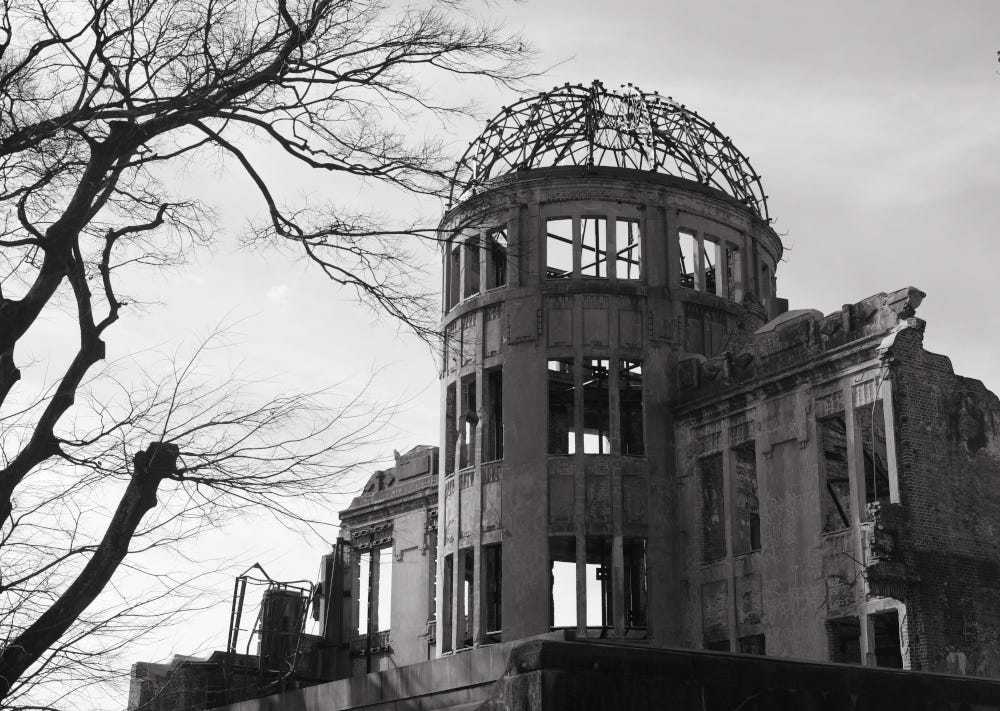
Little remains of the destruction unleashed by the violent blast. The Japanese have done wonders rehabilitating the haunted ground, effacing the nightmare that followed the bombing. The only obvious reminder is the Atomic Bomb Dome. Formerly known as the Hiroshima Prefectural Industrial Promotion Hall, the stone and steel structure was built on a European model to promote the manufacturing potential of the city. Two marble columns, still standing on an upper floor, hint at a former elegance.
The bomb, aimed at the nearby Aioi Bridge, exploded 150 meters from the hall. It killed everyone inside and shredded the building. The iron frame that once supported a copper dome stands exposed to the elements, twisted and skinned like a winter tree after leaf fall. At the structure’s base piles of shattered brick and stone clutter the ground where they fell.
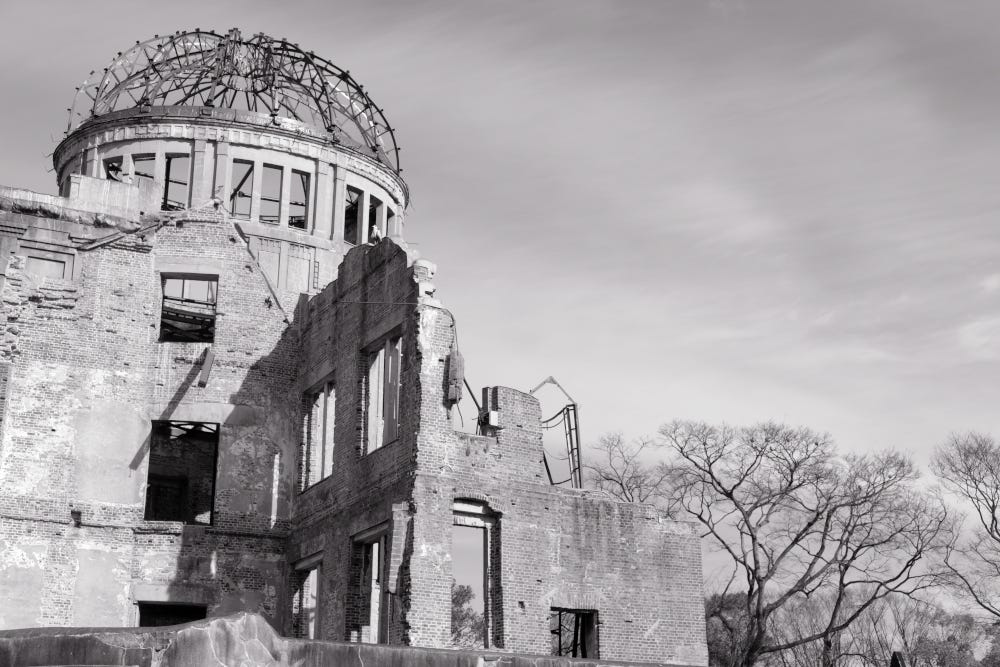
Were it not for the remains of this building, visitors would be hard pressed to find any physical evidence of the disaster. Hiroshima is a bustling, vibrant, Japanese city. That is by design: Residents would like to wash away the stigma that still clings to the word Hiroshima.
I expected to be troubled by the horrendous thing my country had done here—and I was. But what really surprised and disturbed me was the normalcy of the aftermath. The Peace Park museum does a wonderful job conveying the human suffering that followed the bombing, but if you didn’t walk through those exhibits, you would be hard pressed to know what had happened here.
Had General MacArthur placed me in charge of postwar reconstruction, I would have walled off a kilometer by kilometer square at ground zero and left it undisturbed. I would want visitors to walk through ruined streets and blackened rubble, to see firsthand the destruction these weapons caused.
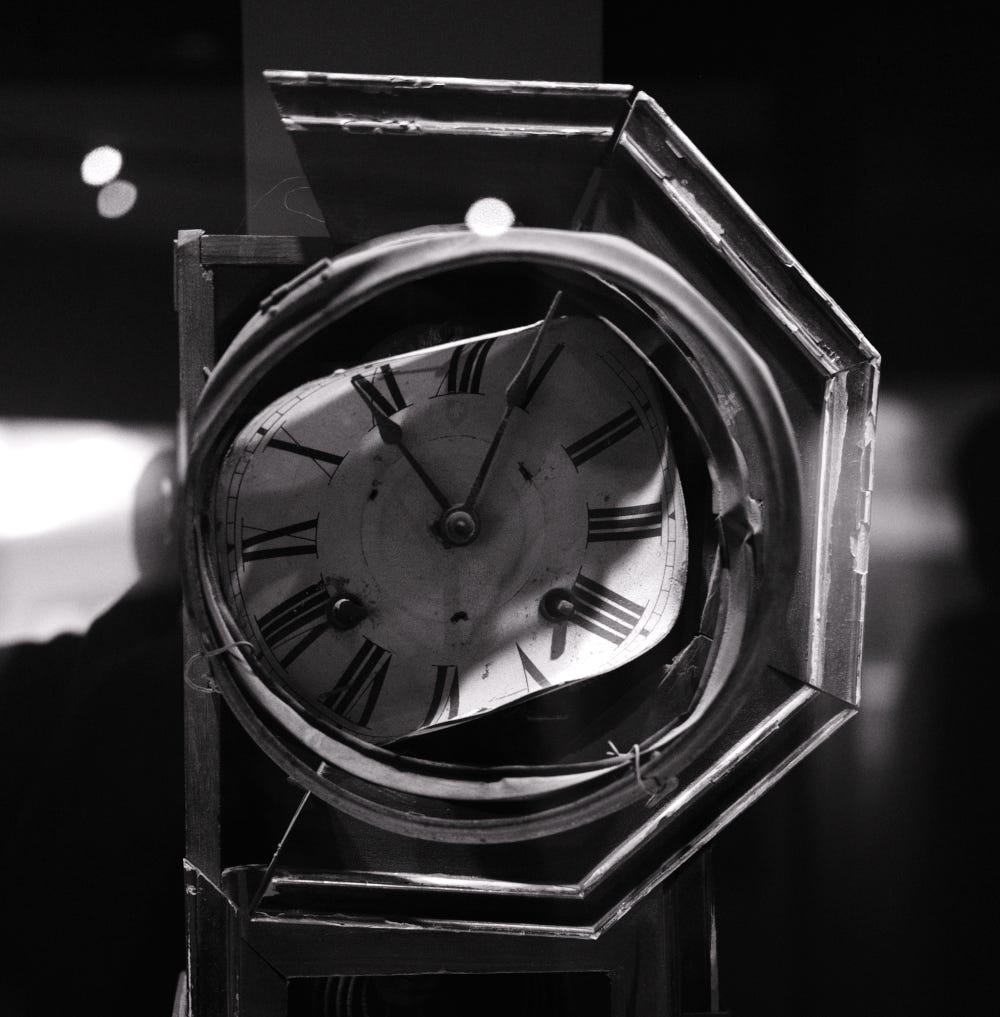
Humanity requires a sterner reminder that this must never happen again. I couldn’t help feeling that the perfection of the current city undermined that conclusion.
Having served many years as an academic historian, I feel uncomfortable with that seductive mental exercise known as “alternative history.” I prefer to contemplate the world as it is (or was) rather than as it might have been.
Nevertheless, after spending time in both Hiroshima and Nagasaki, and then watching in horror as my country launched an unprovoked, illegal, morally-indefensible attack on Iran, I could not resist pondering what might have happened if early twentieth century diplomats had been a little more diligent in their attempt to regulate future conflicts.
On October 18, 1907, the delegates attending the Second International Peace Conference at the Hague, advanced Article XIV, an agreement to ban the wartime “discharge of projectiles and explosives from balloons or by other new methods of a similar nature.” It was, in short, a ban on weapons dropped from aerial platforms.
Unfortunately, only three countries—China, the United Kingdom, and the United States—ratified the treaty. Delegates to the second conference did not press for universal agreement. It was thought that the anticipated Third Hague Conference would provide the opportunity to work out the details and create a lasting ban of aircraft-launched weapons.
More than a hundred years later, we’re still waiting for that third conference. Real history chose a different path. Even as the Hague delegates were meeting, Roy Knabenshue was demonstrating the practicality of aerial delivery by dropping a flour bag on the Los Angeles City Hall (see my recent book, L. A. Birdmen for the details).
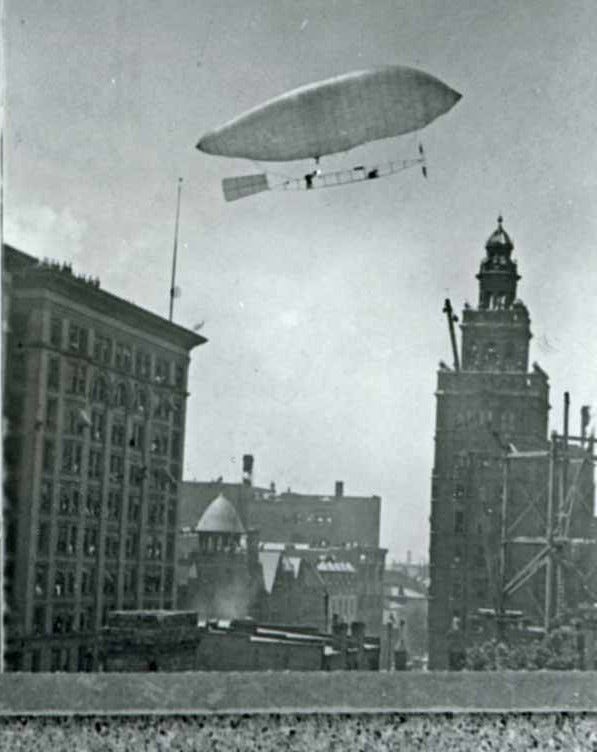
During the Great War (WWI), the military integrated aircraft into their operations. German Zeppelins bombed population centers, Allied pilots dropped munitions on Teutonic fields. As technology improved, the prospect of banning these weapons receded.
Today, the idea of a universal ban on air-dropped weapons is a risible notion. Modern militaries are deeply infatuated with the plummeting bomb. The world could have been a kinder and gentler place, but that was the road forsaken.
Summer is at hand in Taiwan. Temperatures are climbing back into the 80s. I will try to keep cool by remembering the lovely temperatures I experienced in Japan. One installment to go. Look for the grand finale next month.
Until then, be safe, be sensible.
Know someone interested in history, travel, or photography? Hit the share button and send them a copy of the Peripatetic Historian.
Thoughts? Comments? I have a button for that as well:
No posts
Comments
Nothing yet. Say the first thing.
Sign in to join the conversation.