
I have been travelling in Italy and France the last 10 days to see friends, to discuss creative projects and to take in concerts and art exhibitions. It is sobering to see and hear wonderful art, especially with the background of worldwide poverty, horrific violence and genocide, especially with our tax money used to make bombs which destroy so many people’s lives, hopes and dreams.
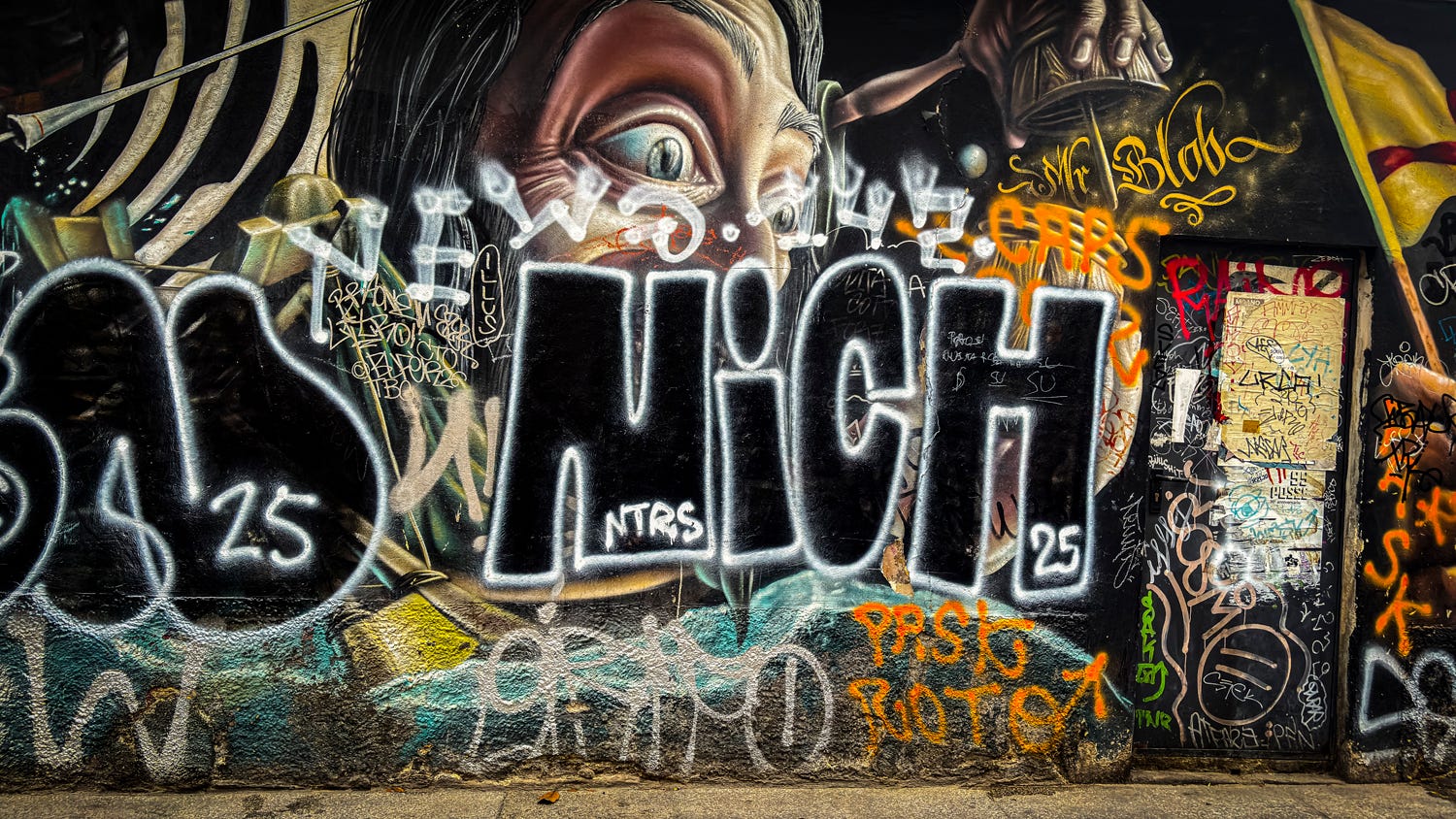
Travelling by trains up the spine of Italy, I saw beautiful houses boarded up, surrounded by their gone-to-seed gardens, then shuttered factories, derelict goods yards, rusting bridges and ego-filled graffiti in its barbaric ugliness. All emptied by the sorrow of passing wars, globalisation, lost jobs and broken hope.
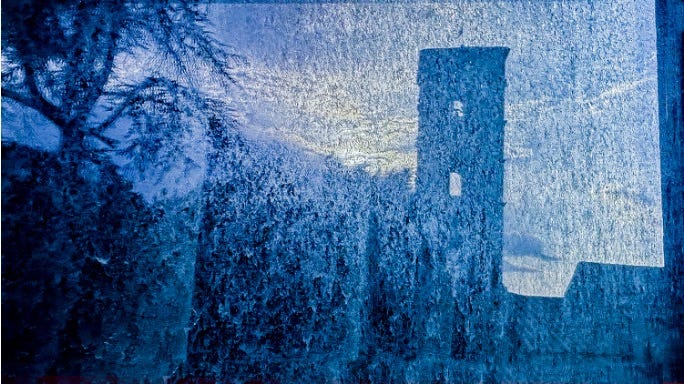
Thus it was a trial to witness the distraught photographic beauty of the Italian theatre director, Alessandro Serra, in the crumbling spaces of the 12thcentury castle that sits above the southern Tuscan town of Sarteano. Again my emotions were pecked at and torn by the sense of utter degradation of our combative civilization evinced profoundly by Serra.
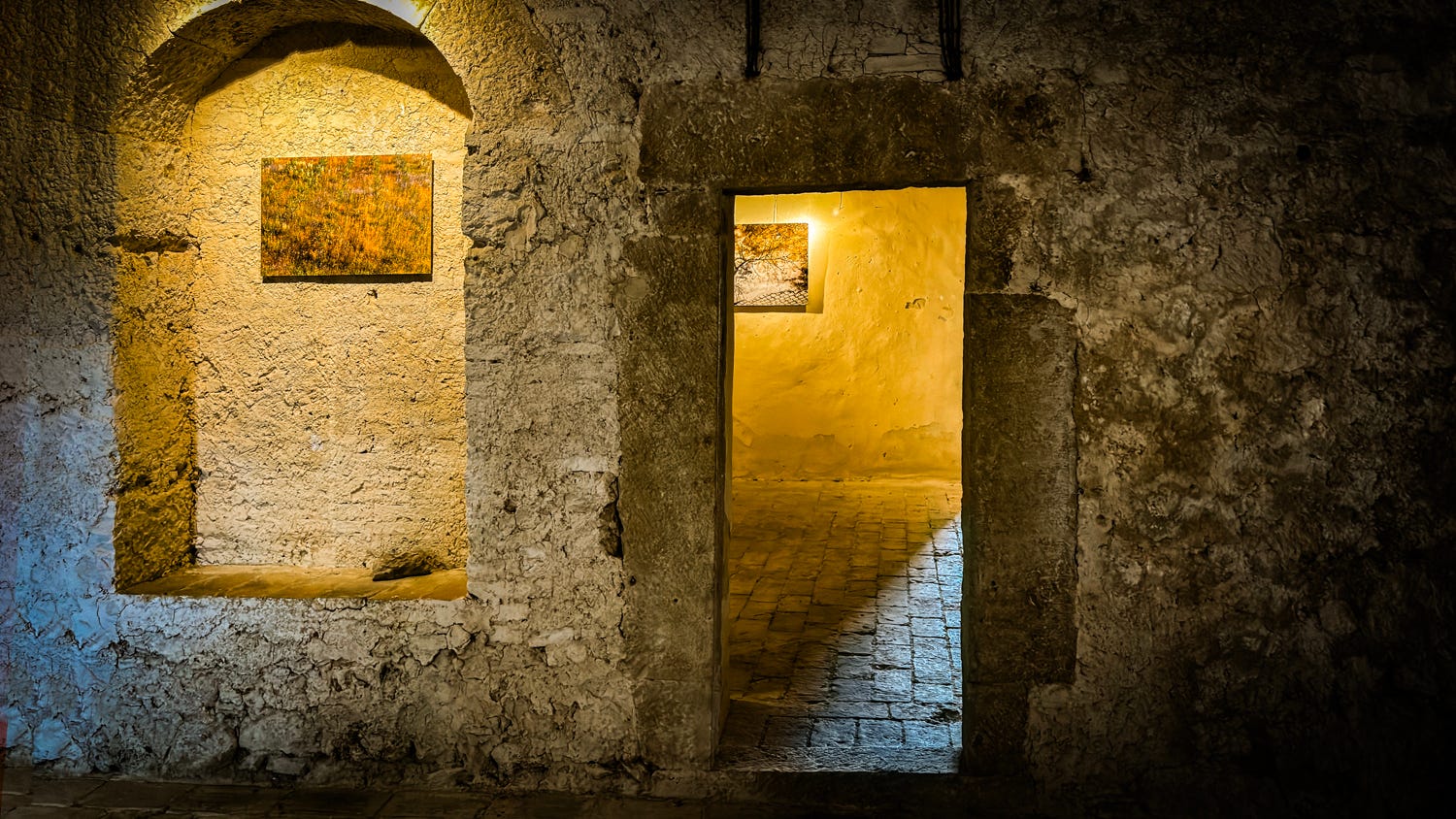
The only tingle of hope in Serra’s photographs was the reminder of a once beautiful earth, illuminated by his exquisite perception, capturing and delivering to the viewer the balm of beauty offered by his way of rendering natural light.
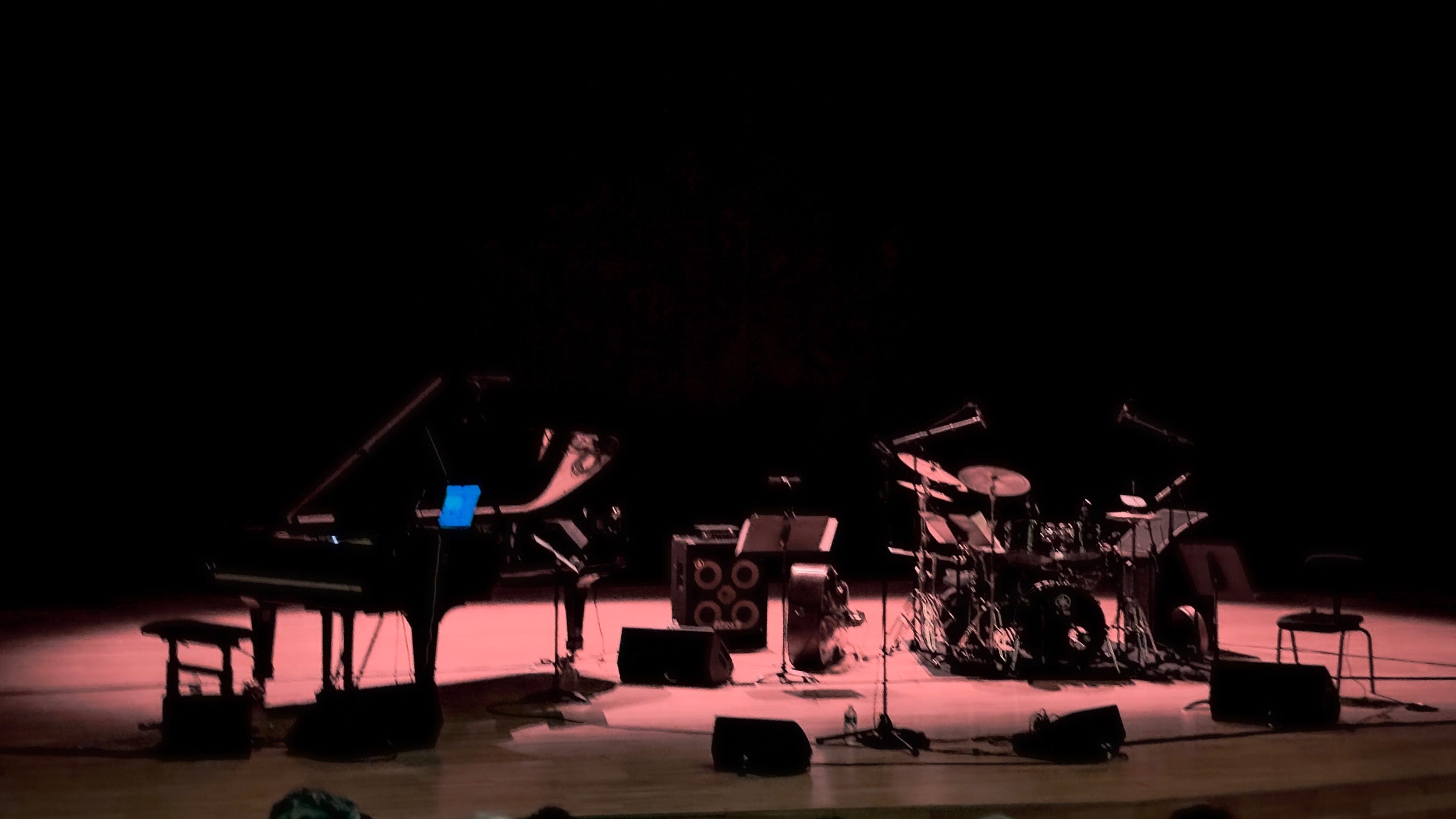
In Paris it was a trial to listen to the music of the Lebanese musician and composer Layale Chaker without being torn by the clashing notes of jazz in conflict with traditional Lebanese melodies and emotionally charged instrumental sounds drawn from a wider Middle Eastern soundscape.
Years ago I made many commercials in Beirut and a documentary about Lebanese food and culture. I befriended some and met many other people in the course of work. One day while driving north towards the ancient city of Baalbek my guide and I were confronted by a Hezbollah roadblock. A tough lout stuck his bearded face and machine gun muzzle through the driver’s window demanding to know who and what I was. My young guide and translator screamed “you better leave us alone, my father’s the mayor of the town.” Shocked by her vehemence and her news, he jerked away and we sped off. I said to her I had no idea she was the daughter of a politician. She smiled slightly and said she wasn’t, thus the past and present struggles of Lebanon are real and personal for me.
As I travelled I also saw people embrace or taking pleasure sitting in the shade of large umbrellas protecting café patrons as they quaff their cold beers, their finely bubbling rosé wines or their fierce black coffees.
But it was anger-making to hear from talented progressive minded artist friends they are locked out of theatres, galleries and publishers unless they conform to the needs of the dominant ideas which surround us all. This in democratic Europe.
CAMUS, ART and TRUTH
Many of us probably know people who, aching with uncertainty and confusion, return to passages in the Bible or to words of poets, as do I return to the writing of Albert Camus, who mends not just my mind but also my being. His humanity and his wisdom offer direction, hope and a balm for my soul.
All the above intersect with my endless hunger to make
and to create messages for those who may listen,
to those hungry to understand our trials and our cruelty.
This is a paraphrase from Camus:
‘…artists cannot bypass the time in which they live;
their work must live in this world ….
here, within the community,
it constitutes a means of stirring the greatest number of (people)
by offering them a privileged image of our common sufferings and joys.’
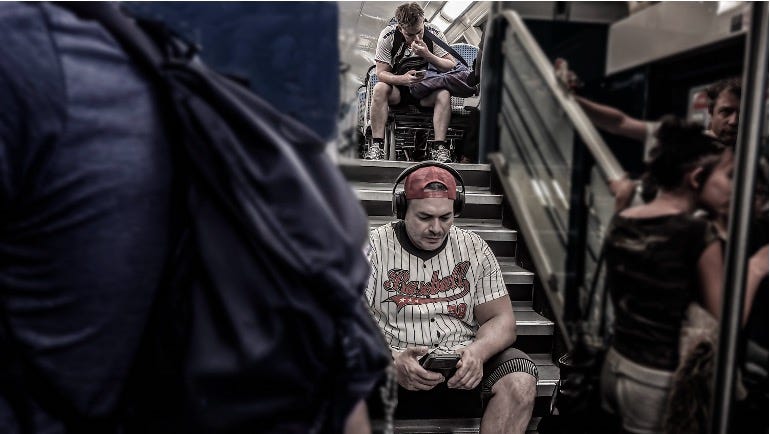
In that, Camus defines the “mission” of every artist,
‘…since their work must speak to the “greatest number of (people),
they can only be at the service of truth and liberty.’*
Again from Fatini’s essay:
The rejection of falsehood and oppression,
and the continuous search for truth and liberty,
are therefore the “commitments”
that characterize the (artist’s) craft according to Camus.
For this reason, the greatest error an artist can commit is abstention—
taking refuge in a world of illusion,
an Arcadia far from everything and everyone.
From the moment they choose to live in a dream rather than in reality,
they fail in their duty and definitively abandon the aesthetic universe.
As Camus states in The Rebel:
Art disputes reality but does not hide from it.
Art therefore, coincides with “commitment.
“Each generation, doubtless, turns itself to remaking the world.”
My generation, however, knew that it will not remake it.
Our task was even greater.
It consists in preventing the world from destroying itself.”
The purpose of my new teaching project,
PHOTOGRAPHY: Making Meaning
is to encourage people to ask themselves
who are they,
as they develop their skills,
what responsibility do they feel (if any)
towards themselves, their loved ones, their community
or indeed towards our species?
For me, Camus has from the first moments of reading him
through to the construction of PHOTOGRAPHY: Making Meaning
encouraged me to guide myself and provide hints for others
about what there is to do.
* 1. The Written Word, the Spoken Word:
The Community of the “Embarked” Artist
by Laura Fatini
Comments
Nothing yet. Say the first thing.
Sign in to join the conversation.