
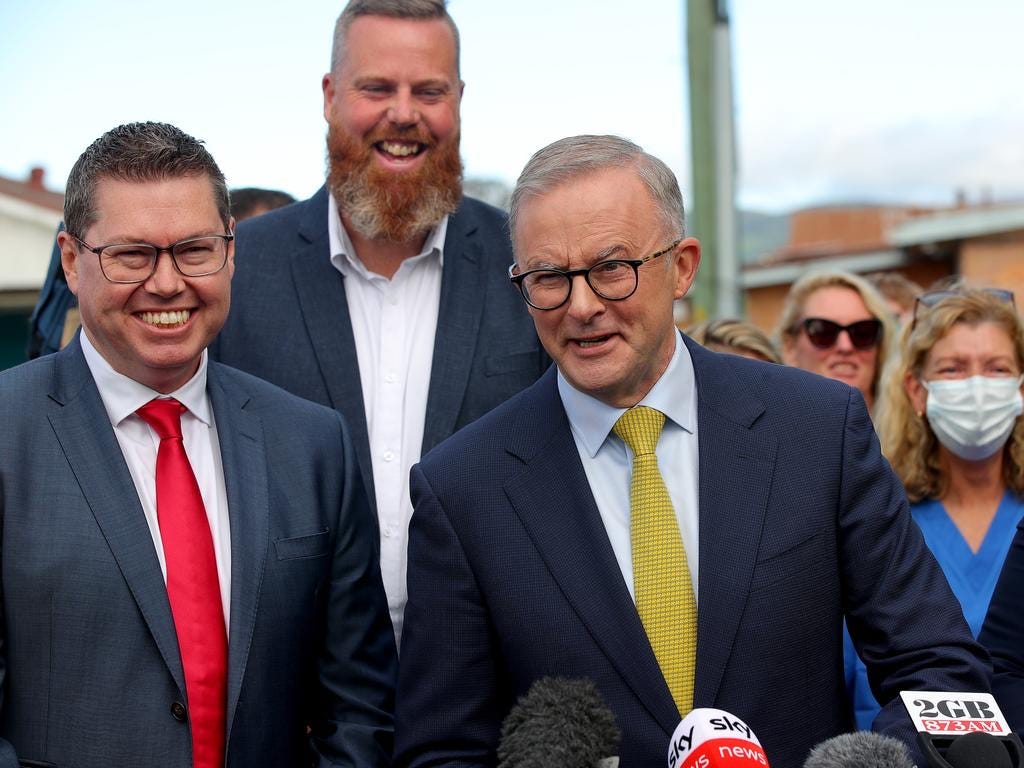
Minister for Defence Industry Pat Conroy defended AUKUS yesterday on ABC radio Newcastle.
When challenged on what public consultation has happened on AUKUS, he says:
ultimately this has been tested at a number of elections where people have stood on both a pro‑AUKUS and an anti‑AUKUS platform, and as a consequence of that the Australian people have voiced their support for AUKUS through the election of the Labor Government, who stood very clearly on a commitment to continuing with AUKUS.
Jenny Marchant says,
Things have changed though, haven't they, since the election?
It was announced in June, for instance, that we'd buy three second-hand subs rather than two second-hand and one new. Just things change. Global factors change too, and Australians may have new views on our military ties. If there is significant concern, as it appears there is through this process happening through a crowd‑funded inquiry, why not have a government public inquiry so that people can talk it out?
On the second hand submarines with a more limited shelf life, Conroy repeats the government’s talking point that “that's what we asked for in the first place.”
He skips over the deteriorating public views about the US alliance.
He rehashes the “20000 jobs” talking point, despite the embarrassing revelation that each job cost $18 million to create.
Then Conroy sets his sights on the current public inquiry:
Now this so‑called public inquiry is being run by the Australia Institute, which is a mouthpiece for the Australian Greens political party. And that's fine, they're entitled to their opinions. But they've already made their views well and truly clear. They are anti‑AUKUS, they're anti‑defending our nation. That's their democratic right.
But let's not pretend that this is some neutral independent inquiry. It's been rigged from the start. And that's fine. But let's be honest about that.
The AUKUS Public Inquiry, launched at Parliament House on 2 June 2026, is coordinated by the Australian Peace and Security Forum. Its five commissioners are:
Peter Garrett — former Labor cabinet minister
Carmen Lawrence — former Labor Premier of Western Australia and federal cabinet minister
Chris Barrie — retired admiral and former Chief of the Australian Defence Force
Karina Lester — Yankunytjatjara woman, from a family directly affected by British nuclear testing
Leanne Minshull — co-director, the Australia Institute
The Australia Institute is not running the inquiry and positions itself as non partisan and independent, so that’s some heavy handed politicking from Conroy.
The witness list to this inquiry makes Conroy sound even more desperate. The first hearing in Melbourne opened with Gareth Evans, foreign minister in the Hawke and Keating governments. The Adelaide hearing heard from Christopher Pyne, a Liberal defence minister.
Dissent on AUKUS is not confined to the crossbench. Ed Husic has publicly called for a rethink; the WA MP Josh Wilson has raised questions.
As Cameron Leckie writes in his submission to the inquiry:
It says much for the state of Australian democracy that it has taken a crowd-funded Public Inquiry to apply appropriate scrutiny to AUKUS. I would like to acknowledge and thank those organisations and individuals who have established this much needed Inquiry, as well as the Commissioners overseeing it.
The minister is the opposite of thankful.
Conroy later returns to the question of whether there needs to be public consultation on AUKUS by pointing to a poll.
I should just make the point that the latest Lowy poll of public opinion, and which polls tens of thousands of people, found that there was actually an increase in support for acquiring nuclear-powered submarines. I think it went up to something like 68 per cent of Australians support this.
Lowy says support for the submarine acquisition held firm (an increase of 1%).
The poll surveyed over two thousand people, not tens of thousands.
He also selected carefully from a poll that contains material far less comfortable for the government.
The same 2026 Lowy Poll found a narrow majority of Australians now say Australia should distance itself from the United States under President Trump, and that confidence in the US president to act responsibly in world affairs has collapsed. Earlier Lowy polling found that when Australians were asked whether the capability was worth its cost, roughly twice as many said no as said yes.
This is pretty remarkable given Lowy Institute’s question framing is normally geared towards confirming support for the US.
DeepCut News reported on an even more damning poll from Pew Research, where support for China has overtaken support for the US.
Having substituted election wins and polls for public consultation — and mocked those doing the consulting — Conroy returns to the government talking points: the most advanced submarines in the world…National interest…jobs.
Journalist Jenny Marchant switches gears: “Minister Conroy, is Newcastle still under consideration to house the nuclear submarine fleet?”
Conroy says the government is coming up with it’s own shortlist of locations and “it includes an examination of the entire East Coast, so Newcastle's obviously on the East Coast, but we're not looking at this process until the end of the decade.”
Over the course of that interview, Marchant asks four times and the answer never becomes a yes or a no. Her sharpest question — would the community need to agree for it to happen? — goes unanswered.
Marchant finishes with, “Are you confident that AUKUS will actually deliver submarines to Australia as planned?”
This question has been asked dozens of times in recent times. Usually the answer is yes, but this time, Conroy also claims to rely on the Chief of Naval Operations in the US. Except the only available record from the CNO doesn’t support that at all.
Defence ministers continue to do more interviews than others, but the line of public questioning remains very limited and completely missing the most prominent questions of our time —AI and military, electronic warfare and what sort of regulation we need. Also, what it means for Australia that its core partner—the US—is poised to enter a formal production partnership with apartheid Israel.
Defence ministers defend the status quo of the military industrial complex, with a lot of talking and live interviews, giving a sense of action and public accountability, but the research is lazy and the window for acceptable questions is tightly guarded.
Meanwhile, Home Affairs and Immigration portfolio Ministers Tony Burke, Anne Aly, Matt Thistlewaite and Julian Hill seem to be collectively avoiding live press conferences or interviews. The next time they resurface will be to sell their “tough on immigration” announcement being telegraphed in the NewsCorp.
Foreign Affairs Minister Penny Wong also continues to be very sparing on the live media front, preferring one directional communication.
Chalmers remains one of the most “frank” communicators, although he’s also drowning in the government’s skint effort on social and public housing and rental pain—meaning he really has nothing to say on cost of living to those who are really struggling.
Plibersek finishes with a plea on gambling ads reform: let’s pass this and then keep campaigning for more. Except it doesn’t work like that in reality.
Each tranche of micro reform takes years, while the hungry corporate games of gambling advertising and electronic warfare rapaciously grow. Data centres are coming, joining the hundreds of US bases, storage facilities, “sustainment facilities” and the famous Pine Gap.
Conroy has told us with his message yesterday: Every time Labor receives the same or bigger share of primary votes, the sky is the limit for the weapons industry.
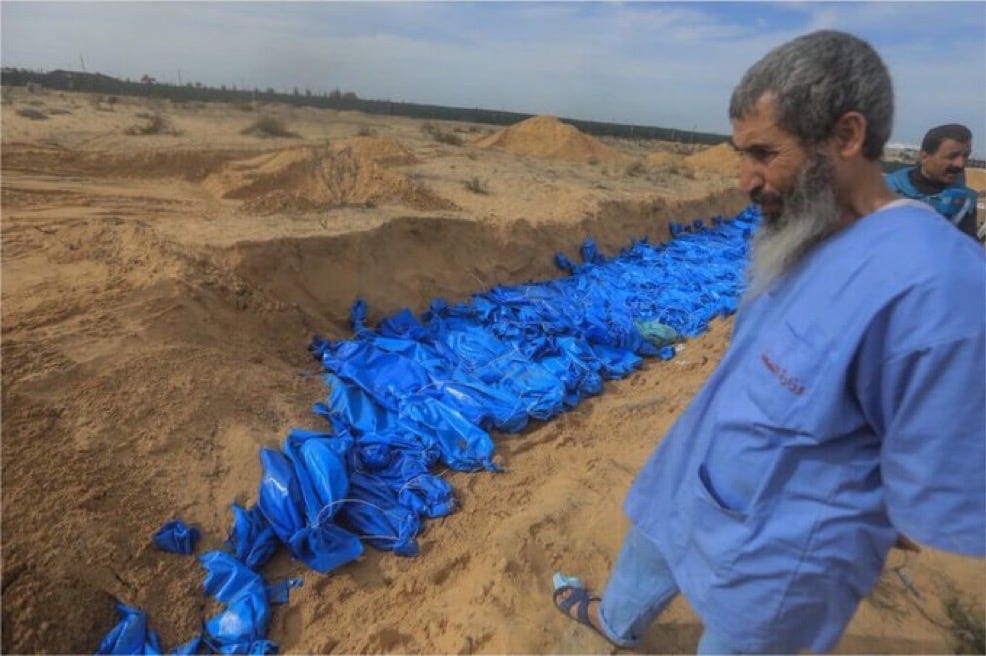
We are about to find out whether “defending Australia” can be done without enabling and assisting war crimes, crimes against humanity and genocide. Because red lines is just that — the bare minimum of standards with ways to hold politicians and senior managers accountable.
Most are shocked this is already not part of Australian law. Some have told me that the answer is already clear, but that is missing the point. Because the real question this package will answer is who is willing learn from history and fight for a different future?
Joel Jenkin’s stirring latest piece talks about the cultural and historical fear that is keeping so many Australians tied to the status quo on defence policy.
I refuse Anthony Albanese’s idea of “unity” or “purpose” or “long term” plan that asks us to silence ourselves.
We are not entitled to profit from families suffering. Now and never. That is our red line.
The Red Lines Package legislation is coming soon to parliament—now just weeks away. Sign up for updates now so you can be ready to amplify and ask your MP/Senator where they stand. Please watch for those who do speak up online and show them love, and those who remain silent, remind them in every post they give you. Make this like the gas tax. Channel the historic March for Humanity bridge walks. We are a movement, even when we are apart. Never forget it.

No posts
Comments
Nothing yet. Say the first thing.
Sign in to join the conversation.