



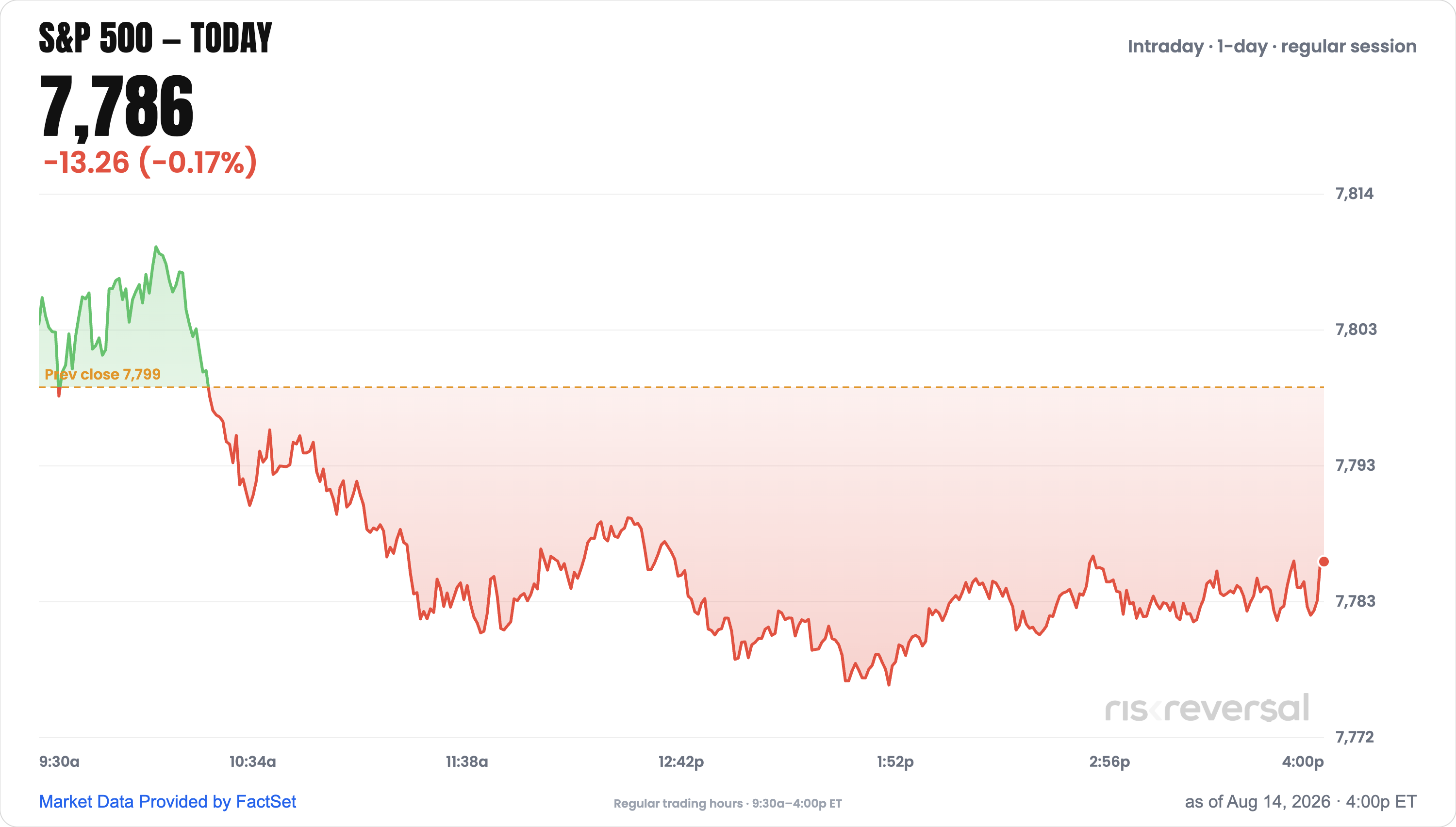
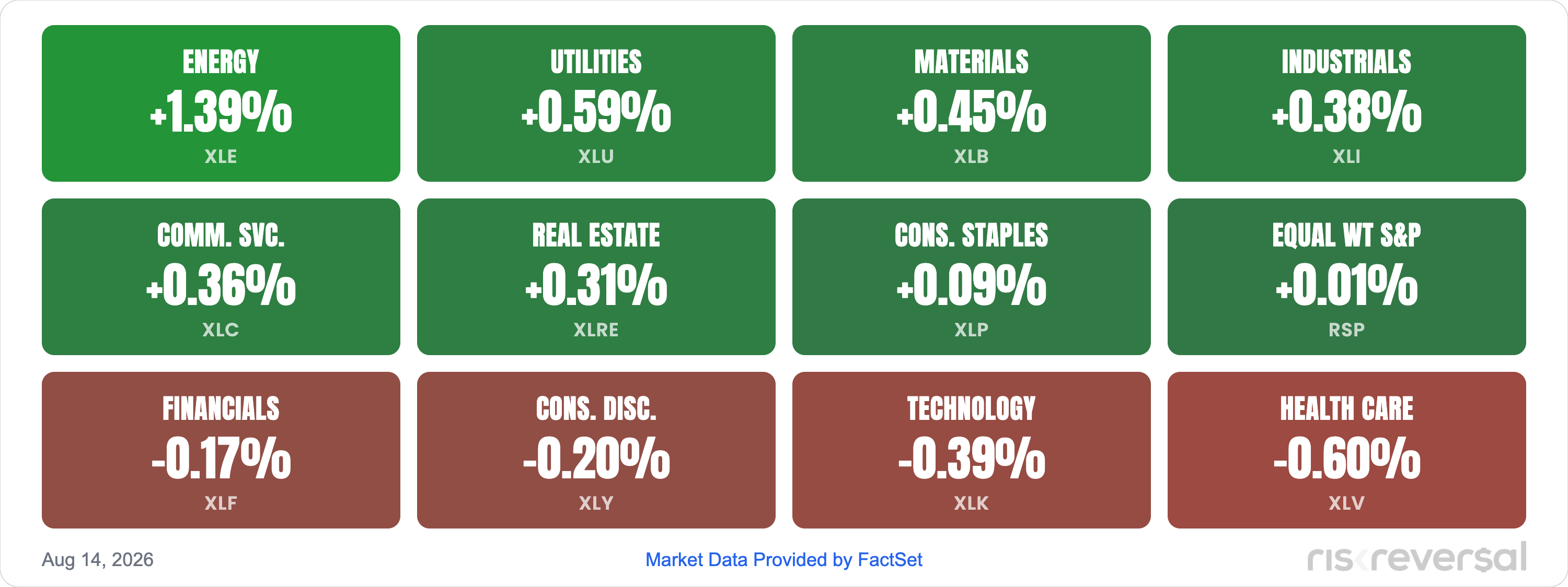
Stocks finished the week on a slightly softer note as oil and yields ticked higher on the day, alongside softer than expected Retail Sales and Consumer Sentiment this morning. The SPX finished the week with slight gains. Volatility continued to compress and the SPX has bascially been in a holding pattern for the past week and a half.

Oil: Ended the week higher, taking some of the enthusiasm away from the cooler than expected inflation numbers we saw this week. Crude is now $82.50. It hit a high of around $85 earlier in the week.
Yields: Yields backed off following this week’s inflation data but the move was fairly short lived in the longer durations. The US10YY was actually a few bps higher for the week while the 2YY was lower. The 2/10 Spread is now the widest since May.
Dollar: DXY was lower today to $99.65. It’s traded in a very tight range all of August.
Gold: Had a great week but couldn’t muster a huge move today despite the dollar, ending the week $4432
Volatility: The VIX remains remarkably subdued, entering the weekend near 14.40, its lowest level of the year. SPX vol is VERY low for the foreseeable future, with at the money options in full Summer mode near 10IV with only a slight uptick at the end of the month for Jackson Hole and NVDA earnings.
If one was looking for directional option positioning in September or October, you’ll rarely see it as low vol as it is right now.

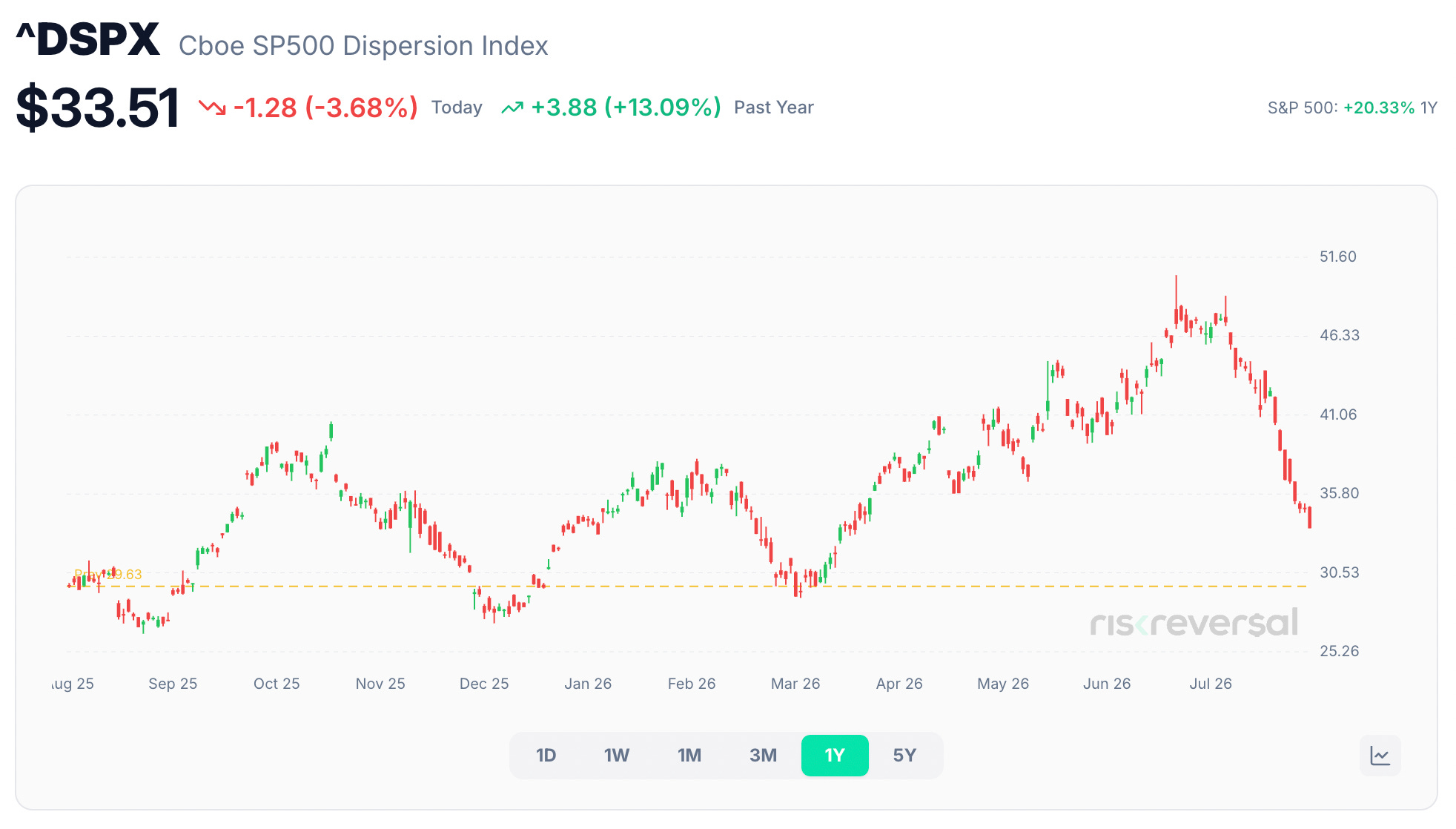
Semiconductor volatility has “normalized” a great deal following the capitulation in memory names a few weeks ago, and with that leadership has broaden out. That can be seen in readings like DSPX which crashed back to much more normal levels the past two weeks:

Articles Mentioned:
S&P 500 edges lower, but index heads for third straight winning week (CNBC)
Retail earnings next week could shed light on the health of consumer spending. Here’s what’s ahead (CNBC)
Mortgage costs pushed higher by US stand-off with Iran (FT)
AI-driven surge in bond yields could be next risk for markets and growth (Reuters)
AI’s infrastructure boom is getting more leveraged — and harder to track (CNBC)
Nvidia’s $500 Billion Plan Envelops Wall Street in Its AI Frenzy (Bloomberg)
The AI Buildout Is Expanding the Role of Private IG (Apollo)
OpenAI and Anthropic in price war as Chinese AI rivals gain ground (FT)
OpenAI talent exodus raises ‘huge red flag’ ahead of IPO (CNBC)

After last week’s weak payroll report, the worry this week would have been hot inflation, where the word stagflation would have been heard all across financial media. CPI came in roughly as expected, then PPI came in cooler than expected.
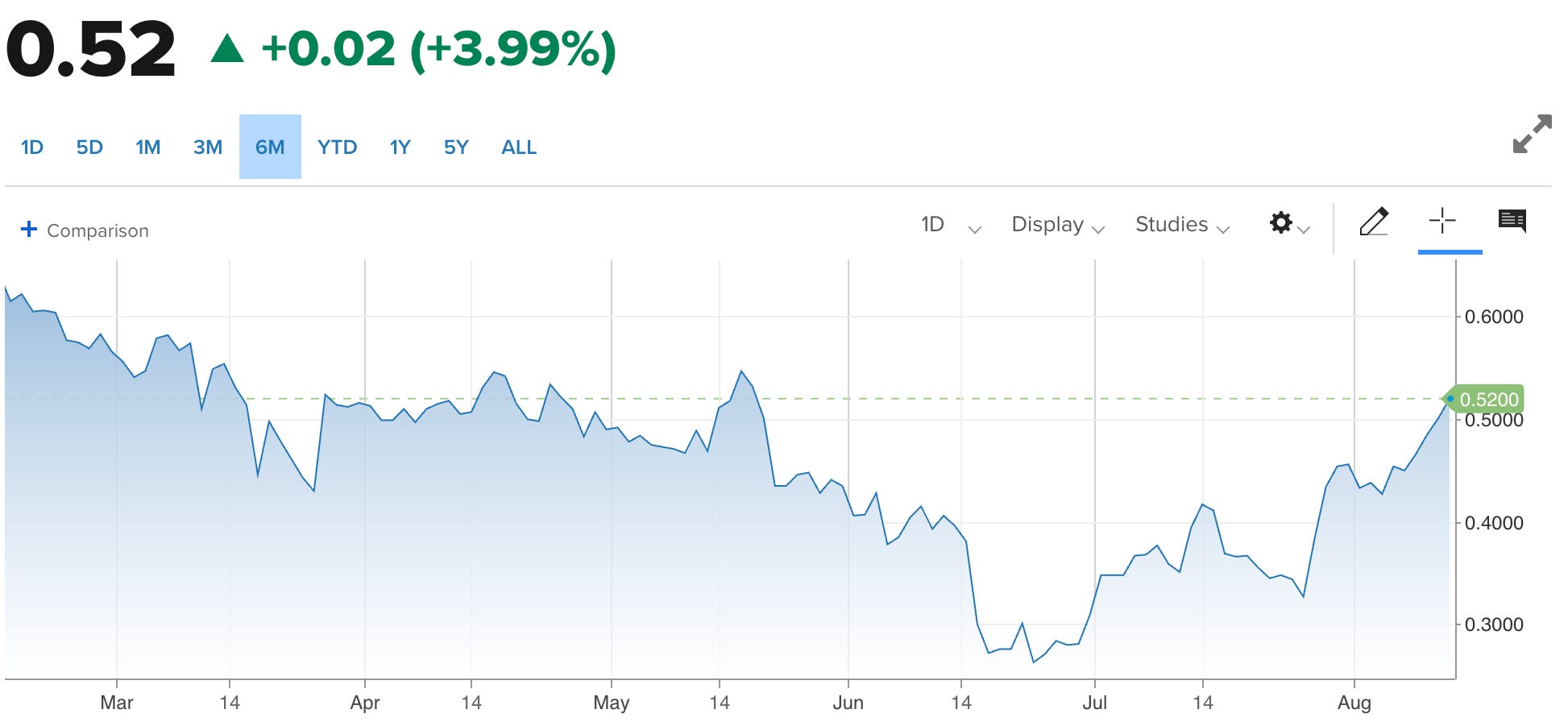
With that, rate hike odds for September fell sharply and it’s becoming harder to figure out what if anything the Fed will do next. Jackson Hole could provide some clues as now we’re seeing the 2Y/10Y spread expand to its widest since May:

Attention begins turning toward Jackson Hole and NVDA earnings later this month, but before that we’ll be heavy on retail earnings next week, with names like HD, TJX and WMT reporting.
We’ll be back this weekend with a full preview.

RiskReversal welcomes Vincent Daniel, partner at Seawolf Capital and one of the investors who called the 2008 housing crash, for a deep dive into where markets stand heading into year-end. They break down new Fed chair nominee Kevin Warsh's "immaculate economy" problem, why passive fund flows are quietly the most powerful force in the market, and the hedge-fund blowup that briefly rattled the S&P.
From there, Dan and Vincent get into the real meat of the episode: the new wave of GPU-backed financing deals from Nvidia, Apollo, and Blackstone, why Vincent thinks the AI trade is less a Ponzi scheme and more a "debt-infield CapEx initiative," and where the credit risk is really hiding. They also debate capital availability, return on invested capital, which software names survive the AI shakeout, and whether this all ends up looking more like the dot-com bust or the GFC. Plus: an unprompted case for why Vincent should be the next GM of the Mets.
Learn more about our sponsors APEX Fintech Solutions, CME Group and Fidelity.

RiskReversal is free, and free to share. Help spread the word by re-stacking or sharing with friends and colleagues!
Comments
Nothing yet. Say the first thing.
Sign in to join the conversation.