
In the past decade, India has undergone one of the fastest digital transformations in the world. Cheap data, smartphones, and platforms that collapsed distances between cities, languages, and social circles have also quietly produced a generation that has rarely experienced life offline. For many young Indians, the internet is not simply a tool or a medium - it is an environment.
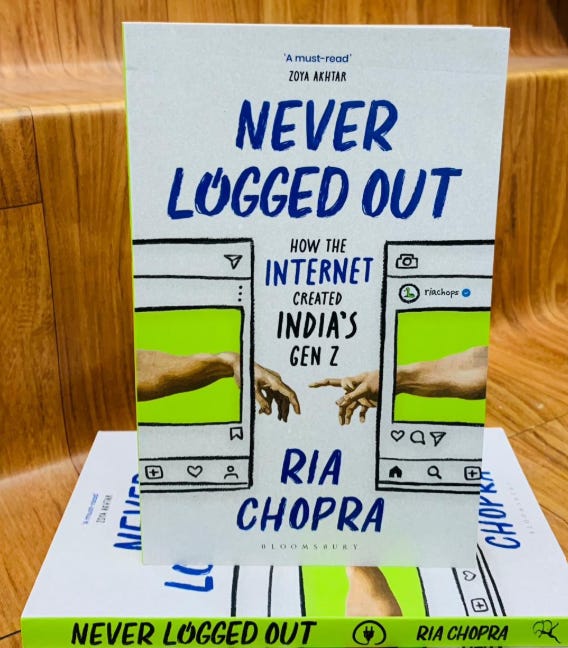
In Never Logged Out: How the Internet Created India’s Gen Z, the writer Ria Chopra attempts to make sense of that environment. Published by Bloomsbury Publishing, the book is a collection of essays that moves between cultural criticism and personal reflection to examine how the internet has shaped identity, memory, ambition, intimacy, and visibility for India’s Gen Z.
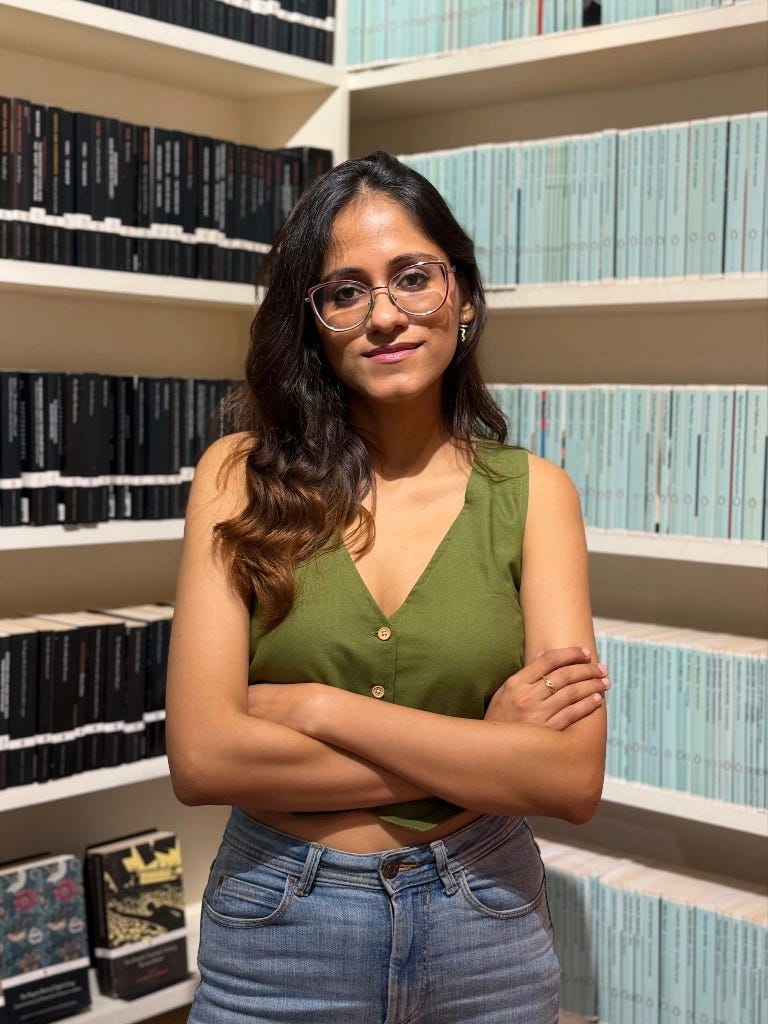
Ria belongs to the very cohort she writes about, young Indians who grew up just before constant connectivity became the norm and then watched the country’s digital landscape transform, particularly after the arrival of Reliance Jio in 2016, which dramatically expanded internet access. The essays draw on sociology, media theory, and internet lore while also reflecting on Chopra’s own experiences navigating online life.
In this conversation, Ria discusses the challenge of writing about a world she is still immersed in, the uneven realities of internet access in India, and the emotional process of turning years of scattered digital-age observations into a book.
Q1) You argue that India’s Gen Z has essentially never logged out of the internet. How has this constant connectivity reshaped ideas of selfhood and identity compared to pre-internet generations? Ria:
Q2) The title suggests the internet didn’t just influence but created India’s Gen Z. To what extent do you see this generation as shaped by global internet culture versus India’s specific digital ecosystem, cheap data, language diversity, and platform adoption?
Ria: I think there’s definitely a cross-pollination with global internet culture – especially when it comes to fashion trends, slang, and pop culture – but India’s internet ecosystem is also entirely its own. The advent of Jio and the post-2016 shift in Indian internet culture proves it – we are very uniquely a set of people with micro-cultures, niches, pop cultures, linguistic quirks, local traditions, beliefs etc. that all seep into our internet usage.
Q3)Your book moves between cultural analysis and personal reflection. How did you decide when to step into memoir and when to pull back into critique, especially when writing about a world you are also deeply embedded in?
Ria: I was very sure that I wanted the memoir/personal narrative part of the book to not be self-indulgent – every time there is a detour into my own experiences, it is there for a purpose – either as an example, or as a parallel. For the longest time, my bio on various social media platforms read: ‘the personal is cultural’. Analyzing culture is the point of the book, the personal is just representative of the tangible effects it can have on people. Being part of the cohort I am writing about just gave me more material to draw upon. Of course I was also conscious of structure, so there was an aim to intersperse the research-heavy portions with anecdotes in order to never overwhelm the reader.
Q4) You write from within the internet while also critically examining it. Do you ever worry that critique itself risks becoming another form of online performance? Where do you draw that line as a writer?
Ria: There is occasionally that worry, especially when I’m talking about something topical in my articles or short videos – am I talking about it because I have something to say, or am I doing it to say something, to have a ‘hot take’? I think there is a practice of self-reflection, to know when I’m adding to the discourse and when I’m not, and it’s one we all have to do for ourselves. I also have started taking more time to think about things before I write or post anything at all, because the process of writing my book taught me that I am organically a long-form person – I think best when I take the time and space to do so.
But I also think we have a lot of large, vague notions around ‘performance’ that aren’t very specific to the online world. We all perform. We all perform offline, too. Performance is also a part of work culture in some way – office jargon, formal wear, packaging things to suit the context etc. And the same is part of the digital world too. Since my work goes out in the attention economy, I sometimes have to play by its rules, which can look like adding a ‘hook’ to a video or referencing a meme or adding some topical slang. And I think to that extent it is okay, I feel fine doing it.
Q5) Internet culture has its own grammar: memes, irony, screenshots, virality. Did you consciously think about translating this language into long-form prose? What gets lost when the internet is written about rather than experienced?
Ria: This was a really fun challenge for me – to capture the grammar, the feeling of the internet, into the prose of the book. That has come through in form in various ways – there are meme references scattered throughout the book, there is slang which may be grammatically incorrect but makes sense for a digital-first readership, there is an assumption of digital familiarity (though we did add a glossary for anyone not as well-versed with internet vocab). Another thing I really wanted to do was to play with structure and have sections of the book that feel like scrolling – back to back infodumps, staccato sentences, multiple stimuli – to make people feel a sense of overwhelm, which is what we feel when we scroll. And then, of course, we have the ‘log out’ symbol breaking up all these sections and asking you to stop and think.
When it comes to analyzing the internet, then to echo McLuhan, the ‘medium is the message’ – I have a four-point framework in my book about why the nature of the internet renders it extremely hard to represent properly in other mediums, including a book. Obviously, experiencing something is the most holistic form of understanding. But the book was important too – to break out of algo-governed platforms, away from the attention economy, to sit down and write and think about what this massive force has done to us.
Q6) Across the essays, you touch on privacy, visibility, ambition, and fame. Which chapter was the most difficult to write - conceptually or emotionally, and what resistance did you encounter while working through it?
Ria : I will say that the whole book was emotionally harder than I was expecting it to be – I did expect it to be conceptually difficult, as it is such a huge undertaking, but there was definitely a huge emotional toll of realizing how much I have been changed (much of it non-consensually) by the internet, and to recount instances and incidents that felt small at the time but led to massive butterfly effects in my life.
Out of all the chapters, I found those on memory/forgetting and fame/visibility the hardest to write. Both forced me to confront incidents in my life that I’ve been burying a fair bit, and had me reckon with my own beliefs and understanding of larger life questions. I think we’re wired to protect ourselves, and to process these, publicly, knowing people would read it and judge it, was tough. It was necessary, though. I’m glad I did.
Q7) India’s internet experience is often framed as universal, but access, safety, and visibility are deeply uneven. How did questions of class, gender, or geography shape what you chose to foreground, or resist generalizing, in the book?
Ria: The book is rooted in personal experience, so I knew that I could only represent a very specific, privileged, upper-caste and upper-class lived reality of the Indian Gen Z experience. Like I said, internet access and experience in India is fragmented along the same fissures that fragment our society, which is why throughout the book, reaffirming my narrowness of life experience was important for the sake of clarity. I have also referred to scholars, writers, researchers writing about the themes I am focusing on, but from the perspective of different social groups, to include that experience too.
Like any other non-fiction writer, I focus on what I care about, which obviously emerges from my own personal lived experience too – but for this book specifically, I tried to pick up broad, far-ranging themes that impact us all – things like privacy, memory, love: that differ in experience and level of impact, and intersect with society and policy differently, and hence yield specific experiences for each of us – and then to find the commonalities between us all.
Q8) You’ve described Never Logged Out as the processing of years of scattered thoughts and feelings. Can you walk me through how you organized that chaos, what did your actual writing process look like from idea to finished essay?
Ria: Many of these ideas came to me at different points over the last five years, and others crystallized more recently, but I feel I’ve had these questions for decades. The first synthesis for my thoughts came in 2023, when I drew up my first book proposal, where I had to break down my book’s structure, tone, and chapters. I’d say that first proposal is only 40% similar to the eventual final book that got published – many more ideas were added, some were removed, some chapters started out with one goal and ended up achieving something else by the end of their writing, I lived more life which added more experience, and I read more and paid more attention to the world and hence to my own thoughts.
I knew that I wanted each essay to have one broad overarching core value at their centre – as of the finished book, these are identity, love, memory, consumerism, fame, anonymity, knowledge, and representation – so I started out by narrowing down on those broad themes. This was done by looking at the large questions I have about myself and my generation, and how I can see the impact of the internet in them. Then there was the matter of research and writing. Some chapters came more easily than others, because I feel I had thought about those things a lot more, almost as if I had been writing those chapters in my head to process the situations, or because I had worked more in that specific field or previously written something that was related to that theme. Others required a lot fresher research and reading – something which I really, really enjoyed. The writing itself was haphazard – I have described it in previous interviews as almost as an ‘exorcism’ because it was so freeing, so uncontrollable, once I started writing it seemed I could not stop. More than half the book has been written between the hours of midnight and 4 AM. Many chapters were written on flights, in hotels, in gardens, and curled up on other people’s couches. I spent days feverishly writing, and then weeks not writing at all. There was no process. The ideal writing process, at least for me, is whatever gets me to actually write.
Q9) Was there a chapter, argument, or personal experience you consciously chose to leave out of the book? What made it feel unresolved, premature, or too personal to publish?
Ria: We’ve removed some stuff for legal reasons, especially in parts where I’m talking about known public figures. There are also things I haven’t processed yet that I, hence, don’t feel comfortable writing about right now. I need to know where I stand before I publish it.
Q10) If Never Logged Out were read 20 years from now, what do you hope it captures truthfully about this moment, and what do you suspect might feel incomplete or naive in hindsight?
Ria: I hope it continues to capture and accurately represent our overwhelm, our confusion, our complexities, but also our love for the internet. Like the ending of the book says – I was here, and it mattered to me.
I suspect that the internet is going to change, massively, due to the way we’re seeing AI being incorporated into it. Our internet of now will soon be the internet of our past. In that sense, I think Never Logged Out is a documentation of not just my internet experience but also of the internet at this point of time. We were here, and this is how it felt, and it mattered to us.
Thank you all for reading and a big thanks to Ria Chopra for collaborating in today’s post!
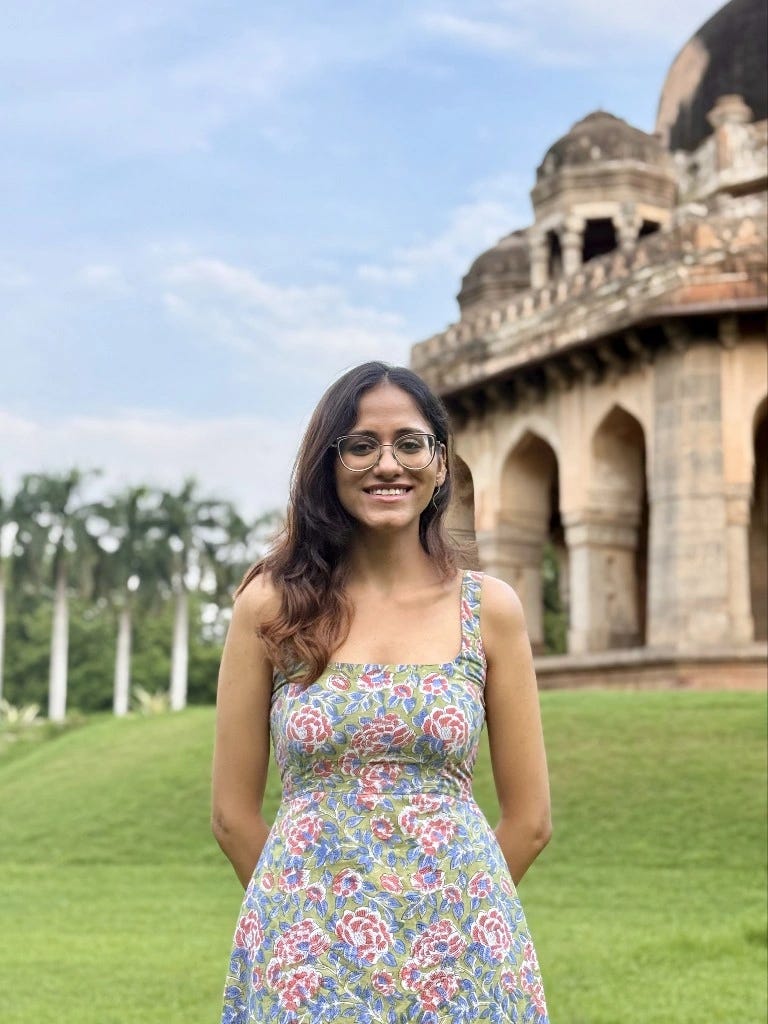
It’s a pleasure!
Readers who wish to follow Ria’s work more closely can visit her website or follow her commentary on Instagram.
Website: https://riachops.com/
LinkedIn: https://www.linkedin.com/in/riachops/
Instagram: https://www.instagram.com/riachops/
No posts
Comments
Nothing yet. Say the first thing.
Sign in to join the conversation.