
Sierra Leone should not be this poor.
Before the civil war tore through the country between 1991 and 2002, Sierra Leone was a nation with genuine upward momentum. It had diamonds, rutile, bauxite, and fertile land. It had Freetown, one of West Africa’s oldest cities, with a tradition of education and civic society that predated many of its neighbours. It had potential that was not merely rhetorical. It was structural.
The evidence of that foundation is not abstract. Fourah Bay College, established in 1827, was the first university in sub-Saharan Africa, and for generations it was the intellectual engine of the entire West African region. Its alumni shaped a continent. Samuel Ajayi Crowther, the college’s first student, became the first African Anglican bishop. James Africanus Beale Horton became a physician and one of the earliest African nationalist thinkers. Edward Wilmot Blyden became a foundational voice of Pan-Africanism. These were not peripheral figures. They were produced by a Sierra Leonean institution, in Freetown, before most of the world had begun to take African intellectual life seriously. When the colonial era eventually settled, it left behind infrastructure, institutions, and a civic tradition that gave the country something real to build from. The war did not just destroy lives and displace communities. It dismantled the accumulated foundation of more than a century.
The numbers are not the whole story. Numbers do not capture what it feels like to live inside a country where you cannot trust the institutions that are supposed to protect you.
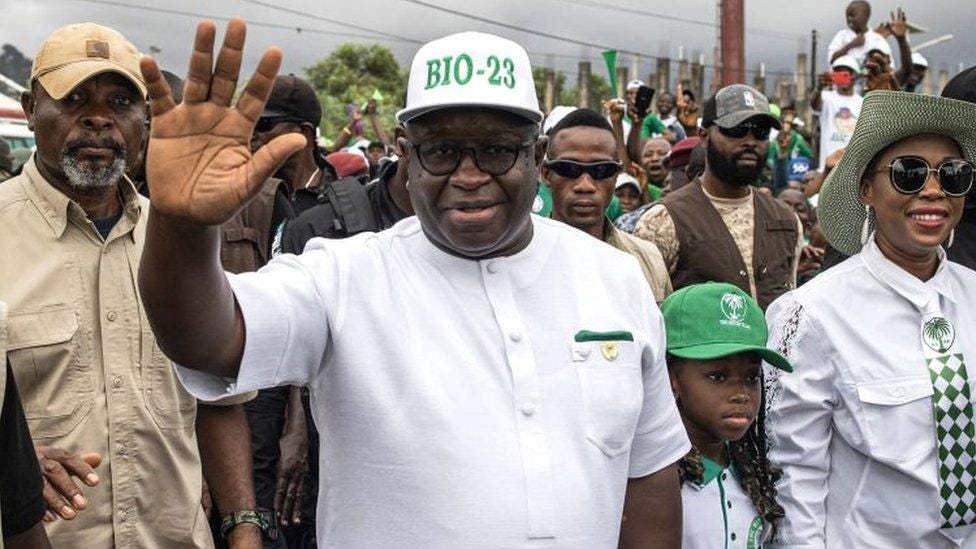
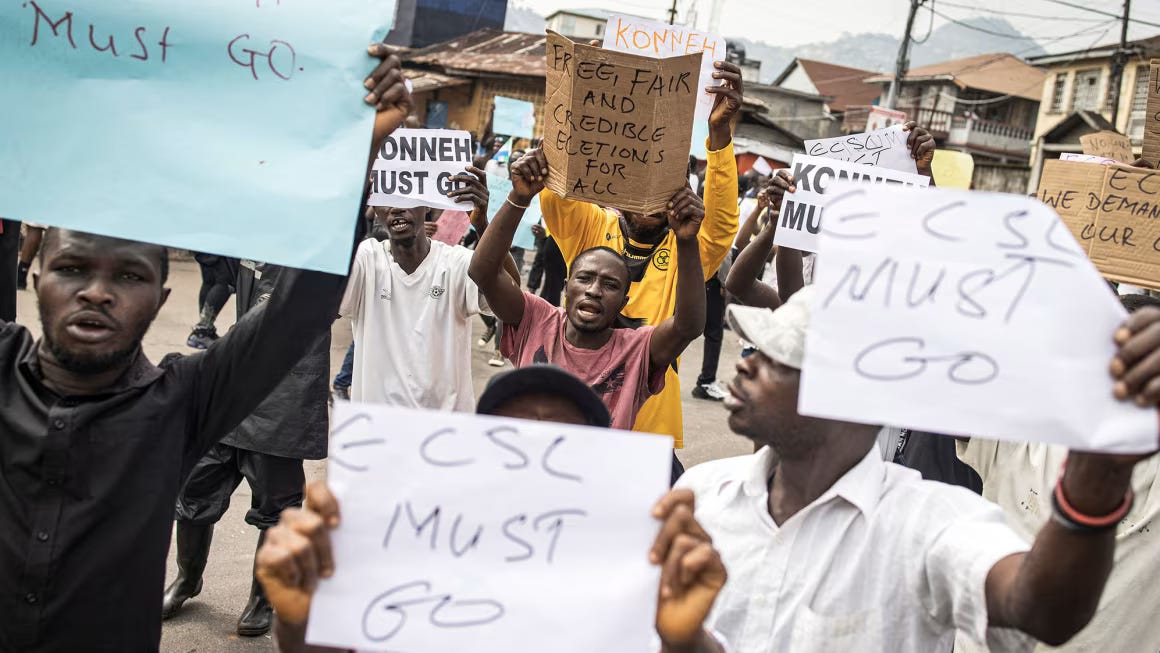
The tensions around the 2023 general election were not born in 2023. They were years in the making. The All People’s Congress entered that election already suspicious, already hardened by the experience of 2018, which they also contested. When the Sierra Leone People’s Party won again, the APC did not accept the result. They pointed to Edmond Alpha, the Chief Electoral Commissioner, as the symbol and instrument of what they described as a stolen election. They called his appointment wrong, unlawful, and a threat to democracy. They demanded his removal. When that demand was not met, they boycotted.
And here is where the story becomes something more than a party political dispute. When the APC walks out of the legislature, Sierra Leone loses its functional opposition. It loses the institutional check that exists to hold the ruling party accountable. In a country with already weak oversight mechanisms, where the police and armed forces are widely regarded as instruments of executive power rather than independent protectors of citizens, the absence of a working opposition is not a symbolic loss. It is a structural one.
Power without accountability does not stay still. It expands. It makes decisions without scrutiny. It signs contracts without challenge. It removes inconvenient people and replaces them with compliant ones.
Yvonne Aki-Sawyer, the Mayor of Freetown, was temporarily removed from her position. Whatever the stated legal basis, the message it sent was clear to anyone watching: elected office in Sierra Leone is conditional. You hold your position not solely by democratic mandate but by the tolerance of those with greater power. That signal travels fast. It reaches investors weighing political risk. It reaches civil servants deciding whether to act independently or defer upward. It reaches ordinary citizens, asking whether the people they voted for are actually governing.
But accountability must cut in every direction. The APC’s response, retreating into boycott and procedural warfare, raises its own serious question. If your mandate is to serve the people who voted for you, then abandoning the legislature is not a protest. It is dereliction. The communities that sent APC representatives to parliament did not vote for absence. They voted for opposition, scrutiny, and pushback. Party politics became more important than the duty of representation, and Sierra Leoneans on both sides of the divide paid the price for it. Instability is not only what the ruling party does to the state. It is also what opposition parties do to their own people when grievance replaces governance.
Sierra Leone’s political divides run deep and are rooted in history. The SLPP draws its core support from Mende communities in the south and east. The APC is strongest among Temne communities in the north and northwest. These are not merely electoral coalitions. They are identities, with grievances attached to them that stretch back through decades of exclusionary governance. When roughly 80 per cent of Sierra Leoneans tell Afrobarometer that they see politics as violent, and when half report having personally experienced electoral violence, you are not looking at a country with a political problem. You are looking at a country with a civilisational wound that has not healed.
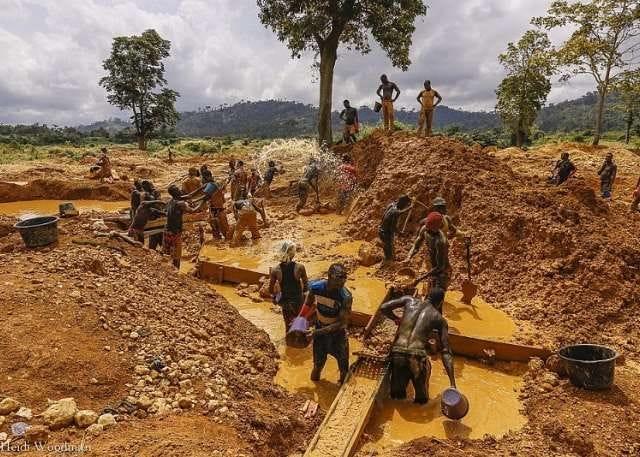
And that wound has a direct economic cost. Political risk perceptions deter private investment and raise borrowing costs. Governance uncertainty, abrupt policy shifts in mining taxation, fuel subsidies, and foreign exchange management, destroy the predictability that businesses and households need to plan. Elite predation and patronage-based control over the formal economy distort markets and concentrate gains in the hands of those connected to power.
The Truth and Reconciliation Commission, established after the war to help the country understand what had happened to it, warned that economic mismanagement and unpredictable governance fostered cynicism and despair. That warning was not heeded with enough seriousness. That cynicism is now structural. It shapes how young people relate to the state, how communities relate to development projects, and how citizens relate to elections.
The tragedy of Sierra Leone is not that it is a failed state. It is that it is a state that keeps narrowly avoiding failure while never quite achieving the stability that would allow it to flourish. The post-war story was supposed to be a success. For a while, internationally at least, it was sold as one. The elections of 2002, 2007, and 2012 were cited as evidence of democratic consolidation. But democratic consolidation is not just about holding elections. It is building the trust and the institutions that make elections meaningful. That work was not done with enough depth.
The structural drivers of the conflict, elite predation, exclusionary politics, centre-periphery imbalances, and the disconnect between those who govern and those who are governed were not resolved. They were managed imperfectly, and then they resurfaced.
Sierra Leone was on an upward trajectory before the war because it had resources, it had people, and it had the beginnings of a civic tradition. Those things have not disappeared. The diamonds are still in the ground. The people are still here, young and in large numbers, and tired of being told that better is coming. The civic tradition, battered as it is, still produces journalists, activists, lawyers, and politicians who believe the country can be different.
But belief is not enough without the structural conditions that allow it to translate into outcomes. And those structural conditions require political stability. Not the stability of suppression, where dissent is managed by force, but the stability of legitimacy, where institutions are trusted enough that their decisions are accepted even by those who lose.
There is no single policy fix for what Sierra Leone is carrying. But there is a framework.
Custodian Republicanism is a political theory built specifically for contexts like this one. It argues that the state’s primary role is not to dominate or to distribute, but to steward. To protect essential public goods, restrain the predatory capture of resources and institutions, and create the structural conditions through which citizens can build lives of dignity and purpose.
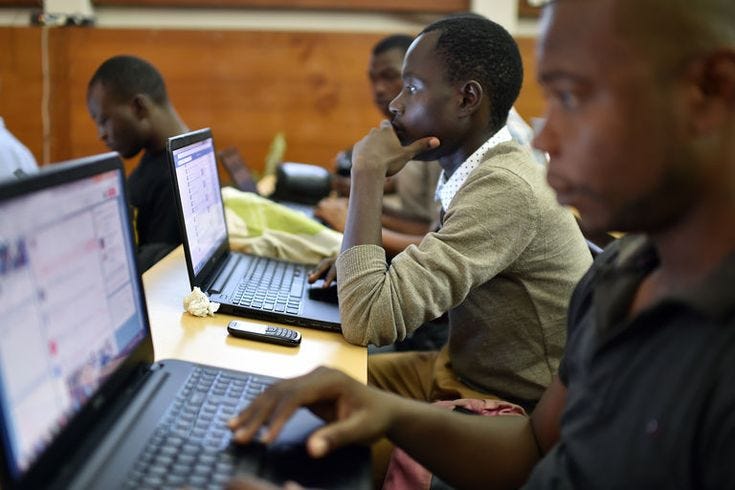
Applied to Sierra Leone, it organises around four interconnected pillars: economic development rooted in resource sovereignty and community land rights, education redesigned to produce innovators rather than clerks, youth activation through visible and dignified pathways into strategic industries, and innovation that surfaces and scales what African communities are already creating. The architecture is designed to be self-reinforcing. Resources fund education. Education produces innovators. Innovators build industries. Industries activate youth. Youth drive innovation. No single leader holds it together. The system does.
This is a summary. The fuller argument, and what it would actually take to build it in Sierra Leone, is a paper for another day. But the direction is clear. The country does not need to be rescued. It needs to be structured.
Sierra Leone’s economic underdevelopment is real. But it is downstream of something older and harder. It is downstream of a political culture that has not yet made peace with itself, in a country that, technically, made peace twenty-three years ago.
The aftershock, it turns out, has a very long tail.
Written By Abu Bakarr Kamara, Founder of Rise Roots Group
No posts
Comments
Nothing yet. Say the first thing.
Sign in to join the conversation.