
Some people have a career. Some people have a calling. Very few get to live both at the same time.
Christy Sovereign is one of them.
A senior executive at Accenture, leader of billion-dollar client relationships, one of the most respected names in the Twin Cities business community — and for over 40 years, quietly in the background of all of it, a coach, a volunteer, a fierce advocate for a cause that had nothing to do with quarterly results and everything to do with her sister Katie.
This June, those two lives officially become one. Christy is the president and CEO of the 2026 Special Olympics USA Games — 4,000 athletes, 20,000 volunteer shifts, 75,000 fans, all 50 states represented, right here in Minnesota. The largest humanitarian sporting event in the United States this year.
She didn’t leave her career to do it. She’s doing both.
It started with Katie
Christy’s sister Katie was born with Down syndrome. From the time she was a little girl, Christy remembers counting down the days until Katie turned eight and could start competing in Special Olympics. That was over four decades ago. Since then, she’s coached, volunteered, cheered, served on the board of Special Olympics Minnesota, and watched her sister build a Special Olympics career that Christy describes, without a trace of irony, as more impressive than her own.
“Katie’s the successful one in the family,” she said, and she meant it entirely.
When Special Olympics Minnesota began bidding on the 2026 USA Games, Christy was involved from the beginning — playing a connector role, helping get the right organizations in the room. When the bid was awarded and someone asked if she knew anyone who might want to lead it, she offered names from her network. They came back and said they wanted her.
Her first answer was no. She had a big job she loved. She was humbled and honored, but no.
They didn’t take no for an answer. She’s glad they didn’t.

What it looks like when purpose and profession finally meet
Accenture didn’t just give Christy their blessing — they leaned in. Fully and quickly. She describes it with visible gratitude: an employer that understands that business can be a powerful good, that resources and assets brought to bear on something like this aren’t just good for brand — they’re the right thing to do.
The result is something rare. A professional with decades of corporate transformation experience, deep personal investment in the mission, and the full backing of a global organization — all pointed at the same thing.
“There are very few opportunities in a corporate environment that something like this represents,” she said. “The opportunity to bring resources to bear as a force for good — that’s special.”
She runs the games the same way she’d run a major transformation project. Her team came together to define their north star. They mapped stakeholder experiences — not just the athletes, but the 3,000 families traveling with them, the thousands of volunteers, the sponsors, the community. They asked: what are the moments that matter most, and how do we deliver on them?
But the metrics she’s most focused on aren’t the ones you’d find in a boardroom. She wants to move the needle on inclusive mindsets. She wants the employment statistic to change.
That statistic — only 18.5% of people with intellectual disabilities are employed at a level matching their abilities, compared to 70% of everyone else — stopped her cold when she first encountered it.
“What a crisis of underemployment,” she said. “Think about all the ability sitting out there, untapped.”
Her response was to build something: a Unified Work Playbook, created with Accenture’s resources, designed to give employers the tools and education to access this talent pool. Summits, forums, virtual sessions — all building toward a culminating Unified Work Summit during the games themselves. The goal is simple and urgent: make 18.5% become something different than 18.5%.
On leading with heart in a world that once told her to stop being so pink
Midway through our conversation, Christy shared something that stopped me completely.
Early in her career — mid-90s — she received career coaching advice from a woman leader who told her to stop being so pink.
Stop being so pink.
In other words: the qualities that made her warm, relational, and heart-led were being flagged as liabilities. Tone them down. Fit the mold.
She ignored it entirely. And she’s spent the decades since watching the business world slowly, finally, catch up to what she already knew — that leading with heart isn’t a weakness to be corrected. It’s a competitive advantage that’s been undervalued for far too long.
“There is no one shape that success takes,” she said. “And I’m so glad that’s been recognized.”
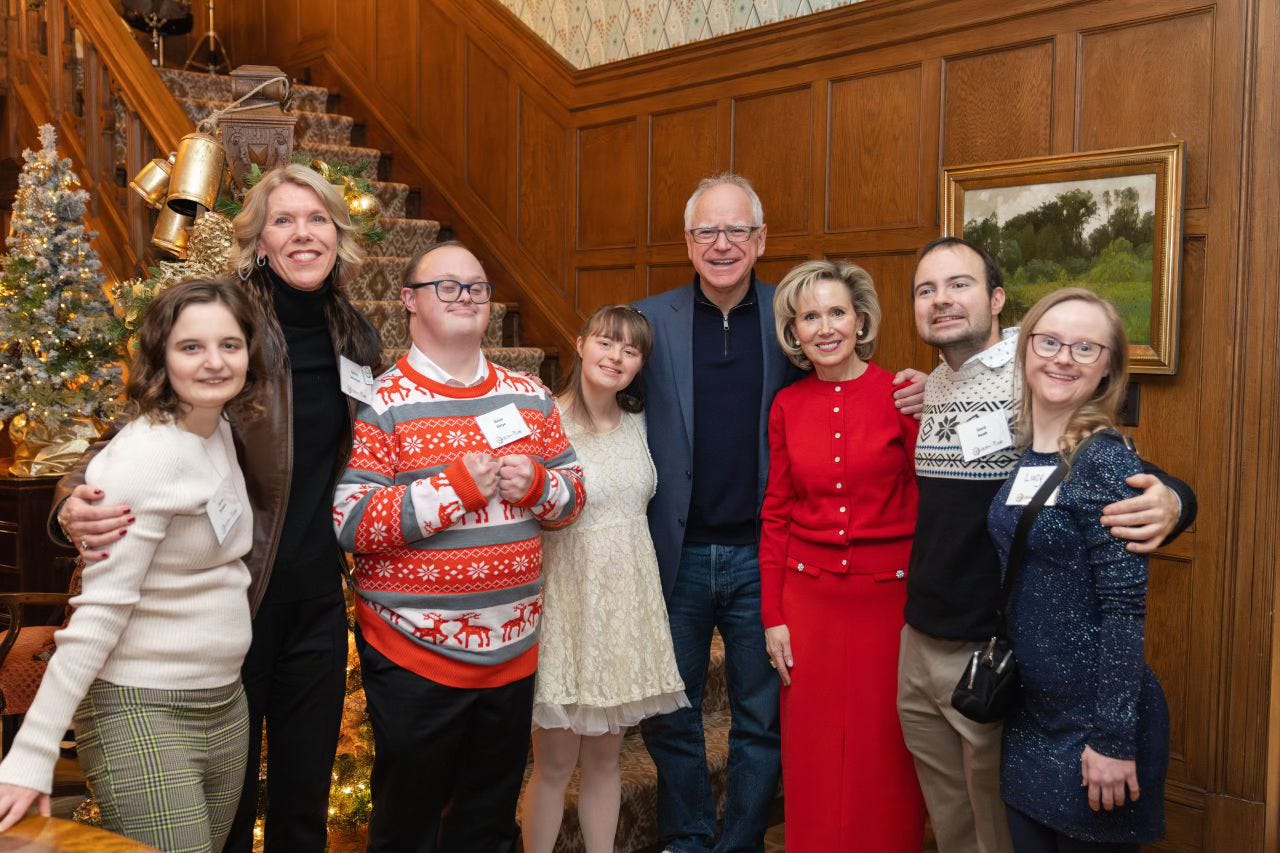
What the games mean — and what they need from you
June 20th to 26th. Minnesota. The 2026 Special Olympics USA Games.
Christy is clear that the financial picture is in good shape — the generosity of this community has seen to that. What she needs now is people.
20,000 volunteer shifts. Full stadiums. Families showing up. People who have never experienced Special Olympics coming through the doors, watching these athletes compete, and leaving — in her words — forever changed.
Because that’s what happens. Every single time.
She described watching Dwayne Johnson talk about a Special Olympics powerlifting athlete he’d befriended at the gym. “He’s the Rock’s rock,” Johnson had said. “He’s the guy who keeps me grounded. He reminds me what matters.” Christy brought that story back to her team and it became the campaign: Forever Changed. Because it’s true. You don’t leave a Special Olympics event the same way you arrived.
“I challenge anyone who hasn’t interacted with an athlete or been at a Special Olympics event not to be touched,” she said simply.
She’s not asking for much. Show up. Cheer. Volunteer if you can. Bring your family. Fill the stadiums. Let these athletes feel what it means to have an entire state behind them.
And if you run a company or lead a team — raise your hand. Ask the question. Let them help you figure out how to be part of the solution on employment. The talent is there. It has always been there. It just needs a door opened.
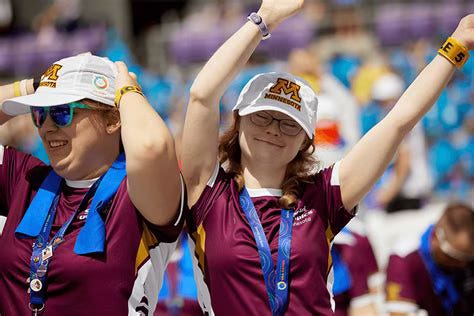
On the language we use and the world we’re building
One of the most quietly important moments in this conversation was a question about language. Intellectual disability. Special needs. Differing abilities. What’s right? What’s inclusive? What do you say when you’re trying to get it right but aren’t sure how?
Christy’s answer was warm and precise. Intellectual disability is the formal clinical term, with a specific diagnosis attached to it. Special Olympics has broadened its eligibility to include any young person with an IEP — an individual education program — which opens the doors wider and removes the barrier of formal testing.
But differing abilities — that’s the language that resonates most deeply with her. Because it reframes the whole conversation. We all have differing abilities. In our IQ, our EQ, our physical capacity, our ways of moving through the world. When you start from that premise, the differences don’t disappear — they just stop being deficits. They become the whole picture.
“When you’re just open,” she said, “all of those beautiful things start to happen very naturally and organically.”
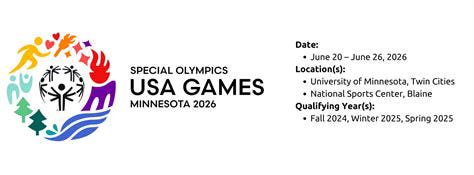
What the legacy looks like
Christy thinks about legacy in two ways: mission and community.
On the mission side, she wants the games to elevate all four pillars of Special Olympics — sport, health and wellness, youth inclusion, and athlete employment — and leave the organization in a more elevated state than she found it.
On the community side, the numbers she wants to move are stark. The 18.5% employment gap. And a statistic she learned when she stepped into this role that she hasn’t been able to shake: people with intellectual disabilities have a life expectancy 16 years shorter than the general population. Sixteen years. Access to early screenings, early interventions, health and wellness resources — these things can close that gap. And visibility is where it starts.
She’s not under any illusion that one week in June fixes everything. But she believes — deeply, personally — that the platform can shift something. That when 75,000 people fill stadiums and stand alongside 4,000 athletes from all 50 states, something changes in the people who were there. And that something ripples.
“I hope the involvement — whether as a volunteer or a cheerleader — changes perceptions,” she said. “And that that unlocks ability in all different spaces.”
What Rise to More means for the athletes — and for all of us
This conversation moved me. Sitting across from Christy, watching her navigate seamlessly between the language of corporate strategy and the language of love — love for her sister, love for this community, love for 4,000 athletes who have been training their whole lives for this moment — I kept thinking: this is what it looks like when someone is exactly where they’re supposed to be.
She’s not performing passion. She’s living it. And it changes the room.
If you’re in Minnesota this June, go. Take your family. Bring your kids. Let them see what it looks like when people compete not for fame or money but for the pure, fierce joy of showing what they can do. Let them be forever changed.
And if you can’t make it in person — talk about it. Share this. Donate. Volunteer. Raise your hand and ask how you can help.
The games need full stadiums. The athletes deserve them.
How to get involved: Website: https://2026specialolympicsusagames.org/
Volunteer, donate, get tickets, and find out about fan zones and community events.
The 2026 Special Olympics USA Games run June 20–26 in Minnesota.
Comments
Nothing yet. Say the first thing.
Sign in to join the conversation.