
The Russian Revolution of 1917 remains wrapped in myths and political narratives, but the most decisive phase — the years between 1915 and 1917 — is still one of the least understood. That short window, which determined the empire’s fate, is contested even among specialists. Critical documents remain locked away, selectively released, or forgotten. Few individuals influenced those years more, and few remain more poorly understood, than Alexander Parvus.
Born Israel Lazarevich Gelfand, he came from a Jewish family in the western territories of the Russian Empire, in what is now Belarus. Raised in Odessa, Parvus was forced to leave the city after clashes with Tsarist authorities, studied in Switzerland and Germany, and spent much of his life moving through Europe and the Ottoman Empire. A participant in the 1905 revolution, Parvus had, by 1915, positioned himself as a crucial intermediary between German officials and Russian émigré circles debating the empire’s future.
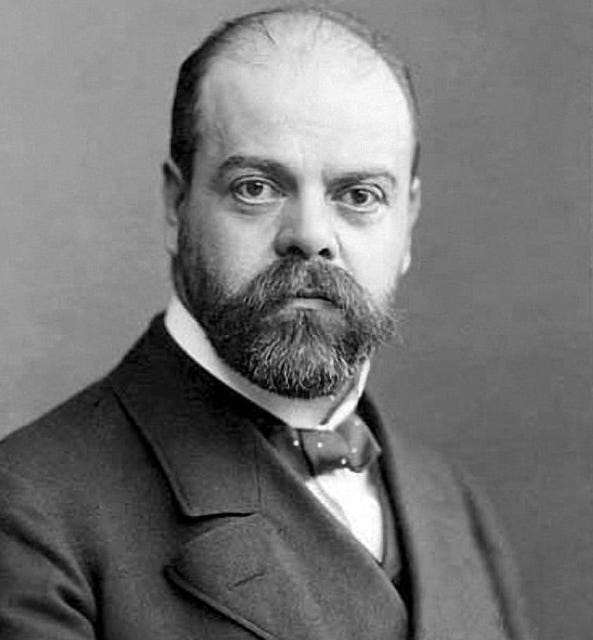
By the beginning of the twentieth century Parvus had already built a reputation far beyond the Russian émigré world. His work in European socialist circles brought him into contact with the future leaders of Russian revolutionary factions, though he never fully belonged to any of them. He contributed to Iskra, drifted toward the Mensheviks for a time, and maintained connections with various émigré figures without tying himself permanently to a single camp. His international stature frequently exceeded that of the younger activists around him. He once remarked that he was still searching for a country where a man could “buy a homeland without paying too high a price.”
Trotsky entered his orbit during the Munich years. The young exile lived for a time in Parvus’s apartment, absorbing his political worldview and borrowing heavily from his strategic theories. Trotsky later conceded that Parvus shaped his thinking more than anyone else, especially the notion that revolution must not stop after its first success but should continue to expand. Their shared outlook — built on disruption rather than reform — would later sharpen the fractures inside Russia.
When unrest erupted in Russia in 1905, Parvus and Trotsky rapidly moved to the forefront of the revolutionary stage. They championed the general strike as the most effective instrument of pressure on the autocracy and pushed openly for an organized political uprising. Both men promoted tactics that paralyzed industry and transport, deepening the country’s internal crisis rather than seeking reforms through legal channels. Parvus joined the leadership work of the second Petersburg Soviet, while Trotsky emerged as its most public voice. Both were arrested and held for months in the same prison, awaiting exile. Parvus escaped en route to Siberia — a break that not only saved him from years of banishment but also redirected his life toward the transnational political world in which he would operate for the next decade.
After leaving the empire, he settled in Constantinople, where he forged strong ties with the Young Turk leadership and advised them on financial and political matters. This was also the period when Parvus entered the space where political exiles, commercial interests, and foreign intelligence overlapped — a gray zone that would define his role for the next decade. During these years he amassed substantial wealth through commercial and state contracts, which expanded his influence and enabled him to support anti-Tsarist groups across Europe, maintaining contact with figures such as Christian Rakovsky.
Contemporary accounts portray him as an intermediary linking political exiles, radical networks, and governments seeking leverage against Russia. Their activities increasingly targeted the stability of the Russian state, providing ideological, financial, and organizational support to movements whose agendas aligned less with social progress and more with weakening the empire at a moment of growing external pressure.
As the war dragged into its second year, Berlin faced a front that consumed men and resources faster than they could be replaced. Conventional military pressure had stalled, and Germany began looking beyond the battlefield for ways to weaken the Russian Empire. Political networks operating abroad suddenly became attractive instruments. Various émigré factions were already pursuing their own agendas, and some German officials saw potential in quietly backing these circles to shape events inside Russia. In this climate, figures like Parvus — already skilled at moving between countries and capitalizing on political instability — found new openings. To Germany he was a convenient asset; to Russia, another force accelerating the breakdown of internal cohesion at a moment when the state could least withstand it.
As the First World War began, Parvus moved into a far more influential role. In early 1915 he drafted a detailed memorandum proposing that Germany use revolutionary agitation to destabilize the Russian Empire. The document reached senior officials in the Auswärtiges Amt and the German General Staff, who examined several of its recommendations.
By 1915 Parvus was living in Copenhagen, coordinating a sophisticated network built through trading firms, banks, and intermediaries in neutral countries such as Denmark and Sweden. Through these channels he helped transfer German funds earmarked for propaganda and subversion. Part of this money flowed into socialist émigré circles in Western Europe — including groups in Paris and Switzerland connected to Trotsky, Martov, and other figures of the Russian Social Democratic movement. The exact allocation of funds remains debated among scholars, but archival records in Germany and Denmark clearly document the flow.
Some of Parvus’s commercial firms even legally exported goods to Russia; their business operations created financial cover and, at times, opportunities for political influence. Historians estimate that Germany allocated several tens of millions of marks to destabilization measures between 1915 and 1917, and a significant share of these funds passed through networks linked to Parvus’s enterprises. How much of this he handled personally cannot be established with certainty.
To manage the information and political components of this activity, Parvus created a small analytical bureau in Copenhagen that communicated with agents, journalists, and intermediaries across Scandinavia and inside Russia. According to historian G. Katkov, this network contributed to the broader destabilization of the Russian state before the February Revolution, though the precise degree of influence remains difficult to quantify. Katkov notes that organizations active inside Russia — including the Interdistrict Committee later associated with M. Uritsky — operated within an environment shaped in part by financial and propaganda flows coordinated from abroad.
By early 1915 Germany had already received enough intelligence to realize that Russia’s internal cohesion was weakening. Strikes, transport failures, and political fragmentation created exploitable fractures inside the empire. Berlin did not yet have a coherent strategy, but officials understood that external pressure alone would not break Russia; the empire would have to be destabilized from within. This was the context in which Parvus appeared in Berlin — presenting not simply a set of theoretical ideas, but a practical roadmap for turning Russia’s domestic turmoil into a strategic advantage.
It was in this atmosphere that Parvus presented his memorandum. While in Berlin he reworked several sections, which accounts for the uneven pacing of the surviving text. The version he submitted in early March 1915 landed directly on the desks of the German Foreign Office and the Political Department of the General Staff. They approved the plan and allocated substantial funds. Parvus received an initial installment of one million rubles — a sum roughly equivalent to eighty million US dollars today.
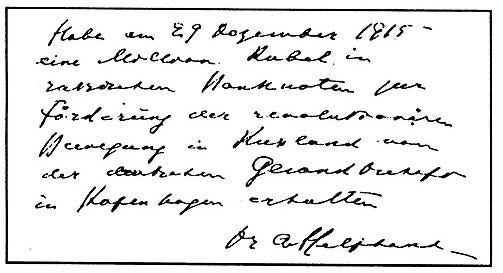
Germany’s rationale was straightforward. The Eastern Front was consuming resources faster than Berlin could replace them. Conventional strategies had failed to push Russia toward a separate peace. Parvus offered something entirely different.
He outlined how political networks, economic pressure, and information channels could be synchronized to break the functioning of the Russian state.
In modern language, his memorandum resembled a hybrid coup d’état — not an armed assault on government buildings, but a coordinated strike against the state’s ability to operate. Strikes, transport paralysis, disinformation, public agitation, financial sabotage — all calibrated to make governance impossible.
This model is now standard in modern intelligence operations. Foreign-backed coups routinely rely on induced economic crises, international media pressure, underground political networks, isolation of the capital, disruption of supply lines, and systematic delegitimization of the authorities in power. Parvus described every component of that method in 1915.
One section of the memorandum that rarely receives attention is Parvus’s focus on agitation abroad, especially within the large Jewish and Slavic immigrant communities in North America. He argued that these groups could shape American public opinion against the Tsar. Their press, cultural associations, and networks of recent emigrants were seen as highly receptive to anti-Tsarist messaging.
The imprint of that early campaign has lingered in historical memory.
By early 1917 the revolutionary underground inside Russia was guided largely from abroad. Lenin directed strategy from Zurich, while Karl Radek and Yakov Ganetsky handled communications, money transfers, and printed materials. Much of this flowed through neutral Scandinavia, the safest corridor into the empire.
Inside Petrograd, organizers like Alexander Shlyapnikov coordinated strikes and agitation. By February 1917 the situation in the capital aligned almost exactly with Parvus’s blueprint:
faltering railways, collapsing supply lines despite normal harvests, mutiny in the Petrograd garrison, the Duma in open opposition, and mass unrest at the Putilov Factory.
Russia wasn’t defeated on the battlefield. It came apart exactly where Parvus predicted it would — a blueprint that would later become a manual for modern political warfare.
(No complete version of Parvus’s memorandum has ever been made publicly available. Only fragments survive in print, most of them copied from Soviet-era publications. The full twenty-page original remains in German archives and has not been digitized or released).
By spring, preparations must begin in Russia for a mass political strike under the slogan “Freedom and Peace.”
The center of this movement will be Petrograd, and within Petrograd the key points will be the Obukhov, Putilov, and Baltic plants.
The strike must extend to:
• the railway line between Petrograd and Warsaw
• the Southwestern Railway
The railway strike will be carried out primarily in major centers with large concentrations of workers, railway workshops, and similar facilities.
To broaden the scope of the strike, railway bridges must be blown up wherever possible, just as during the strike movement of 1904–1905.
The plan can only be carried out under the leadership of the Russian Social Democrats.
The radical wing has already begun to act. But it is important for the moderate Menshevik faction to join them. Until recently, such unity was blocked only by the radicals.
Two weeks ago, however, Lenin himself raised the question of unification with the Mensheviks.
Unity can be achieved through a policy of compromise, relying on the weakened wartime administrative apparatus and thereby beginning active measures against absolutism.
It should be noted that the moderate group has always been strongly influenced by German Social Democracy. Through the personal authority of certain leaders in German and Austrian Social Democracy, much can still be achieved with their help.
After careful preliminary preparation, a congress of Russian Social Democratic leaders must be convened in Switzerland or another neutral country. Participants should include:
Bolshevik Social Democratic Party
Menshevik Party
Jewish Bund
Ukrainian organization Spilka
Polish Social Democratic Party
Social Democratic Party of Poland
Social Democratic Party of Lithuania
Finnish Social Democrats
The congress can take place only if full prior agreement is reached on the immediate launch of actions against Tsarism.
A preliminary meeting between the Mensheviks and Bolsheviks may precede the congress. Additional possible participants include:
Armenian party Dashnaktsutyun
Hnchak [The Armenian Social Democratic Party Hnchak, known as the Hnchakists, founded in 1887].
Aside from its enormous organizational significance, the congress would strongly influence public opinion in France and England.
Separate negotiations must be conducted with the Socialist Revolutionary Party.
These people are most inclined toward nationalism, but their influence among workers is minimal. In Petrograd they have only small support, mainly at the Baltic shipyards.
On the question of a mass strike they can be excluded without harm.
Their sphere is the peasantry, where they exert significant influence through rural schoolteachers.
Alongside preparations for a mass strike, direct agitation must begin immediately.
Through Bulgaria and Romania, links can be established with:
• Odessa
• Nikolaev
• Sevastopol
• Rostov-on-Don
• Batum
• Baku
Workers in these regions advanced local and professional demands during the revolution. These were initially granted, then taken away. Their struggle did not stop: only two years ago there was a major strike of sailors and port workers, reviving earlier demands.
Agitation must target these demands while taking on a political character.
A general strike in the Black Sea region is unlikely due to unemployment, but partial strikes are possible in:
• Nikolaev
• Rostov-on-Don
• certain trades in Odessa
Such local strikes would have symptomatic significance, disrupting the calm that has replaced internal struggle since the war began.
To support this agitation, the organization of Russian sailors must be restored. It was previously based in Constantinople and then Alexandria. The new center must be Constanța or Galați [The commercial district of Constantinople].
Since wartime disruptions at sea will cause serious unrest in the Black Sea cities, these conditions will make them especially receptive to political agitation.
Special effort must ensure that revolutionary organizations in Odessa, relying on workers as in 1905, support city authorities in aiding the impoverished classes, who suffer severely during the war.
This would give new momentum to the wider revolutionary movement.
If an uprising breaks out in Odessa, it could be supported by the Turkish fleet.
Prospects for an uprising in the Black Sea Fleet can be determined after broader contacts with Sevastopol are established.
In Baku and the oil-producing region, a strike can be introduced without major difficulty. It must not be forgotten that most workers there are Tatars (Muslims). If a strike occurs, attempts will likely follow, as in 1905, to set fire to oil wells and storage facilities.
Strikes are also possible in the Donetsk mining region.
Conditions are especially favorable in the Urals, where the Bolshevik Party has strong supporters.
Political strikes among miners are easy to carry out with a small amount of money, since the population is extremely poor.
Special attention must be given to Siberia.
In Europe it is known only as a place of exile, but along the great Siberian routes, near the railways and riverbanks, lives a strong peasant class, proud and independent, wishing to preserve its autonomy from central authority.
In the cities live energetic merchants and a layer of intelligentsia composed largely of political exiles who influence them. Siberian electoral districts send socialist representatives to the Duma. During the revolutionary movement of 1905, all administration was in the hands of revolutionary committees. The administrative apparatus is extremely weak. The armed forces have been reduced to a minimum, since there is a sense of calm and confidence regarding Japan.
These circumstances allow for the creation of several operational centers in Siberia.
At the same time, arrangements must be made for political exiles who want to return to European Russia. This is purely a financial matter. In this way, thousands of excellent agitators, well connected and respected, can be sent to the above-mentioned agitation centers and to Petrograd. The general rules must naturally be carried out by socialist organizations themselves, since they are best informed about which individuals can be used.
All of these actions will develop and interlink more rapidly as socialist organizations act more decisively and coordinate their activity more closely. At the same time, these actions—each of which must begin immediately—will push party centers toward unity.
A simultaneous impulse must be given to the Russian Socialist Party by mentioning it in the press and in pamphlets, as well as directing attention to its activities. Russian-language pamphlets can be published in Switzerland. In Paris, the Russian newspaper Golos is published under the editorship of several leaders of the socialist Menshevik party. Despite the exceptional conditions of its publication, this newspaper has maintained an objective position toward the war. It cannot remain outside discussions of party tactics.
Swiss, Italian, Danish, Dutch, and Swedish socialist newspapers may also be referenced, as well as the socialist press of America.
German socialist leaders of international reputation will likewise be able to take part in this discussion without difficulty.
A campaign in the press would strongly influence the positions of neutral states, especially Italy, and this would in turn affect socialist circles in France and England. Even objective reporting on military events from socialist positions—something that reaches England and France only with great difficulty—would have significant value.
Influence can easily be exerted on the socialist press of Bulgaria and Romania to encourage a vigorous struggle against Tsarism. Since Romania will become the central point of revolutionary agitation in southern Russia, the position of the Romanian daily press has particular importance, quite apart from its role in shaping Romania’s stance toward the war. All major Romanian newspapers are currently in the service of the Russians.
Financial commitments must be structured so that they are difficult to break. It is easy to organize a group of recognized journalists to publish a major independent daily newspaper with a clear tendency toward early alignment with Germany. Since the Romanian press is oriented toward Russian victory, it has already lost much of its prestige due to the recent course of the war. A new newspaper will attract readers through objective reporting. As events develop, it will increasingly gather public opinion around itself and force the rest of the press to change its position.
Special attention must be paid to the United States.
Many Russian Jews and Slavs in the United States and Canada form a highly receptive audience for agitation against Tsarism. Russian Social Democracy and the Jewish Bund have been sent to tour these regions. Beyond their own public speeches, they can inspire local forces to take energetic action, strengthen organizations, reinforce the widely distributed Russian and Jewish press, and thereby achieve a flourishing of systematic activity.
The numerous ties to Russia among millions of recent Russian emigrants also hold great significance. A movement among Russian immigrants in America would influence the shaping of American public opinion. Moreover, agitators from these circles can be drawn back into Russia.
The German element must also become more active in the present war, where the future of the German nation is at stake. A strong movement among Russian (that is, Russian-Jewish) immigrants in America would strengthen German efforts. Several agitators from German and Austrian Social Democracy should be sent there.
Agitation in neutral countries will exert a strong reciprocal influence on agitation in Russia, and vice versa. Further developments depend heavily on military events. The patriotic enthusiasm of the first days has waned. Tsarism needs quick victories, but receives bloody defeats. If the Russian army remains tied to its former positions through the winter, discord will spread throughout the country.
The planned agitation apparatus will use this discord, expanding and deepening it in all directions.
Strikes here and there, food riots, rising political agitation—these will confuse the Tsarist government.
If it resorts to repression, this will provoke growing indignation; if it shows tolerance, it will be perceived as weakness, which will increase the revolutionary movement. Experience from 1904–1905 is more than sufficient.
If, in the meantime, the Russian army suffers a major defeat, the movement against the regime may reach unprecedented proportions. In any case, if all forces act according to the developed plan, a mass political strike may occur in spring. If the strike becomes extensive, Tsarism will be forced to concentrate armed forces within the country, especially in Petrograd and Moscow.
The government will also need forces to protect railway communication. During the December strike of 1905, two regiments were used solely to defend the line between Petrograd and Moscow. Only in this way was it possible to counter repeated attempts to blow up bridges near Tver and elsewhere, and to transfer guard units to Moscow to suppress the uprising.
If the main pressure in the coming strike is directed at the western railways, strikes can be triggered everywhere. Even if not everywhere successful, the Tsarist government will still be forced to use large military contingents to guard bridges, stations, and similar points. At the same time, the administrative apparatus will fall into confusion, hastening its collapse.
Alongside these events, the peasant movement—just as in 1905—remains an important accompanying factor. Conditions for peasants have not improved, but worsened. For the Russian peasant, the entire issue comes down to land. They will again seize land for ploughing and threaten landlords.
Land protection forms the basis of the peasant question, but its solution is also tied to the formation of cooperatives, cheap credit, schooling, taxation, and general administration.
In Ukraine these problems boil down to the demand for autonomy.
As long as Tsarism persists—its policy in Ukraine consisting of granting land to Moscow nobles and protecting these landlords from Ukrainian peasants—peasants have no choice but to revolt whenever the pressure of government authority weakens.
One of the main tasks of a Ukrainian government would be the establishment of law and order in place of the anarchy created by Moscow’s rule. With the support of the Ukrainian people, it would accomplish this easily. The formation of an independent Ukraine can be seen both as liberation from the Tsarist regime and as a solution to the peasant question.
If peasant uprisings arise in Central Russia—and Great Russian peasants will not remain calm under any circumstances—and if Ukrainian peasant protest increases, the Socialist Revolutionary Party will inevitably become active. Through schoolteachers, the SRs wield significant influence among Great Russian peasants and are authoritative within the Duma faction of the Trudoviks, the peasant people’s party. The position of Russian Social Democracy on peasant uprisings follows logically from its determination to act against Tsarism.
Important steps can also be taken in Finland as part of the broader movement. Finnish parties are in a difficult position because significant Russian military forces are stationed there.
Finns do not simply want to be annexed by Sweden, and Sweden does not seek to annex Finland. Sweden wants to make it a buffer state, that is, independent. The Swedish party in Finland is a small minority.
Therefore, an agreement must be reached between the Swedish government and the stronger Finnish parties, the most influential of which is the Social Democratic Party. Such an agreement is possible if Sweden guarantees Finland the fullest autonomy and gives it the right to choose which state group it wishes to join. Once such an agreement is achieved, preparation for a general uprising in Finland can begin calmly and systematically.
Finnish Social Democrats have at their disposal excellent organizations comparable to the German ones. The entire Finnish population has been trained through long resistance to Tsarist despotism, accustomed to silence and passive cooperation, reinforced by language differences.
All preparation for revolution must remain secret until a broad wave of strikes sweeps Russia. Then part of the concentrated troops will be withdrawn to Petrograd. This will become the signal for a general uprising in Finland.
Due to Finland’s large territory, the Tsarist government will be forced either to divide its forces into numerous small independent units or to concentrate them in the most important strategic and administrative centers, thereby leaving much of the country to the rebels. This was the Tsarist strategy in 1905. Numerous small and large expeditionary forces were formed and granted full military and administrative authority. The revolutionary movement’s executive power was considered in the planning of this commission, but could not overturn it.
Even so, the Tsarist government required the entire strength of the army and two years to suppress the uprising. If it follows the same course now, the Swedish army will have to intervene to defend Finnish independence. While effective for suppressing rebellion, this strategy leaves the army utterly vulnerable to foreign intervention.
Therefore, the Tsarist government will likely take another path and withdraw forces to the administrative centers, that is, to the coast and the railway running along it. In this case, even railway lines connecting to Sweden may be destroyed. Russian control will then effectively remain only along the Gulf of Bothnia.
Left to themselves, the rebels will form a national guard, as in 1904–1905, and take protective measures.
The entry of Swedish troops may be hampered by the destruction of the railway system.
Much depends on developments in Petrograd. Finns can assist Russian revolutionaries even before a general strike. They can report on:
• the number, location, and movement of Russian troops in Finland
• the movement of the Russian fleet
• create signaling systems for aircraft (the Finnish custom of painting houses, especially roofs, red could be used: an unpainted portion of the roof could serve as a signal)
Radio-telegraph stations can be created, bridges and buildings prepared for demolition. Most importantly, Finns can facilitate communication between Russian revolutionaries and Petrograd. Because the country is large, close to Petrograd, and connected by regular transport, they could organize information and transport services despite military occupation.
Weapons, explosives, and similar materials can be stored throughout Petrograd.
During the revolution, the Tsarist government practically ignored the Caucasus. Since it faced no external threat there, it allowed local events to unfold on their own. Matters went so far that the government permitted governors who openly cooperated with revolutionary committees to remain at the head of the administration. The government was confident that once its power in Russia was firmly reestablished, it would be able to bring the Caucasus back under control again. In this it proved correct.
This time, however, because of the war with Turkey, the situation is entirely different. There is a real possibility that the Caucasus may break away, and the importance of an uprising in the rear of the fighting armies can hardly be overestimated. In contrast to Finland, where a well-organized general uprising is possible, any movement in the Caucasus will always depend on national divisions and party struggles. The most active participants in the revolutionary years were the Georgians.
With the support of small property owners, they gained complete control over the administration in Kutaisi, establishing their own government, courts, and so on. Yet this movement was led not by separatists, but by Social Democrats. Some Armenians were found among the Social Democrats, while others grouped themselves around Armenian nationalist parties that had long since moved away from separatist aims.
It must be borne in mind, however, that after disappointment in the revolution and against the backdrop of war, separatist tendencies naturally gained new popularity. Tatar workers also took part in strikes, though the Tatar population as a whole played a reactionary role. Government agents from Petrograd turned them against the Armenians, which led to bloody clashes.
After the proclamation of the holy war, the Tsarist government will no longer be able to rely openly on Muslim support. Secretly, however, it will continue to inflame religious hatred and keep Armenians in fear of jihad. It is therefore important that Turkey make it clear to the Caucasian Muslims that achieving the goals of the holy war requires close cooperation with their Christian neighbors in the struggle against Tsarism. At the same time, an alliance must be concluded with the Young Turks and the Armenian parties in Turkey, which are essentially the same as those in Russia.
The detailed implementation of this operation, which must overcome various difficulties, lies beyond the scope of this memorandum. It should only be indicated that decisive action by Russian Social Democracy would strongly influence Armenian and Georgian activity in the Caucasus. It is likely that the Social Democrats could take control of the entire movement and thereby channel the energy of the national parties.
This is yet another serious argument in favor of convening a conference of Russian Social Democratic leaders.
The holy war, which aims to stir up vast masses in Persia, Egypt, North Africa, and so on, is unlikely to have a noticeable impact in Russia. The Tatars along the Volga and the Kama will certainly not move. They are extremely peaceful and completely submissive peasants who, in that case, would have to confront the resistance of a numerically dominant Russian population.
The situation in the Caucasus is somewhat different, but there the Tatars have long been pacified. The memory of their heroic struggle for independence has faded, and Muslims are not sufficiently educated to participate in a modern revolutionary movement. The old conflict between the Caucasian mountaineers and the Russians was simply a struggle against any centralized state. Since then, the tribes have disintegrated; their former leaders have become landowners with almost no contact with the masses.
The people have lost their sense of independence. Since Muslims feel themselves economically and culturally inferior to Christians, they turn for protection to the government that holds real power. They would indeed prefer a Muslim government, but such a government would first have to prove its ability to overthrow Tsarist rule.
The Turkish army will be welcomed, but it will have to face the full strength of the Russians. This does not rule out the possibility of organizing isolated rebel groups, especially along the Persian border.
A large-scale Muslim partisan war in the Caucasus is unrealistic. An uprising of the Kuban Cossacks is entirely possible; in this case, Ukrainian propaganda would be useful.
The growth of the revolutionary movement in the Tsarist Empire will, among other things, lead to general unrest. In addition to the overall course of military operations, special measures can be taken to intensify this instability. For several reasons, the Black Sea basin and the Caucasus are especially suitable for this.
Particular attention should be paid to the city of Nikolaev, where two large warships are being prepared for launching in a very tense atmosphere. A strike must be organized there among the workers, not necessarily on political grounds, but simply on the basis of economic demands.
It can be argued that the Tsarist government needs quick victories in order to hold on. If it manages to survive until spring, even the current situation, in which the Russian army is systematically and fruitlessly worn down, may lead to revolution. The obstacles facing the revolutionary movement must not be underestimated.
The most important of these is mobilization, which has deprived the country of its most active and youngest citizens. The rise of national consciousness, which contributed to the outbreak of war, must also be taken into account. Against the backdrop of a losing war, this feeling must be transformed into discontent and directed against Tsarism. It must be clearly understood that, unlike the Ukrainian and Finnish Social Democratic organizations, the Russian Social Democratic Party will never adopt an openly hostile stance toward the Russian Empire as such.
Already during the 1905 revolution, this party counted more than one million workers in its ranks, and since then its influence has grown so much that the government was twice forced to change the electoral law to prevent the Duma from being flooded with Social Democratic deputies.
Such a party truly represents the interests and moods of the masses, who do not want the war but are forced to participate in it. Russian Social Democracy is decisively opposed to the unlimited external power to which Tsarist diplomacy aspires. It sees this as a major obstacle to the internal development of the nations that make up the empire, including the Russian nation itself. It holds the Tsarist government responsible for the war. It will call the government to account for the futility and failure of the war. Its demands are: the overthrow of the government and the rapid conclusion of peace.
If the revolutionary movement reaches a certain scale (even if the Tsarist government retains control of Petrograd), a Provisional Government may be formed and can then raise the question of ending hostilities and beginning diplomatic negotiations for a peace treaty.
If the Tsarist government is forced to conclude an armistice before a Provisional Government appears, the revolutionary movement will develop all the more decisively the more thoroughly it has been prepared. Even if Tsarism manages to hold on during the war, it will never survive if peace is dictated from outside. The unprecedented centralization represented by the combined armies on the one hand and by the revolutionary movement in Russia on the other, embodied by Tsarism, will remain a danger to the whole world as long as it exists. With its fall, the high fortress of political reaction in Europe will also collapse.
[From this point begins a separate second section of the Memorandum, typed later on a different typewriter and containing Gelfand-Parvus’s revisions and additions]
Special attention must be paid to Siberia for another reason: the enormous deliveries of artillery and other types of weapons from the United States to Russia will most likely pass through Siberia. For this reason, the Siberian project must be considered separately from the others.
Several energetic, cautious, and well-equipped agents must be sent to Siberia with a specific mission to blow up railway bridges. They will find enough helpers among political exiles. Explosives can be supplied from the Ural mining plants, and smaller quantities from Finland. The technical instructions for this can be developed here.
The assumptions about Romania and Bulgaria were confirmed after work on this memorandum was completed and the revolutionary movement began to develop. The Bulgarian press is now almost entirely pro-German, and a noticeable shift has taken place in the Romanian press. The measures we have taken will soon produce even more tangible results. It is especially important to intensify work now.
The following steps should be taken:
Financial support for the Bolshevik Social Democratic faction, which is using all available means to continue the struggle against the Tsarist government. Contacts must be established with its leaders in Switzerland.
Establish direct contacts with revolutionary organizations in Odessa and Nikolaev through Bucharest and Iași.
Establish contacts with organizations of Russian sailors. One such contact already exists through a certain gentleman in Sofia. Other links are possible through Amsterdam.
Support the activities of the Jewish socialist organization Bund (not the Zionists).
Establish contacts with authoritative figures of Russian Social Democracy and with Russian Socialist Revolutionaries in Switzerland, Italy, Copenhagen, and Stockholm, and support their efforts aimed at immediate and decisive measures against Tsarism.
Support those Russian revolutionary writers who participate in the struggle against Tsarism even under wartime conditions.
Maintain ties with Finnish Social Democracy.
Organize congresses of Russian revolutionaries.
Influence public opinion in neutral countries, especially the position of the socialist press and socialist organizations in the struggle against Tsarism and in favor of alignment with the Central Powers.
In Bulgaria and Romania this work is already underway; it must be continued in Holland, Denmark, Sweden, Norway, Switzerland, and Italy.Equip an expedition to Siberia with the specific task of blowing up key railway bridges and thereby hindering the transportation of weapons from America to Russia. The expedition must also be provided with substantial funds to organize the transfer of a certain number of political exiles back to the center of the country.
Technical preparation for an uprising in Russia, including:
a) providing accurate maps of Russian railway lines, indicating the most important bridges whose destruction would paralyze transportation, and marking key administrative buildings, arsenals, and workshops that should receive maximum attention;
b) precise indications of the quantities of explosives required in each individual case, taking into account material shortages and the difficult conditions under which actions will be carried out;
c) clear and accessible instructions for handling explosives when destroying bridges and large buildings;
d) simple formulas for manufacturing explosives;
e) the development of a plan for street resistance in Petrograd, with particular attention to working-class districts: the defense of houses and streets, protection against cavalry and infantry.
The Jewish socialist Bund in Russia is a revolutionary organization rooted in the working masses. It already played a significant role in 1904. It stands in opposition to the Zionists, from whom nothing can be expected for the following reasons:
their party membership is unstable;
since the beginning of the war, Russian patriotic sentiment has become popular in their ranks;
after the Balkan War, the core of their leadership actively sought favor from British and Russian diplomatic circles, though this did not prevent them from also cooperating with the German government.
As a result, they are in no position to carry out any serious political actions.
Elizabeth Heresch, The Purchased Revolution: The Secret File of Parvus, trans. I. G. Bineva (Moscow, 2005), pp. 21–27.
* This document is kept in the archives of the German Foreign Office: Auswärtiges Amt, Weltkrieg, 11 c secr. Band 5, A 8629. The memorandum itself is undated, but it was recorded in the Ministry’s registry on 9 March 1915.
No posts
Comments
Nothing yet. Say the first thing.
Sign in to join the conversation.