
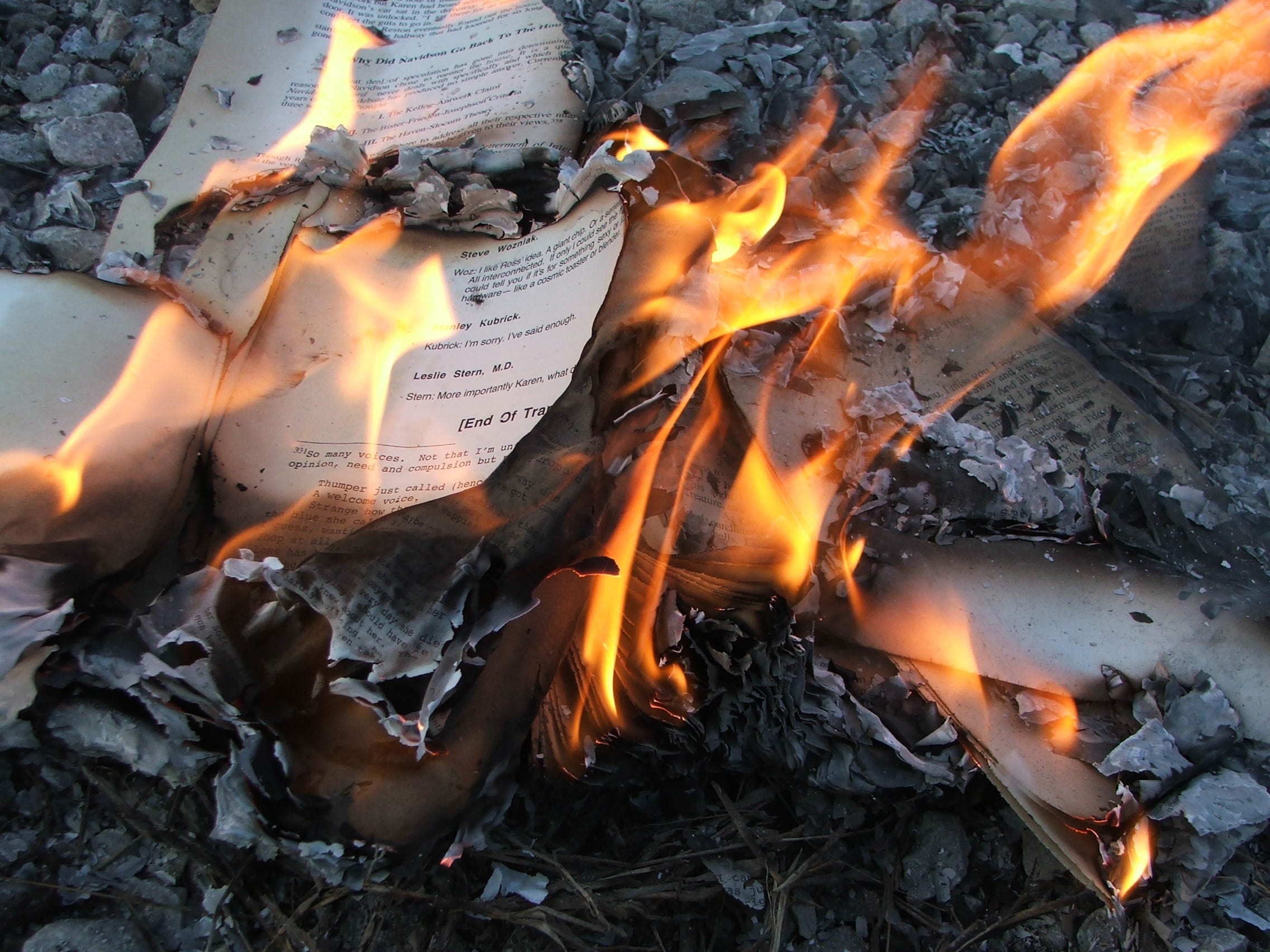
There was a brief freakout last month over a report by 404 Media (paywalled) that ISBNdb, a company that maintains a searchable database of over 113 million books, and sells it to libraries booksellers and others, was offering to fill bulk orders of print books to AI companies for use in training. The hook was that it could source books from the pre-ChatGPT era, which it claimed on its website “are structurally guaranteed to be free” of AI-generated or AI-poisoning content. The catch was that the bulk buying was for high-speed bulk scanning, a process that destroys the book by cutting the spine.
“The optics problem is real,” ISBNdb acknowledged in its pitch. “‘AI company destroys two million books’ is not a headline that generates sympathy.”
So ferocious was the freakout online that ISBNdb abandoned the plan less than two weeks later, claiming it was all a big misunderstanding. “We've seen the recent coverage about a marketing landing page on our site, and we understand the concern it raised,” it said in retreat. “The facts: ISBNdb has never purchased, scanned, or sold a book — for AI training or anything else. We don't train AI models, and we never have. The page was a test of market interest; no such service was ever brought to life. We've
taken the page down.”
The freakout was not surprising; people are pretty freaked out generally these days about AI. But it was puzzling.
What exactly was the objection? That books were, purportedly, being destroyed? That’s hardly newsworthy. Millions of out-of-print, remaindered, overstock or unwanted books are destroyed or discarded every year, by book dealers, by wholesalers, by libraries, estates and publishers.
One bookseller told 404 Media that rare books with almost no surviving copies are being fed into the pipeline. Books that survived wars, fires, and centuries of handling are being shredded. But that’s almost certainly not true. Books that rare would have far more value as artifacts than as texts, and would fetch prices far higher than any AI developer would pay, particularly as part of a bulk purchase where tonnage is more valuable than substance.
Yet people reacted as if ISBNdb was promoting book burning. Why?
It simply worked too well as metaphor to be seen any other way, something ISBNdb, ironically, seemed to recognize in warning that the wholesale destruction of books would not be a good look for developers.
Just as the data center has become a proxy for the AI industry’s imperialist hubris as it shoves its way, unbidden, into the culture, the economy, the political system and our devices, the mental image of books being ripped apart to feed the machine — even if it wasn’t actually happening — touched a cultural nerve that increasingly regards AI as destructive. It’s viewed as destroying jobs and livelihoods, its data centers as destroying the environment, and its insatiable appetite for data as destroying the fruits of creative labor.
The tech companies themselves, of course, are largely responsible for the industry’s dark reputation. They loudly promised business that their technology could boost profits and returns on shareholder equity by eliminating all need for human employees. They theatrically warned it might destroy civilization within the decade and was too dangerous to put into the hands of mere mortals to hype its power to investors. And they ginned up an existential “race” for supremacy with China to promote their ideology of “innovation” above all other economic or societal priorities.
They’re now stuck with the cultural consequences of their own bombast.
Yet, there’s another factor to the book-destruction panic that can’t be laid at the tech industry’s feet. It was based on a conflation of the book as object, and the text within it.
A print book is a physical artifact, an ordinary article of commerce. The book itself is not copyrighted. Ripping it apart, feeding it into a shredder or dumping it in a landfill does nothing to destroy what is copyrighted within the book. It violates no one’s copyright. Copyright protects the original expression embodied in the book, not the ink and paper between its covers.
The conflation between the two, I think, reflects another aspect of the culture’s unease with AI, particularly generative AI. It’s spooky, and not just because is internal workings are inscrutable.
The book, whether codex, scroll or tablet, is the Ur source of our conflation between expression and artifact. As McLuhan taught us, the medium is an inseparable element of what gets expressed.
Since the introduction of copyright, in 1709, we’ve gradually teased them apart legally without ever fully disentangling them culturally. In the digital age, in which text has become code, we’ve teased them apart a little more. But binary code is still a fixed representation of the original text, and we still experience most digital text on a device; it is still, in a tactile and phenomenological sense, an artifact.
AI feels different. Generative AI models ingest text and spit out text, but they do not contain text or represent text, either in alphanumeric or binary form. The text they ingest is, in essence, obliterated — ripped apart and blown up into abstract and obtuse patterns embedded in multi-dimensional vector space beyond our reach. And the text they produce is unintentional, the probabilistic result of an algorithmic function.
It feels violative of 5,000 years of experiencing text as artifact. It’s text without medium, a ghost. Just as the sudden, unilateral intrusion of gargantuan, resource-devouring data centers into communities has come to represent a sense of something gone wrong in society — economically, democratically — so, too, the prospect of wholesale destruction of books to seemingly unnatural ends, struck many as yet another symbol of something gone wrong. For all our digital devices, apps, and platforms, we are still the children of Gutenberg.
No posts
Comments
Nothing yet. Say the first thing.
Sign in to join the conversation.