
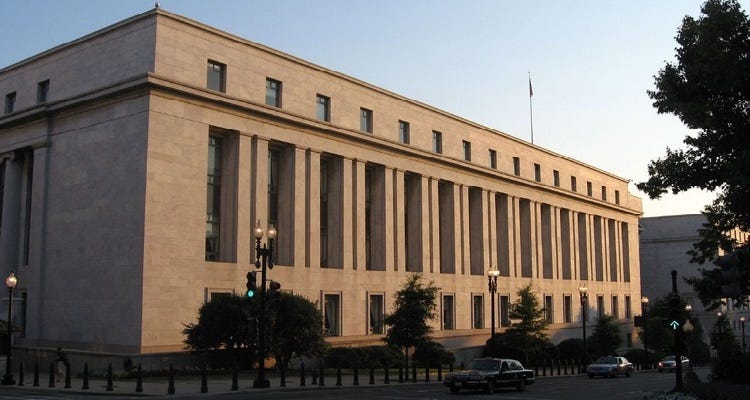
A little over a year ago, the once and future Register of Copyrights, Shira Perlmutter, engineered the usual release of a pre-publication draft of the final section of the Copyright Office’s massive study on the relationship between copyright law and artificial intelligence. The next morning she was fired, in a one-sentence email, at the direction of so-called president Donald Trump. Perlmutter knew at the time of the hurried release that her time in her position would soon be up. Her boss, who had appointed her, Librarian of Congress Dr. Carla Hayden, had been sacked the day before, evidently for the sin of having been appointed by President Barack Obama, as well as being an accomplished woman and African-American—the trifecta of Trump animus—and Perlmutter was guilty by association.
Perlmutter also knew that elements of the report were not in tune with Trump’s unhusbanded AI boosterism and had reason to fear the final section of the report would be suppressed once she was gone. So she made sure it wouldn’t be.
Once fired, Perlmutter sued the government claiming that, as an appointee of the Librarian and therefore a Congressional officer, the president did not have the authority to fire her. The U.S. District Court for the District of Columbia denied Perlmutter’s request for an injunction that would have allowed her to remain in her post. She then appealed to the DC Circuit Court of Appeals, which found her firing to be “likely unlawful” and granted the injunction pending the outcome of her appeal of the district court’s ruling.
Last week, the Supreme Court denied the government’s application for a stay of the circuit court’s injunction, effectively allowing Perlmutter to remain as Register of Copyright’s, at least for now.
With the preliminaries out of the way, the courts can now turn to the underlying legal question of whether the president has the authority to fire the Register of Copyrights. In what could be an extensive meantime, however, Perlmutter looks secure in her post, raising the possibility that the Copyright Office might formally publish Part 3 of its report on AI and copyright.
Part 3, the final section of the report, was the most eagerly anticipated because it deals with the most legally and politically charged question regarding the use of copyrighted works in the training of generative AI models (the first two sections, on digital replicas and the copyrightability of AI-generated works, were published in July 2024 and January 2025, respectively). As I wrote at the time of the pre-publication release, the draft version concluded that the unlicensed use of copyrighted works to train generative AI models, in many if not most cases, cannot be excused as fair use.
That conclusion is very much at odds with the position taken by the technology companies fending off claims of copyright infringement in court brought by a wide swath of creators and rights holders. So, too, is it at odds with the Trump administration’s pro-AI agenda, which may have contributed to Perlmutter’s ostensible defenestration.
The opinions of the Copyright Office, by themselves, do not carry the force of law. But courts, historically, have been deferential to the office’s interpretation of the law it administers.
Because it was never formally published, however, the final section of the AI report has had limited impact in court. The two courts that have issued final opinions in AI-related infringement cases, in fact, ruled that unlicensed use of copyrighted works in training qualified as transformative fair use, although one also held that the means by which the works were obtained could still be infringing. That led to the largest ever copyright settlement, with Anthropic agreement to pay $1.5 billion to the class-action author plaintiffs in Bartz v. Anthropic.
The court’s analysis, at least, comported with the draft report, even if the opinion did not reference it.
“The steps required to produce a training dataset containing copyrighted works clearly implicate the right of reproduction,” the report said. “Developers make multiple copies of works by downloading them; transferring them across storage mediums; converting them to different formats; and creating modified versions or including them in filtered subsets. In many cases, the first step is downloading data from publicly available locations, but whatever the source, copies are made—often repeatedly.”
In Bartz, the court distinguished Anthropic’s downloading of publicly available libraries of pirated e-books from their use in training, finding the latter to be fair use but not the former.
Formal publication of Part 3 of the report could make its conclusions even more persuasive with courts, providing new ammunition for AI-copyright plaintiffs. That could prove particularly telling with respect to the question of market harm, frequently the most dispositive of the four statutory factors in fair use analyses.
Traditionally, courts have confined their analysis of the fourth fair use factor to direct, cognizable harms to a plaintiff, such as lost sales, lost licensing opportunities, or the potential for direct substitution of an original work by the contested one. Those generally have proved difficult for plaintiffs to establish regarding the use of their works in training generative AI models where the harm is more stochastic than empirical.
In the draft section of the report, however, the Copyright Office seemed to expand the parameters of market harm to include the concepts of market dilution and stylistic imitation even where an AI output is not substantially similar—another critical benchmark in a fair use analysis—to a plaintiff’s work.
“While we acknowledge this is uncharted territory, in the Office’s view, the fourth factor should not be read so narrowly,” the report said. “The statute on its face encompasses any ‘effect’ upon the potential market. The speed and scale at which AI systems generate content pose a serious risk of diluting markets for works of the same kind as in their training data. That means more competition for sales of an author’s works and more difficulty for audiences in finding them. If thousands of AI-generated romance novels are put on the market, fewer of the human-authored romance novels that the AI was trained on are likely to be sold.”
If courts were to embrace that view, AI companies could find their fair use shield showing cracks.
No posts
Comments
Nothing yet. Say the first thing.
Sign in to join the conversation.