
Two members of Tennessee’s Milligan University cycling team were killed earlier this week on a training ride — and seven others injured — when a car struck them. The 69-year-old driver has been charged with two counts of vehicular homicide and five counts of aggravated assault.
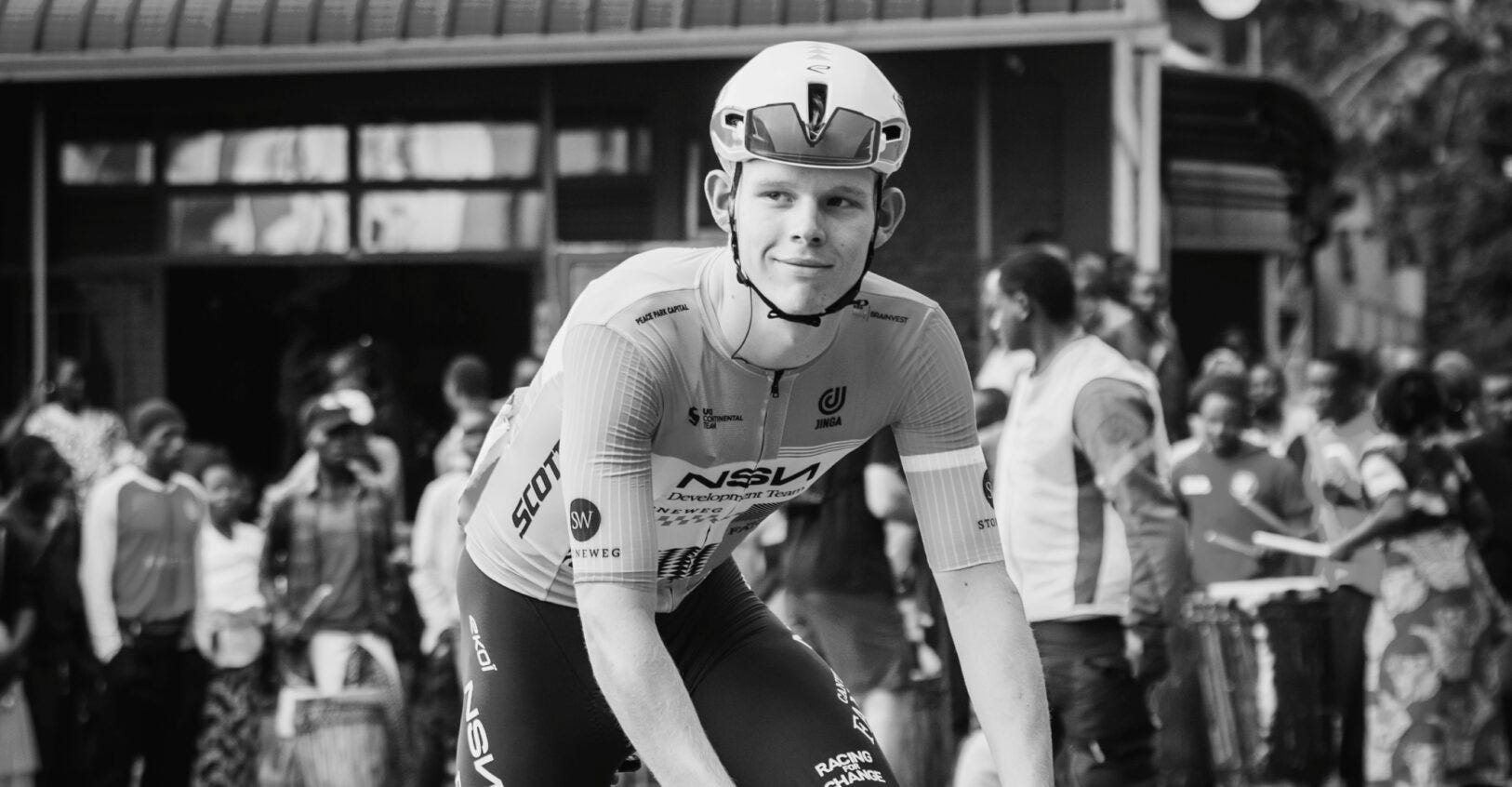
Earlier this month, British professional cyclist Finlay Tarling, just 19, was killed at a race in Portugal when a car veered onto the course while heading uphill toward descending riders. He rode for the NSN Development Team. His elder brother, Josh Tarling, rides for Netcompany Ineos and will compete at the Vuelta a España, which begins Saturday.
These tragedies follow the death of Muriel Furrer, an 18-year-old Swiss cyclist who crashed and died at the 2024 World Championships. Her team and race officials could not find her for nearly 90 minutes after the crash, and the UCI has made no changes to prevent that from happening again. In 2022, Gino Mäder, a Swiss professional cyclist, died a day after crashing into a ravine on a harrowing descent at the Tour de Suisse. (American Magnus Sheffield crashed alongside Mäder but survived.)
It’s all shocking, avoidable, and unacceptable — and, sadly, not surprising. Cars have veered onto race courses before with deadly consequences. Professional cyclists assume a certain amount of risk during training rides and races. Even recreational cyclists and commuters know firsthand and with deadly consequences that too many drivers are distracted by their phones or under the influence of marijuana.
I’m fortunate enough to ride on roads that are blocked to traffic or where traffic is light or intermittent — Washington, D.C.’s Rock Creek Park, Hains Point, MacArthur Boulevard — and still, it’s almost a certainty that at every stop sign or light a driver is looking at their phone. It’s not unusual to catch a whiff of marijuana, either. That’s not to say I’m immune from these risks. Two years ago, I was hit by an elderly driver, who did not even know she hit me, while riding towards MacArthur Boulevard.
It’s easy to say “these things happen” or “there’s nothing that can be done” — that professional cycling can’t protect its riders no matter how hard it tries, that reckless drivers are reckless drivers and the law can’t deter bad behavior.
The reality is that it might not be trying hard enough. Professional cycling needs to get its act together. This is one more instance where a real riders’ union would benefit the sport. Unless riders band together and threaten to boycott a Monument or a Grand Tour, nothing will change — not even something as simple as putting a tracking device on a rider’s bike.
As for the rest of us, Congress could take a major step by passing the Magnus White and Safe Streets for Everyone Act, which would expand automatic emergency braking (AEB) technology so vehicles can detect bicyclists, helping reduce crashes and improve bike safety. Pass it as a standalone bill; don’t wait on a major transportation package.
That the bill was introduced at all, and is now working its way through committee, is a testament to the efforts of the parents of Magnus White, a promising cyclist killed in Colorado on a training ride ahead of the 2023 World Championships.
The grief and pain for their loved ones must be unbearable right now. Each time we ride, Tarling and the Milligan University cyclists will be top of mind — because it could happen to us. And in a few days or weeks, they won’t be — because it’s too painful to keep thinking about the fact that it could happen to us.
Comments
Nothing yet. Say the first thing.
Sign in to join the conversation.