
By: Ben Walker, General Partner
The venture capital world has found a new darling in defense technology. From multi-billion dollar valuations to glossy headlines, the narrative is clear. Defense tech is where the smart money goes. Sand Hill Road has discovered the Pentagon, and it’s a match made in heaven.
But amid the self-congratulations, we are missing something fundamental about where the real opportunity lies.
The surface-level numbers are compelling. Equity funding for defense tech startups more than doubled to $17.9 billion in 2025, up from $7.3 billion the year prior. The number of firms actively investing rose 41% as mainstream VCs dropped previous objections and piled in. The administration is proposing a $1.5 trillion budget, and startups like Anduril, Shield AI, and Palantir command valuations that force investors to pay attention.
The pitch writes itself: massive government budgets, urgent national security needs, sticky customers who don’t churn, and a defense establishment finally ready to embrace innovation.
For all the excitement, the pitch obscures some structural problems.
The addressable market is smaller than it looks. Yes, defense budgets are increasing, but only a fraction reaches innovative companies. The technology-specific modernization accounts most relevant to emerging defense tech total just $40-50 billion. That’s a far cry from the headline figures found in pitch decks.
Sales cycles can outlast fund lifecycles. Government procurement isn’t just slow, it’s glacial. Some VCs can tolerate an 18-month enterprise sales cycle, but major defense contracts can take 3-5 years to materialize, assuming they materialize at all. For a fund with a 10-year life, that math gets uncomfortable fast.
Concentration risk is real. When your primary customer is the U.S. government, you’re building a monopsony business. One budget cut, one shift in administration priorities, one change in military doctrine, and your entire market can move overnight.
The best technology doesn’t always win. In commercial markets, superior products tend to win on merit. In defense, the most successful contractors aren’t the most innovative, they’re the most compliant. The Pentagon rewards predictability and risk aversion, qualities fundamentally misaligned with venture-scale outcomes. This makes early-stage assessment exceedingly difficult for investors seeking to back the best founders.
While everyone chases the next Anduril, a quieter thesis is playing out in dual-use technologies. The companies are building for commercial markets, with defense applications that complement and accelerate growth.
This isn’t a novel insight. It’s the actual history of how defense technology creates value. GPS didn’t generate its biggest returns in missile guidance, it generated them in logistics, ride-sharing, and location services. The internet didn’t reach its potential through ARPANET. It exploded when it went commercial. Palantir itself now derives much of its growth from commercial customers. The pattern is consistent: defense foundations, commercial scale.
Dual-use isn’t just a diversification play. It’s a structural advantage across several dimensions.
Market diversity compounds resilience. A company serving both defense and commercial customers isn’t just accessing two revenue streams; it’s accessing two countervailing risk profiles, development timelines, and growth curves. When defense procurement stalls, commercial revenue keeps the lights on and the roadmap moving.
Commercial markets accelerate innovation. Commercial customers iterate faster, deliver more rapid feedback, and punish mediocrity more efficiently than government buyers. A company serving both sectors can use defense revenue to fund R&D while commercial applications generate the rapid feedback loops that early-stage companies need to find product-market fit.
The valuation math actually works. This is the critical point. The $495 billion in defense tech valuations only makes sense if these companies develop robust commercial revenue. Pure-play defense can’t support the multiples investors are paying. Dual-use isn’t just a nice-to-have. It’s the implicit assumption baked into every major defense tech valuation today. The market just hasn’t said it out loud.
None of this is to say defense tech is a bad investment. The sector has real tailwinds and genuine urgency behind it. But the current consensus that the biggest returns will come from companies built exclusively for the Pentagon deserves more scrutiny than it’s getting.
Instead of asking “How do we sell to the Pentagon?”, the better question is: “How do we build technologies so compelling that both commercial and defense markets can’t ignore them?”
The best defense contractors of the next decade may not be the ones built exclusively for defense. They may be the commercial solutions so advanced that the government has no choice but to adopt them. That’s where we’re placing our bets.

SatVu raised $40M from the NATO Innovation Fund and others to scale its high-resolution thermal satellite constellation and deliver persistent Activity Intelligence from orbit. With 3.5m-resolution thermal imaging and increased revisit rates through a multi-satellite architecture, SatVu enables governments and allied institutions to monitor operational activity across critical infrastructure and supply chains in near real time. HotSat-2 and HotSat-3 are scheduled for launch in 2026, with additional satellites already under contract, marking an important step toward scalable, sovereign thermal monitoring capability.
Altana received FedRAMP High authorization for its AI-powered product network on AWS GovCloud, clearing the bar for deployment across the U.S. government’s most sensitive, unclassified environments. Altana enables agencies and industry to see, verify, and stress-test complex global supply chains from raw materials to finished goods so risks like forced labor, counterfeit goods, and supply disruptions can be identified early and decisions made with confidence. FedRAMP High signals readiness for mission-critical collaboration at scale, where security and trust are foundational.
Loft Orbital expanded its AI-enabled space capabilities on two fronts. First, through a partnership with SmartSat CRC, Loft validated near real-time, on-orbit wildfire smoke detection, processing data directly in space rather than waiting for it to return to Earth. Second, Loft launched a new AI for Space business unit to build scalable infrastructure enabling governments and commercial partners to deploy AI directly on orbit. Together, these efforts advance a new model for space systems: faster insight generation, mission-ready AI, and hardware built for dependable real-world use.
Eion was acquired by Terradot, combining to form a leading enhanced rock weathering (ERW) carbon removal platform. Eion has focused on applying crushed olivine to farmland to remove carbon from the atmosphere while improving soil health. The transaction reflects a broader shift in carbon removal as the market begins to consolidate around platforms capable of delivering projects at meaningful scale.
Across our network, 32 portfolio companies are hiring for 475 open roles. These teams are building the infrastructure, software, and systems that strengthen how critical industries operate.
You can search by role, location, seniority, and industry, or join the talent network to stay ahead of new openings.
If someone in your network is looking to work on high-stakes, real-world problems, feel free to forward this along.
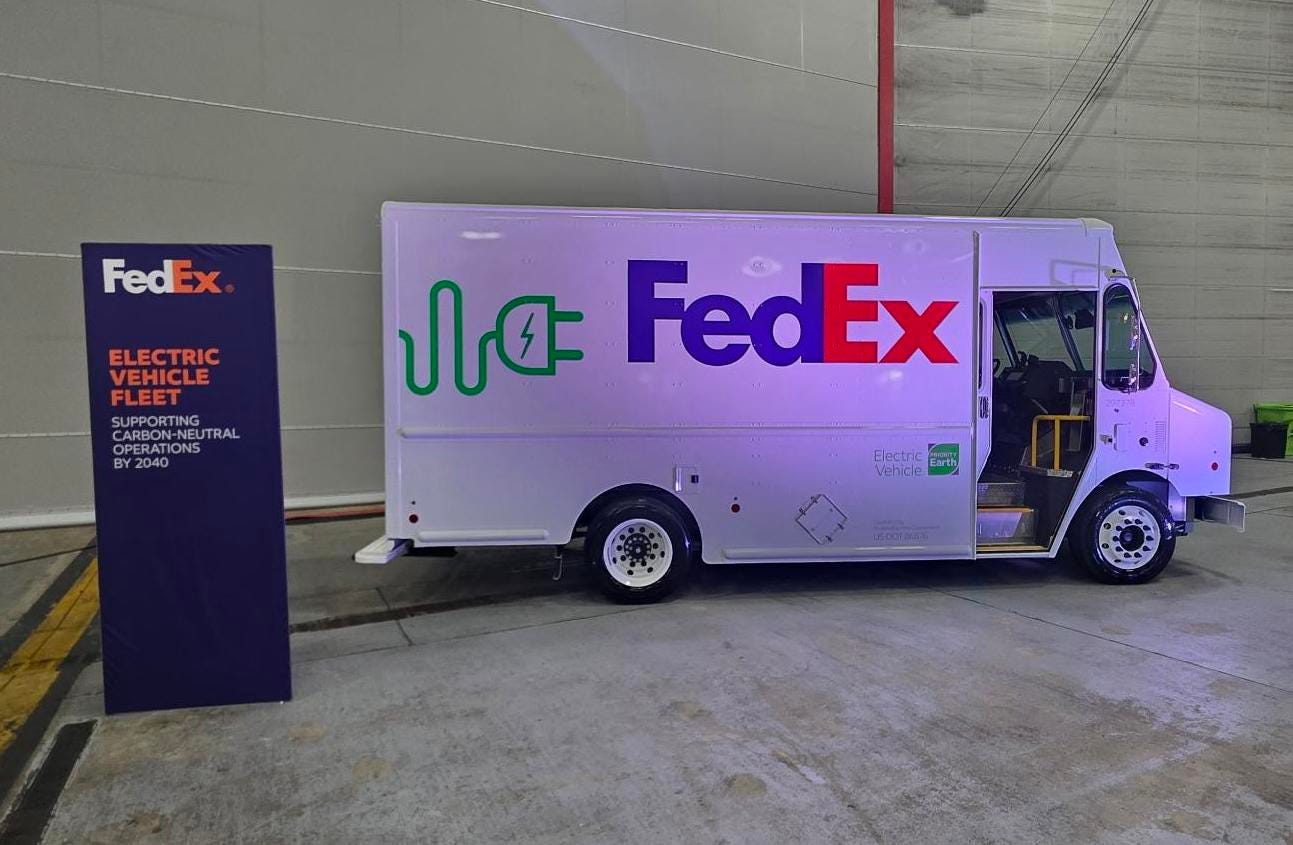
We recently attended FedEx Investor Day 2026. Thanks to Raj Subramaniam and the FedEx leadership team for hosting and for outlining a clear vision for what comes next, including modernizing the backbone of one of the world’s most important physical networks. It was also a meaningful moment to see Harbinger trucks featured as part of that evolution toward fleet electrification and next-generation network performance. We are proud of John Henry Harris and the entire Harbinger team.
The team will be on the road over the coming weeks, connecting with founders, partners, and operators across our network. If you’re nearby, don’t hesitate to reach out.
San Francisco: March 16 – 18; March 22 – 25 (RSAC)
Tokyo: March 21 – 25
Chicago: March 30 – April 1
Nashville: April 22 – 24 (Vanderbilt Summit on Modern Conflict)
If you’re in any of these locations, let us know.
Follow us on LinkedIn for the latest updates and insights from Ridgeline.
Comments
Nothing yet. Say the first thing.
Sign in to join the conversation.