
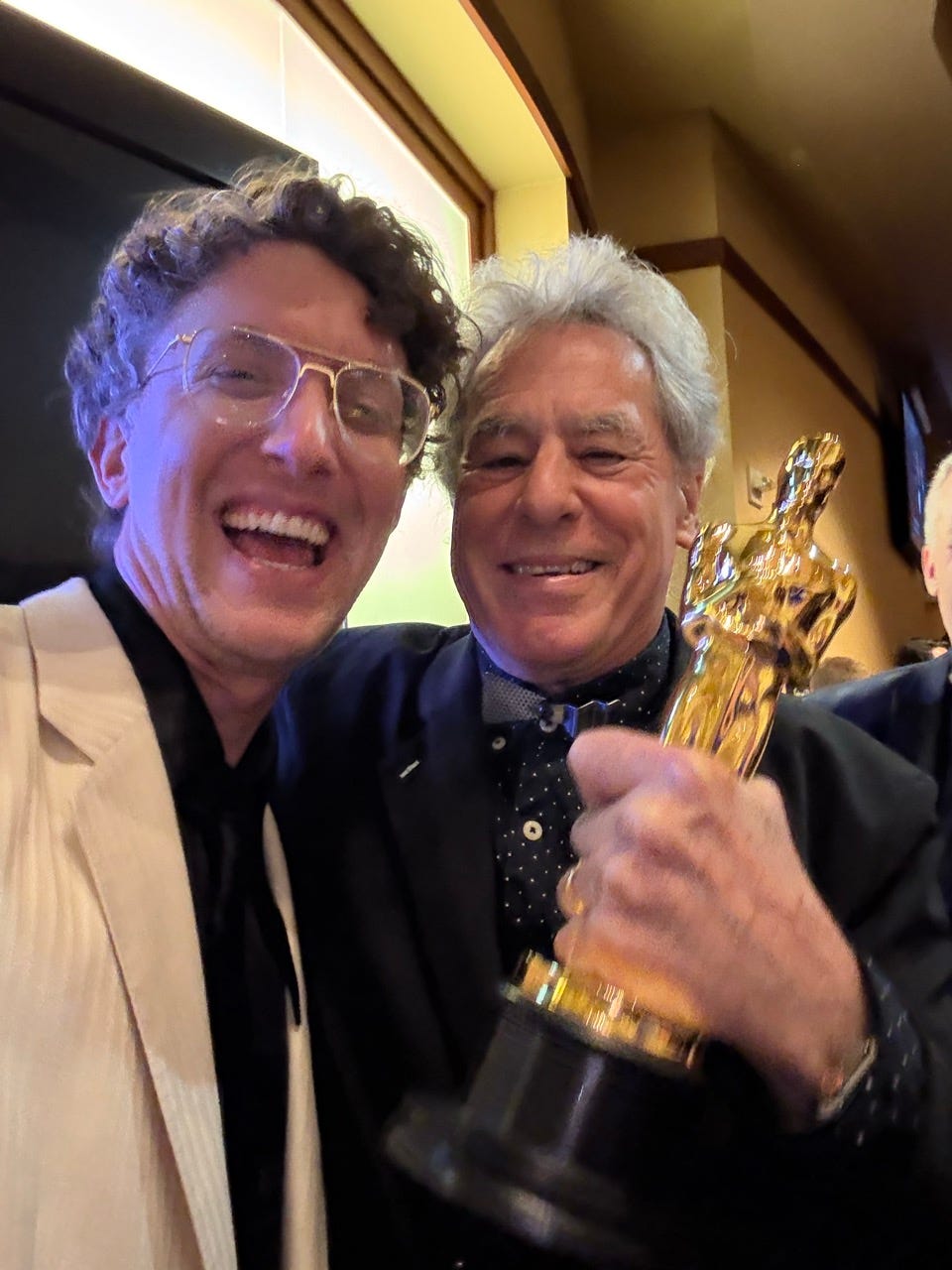
My last posting here ended on a cliffhanger: After winning a BAFTA, what would happen with Mr. Nobody Against Putin at the Oscars? No spoiler now: our film won!!
With Kino Lorber’s 16 Oscar nominations over 25 years—eight in the 16 years on my watch, including consecutive Best Documentary Feature noms in the last three years, our company finally pulled it off. Reported as the biggest upset of this year’s awards, our film Mr. Nobody Against Putin was really Mr. Nobody Against Putin and Netflix. With the might of the major streamer behind the Oscar campaign for The Perfect Neighbor, an unequivocally excellent Sundance-winning doc, how did we ever win? It has something to do with why we probably won’t be in any winner’s circle in the upcoming Cannes. These two peak film events—the Oscars and the Cannes Film Festival—serve very different purposes, but looked at together they tell us a lot about the state of the entertainment industry today.
First, our Oscar story.
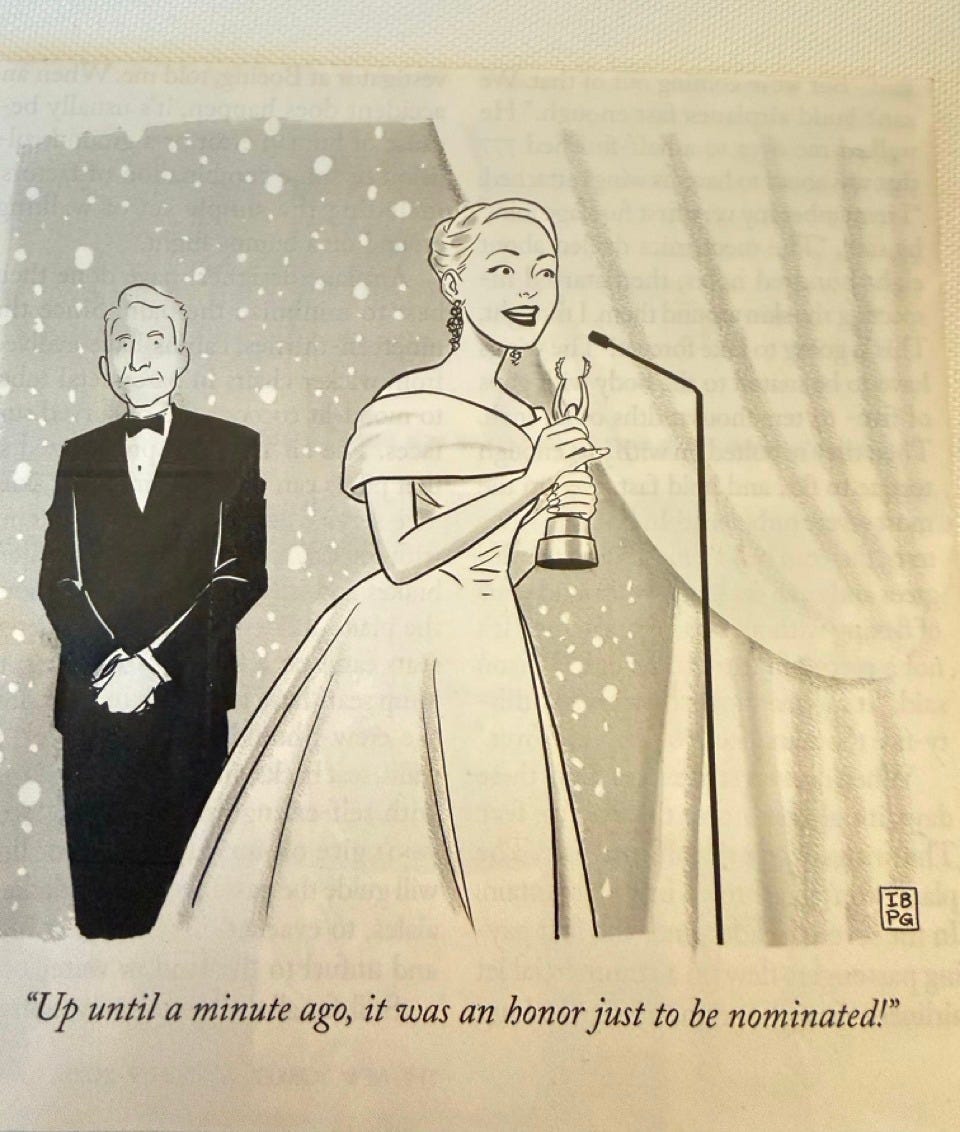
Passionate movie fans assert their politics by buying tickets to documentaries aligned with their partisan preferences. And a typically progressive entertainment industry tends to privilege docs that register outrage against forces of injustice and inhumanity. Now with international members of the Academy exceeding 25%, having one of the two “foreign” docs in the race helped.
Mr. Nobody’s Danish and Czech producers pulled out all the stops with a brilliant digital campaign, some governmental financial support, impact grants, plus prestigious international visibility with BBC (Storyville) investment along with Arte buying in for French and German television. And as a top boutique distributor with years of nominations under our belt, our team really knew how to run a scrappy, cost-effective campaign that would heat up the awareness and effectively compete for an Oscar win. Almost a year after its Sundance premiere when we started pursuing Mr. Nobody, and with the clock running down to launch a national theatrical release, the film’s producers made the call to sign with us.
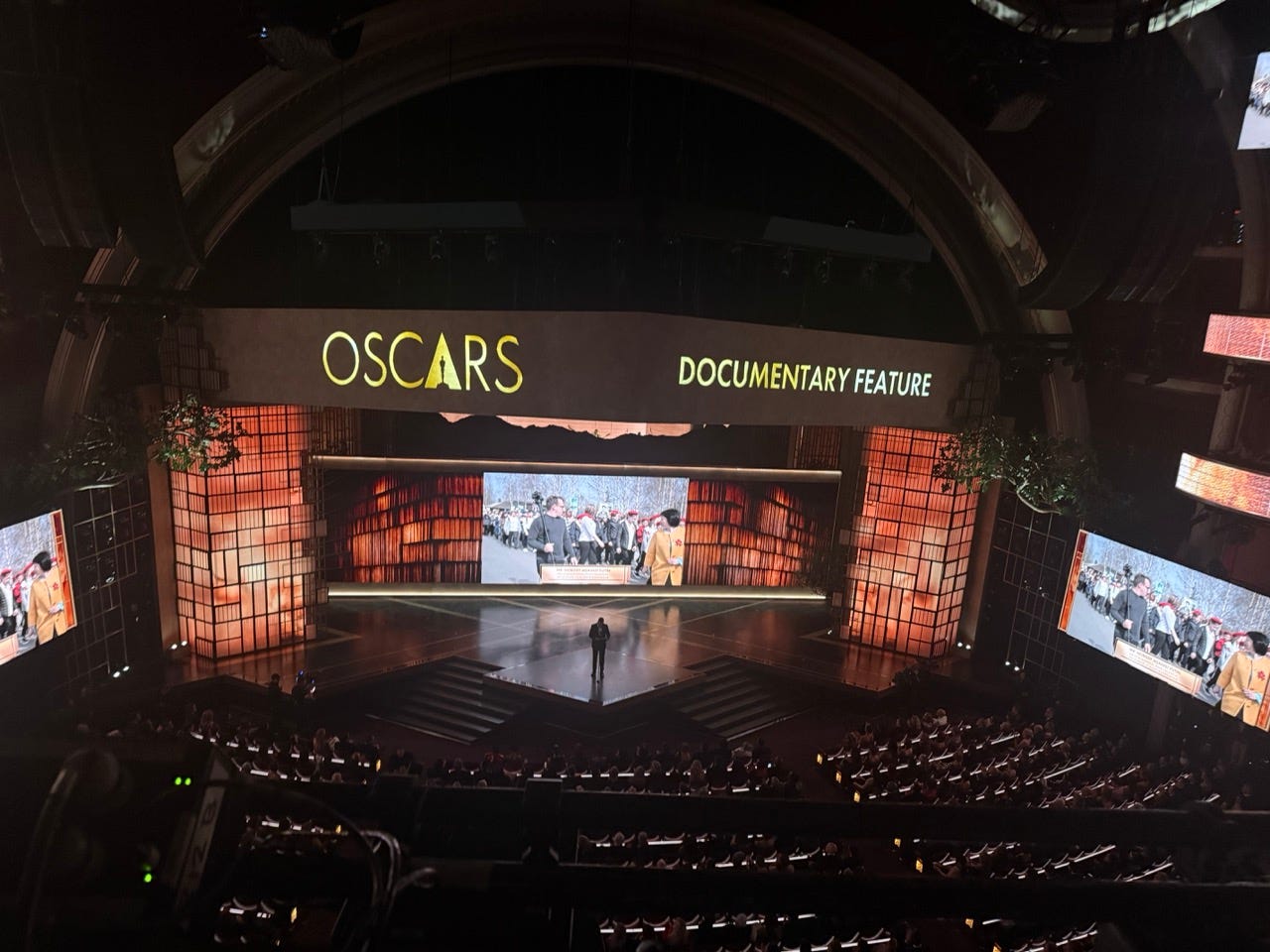
We then faced a daunting scarcity of screens. Distributors of every size scramble to release films for awards qualification and “For Your Consideration” (FYC) promotions in the fourth quarter leading into January. The seas parted for us with the Academy’s announcement in early December. Trade publication handicapping had given us reasons to be optimistic. In a record field of 201 documentary features qualified for the running this year, we were exhilarated to be one of 15 on the shortlist. From this list the final five nominees for Best Documentary Feature would be selected in January. Our small theatrical distribution, marketing, and publicity team of about seven rose to the occasion, firing on all pistons with impeccable timing. Outside help from top tier publicists who had been working with the producers for months moved over to our payroll and significantly amplified our efforts. Within days, we secured a hard-to-get opening in January at a key NYC arthouse theater. The savvy programmer of the IFC Center, a long-time company friend, really believed in the film and gambled with us to open on the weekend the final nominations would be announced.
We were at this year’s Sundance when, after a nearly sleepless night, the official nominations were announced at the crack of dawn. Fearing disappointment, I still tried to sleep through it until text alerts awakened me to good news. And happily, being at Sundance, we could talk it up among the many Oscar voters we knew were there. We still recognized our chances were iffy, with an international doc up against a strong English-language trio backed by Netflix, HBO, and Apple, as well as the one other nominee that took the top international grand jury doc prize at Sundance (our doc prize was the special jury runner-up.).

Rare as it is, some rule changes can stack the deck in your favor. The Academy had just leveled the playing field for “little guys” with some of the best films. AMPAS doc branch members who pick the nominees, as well as the entire 10,000-plus membership who elect the winners, now had to swear on their celluloid hearts that they actually watched the films they would be eligible to vote for. We believed we had one of the two best films among the five nominees (reinforced by many awards and critical raves at 100% on Rotten Tomatoes), giving us better odds than one out of five…maybe a 50% shot! Also, the tide had gone out for previous years’ starry bio docs and celebrations of unsung music talent in favor of serious socio-political themes that speak to our fraught times. And we played our hand well.
Our theatrical and publicity teams touted our fresh Oscar nom the same day we opened in New York and immediately landed dates at arthouses across the country. Our digital team pulled all levers to get prime placements fast-tracked on essential TVOD platforms like Apple and Amazon. And we premiered the film with pride of place on our own subscription platform, the Kino Film Collection. Our usual windowing of media releases went out the window…not our typically preferred approach but we drove hard at a day and date strategy to overcome our late to the game disadvantage in the competitive compression of Oscar time.
We revved up like never before for the final sprint to the March awards. Other years, when we stalled at the finish line, we consoled ourselves with the notion that just getting the nomination is a “win.” This time we refused to anticipate disappointment. We were encouraged by a cult of interns telling us they were all “manifesting” our win.
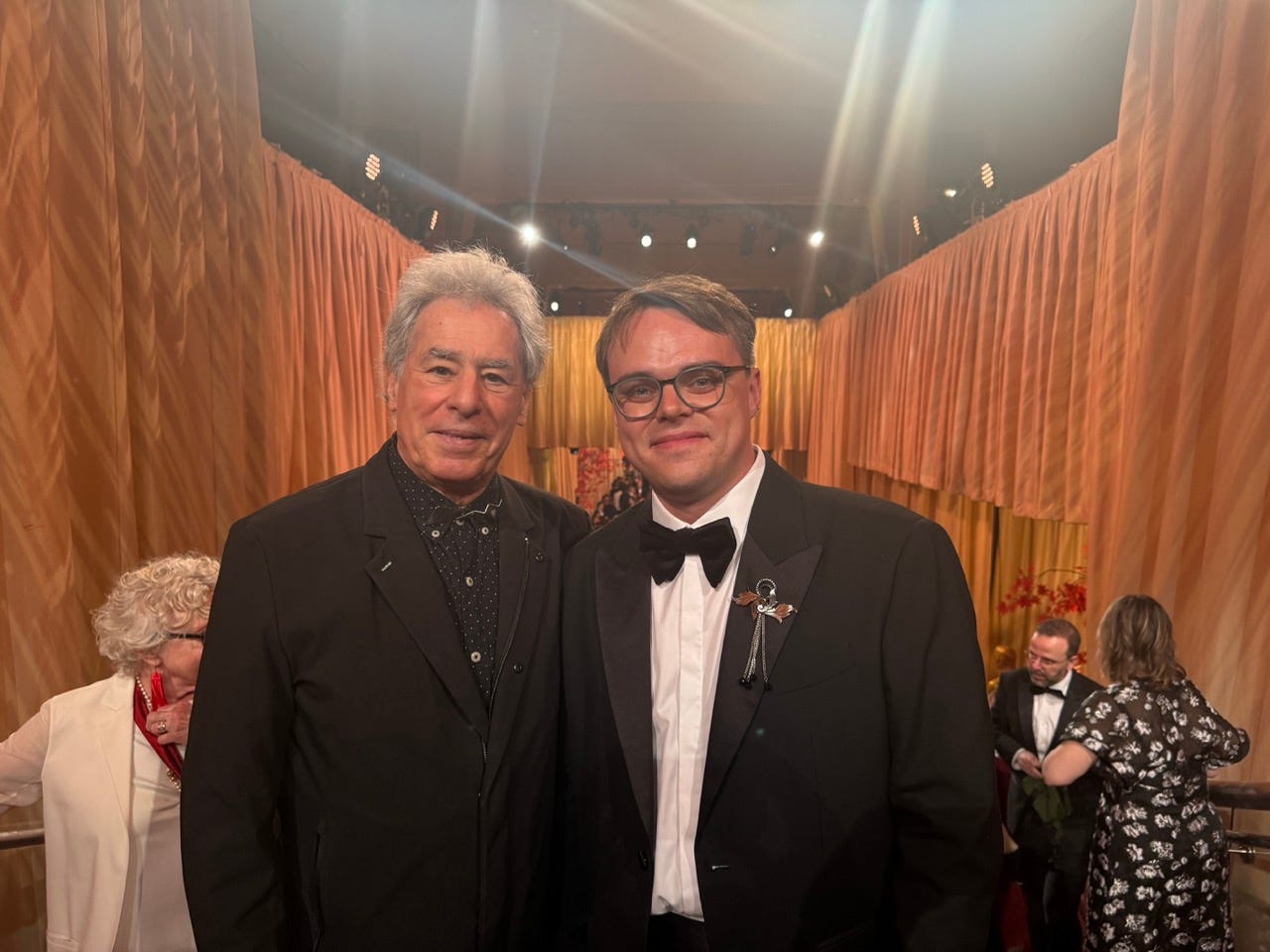
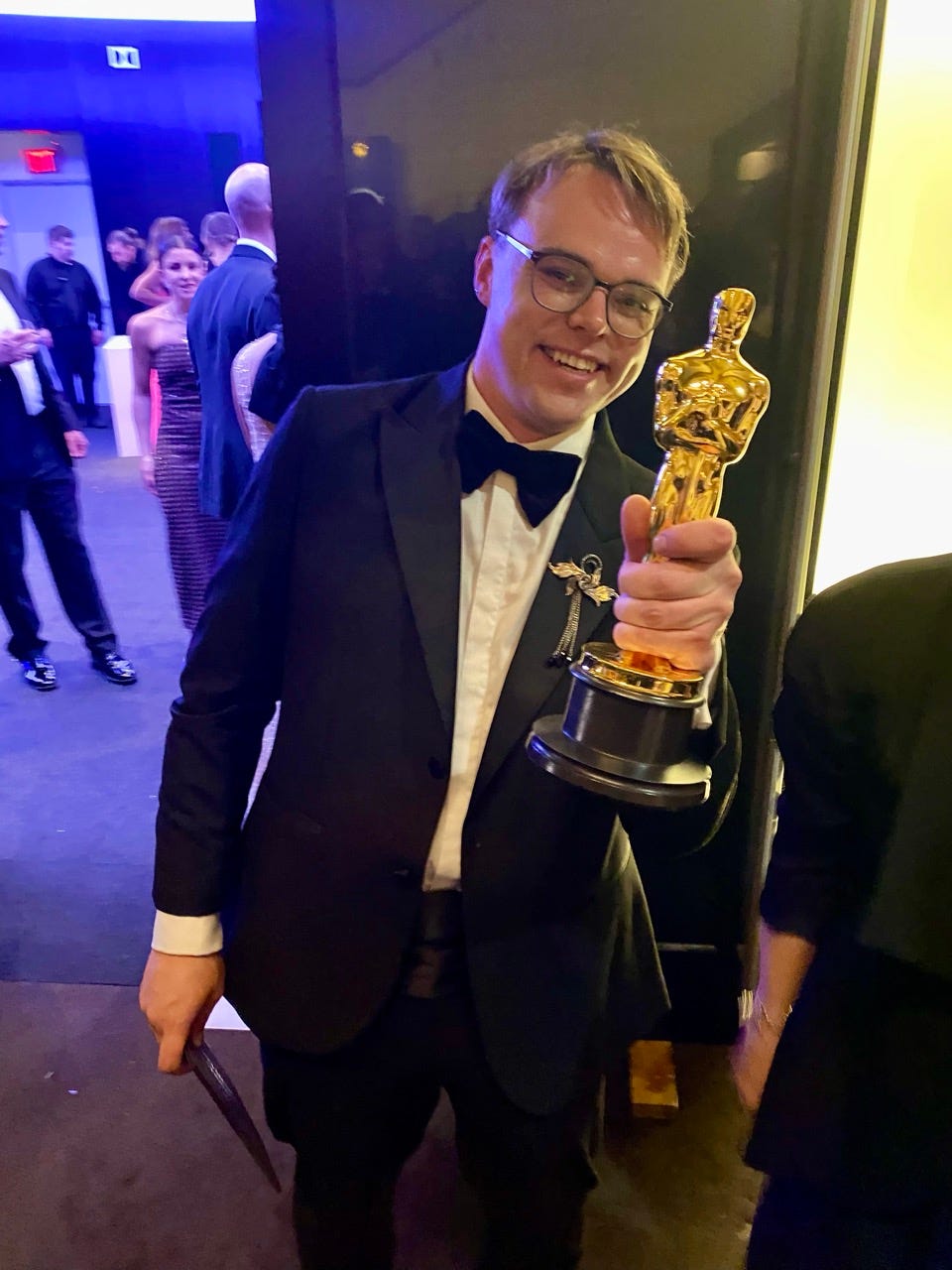
Fact is, winning really is a horse of a different color. As distributors, we’re not a film’s creator, producer, or even financier—we don’t get called to the stage or take home a statue. At best we might get a shoutout in an acceptance speech and photos holding the gold at the Governor’s Ball before the creative team rushes it off to Vanity Fair—the trophy their entry card.
But in our own sphere of engagement, the film gains a new currency, a new life, in all its media incarnations, and elevates our standing among our peers and public. Mr. Nobody set records for us in TVOD, in the educational market, and on the Kino Film Collection. It also garnered a healthy box office gross, despite a limited spend and its competing availability in all home media outlets. After almost six months in about 200 arthouse markets large and small—some screens we never played before—there are theaters that are still booking it. We’re gratified that our thoughtful P&A spending and strategically coordinated home media digital release will generate a healthy financial return for our filmmakers. A 93-page dossier of press clips brimming with critical and audience praise is also hugely rewarding. We’re a commercial enterprise but mission-driven on the many paths arthouse cinema leads. On Oscar night we could not have been prouder to be a distributor evangelizing for cinema as a tool of truth, where a “Mr. Nobody” can expose a brutal regime that’s poisoning young minds with lies about a quest to “de-nazify” Ukraine.

Our film’s co-director David Borenstein is now reprising his memorable Oscar acceptance speech about “losing your country” in new public forums and wide-ranging media. The film’s titular “Mr. Nobody,” and co-director, Pavel “Pasha” Talenkin now lives in exile in Europe and is contemplating his own future. He’s been condemned by the Kremlin as a “foreign agent” and unlikely to ever return to his home.
When Pasha last traveled back to the Czech Republic with his Oscar statuette in hand, a TSA agent disallowed it as a carry-on brought on board. Placed in an unmarked carton and transferred to the baggage hold, it went missing when the plane landed and was assumed stolen or otherwise lost. Days later, after a press uproar, Lufthansa found and returned it to Pasha with an apology. There was no such apology from the TSA, who had never confiscated a carry-on Oscar before. But they had unwittingly made an ironically appropriate call. For this gently explosive film, which has awakened new outrage at Putin’s tyrannical regime, its own Oscar can now claim new status as a potentially “deadly weapon.”
With euphoria fading, Oscars in the rear-view, our sights are now set on Cannes. But the concept of winning or acquiring a winner there is for us a totally different proposition. Cannes continually challenges our idea of how we function in the entertainment industry within our self-selected identity as a film distributor who does not make films. We are struck by how our business is changing as we look at ourselves refracted in the mirrors of Cannes. As arguably the most important film festival in the world, Cannes seems to keep complicating its raison d’etre and redefining itself each year, something the Oscars never quite desires or does. We learn lessons from both. More on that soon…
No posts
Comments
Nothing yet. Say the first thing.
Sign in to join the conversation.