
What is macroeconomics, and what does it tell us about how an economy really works?
In this episode of Understanding Economics, I explain why macroeconomics is about much more than GDP, economic growth, inflation and unemployment. It is about understanding the economy as a whole system in which households, businesses, banks and government are interconnected.
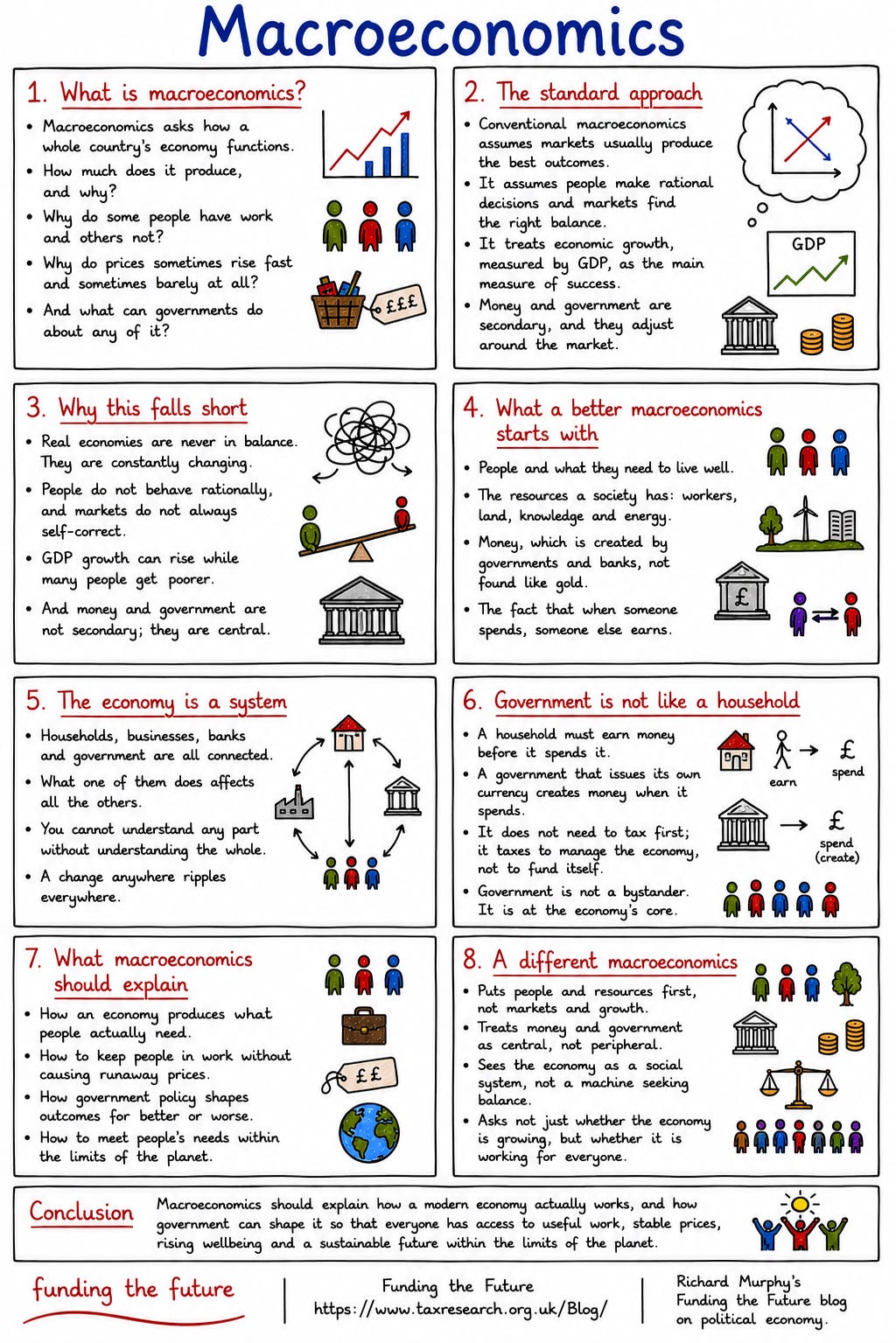
Conventional macroeconomics often starts from the assumption that markets tend towards balance, people behave rationally, and government plays a secondary role. But real economies do not work like that. They are constantly changing, markets do not always self-correct, and rising GDP does not necessarily mean that everyone is becoming better off.
I explain why money and government are central to understanding a modern economy, why government finances are fundamentally different from household finances, and why one person’s spending is another person’s income.
Most importantly, I argue that macroeconomics should begin with people. The real questions are whether an economy can provide useful work, stable prices and rising well-being, while using the resources available to us within the limits of the planet.
Understanding macroeconomics means understanding how all these things connect, and how government policy can change the outcome.
This is part of my Understanding Economics series.
This infographic, which I wrote but used AI to draw, might help:
No posts
Comments
Nothing yet. Say the first thing.
Sign in to join the conversation.