
Friends,
The toughest audience I’ve ever faced wasn’t a room full of senior executives. It was a hundred teenagers in a high school gym, half of them on their phones, the other half daring me to be boring.
C-suite executives are easy by comparison. At least they pretend to be interested. Teenagers won’t. If you lose them in the first minute, they’re gone, and they have no problem letting you watch them vacate the premises mentally.
I’ve spoken to crowds of over 10,000 people. I’ve stood in front of CEOs of global enterprises, and in front of 16-year-olds who’d rather be somewhere else. And here’s the fascinating thing: the same principles apply in all these situations. The size of the audience isn’t that relevant. What matters is where you point your attention.
Most public speaking advice is about you. Your slides, your gestures, your nerves, your eye contact. All useful stuff. But it puts the spotlight on the wrong person.
The speakers who actually move a room flip the equation. Their focus is on the audience instead of on themselves. “What do they need?” runs in the background the whole time. That one shift fixes more problems than any technique I know. So let me give you the obvious tips fast, then spend our time on the ones people miss.

Stand tall. Smile. Make eye contact with actual humans, not the back wall. Use vocal variety so you don’t drone. Cut the jargon. Practice until the words feel like yours instead of something you’re reciting.
Limit yourself to about three core points, because that’s roughly what a human can hold while also listening to you. Build the talk around one key sentence you want people to remember, and let that sentence be the filter for every story and slide. If it doesn’t serve that one idea, it goes.
None of this is controversial. It’s table stakes. Get it right and you’ll be competent. Now let’s talk about what will make you compelling.
Nerves come from self-focus. When you’re terrified, notice what you’re actually thinking about: me, me, me. How do I look? What if I forget? What will they think?
The fastest way out is to make the talk about them instead of you. I call it a giver’s mindset, and it’s inspired by Adam Grant’s research at Wharton on givers vs. takers. Your job on that stage is to offer the audience something that improves their life and the lives of the people they go home to. Doing a great job is a pleasant side effect, but it’s not the point.
Try this before you walk out: “I am here to give these people something valuable.” Say it like you mean it. Something physical happens. The knot in your stomach loosens, because you can’t be self-conscious and generous at the same time.
This is the master move, and it’s the one most people skip. They prepare the content. They rehearse the delivery. They forget to crystallize who the talk is actually for.
Right before I speak, I go BIG. It’s a simple but powerful practice: Breathe, Intention, Gratitude.
Breathe. A few slow rounds, or box breathing if my heart is really going. This calms your nervous system and puts you in a more positive state.
Intention. How do I want to show up today? Warm? Bold? Hopeful? I pick one and let it guide me.
Gratitude. Why am I grateful for this moment? These people are giving me their precious time. I get to share something meaningful with others.
If you’re really nervous, going BIG may not work as well. Here is a Jedi mind trick you can use: say to yourself “I am excited.”
Sounds so simple, but it works. Nervousness and excitement are high-energy physiological states. Racing heart, quick breath. Your body has already done the hard part of generating the charge. You just get to decide what to call it. Telling yourself to “calm down” fights your own biology. Telling yourself you’re excited rides the wave.
There’s a Harvard study by Alison Wood Brooks where people about to give a speech said either “I am calm” or “I am excited.” The excited group performed better and were rated as more persuasive. Same nerves, but with a different label and different outcome.
Stack a power pose on top of it. While you're telling yourself "I am excited," make yourself big: wide stance, hands on your hips or in the air, chest open, for two minutes. Backstage works and so does a bathroom stall (where I've done it more than a few times). You might feel ridiculous, but do it anyway. Expanding your body and taking up more space tells your brain you're confident. Believe me, it works.
The opening is where nerves are loudest. Your voice is shaky, your mouth is dry, your brain is screaming. That’s the worst possible moment to improvise.
So don’t. Write the first 30 seconds word for word and rehearse them until they’re automatic. Get them out clearly, with the energy you want (usually higher than feels natural), and something clicks. You hear your own voice land. The audience leans in. The anxiety dissipates, and you roll from there.
I usually don’t script the rest. Memorizing a whole talk makes you sound like robotic, and if you lose your place you panic. Just nail the launch. Once you’re airborne, it’s much easier to keep flying.
This is the big one, and it’s where most smart people go wrong.
Set your north star before you write a line or build a slide: what do I want them thinking, feeling, and doing after my talk? Most people nail “thinking.” They’re good at information. They obsess over “doing,” the call to action. And they skip right past feeling.
But feeling is the engine. Feeling is what drives the doing. People decide with emotion and justify with logic, in that order, almost every time. A talk that only informs gets a polite nod. A talk that makes someone feel something gets them to actually change a behavior.
Be intentional about what emotions you want to elicit—surprise, excitement, hope, shock, fear, concern, sadness? These each have their place depending on what you aim to accomplish.
So how do you make people feel? Tell a story. Share about a real event with names and specifics and challening moments. Be authentic, relatable, and maybe even vulnerable. These qualities make the story resonate.
You can also use data to tell a story. It’s all in your intention and presentation. You can share facts and figures to simply inform, or you can use them to evoke an emotion—like surprise or sadness. For example, a stat I often share is about self-awareness: “Based on research from psychologist Tasha Eurich, 95% of leaders believe they are self-aware, but when they are run through a battery of tests, do you know how many actually are? 10% to 15%.” That generally evokes surprise and/or disbelief. The story is that most leaders are more self-deceived than self-aware…and you in the audience may be too! I have captured their attention.
Stories make people feel. Data makes people think. You need both, but if all you brought is data, you brought half a talk and engaged (less than) half of the audience’s brain.
This was the secret to my speaking success at AWS. I traveled across six continents delivering talks that were almost always the highest-rated one at the event. These included AWS re:Invent, ExecLeaders, Sales Kickoff, Imagine for Nonprofits, HITEC Summit, IBM Elevate, Petronas Innovation Day, Volkswagen Leadership Week, and Novartis Leadership Summit. (You can see my talks at https://richardhua.co.)

Here’s the trap for prepared people: we fall in love with our game plan and don’t study the audience.
The most repeated lesson I’ve learned about speaking is to design for the listeners, not for yourself. Their knowledge level. Their mood. Their pains, challenges, hopes, and dreams. A keynote that lands with a room of engineers will gasp for air in a room of non-technical business leaders, and the only way to know the difference is to look up from your notes and actually see them.
When you sense you’re losing the room, adjust. Speed up. Drop a point. Ask a question. Tell the story you weren’t planning to tell. The talk is a conversation with people who happen to be quiet, not a recital you push through no matter what. (This, of course, takes masterful preparation. You need to know your content so well that you can adjust without losing track of your main points.)
This is emotional intelligence applied to a stage. You’re reading the room’s emotional state in real time and responding to it. That skill is the whole game.
Open body language tells the audience you’re being real with them. Crossed arms, hands jammed in pockets, a body turned away: the audience reads all of it as guarded, even if they couldn’t tell you why.
Gestures do double duty. They help you convey emotion, and they help the audience comprehend it. Watch any speaker you love and you’ll see their hands working the whole time. Use a generous amount. It feels like too much from the inside and looks just right from the seats. Research found that the most popular TED Talks feature speakers who use nearly 2x the number of hand gestures as less popular talks (465 vs. 272 gestures per 18-minute talk). The right gestures increase persuasion, improve memory, and communicate warmth.
Here are 20 hand gestures from people researcher Vanessa van Edwards that you can add to your toolbox. I read this article years ago, and I’ve personally incorporated a number of them into my repertoire. (Note: if you often speak with slides and a clicker, practice the gestures that will work with a clicker in your hands.
Last one, and don’t skip it because it sounds fluffy.
If you’re having fun, the audience has fun. Emotions are contagious, which neuroscientists will tell you is literally true thanks to the way our brains mirror each other. Your nerves are infectious. So is your joy and delight at being with the other people in the room.
The teenagers in that gym? I won them the same way I win a boardroom. I didn’t try to impress them; instead, I focused on genuinely enjoying them. Asking them questions. Sharing funny stories about myself. Talking about my failures, not just my successes. The phones came down and faces went up. Being smart and slick didn’t do that. A grown man clearly having a good time on stage did, and that’s hard to look away from.
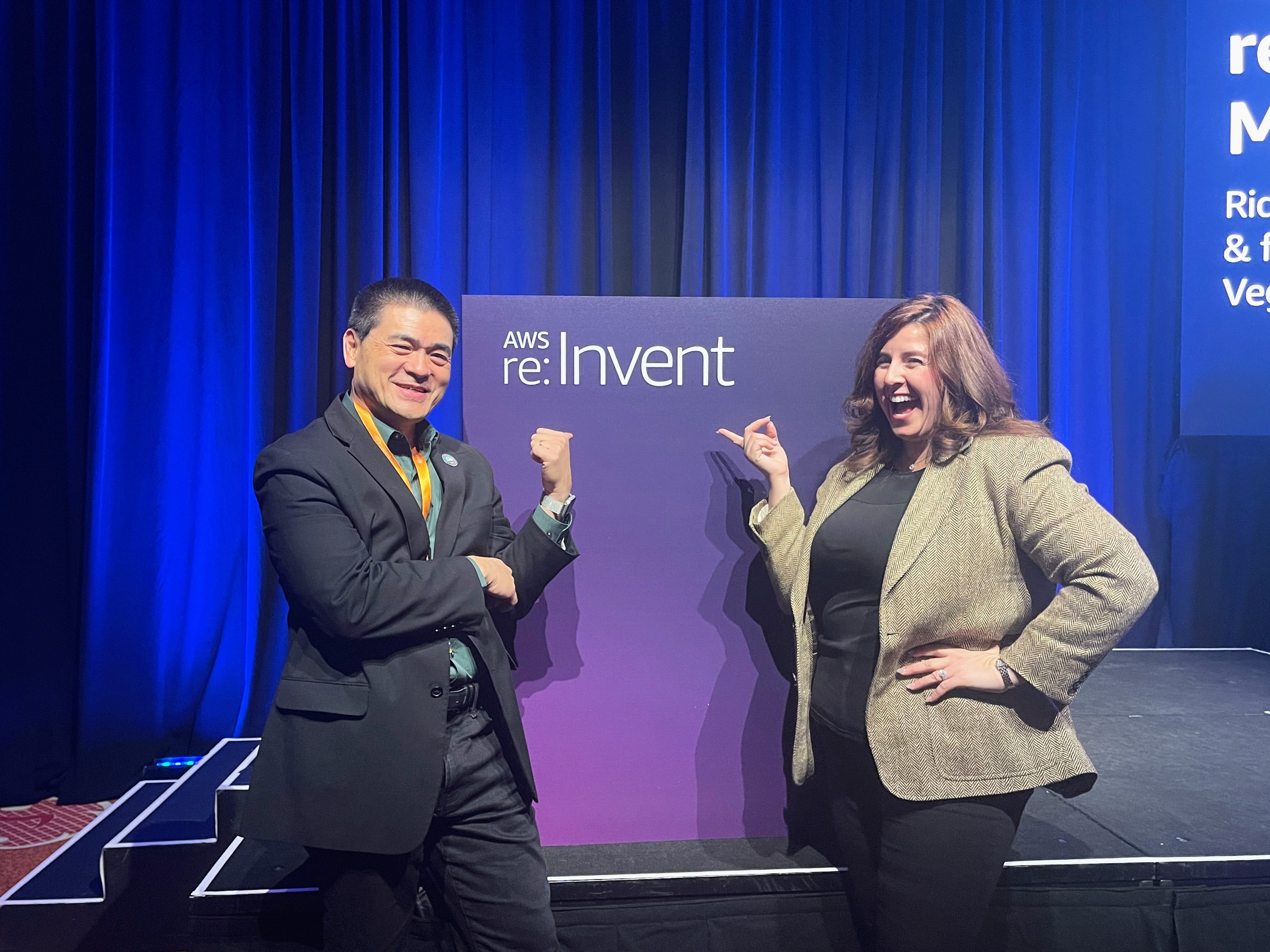
If you remember one thing, make it this: point your attention outward.
Every technique here is really a version of the same thing. The giver’s mindset, the gratitude, the focus on feeling, reading the room, having fun. They all take the focus off yourself and put it onto the people in front of you. Do that, and the nerves shrink, the connection grows, and you stop performing and start serving.
Put them all together and you get presence. That's all presence really is: your full attention landing on the audience instead of on your yourself. It was never about you. It's about them.
Being polished is optional. Being present is everything.
The most effective thing you can do on a stage is to be generous—to forget yourself long enough to truly see the people who showed up to listen. Do that, and you’ll never be a boring speaker.
Be EPIQ,
Rich
P.S. Pick one talk coming up (even if it’s for a team meeting) and use some of these techniques. Share in the comments how it went. I’d love to hear.
No posts
Comments
Nothing yet. Say the first thing.
Sign in to join the conversation.