
The Carolina Wrens that live and sing around our house here in south Louisiana cheer me to no end. Their pretty singing at dawn reminds me of the gift and promise of morning.
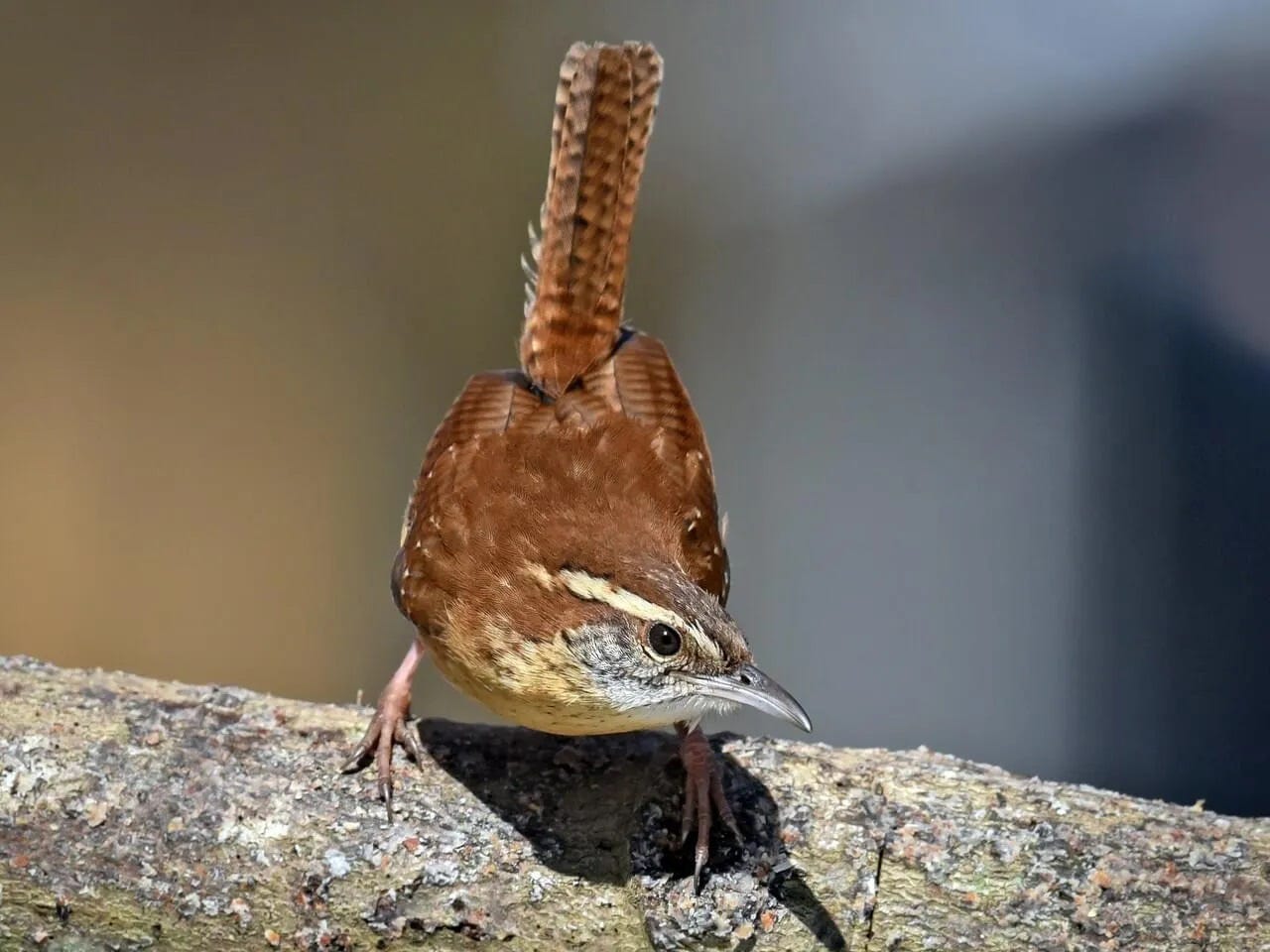
One day a few months ago, I stepped outside, and, to my left, a sudden blur flew off into the trees facing our porch. It was a Carolina Wren, perched on a low branch. It has an unmistakable contour—a little bird with, most obviously, a cocked tail.
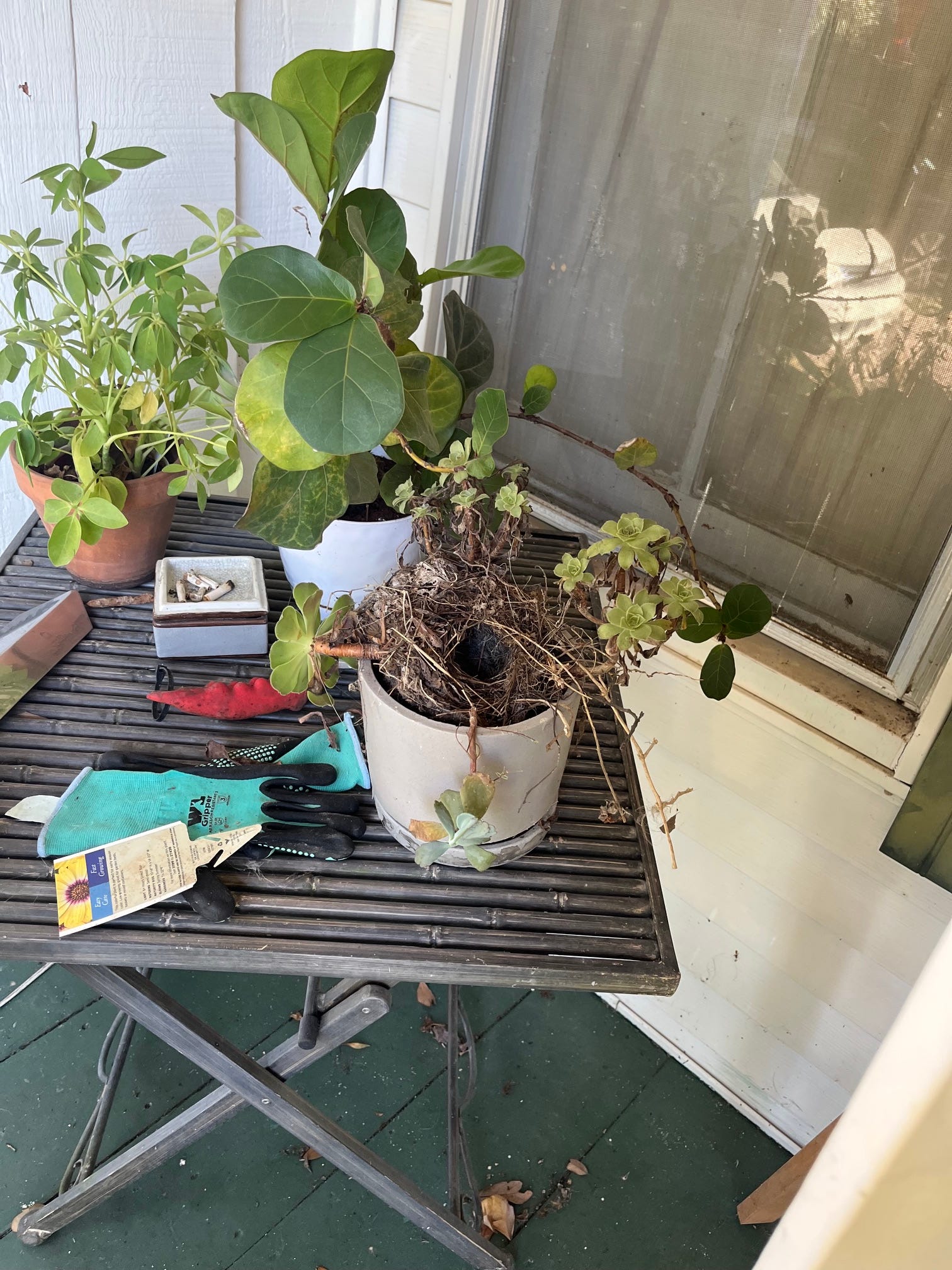
I looked at our potted plant, set on a small iron table near the door, from which the Carolina Wren left and saw, within some Spanish moss, the clear beginnings of a nest.
Right next do our highly-trafficked front door? The same door we let our dog and cat out, and in, many times a day? Dear Carolina Wren, is this the best house-constructing decision you could make?
My wife, Gaywynn, and I started adjusting our entrance and exit behavior. We opened the front door cautiously, did not peer into the potted plant, hoping to disturb this process as little as possible. Behind a window, we watched the birds fly to our plant with bits of straw, sticks and leaves in their beaks. “Their,” because it was two doing the job, male and female.
What we saw in this nest-building over the next week or so was skill, hard work and persistence.
Which leads me to the question: how do the birds know when they have to begin building a nest? How does the female know it’s pregnant? Is there some way the female informs the male that she’s expecting? Is there some form of communication that says: we need to build a home for our arriving babies—now? Something must go on in, and between, them.
To further confuse things, research tells me that birds build their nest before they mate. Yet another magnificent mystery of the natural world.
When I watched the birds working so diligently and purposefully together, I thought of my own mother and father and the home they built for me and my siblings. I thought of myself and the home my first wife and I built for our daughter. Did we provide safety, nourishment and comfort for our child? Were we good nest-builders? There is a French word I’ve always wished we had an equivalent of, dénicher, which means “to take a bird from its nest.” (Niche, means “nest” in French.) When my parents divorced, my siblings and I were de-nested. When my first wife and I divorced, our young daughter was de-nested. Yanked from her nest.
To watch these birds build their nest is to feel a sense of protection against the world. We don’t call it a nest, we call it a home, and we all need one.
One day, it appeared that the two birds were done.
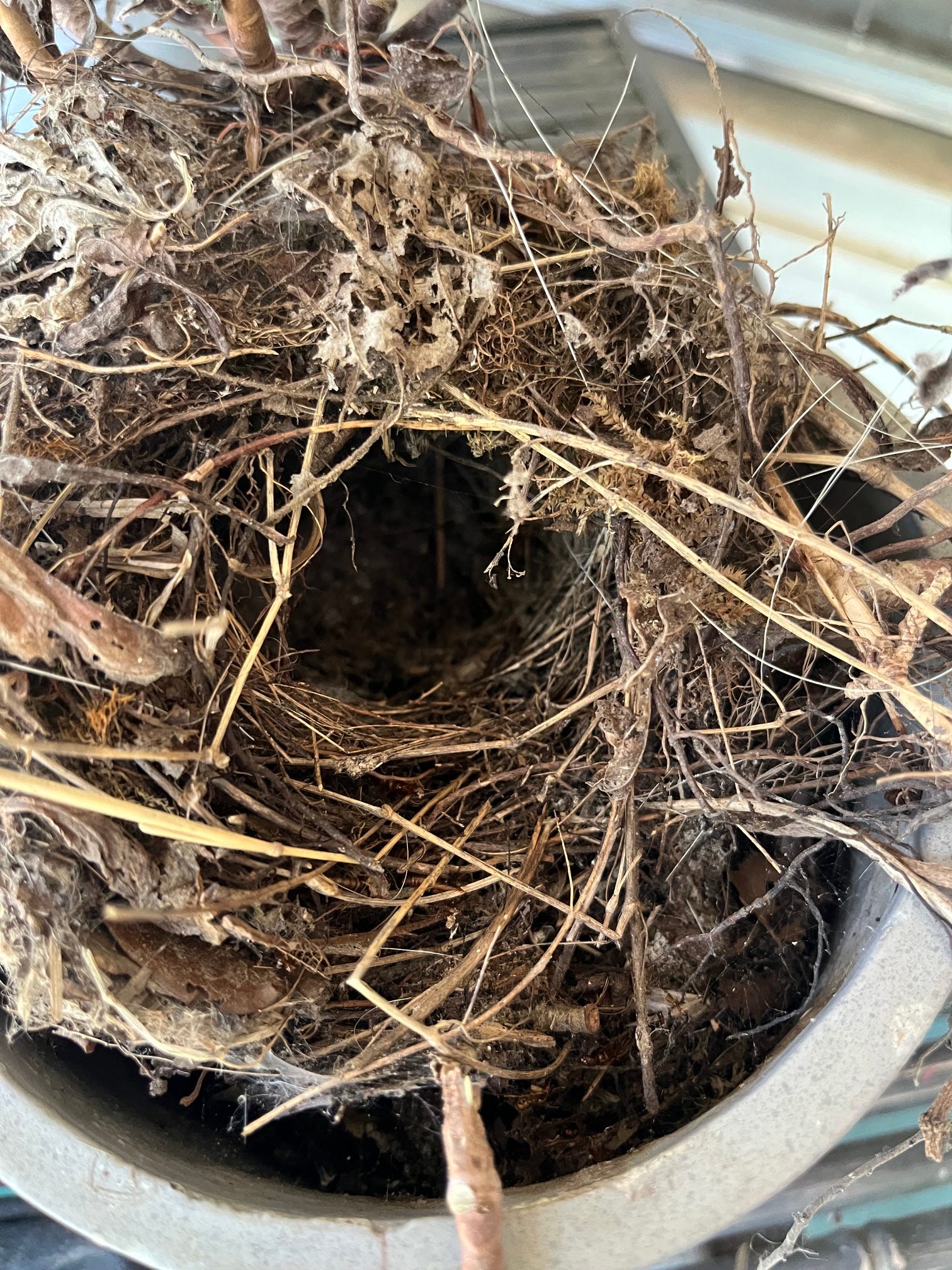
A week or so later, we peeked inside the pot and saw five small white speckled eggs nestled together. Such a sweet sight!
Then the female—because, I found out, it’s only the female who sits on the eggs—did what she does. Sometimes, when we opened the door a bit too abruptly, she would fly away. We would say, “Sorry, Mom!”
About two weeks later, we peeked and—two tiny hairy heads! It felt like we were godparents. Another lovely sight!
Our vigil then took the form of watching the parents bring food to the two nestlings. They brought insects of all sorts—worms, bugs of all kinds, some I could identify, some not—on a steady basis. First, one bird, then the other, working in tandem.
Baby birds, as we know, are insatiably hungry. Their parents kept coming with the goods, all day, without fail. This instinct, developed over millions of years to insure the future of the species, is something to behold. Watching the wisdom and power of nature unfold, the urge to continue, on our porch was humbling.
The feeding continued. The nestlings grew. Then they seemed ready to fledge. They adult Wrens had done their job.
One night, a few days later, we were in our living room talking, when we heard a loud screech, a noise, very close by. It seemed to come from some sort of animal. But what animal? Neither of us recognized it. We didn’t hear it again.
The next day we went outside and took a look into the nest.
We had hoped we would see these two little birds fledge. A year ago, a pair of Carolina Wrens built a nest in my wife’s bicycle basket, which is stationed, always unused, on our back porch. We watched the two little birds grow, fledge, and then, one morning, fly away. That moment of first flight was thrilling. All that work and care—fulfilled. We knew too well we were charmed to have witnessed that.
The nest was empty. We did not see the birds fledge. The truth is, in nature, once in a lifetime is often all you get. If you are able to see two birds fledge and fly away one time, that moment can last a lifetime.
Life in the wild continues. However nature decrees it to. Carolina Wrens are still here, singing their third-balcony-strong arias at dawn, reminding me how privileged I am, even earth-bound, to be part of their world.
Comments
Nothing yet. Say the first thing.
Sign in to join the conversation.