
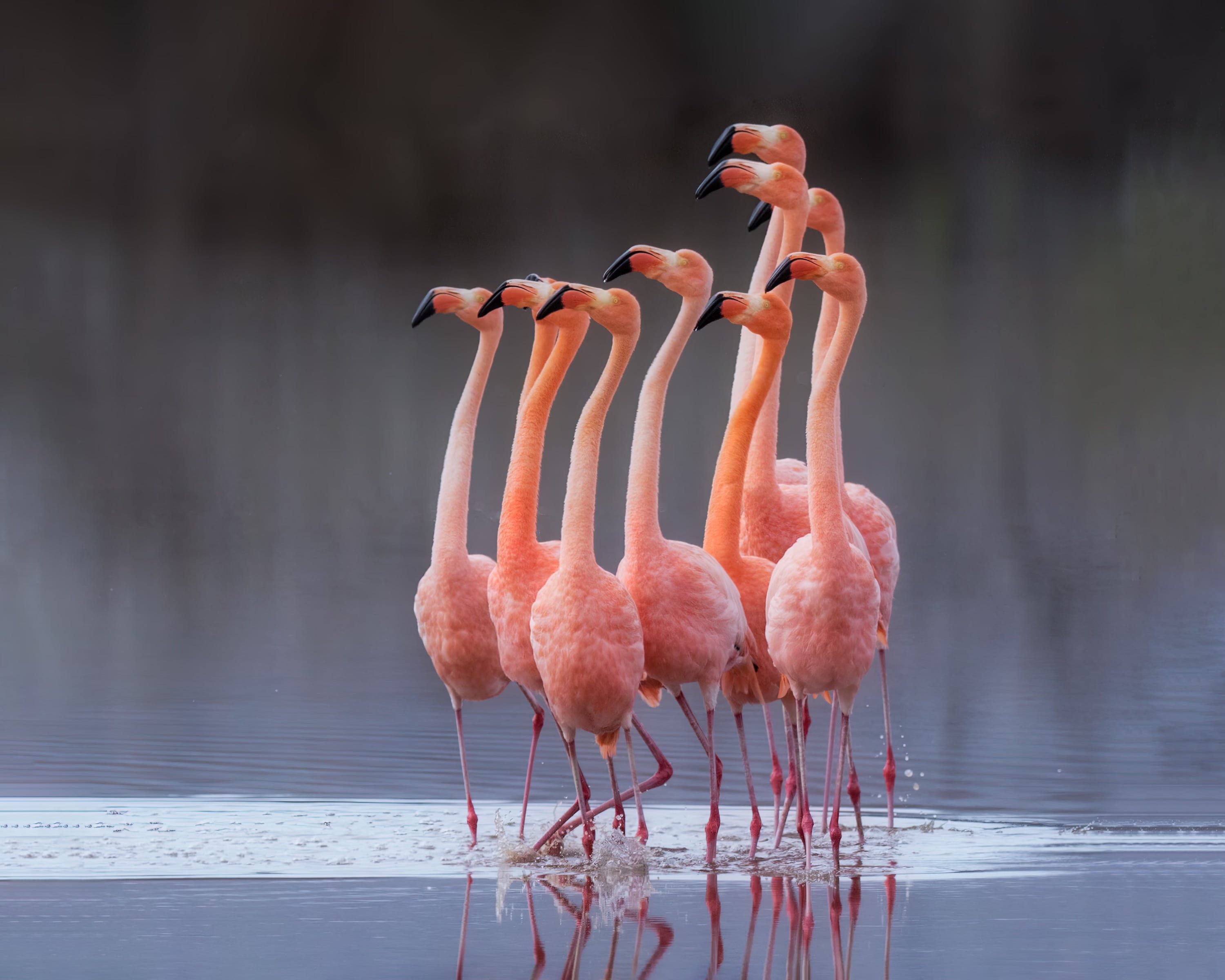
“Success is going from failure to failure without losing your enthusiasm.” The line is often handed to Churchill, though he likely never said it. It survives anyway, because it’s true.
Behind most great photographs are a thousand failures.
We never see them. We never see the disappointments, the miscalculations, or the frames trashed in frustration. We never see the recalibrations, the lessons paid for in time and patience, or the slow grind of understanding why something didn’t work and trying again. All we see is success, and we assume it arrived that way.
It did not.
Right now, I am two weeks into a Botswana safari, and I have captured thousands of frames. My “keeper folder,” however, contains only 37 photos. By any conventional metric, that is an astronomical rate of failure. Yet, each of those 37 surviving images is the direct product of a dozen or more failures. Those failures could have occurred seconds or milliseconds before the desired outcome. Perhaps days, weeks, months, even years prior to each success. The failed experiments, discarded options, and hard-won luck all played their own little part.
Failures are not a waste of time. They’re your education. Every bad frame is a small disagreement between the vision in your head and the reality captured on the sensor. Resolving that disagreement is how photographers mature. Each failure made today is just another small, necessary step toward getting where you want to be. Think of them as investments to future successes.
And yet, most photographers and creators are paralyzed by the thought of messing up. They fear failure, so they let that anxiety quietly take the controls. They optimize for safety. They settle into the safe compositions and concepts they can already execute, the light they already know how to read, and the subjects that give them comfort and security. The images that result are competent and predictable. They are also completely uninspired.
Real growth doesn’t live in that safe place. It lives at the absolute edge of your current capability, the precise spot where the odds of getting it wrong are highest. That is not a flaw in the creative process; that is the process.
The discomfort you feel when reaching past your competence is the exact physical sensation of getting better. Comfort and growth cannot occupy the same frame.
Before you can do any of this, you have to give yourself permission to fail. That permission frees you to take the necessary risks without already bracing for the verdict. Failure is not a detour from the creative process, it’s an essential part of it. It’s the toll you agree to pay for the privilege of making something real.
So stop protecting yourself from failure. Chase the work you aren’t quite good enough to make yet. Put yourself in situations you don’t fully understand and accept that most of what you attempt at that bleeding edge will fail. The successes, when they finally come, will carry the weight and gravity of everything that failed before them.
*****
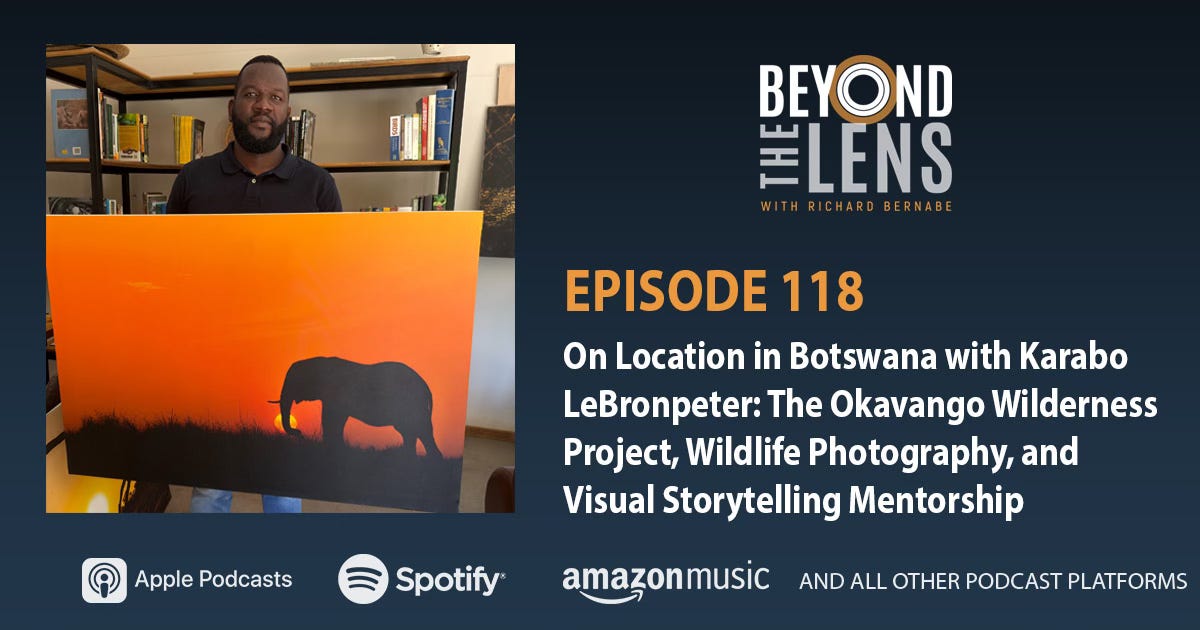
Karabo LeBronpeter is a Botswana-based wildlife photographer, teacher, mentor, and storytelling officer for the Nkashi Trust, the local implementing arm of the National Geographic Okavango Wilderness Project (NGOWP).
Launched in 2021, Okavango Eternal is a partnership between the National Geographic Society and the De Beers Group to help achieve long-term, sustainable protection of the Okavango Basin and support livelihood opportunities for its communities.
As I mentioned, all links are to Apple Podcasts but you can search for Beyond The Lens with Richard Bernabe on Spotify or any other podcast app.

You can follow here.I’ll be in Botswana for the next couple of weeks.
Here’s to Truth, Adventure, and Passion
No posts
Comments
Nothing yet. Say the first thing.
Sign in to join the conversation.