
I texted a dear friend recently, “logically it would seem so easy to just forget about poetry and never think about it again. Yet, it genuinely feels like every day of mine is centered around some core dance with the subject.” I am in a fallow period with relation to literature: I haven’t read much in maybe two months.
Typically when this happens I can ascribe it to a number of reasons: the books I am carrying around in my bag simply aren’t that interesting to me; or I have writerly ambitions that are occupying my mind far too much to allow for idle time to be spent reading; or I am in too busy of a headspace to justify taking the moment to actually settle with reading, perceiving, processing, and interpreting the written word. Right now I would say I am in the last category: my career is booming, and unfortunately due to the rigors of needing money to survive, I am forced to adhere to the boom.
When I say it would seem so easy to just forget about poetry, truly, I mean that from a logical perspective: poetry does not physically feed me, it does not physically put a roof over my head, it does probably have some connection to the success of my marriage… but looking at those four primary human needs of food, shelter, security and intimacy, two out of the four poetry blatantly ignores, one it is oppositional toward, and one it encourages like no other. In a recent medical appointment for my wife, I tell her nurse who we’ve been seeing off-and-on for two years, for the first time, that I write poetry, that I organize arts events in the city. The nurse is astonished at this devotion, noting the difficulty that poetry tends to be associated with. Emblematic of what I mean - that, in theory, poetry offers one very little - yet I have always found myself subservient to poetry.
I cannot blink without thinking of poetry. The occupations of my days and mind are to the effect of how I might serve poetry yet more.
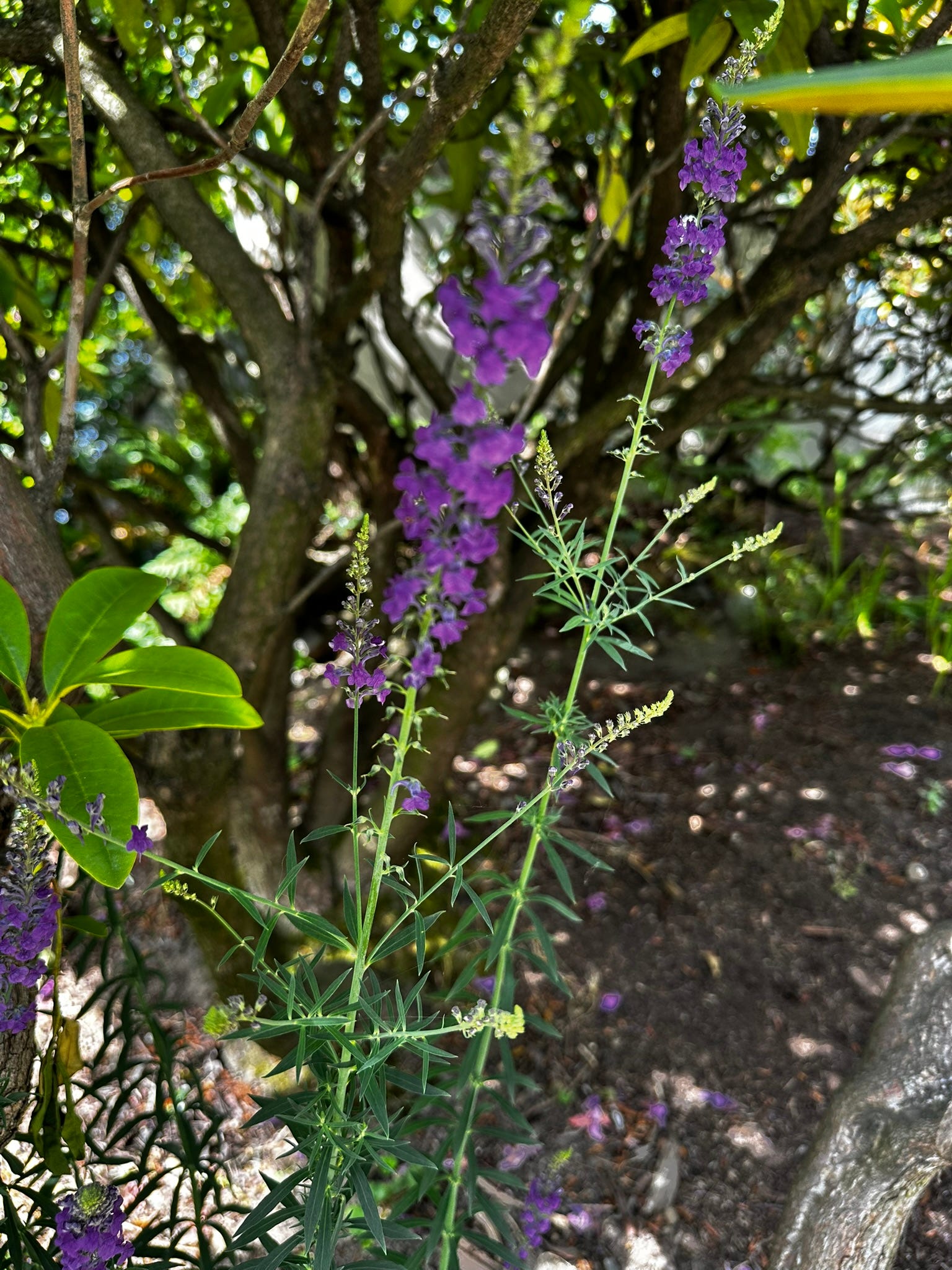
The more extraordinary the circumstances of my being, in defiance or in unison with that which plagues me, as well as in recognition of the ridiculous blunders the world is succumbing to at large with regard to technical oligarchies, genocidal capitulation, and the ever-widening reach of narcissism, the more that any striking image or moment becomes a moment generative of speech, the beginning of a poem. For instance, a corner of unused land on the outside of a fence surrounding a parking lot for a department store, adjacent to the biking trail I ride at least once weekly has recently had these three maybe eight-feet-by-eight-feet tree-trunk log planters installed with fresh flowers in them. Nice touch for an unused bit of land, yeah? Though, I should say, I’ve witnessed the arrival-and-then-clearance-and-then-moving-back-and-then-clearing-again of unhoused individuals making camp at this corner since I first started biking past it in 2018. These logs and the associated ‘plugging in’ of the otherwise unused land is a marked aggression against the unhoused here, saying, ‘We’re not going to tell you to fuck off, but good luck making camp here again.’ This is, of course, a poem. But isn’t it even moreso a poem as Seattle fights having data centers installed in abandoned school buildings? As Seattle preps for the world cup matches in which one it is hosting — Egypt vs Iran — two openly anti-LGBTQ countries — on a pride weekend for the city? As America has actively threatened to nuke Iran several times in the last three months? As diasporic individuals fight to maintain their right to live, their right to happiness?
This is not to say that every poem must be revolving around the pain of the world, but rather to say, the overt challenge from the world to maintain seriousness in an otherwise fundamentally unseriously-ruled society makes for the dramatic irony that tends to blossom fruitful poetry.
Now, Seattle has so many funded poetry reading series: Unpoetry, Speak Out Seattle, my own Other People’s Poems. There are so many cool gallery-coffee-bar spaces that rent out evenings for arts events. The writers are all so talented and generous. Truly I do not think there is an area more inclined to be considered a writing capital of the U.S. right now than Seattle. The event creators speak with each other, and we try not to overlap events. On any given evening there are book launches or readings and signings at places like Third Place books, or Elliott Bay books; there are artist parties at Common Area; there are hybrid performances at places like Vermillion or the Seattle Jazz Fellowship or Charlie’s Queer Books; there are pop-up art parties at all number of indie galleries or artists collectives — there are so many artist collectives here that I cannot name them all competently. For what we bring to the city, I know the city could give us more support; however, the city of Seattle still has a dedicated Artist fund and a whole organization dedicated to amplifying art around the city. There are multiple lecture series like the Seattle Arts and Lecture series or through Town Hall Seattle. If this all sounds like a brag, it is to some extent. But more than that, it’s a note to the volume of artistic community that is being instilled and supported in Seattle.
Many of the reasons why I can see the criminal antagonism of our unhoused neighbors on the Burke-Gilman trail, contextualize it within the broader technical oligarchical irony of Seattle’s leadership, and hold fascination for the way they cut the logs of the planter trunks to fit together as though part of the design intention was to make it more difficult for someone to disassemble the planters; why I can see the poetry so prepositionally is because of the amount of people who are making art so blatantly about the city we all live in.
Sitting at a poetry reading, or a hybrid performance piece, dance, music, overhearing some talk about what they’ve been musing over, fielding questions from loved ones about abstractions like patheticness or courage jolts the disintegrating ridges of my mind into activity yet more.
I write all of this in a period of flourishing readings, personally, too. Ally and I put on our 18th Other People’s Poems. I think we’re over 150 total readers at these events between open mic devotees and featured readers. I personally read at another series, Nonfiction for No Reason, where I read aloud my nonfiction for the first time in maybe ten years? The last time being a creative nonfiction workshop with Pam Houston while I finished my Master’s at Davis. I wrote then about tule and laughter. I wrote now about Jessie Ware and death.
My friends and loved ones are putting on all number of readings, coming together to celebrate the fact that the necessary distraction of art is vital for overcoming this overwhelming world grief. Logically, it would be so easy to rescind and retract, to try and avoid and forget the world around us as we fall into disgrace and decrepitude. Yet something must call that the more recognizable the pain is, the more urgent the demand is from within to combat this suffering in the ways one has available to them: making spaces, holding each other, eye contact and silence.
This must be what it is like to contend with being in an area where artists make space for each other to continue making, thinking about, talking about, and being affected by art. This must be what it is like to live.
Some of my fantasy short stories below:
No posts
Comments
Nothing yet. Say the first thing.
Sign in to join the conversation.