
There’s a basic rule of authority for which I can think of no real historical exception. Put simply: once a government expands its power over the people it rules, it will never voluntarily let go of that expanded power. The exact same rule applies also to the capitalist class, because they are the ones for whom our governments exist.
Over the last few months, I’ve started to notice something strange in the grocery store where I regularly shop. I’ll be staring at a set of shelves in one of the aisles and then suddenly notice a price tag change.
Before I arrived in Luxembourg, this store was privately-owned, founded by a local family who generally kept prices reasonable and were willing to stock whatever customers requested. It later became a franchise of a large Belgian grocery chain and then, a year after I arrived, was sold in full to that corporation.
When it was sold, the corporation shut it down for four weeks in order to renovate. But besides better lighting and some other aesthetic improvements, the real purpose was to make two major changes: the addition of a large sea of self-scan kiosks (the previous version never had these) and the implementation of digital price tag screens.
I remember the first day I walked into its new incarnation during its grand and utterly chaotic reopening. Something had gone very, very wrong with the connection between the store and its central servers, resulting in utterly absurd prices for every item in the store. I remember a dozen eggs costing over a hundred euros, while 250 grams of whole bean coffee would set you back several thousands of euros.
It was all quite hilarious at the time, and the problems lasted for weeks. But what wasn’t so funny is what those digital price tags meant.
It’s called dynamic pricing, a system by which the prices customers pay are set in “real-time” according to the calculations of algorithms. Amazon and Uber are two companies notorious for their early adoption of this system, but airline companies, department stores, and now even grocery stores have also begun using it.
What happens is this: when certain conditions are met, the prices on goods and services will increase or decrease in order to maximize overall profit. The basic conditions these systems are trained to look for involve the usual economic calculation of supply and demand. If there’s a lot of product and very little demand, the price reduces to encourage customers to purchase it. If there’s high demand and lower supply, the price increases to exploit that demand.
The grocery store I use claims that it doesn’t use dynamic pricing and only changes prices once a week. I know this not to be true, as I cannot remember a shopping trip there where a digital price tag hasn’t suddenly blinked and then displayed a new price. It happens so fast, though, too fast for me to ever catch it on video. And worse, I’ve only witnessed in directly in my view a few times, while most times it’s a price more in my peripheral vision. This, of course, always leaves me feeling a little like I’m crazy.
As is often the case for evangelists of our machine age, there’s a tendency to defend new technological instances by equating it to older versions, as if they’re the same thing. For example, you’ve probably seen graphics or memes that explain how modern genetic modifications of plants and other organisms isn’t really different from ancient breeding and selection techniques. Very commonly, the several thousands years of selection for traits in Brassicas (starting from wild mustard) that resulted in broccoli, kale, brussel sprouts, and the like is falsely presented as “genetic modification” in order to justify modern gene insertion technology as just another natural human intervention.

The same occurs with dynamic pricing. After all, the argument goes, grocers (and individual vegetable, bread, and meat sellers in medieval markets before them) have always adapted their prices, lowering prices when an item is about to go bad or raising a price (price-gouging) during supply shortages. In this argument, what’s happening is merely a more efficient version of this earlier form. In other words: nothing new to see here.
It is radically different, though, because those older forms were occurring in a radically different world. If you entered a bakery a hundred years ago and the baker charged you more for a loaf of bread then the person in front of you, that baker would have been certain to expect a punch to the face. In fact, the same would have happened if he raised the price on bread for everyone from one week to the next.
That’s because we’ve always had a sense of the a common price for basic items, a sense that was so ingrained within our economic and social life that bread riots were a rather common thing in places like France. People expected a baguette to cost a certain amount, because that’s what a baguette cost, and not a single centime more, even if the price of flour had increased.
Similar to this, and using France as an example again, we also had a cultural expectation that the prices of basic items and services would be the same for everyone and clearly stated. That’s why you still see price boards in the windows of every French bistro and cafe declaring the prices for coffee, juice, water, beer, and other simple items. It isn’t for advertisement, but rather for transparency for the customer and an assurance that the owner will not gouge them, because he cannot.
Algorithmic pricing removes that human element and discards all cultural and social expectations of fairness and transparency. Worse, when it’s tied to other technologies that track, predict, and coerce individual behavior, it can be used to get the highest price a specific person would be willing to pay for an item and service.
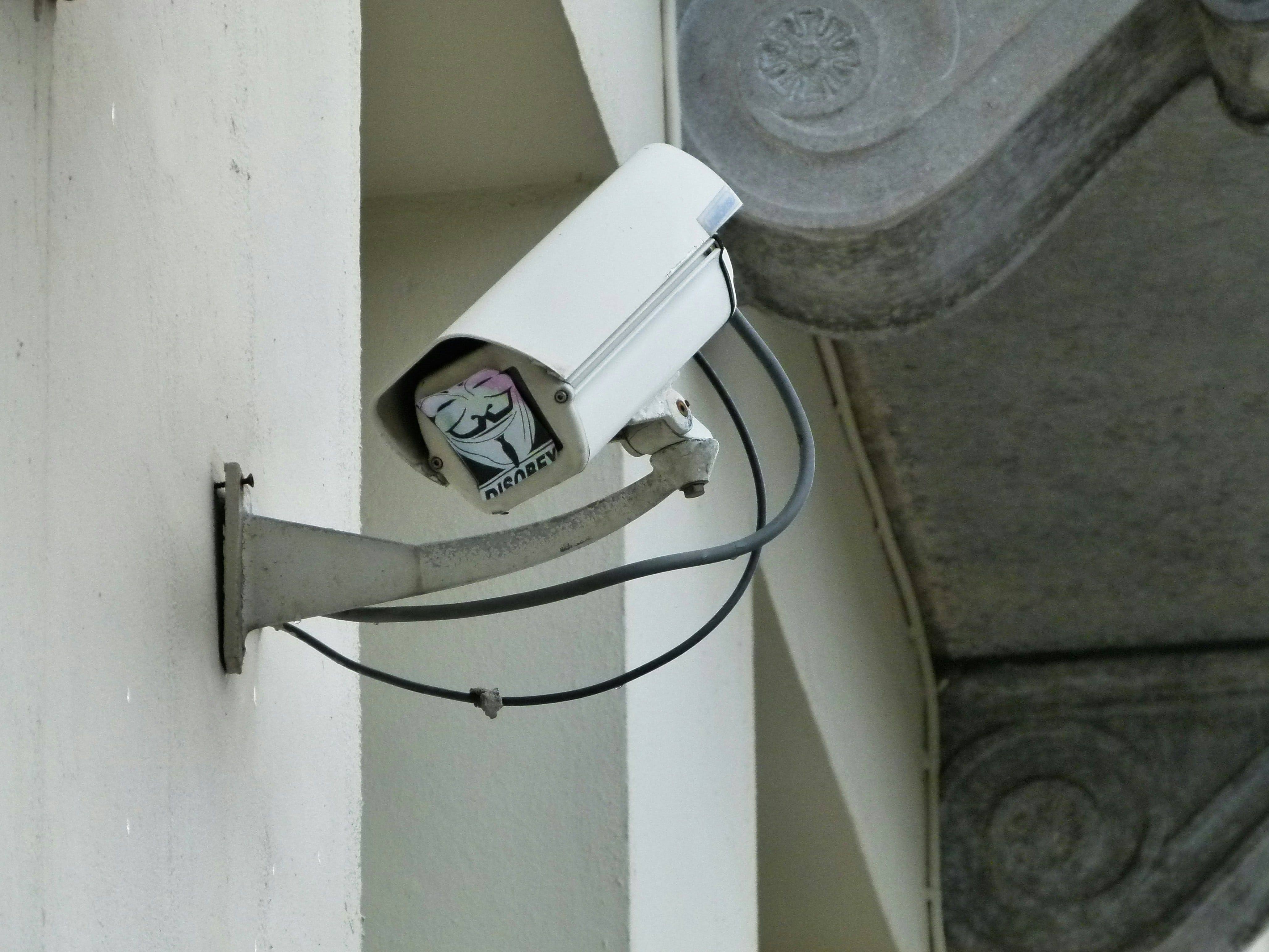
Those technologies are already here, of course, and they’ve been put into place in US, UK, and European grocery stores since at least 2023. Particularly, AI facial recognition software, supposedly implemented only to catch known shoplifters, can be used to associate individual customers with digital consumer profiles. Once identified, the algorithmic pricing system can then shift specific prices you encounter to maximize your spending behavior.
How might this look? Well, my husband and I always buy the same half-kilo bag of coffee every four days or so. Because this behavior is rather predictable, when I enter and am recognized by the system, the price can be increased before I arrive at the aisle. I might balk at the increase, but since I’m out of coffee and it’s the only one I like, I’ll buy it regardless.
On an individual basis, a minor price hike on a few items isn’t going to reap any real profit for a grocery store. But with complicated-enough algorithms, prices can be increased across every grocery store according to the most reliable customer profiles and then adjusted when certain increases no longer result in the desired sales. Do this throughout every day in every grocery store location, and the profit becomes quite substantial.
Predicting human behavior is the first step to shaping human behavior, but to do either of these things, you need to tie an individual human to a profile of information. That’s why Meta, Google, and countless other internet companies insert tracking cookies into browsers: they’re building profiles of you. That’s also why grocery stores implemented loyalty cards tied to your phone number and home address. In exchange for minor discounts and loyalty rebates, customers agreed to allow all their purchase behavior (items bought, shopping times, and even cyclical actions tied to intimate life like buying tampons, condoms, birthday cake mixes, excessive alcohol, etc) so the companies could build more accurate profiles of each person entering the stores.
Combining consumer profiles from multiple sources increases their accuracy, but there’s always been a difficulty of matching the information across profiles. Fortunately, in the name of protecting children and public safety, the UK and the EU have already begun implementing “digital ID” systems tied to smartphones that force people to link their devices to civil identification regimes. In the UK, for example, the social media bans for children will require every social media user to prove their age either by providing face image data or linking your phone to a national ID. The EU’s plan is similar and is also tied to the new central digital currency (the “digital euro”) that is intended to replace credit and debit payments (and ultimately, despite their denials, cash).
Of course, governments have their own motives in tying citizen behavior to digital profiles. Knowing what an individual is searching for on the internet can be quite useful to a state, especially if it’s something like “how to avoid paying taxes” or “how to organize against the police.” And being able to tie the phone someone owns to their whereabouts at all times is an easy task, especially when you can combine involuntary street-level AI face recognition to cell site data (the constant ping of cell phones with cellular towers).
There’s a basic rule of authority for which I can think of no real historical exception. Put simply: once a government expands its power over the people it rules, it will never voluntarily let go of that expanded power. The exact same rule applies also to the capitalist class, because they are the ones for whom our governments exist.
There are only two ways such power is ever wrested away from them. The first is through atrophy and collapse, when the very foundation of that authority becomes eroded. That’s a natural and inevitable process, but it takes a very long time for a corrupt authoritarian power to crumble under its own weight.
The second way is when the people over whom that power is claimed try to take it back. That’s usually revolt of some sort, whether through mass civil action like strikes or actual armed insurrection. This option is faster and more effective, but it’s also exactly why these new forms of control are being implemented. Controlling what the people do, how they communicate, how much they are allowed to buy, and where they are allowed to be is a great way of heading off any potential revolt.
And I think that’s why I’ve become so frustrated with any of the “leftist” political movements that still try to claim that name. Almost none of them make any real effort to push back against these new technological seizures of power, and those that do are mostly toothless. On the other side, some “far right” political tendencies do try to resist this, but this then makes it too easy for the liberal capitalist governments to dismiss any resistance to this as “fascist.”
It’s a twisted and tragic situation, because if anything in our current political world qualifies as fascist, it’s precisely this. The totalitarian seeks total control over human thought, behavior, and every other aspect of human life, and that’s the same goal here.
Yes, of course, there are individual ways to reduce your exposure and vulnerability to this control. You can put your phone in a Faraday bag (or even buy a Faraday jacket and matching AI face recognition scrambling hood from quite a few fashion designers), you can use VPNs and private servers, and you can get off the internet, stop using a smartphone, and even stop leaving the house. And maybe, just maybe, that might work, but that’s not much of a life, really, and it doesn’t help others.
The other way not only helps others, too, but it also requires them. Every digital system, no matter how complex, relies on really-existing physical infrastructure. AI face recognition cameras aren’t indestructible. Neither are the data centers that hold and process that information. And the politicians and capitalists who implement these systems have the same goal of self-preservation that the rest of us do. And in a choice between the preserving our own physical safety or continuing to implement inhuman and insane systems of control, most of them would probably opt for that first option.
It needn’t go that far.
But they needn’t, either.
Want to explore your own autonomy and agency? That’s what my Jungian Coaching work is about.
Comments
Nothing yet. Say the first thing.
Sign in to join the conversation.