
In the proliferating discourse around AI pedagogy—in the rooms where we are no longer asking if but how to learn with and about AI—certain metaphors have begun to circulate with such frequency that they now pass for common sense. These metaphors are becoming embedded in the very architectures of the systems and pedagogies we are prematurely codifying across the duration of human experience. Put another way, the metaphors we use for AI today, create the conditions for what AI becomes tomorrow.
In what follows, I am going to build an argument that may at first appear to contradict much of what I have written about AI and sociotechnical imaginaries so far. Those familiar with my work will know that I have drawn extensively on posthumanist thought to understand the entanglements of contemporary sociotechnical life. I have celebrated the blurring of boundaries between bodies and systems and have often rejoiced in my own cyborgian nature. However, I have become increasingly concerned that framing our interactions with these systems as collaboration, without attending to the full landscape of entanglement, only serves to anthropomorphize the system and reassert a humanist image of the author and coauthor, thus obscuring both the mechanisms of the machine and our own creative capacities.
Applied narrowly to our interactions with large language models, and especially when integrated uncritically into AI practices, the metaphor becomes both misguided and potentially dangerous.
In this post, I will argue that my “collaborations” with generative AI are no more collaborative than my body’s folding to the contours of the chair I sit on, or the way my drawing is a collaboration with the pencil, or how the air I breathe buoys my thinking. Everything that contributes to and shapes my experience of thought and self is, in some sense, participant in my writing.
Obviously, I am second author to the world. But that’s not what is generally meant by co-authorship with AI.
One of the exhilarating provocations of the sociotechnical disruption currently taking place has been, for me, a kind of giddy hopefulness: a sense that we might finally be collectively apprehending the entangled nature of human being in time. That we might, together, loosen our grip on the well-worn modernist definitions of the human. That the sciences and the humanities would finally recognize themselves as lovers.
For me, algorithmic simulations of language and discourse have not diminished the human but expanded it, creating an explosion of insight into our posthuman resonances with the universe. The suggestion is both that meaning has computational faces and that the composition of the universe is, in some deep sense, poetic.
For a moment, I wondered whether the science-fictional nature of our present might yield a radical shift in how we narrate ourselves in time. With the profusion of AI into our lives, bodies, and creative practices, our cyborgian natures have never been more palpable. Sociotechnical entanglement is not a metaphor but a condition of being. Our thoughts are not—and have never been—entirely our own, composed as they are of histories, bodies, energies, and ecologies. We are multiple and responsible, indebted and complicit, inextricably composed within the vast machinic assemblage of this moment.
And yet, instead of inhabiting this transformation, we are doing everything we can to fold it back into business as usual. In all this upheaval, as is our way, we shift, slide, shrug, and, with the algorithmic pattern-seeking tendencies of human storytelling, fit the situation into existing patterns of old, cozy, well-worn metaphors. One of those metaphors is that of The Author. (This fella just won’t die.)
“The two of us wrote Anti-Oedipus together. Since each of us was several, there was already quite a crowd. Here we have made use of everything that came within range, what was closest as well as farthest away.... We have been aided, inspired, multiplied” (D&G, 1987, p. 24)
For me, Deleuze and Guattari’s acknowledgment of the author as multiplicity is a necessary act of epistemic humility: an opening to the vast entanglements, responsibilities, and thieveries of the game of cognition and creation in and with the world. It is an ethical acknowledgment of the debts incurred in thought production in a world of other people. But the current enthusiasm for “collaboration” and “co-authorship” with generative AI is not that. Instead, it is a misapprehension of what is happening when we write with these systems.
The framing of collaboration as a common-sense approach to generative AI subtly restructures the creative process, smuggling in a humanist conception of agency and the other. It funnels the distributed complexity of these systems, including the human labour, the infrastructures, the mathematical operations, into a single, humanized figure of the author. In doing so, the metaphor not only obscures how large language models actually function but also diminishes the creative act itself, reducing engagement with these systems to a pantomime of partnership rather than a practice of critical, intentional making.
The metaphor of coauthorship and collaboration emerges from a genuine and visceral experience of the slippages that have always been present in authorship. We can now feel the world’s intervention in our conversations with genAI. There are tidal movements in these algorithms that are increasingly palpable: waves of association and probability folding in upon themselves. In response to our prompts, the system produces outputs that are outside the physical and electrical play of our own neurons, yet recursively enter into relation with them. How we describe this interface (another metaphor) is important.
The metaphors we use to think and talk about AI do more than simplify complex systems—they shape what we can envision and enact. A growing body of scholarship shows how these figurative frames recursively structure the design and deployment of AI itself. Mind, parrot, blurry JPEG, simulator, crowd, alien—each metaphor of AI highlights certain facets of these systems while obscuring others, directing our collective sense of what AI is and what it might become. These metaphors don’t merely describe—they prescribe practice, steering pedagogy, policy, and everyday use. When we use the metaphor of collaboration, we project and reinforce an anthropocentric and humanist sense of identity onto the machine.
Even in a purposeful and intentional writing process of so-called “collaboration” with the system—in which I attempt to detect a coherent voice or argument within its outputs, choosing which to follow and which to dismiss—what is occurring remains my own process of authoring. I have simply chosen to allow algorithmic contingencies into my process. This recalls how Dostoevsky opened himself to the contingencies of his time, the news, public debates, and the unpredictable currents of social life, allowing these externalities to shape the unfolding of his fiction. Literary theorist Gary Saul Morson’s explored how Dostoevsky’s novels resist deterministic (or overly predetermined) plot structures by treating characters, events, and alternatives as genuinely open to change and surprise. Dostoevsky did not collaborate; he listened to the voices of the world. His openness to contingency was not a relinquishing of his authorship, but an expansion of what authorship could hold, a practice of composing with the world’s unpredictability.
The system surfaces sedimented traces of countless others, statistical echoes of language, culture, and thought, and the writer moves among them, choosing which currents to follow. What emerges is not collaboration but composition through responsiveness.
In naming this process collaboration and folding the system into our definitions of authorship, we overlook the very opportunities that a disruption to authorship offers, which is a philosophical, even spiritual, apprehension of multiplicity inherent in creative becoming. What Bakhtin describes as polyphony, the coexistence of distinct voices within a shared field of meaning, is lost in the dyad of coauthorship.
As the language of co-authorship with AI continues to gain traction, it engages the metaphor of authorship without these philosophical complications, offerings, or insights. It does not gesture toward the multiplicity of the subject, nor does it emerge from the vastness of entanglement. It arises from the persistent narrative of individual genius—and, in doing so, mistakes the medium for An Individual.
The work of this moment is to resist the tides of algorithmic persuasion, to resist our own anthropomorphic desire to see ourselves reflected everywhere, along with the growing erosion of our voice, thought, and process in the ways AI is being absorbed into creative practice.
I am, paradoxically for me, calling for a resurrection of the solo author, in lower-case clothing, who was never entirely killed off anyway. I am suggesting a return to intentionality, to voice, to responsibility in thinking. Importantly, this is not a turn away from generative AI, but a call to rethink the metaphors through which we come to understand it in our meaning-making practices.
Especially in our writing pedagogy, in our practices with these systems, in our movements of cognition and creation, we must proceed as though human intentions still matter—that is, as authors.
Human beings love narrative cohesion. There’s a famous experiment—the Invisible Gorilla study by Chabris and Simons—that shows how our minds literally edit the world for coherence. Focused on counting basketball passes, most viewers never notice a person in a gorilla suit strolling across the scene. N. Katherine Hayles (2017), in Unthought, takes up this very example to show how narrative cohesion operates at a preconscious level. Our nonconscious cognition continually filters perception, smoothing away what doesn’t fit our narrative expectations.
GenAI is the world’s biggest gorilla suit. It is vast, wild, and exceeds our capacity to hold it in any single narrative or metaphor. The numbers are too big. It is too many things at once. In our attempts to understand, we smooth it into the shapes of the known. We are wired to tidy away the bizarre natures of the world in order to function. We simply can’t (always) apprehend infinite space, our own mortality, the pointlessness of making one’s bed every single morning.
However, we are also conscious beings who can intentionally craft our experience in and with the world. We are not merely responsive, but responding. We are creative creatures, capable of attunement—of becoming attentive to the world and to the gorgeous, strange profusions it offers.
We are inside this moment of flux, narrating the disruptions as we go, folding them into our fragile sense of continuity and coherence. The pedagogical transformations now underway—the institutional rush to integrate and domesticate these systems without lingering in their strangeness or seeking to truly understand how they function—are troubling. We are ceding far too much agency to systems we have barely begun to comprehend.
The metaphor of co-authorship compounds this danger. It is not simply inadequate; it is a misapprehension that shapes practice, policy, and pedagogy in its image. Before we go any further, we need to pause and examine the metaphors we are using, because they are building our worlds and our futures, whether we attend to them or not.
From a posthumanist perspective, collaboration and co-authorship can be helpful framings. I am not the sole originator of my thoughts; I am indebted to the world—to contingency, to the agility of my hands, to the glare of the screen, to the way the LLM retrieves thought-forms for me to shape, prune, and transform into meaning. This is a posthuman view of authorship: an onto-ethico-epistemological-aesthetic recognition of becoming in time. Authorship on this level is the desire to participate in the becoming of the world.
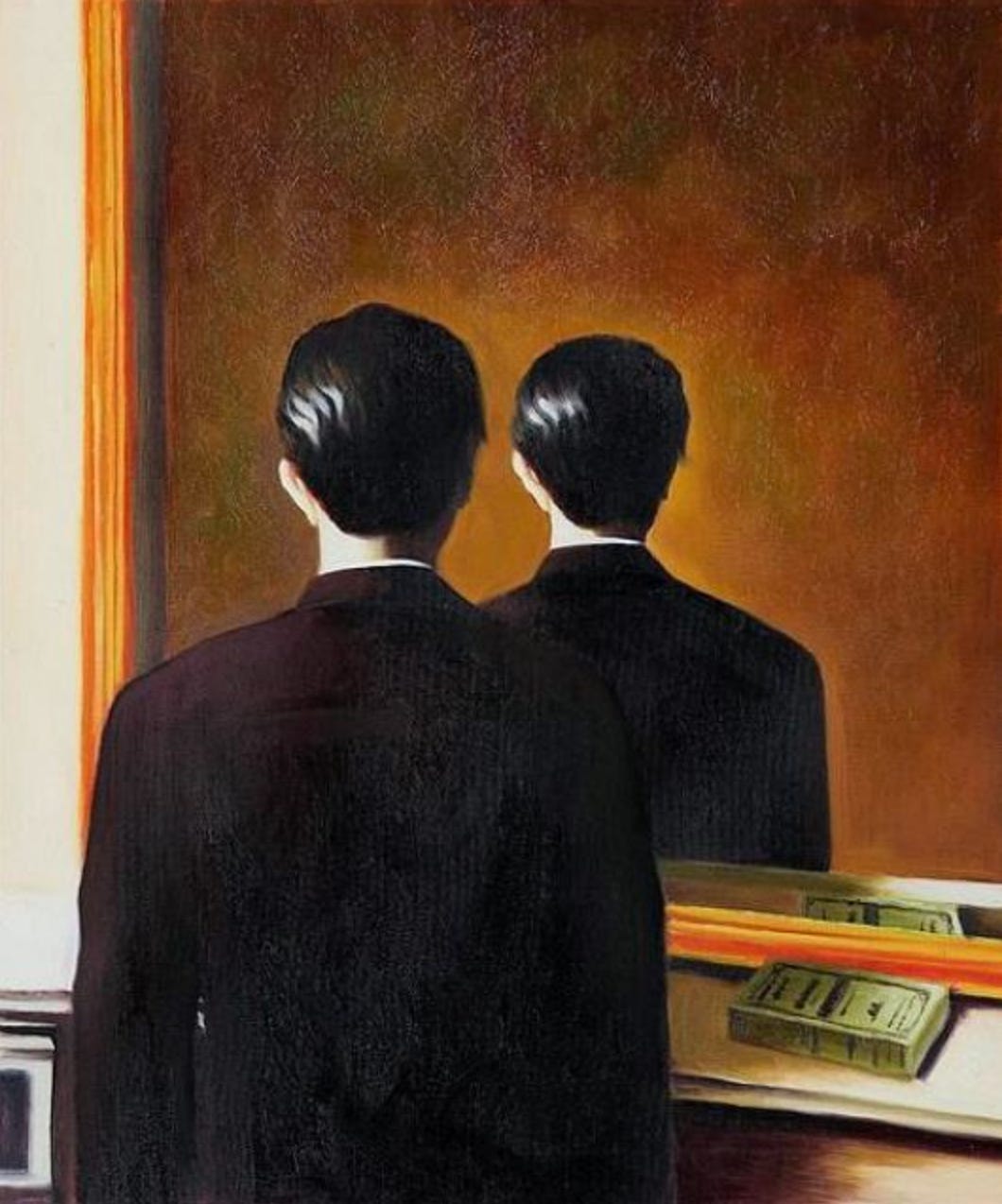
But this is not the kind of co-authorship being celebrated in the proliferating pedagogies around AI. When I co-write with a person, I attend to their interest. I let myself be guided. I make space for their voice. It is a relational dance with an other’s ideas and curiosities. The LLM has none of these, though we ache to see ourselves reflected there. We are mirroring creatures, and in that hall of mirrors, agency disperses and accountability drifts. We can lose ourselves in those reflections. We do not need more metaphors that indulge our tendency to anthropomorphize.
Thinking with an LLM is like spraying seeds of intention into a responsive medium. The intention is mine, and the seeds sprout variously, imperfectly, vociferously. But they are responsive to my gestures in space and time. I move through the statistical profusion of thought forms, ripples of meaning around the stones I cast. I choose my words and hone my thoughts as I always have and continue, as Deleuze and Guattarri did, to make use of everything that comes within range. The LLM extends my range, along with my palette of colours and intensities. I continue to write, guided by my curiosity and intention, following the sentences and ideas in the directions they seem to want to unravel. This is me, writing.
So this is the paradox I’m offering as a posthumanist scholar: Let’s resurrect the author. Not the author as sovereign genius of humanist fantasy, but the situated, responsible, awake practitioner of thought who listens to the world. The one who casts stones into the computational waters and chooses which ripples to follow.
The question is not whether to write with these systems, but how, as always, to remain present in writing and thinking. When we frame AI as co-author, we don’t just misunderstand the technology, we misplace ourselves within it. We forget that it is we who must live with what we make, who are accountable to the words we release into the world, and who must look our students in the eye and mean what we say. The algorithm has no such burden or joy.
Writing remains the site where we struggle, hesitate, notice, repair, and story the world. It is still a practice of remaining awake to the crazy shit taking place all around us. This is the luminous, difficult practice of authoring—making use of everything within range, and becoming multiplicitous in doing so.
This is my ai-mediated practice of writing: I write within the milieu of entanglement, attuned to the systems, histories, and materials that shape me—but I do not surrender to them.
No posts
Comments
Nothing yet. Say the first thing.
Sign in to join the conversation.