
In 2016, I was living a big story as a wife to a Mission Aviation Fellowship (MAF) pilot in Borneo, Indonesia.
But I’d lost faith in humanity’s ability to tell a true story.
Trained a journalist, I’d converted from newspaper reporter to missionary in my rose-colored 20s, excited to spread not just the news but the Good News. At MAF’s invitation, I soon also began telling MAF’s good news as a regular blogger for its website and on social media, writer of our own newsletters to donors, and speaker in churches when it came time to fundraise.
But more than a decade later, the good things I was seeing had become clouded with the messy, complicated reality of ministry, trauma, and power dynamics. I was wrestling with whether historically, outsider missionaries had truly helped or perhaps in some cases, hurt others (locals, missionary kids, fellow staff). And were we, as modern missionaries, building on something good? Or had we, at times, been complicit in hidden harm? The questions shook not only the foundation of my mission work but also my Christian faith.
Soon I lost my words and myself. So, one day, I stopped writing.
My husband, always supportive of my own writing gifts, gave me an invitation and an idea.
“Tell the Palangkaraya story,” Brad said.
I was used to telling the MAF story. But focusing on our small Indonesian city of Palangkaraya with its ancient tribes and winding rivers intrigued me.
So, rather than relying on missionaries’ tales for my research, I started meeting MAF’s Indonesian passengers at the hangar and interviewing them about their ministry and lives. A female pastor told me that in her tribe, women are usually the spiritual leaders. So, she would bring her small child with her to care for her flock in remote villages while her husband stayed behind to tend to their farm. I saw how the airplane kept their family—with their gender roles flipped from western clergy tradition—connected.
When two faithful MAF airplanes were getting ready to retire, I pitched a story about their 50-year history of Indonesian flying to an aviation trade magazine. But I sought out Indonesians—not only American pilots—to interview. I learned how Indonesians were glad when they got to actively partner with—and not be mere recipients of—MAF’s work in transforming their own communities.
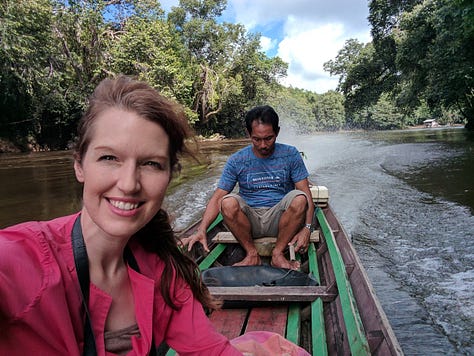
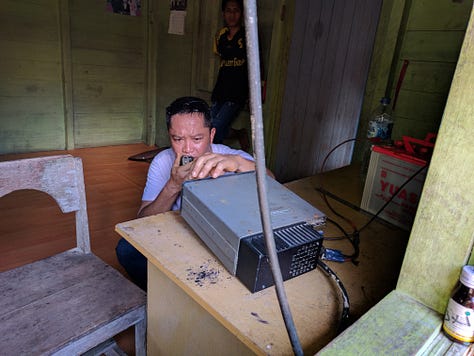
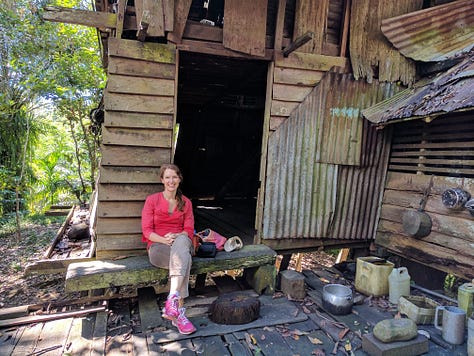

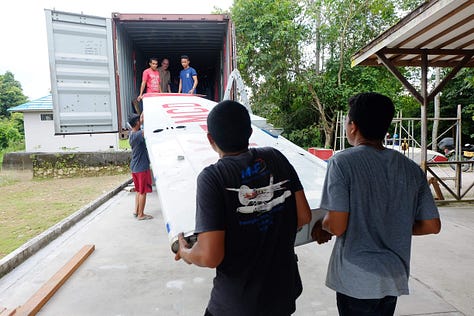




It soon came time for recipe submissions for an MAF cookbook, traditionally written by western missionary wives. I invited the best cook on our team—my Indonesian friend, Ibu Yunike—to share her recipes and her story. In the process, she gave me her own kind invitation. She welcomed me to her home to learn from her how to patiently use the crush of a pestle and mortar to blend spices, making rich food thanks to a rich culture.
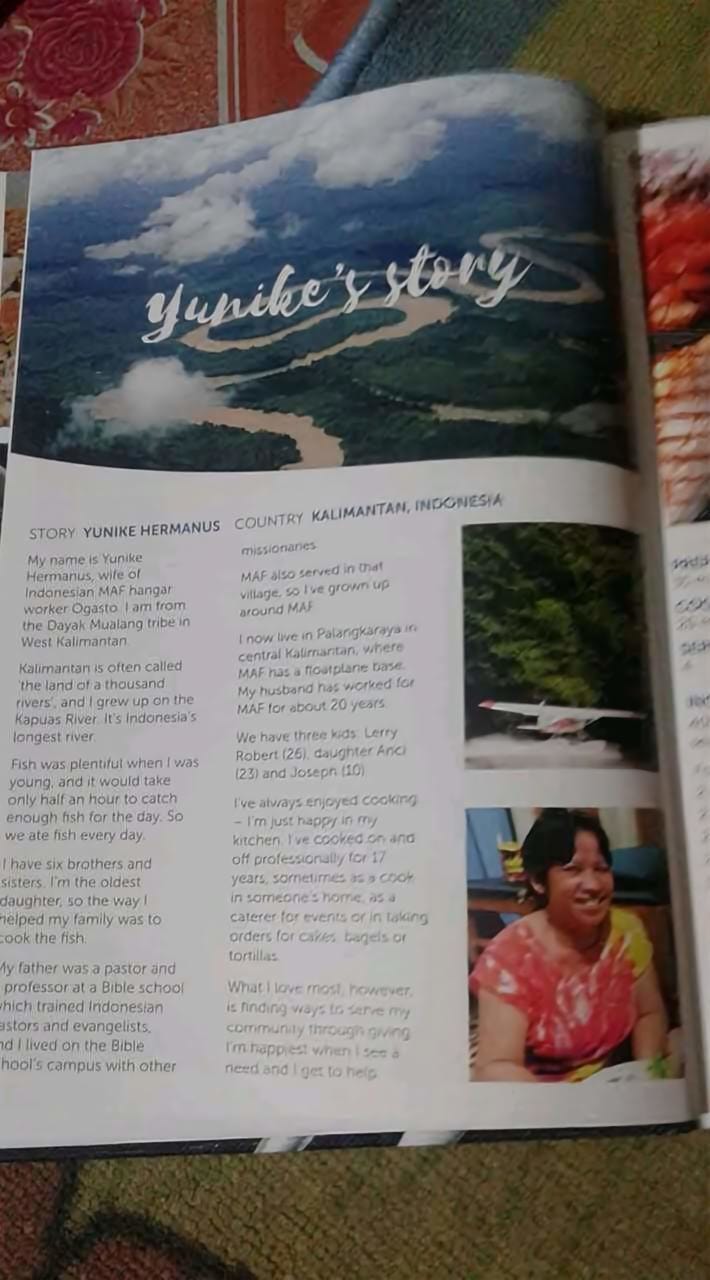
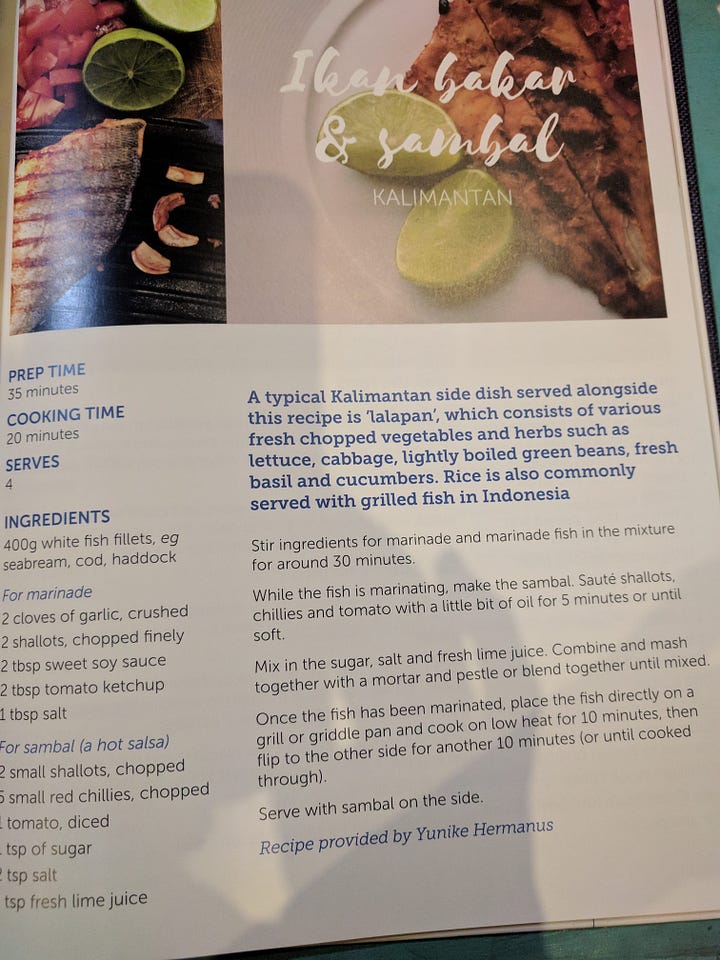
Soon these stories changed my perspective on missions. We need less hoarding of power and more pursuing of partnerships. And on a deeply personal level, the hope and faith in these voices helped me heal my faith and find my own voice.
Not long after, my husband and I saw or experienced some aviation-related safety concerns and possible leadership abuses. To tell the whole Palangkaraya story, we used our voices to report the concerns to MAF, believing we’d be believed.
Maybe you’ve done something similar. You also believed you needed to tell those stories to your leaders to protect the mission, the people they serve, and the staff who give so much. Surely, we can tell the problematic stories—not just the positive stories—and be heard.
But when our leaders, in response, told us to quietly leave, I was left with a story I was too scared and ashamed to voice again.
So, I locked the whole big, messy story away and tried to move on.
I moved to the United States and returned to journalism. Journalism’s commitment to telling the truth and the opportunity it gave me to help other survivors tell their stories eventually gave me the courage to reopen that chapter of my life. I put honest words to the real losses in past substack newsletters in three parts, here, here, and here. I also shared about how MAF hasn’t responded to our many requests for a truly external investigation, apologies, and change.
The feedback from readers like you for what I shared publicly has been largely supportive and redemptive. I especially love hearing others courageously name the painful things that have happened to them.
But I’ve gotten pushback, too. Recently, MAF quietly removed all the articles I’d written for them without telling me, though they’ve left up other bloggers’ stories.
Then when my family went back to Indonesia this summer to visit, I posted a video about my ongoing concerns about MAF.
A wife of an MAF leader posted on my Facebook page with a counterpoint to what I said. She told about a terrible loss from her own life but wrote that MAF had responded in really meaningful and caring ways. She said she believes while MAF isn’t perfect, it cares well for families.
“MAF leadership has grown a lot over the years and truly seeks to work through situations in a manner that honors the Lord,” she wrote.
Another wife of an MAF leader added her agreement on Facebook.
The crux of these women’s messages seems to be this. What about the good stories? Don’t they balance out the honest mistakes?
When I hear of someone’s good firsthand missionary experience, I rejoice. Staff should receive care during tragedy. So, when they do, I’m so glad. Organizations have a responsibility to do the right thing, so when they do, I’m happy. When learning from mistakes and growth happens, I’m so relieved. It’s great to see that even when the challenges are great and the resources are few, leaders can and do make some impactful, courageous choices to love and lead well.
When I hear people telling their own personal good stories that happened while they worked with MAF, I can also relate. I have some of my own that I’ve shared on MAF’s (now-deleted) blog and with donor churches. I stayed in MAF for 14 years mostly because of the good I believed we got to do together.
Maybe you can relate. You initially joined the church or ministry because of the good the leaders were doing. And when you later saw or experienced abuse, you spoke up because you feared the harm would spoil the good.
But then your colleagues or leaders didn’t seem to believe you, offering their own positive experience with the offender or ministry as evidence. Everyone makes mistakes, after all. Doesn’t the good and bad all balance out in the end?
Abusers take advantage of this thinking. In fact, sometimes they intentionally do good to obscure their wrongdoing and isolate victims from potential witnesses, allies, and advocates, experts say.
I had the honor of interviewing Pete Singer, who was the executive director of the Godly Response to Abuse in the Christian Environment (GRACE), before he passed away from cancer this year. He told me that abusers often groom their victims AND the community with special treatment. They need trust from both their victims and those around them to abuse people.
“So often, they put significant amounts of time into presenting themselves as exactly the kind of person that would make you say, ‘Well, they would never do that,’” Singer told me.
Abuse and harm need exposure and justice. And offenders must acknowledge the harm done for relationships to be made truly right again, said Anglican Bishop Desmond Tutu, a Nobel Peace Prize winner who led a nonviolent campaign against apartheid in South Africa.
“Forgiving and being reconciled to our enemies or our loved ones are not about pretending that things are other than they are,” Tutu stated in 2004. “It is not about patting one another on the back and turning a blind eye to the wrong. True reconciliation exposes the awfulness, the abuse, the hurt, the truth. . . . Superficial reconciliation can bring only superficial healing.”
Similarly, a Bible verse from Jeremiah 6:14 puts it this way:
“They treated my people’s wound superficially, telling them, ‘Peace, peace,’ but there is no peace.’” (ISV)
In his dissertation, researcher Wade Mullen argues that when Christian organizations are trying to recover from a scandal, many try to manage their image rather than facing and dealing with its problems transparently and justly. So, leaders roll out positive stories to the public and with their staff, engaging in “organizational promotion,” Mullen wrote. Leaders may highlight the organization’s “prosocial” behavior, promoting the good the organization doing in the world, Mullen wrote.
This self-promotion distracts people and rebuilds the organization’s reputation without actually addressing the wrongdoing or requiring accountability, Mullen wrote.
“The organization can then dilute the negative event by drowning it in a sea of good,” Mullen said. “The result is stakeholders view the event as a phenomenon that should not be fairly linked to the organization.”
Similarly, organizations make some concessions, apologetic-type statements (that aren’t real apologies), and say they’ve changed. But saying change has happened and actually doing it are two different things, Mullen argued.
Real changes that make a long-term difference take a lot of work. And it requires a focus on serving victims, rather than the institution’s reputation, Mullen said.
“An organization might choose to respond by focusing on those who have been harmed, listening to them, offering apologies, and making restitution,” Mullen wrote. “In doing so, the organization might invite penalties, some of which could include damage to reputations and the extinction of the organization.”
Simply put, “(I)n choosing to focus on the victims, the organization might need to forget about itself,” Mullen wrote.
As an MAF wife dealing with shrew infestations in my house and long power outages, many days, it felt like I wasn’t doing anything meaningful. But I also fought to find my place in a world I didn’t belong, give myself to a work far from everything I’d ever known, and integrate both the good and the bad I was seeing into one true story. In a word, I yearned for unity.
But when our leader called my husband and I “divisive,” the criticism stuck in my head for years.
In my journalism work, I’ve heard leaders call other whistleblowers divisive, vengeful, unchristian, Jezebels, disloyal, pot-stirrers, betrayers, and, believe it or not, tools of Satan.
For decades, the field of whistleblower research has sought an answer to this question: Who are whistleblowers? Are they prone to disloyalty, complaining, and troublemaking? Employers may wonder, is there a whistleblower personality that they can weed out so they don’t have to deal with all their negativity?
Research results about whether there is a specific whistleblower personality have been mixed. For example, researchers Janet Near and Marcia Miceli discovered that employees with positive affectivity—optimists—are likely to blow the whistle, believing it will make a difference. But also, employees with negative affectivity, who are more skeptical, are likely to notice, name, and report wrongdoing. The conclusion? Various personalities become whistleblowers. The personality of the whistleblower isn’t really the point.1
Research shows that whistleblowing has the potential to bring about much good (better safety standards, offenders put in jail, etc.) but often at the expense of whistleblowers’ careers and mental health.2 Character—rather than personality—is a main motivation, research shows.
People who speak up do so for ethical reasons. Those who report wrongdoing are “reformers” who see themselves as “loyal” employees who just want to make things better, this 1974 paper found.3 A 1986 essay termed it “principled dissent.”4 A book from 1989 said whistleblowers are “ethical resisters.”5
Reporting something can take many steps and whistleblowers often have to push through companies’ manipulative impression-management strategies. Only those with strength can keep going, research indicates. A 2010 study used one simple term to describe whistleblowers: proactive.6
So, you ask, “What about the good stories?”
In a word, whistleblowers are doing good by telling the truth about the wrongdoing to protect the vulnerable, do justice, care for others, and love the organization itself. You could even say that good stories aren’t fully true without the entire story being heard. Whistleblowers overcome shame, criticism, abusers’ false narratives, job loss, and organization’s self-promotional impression management, to tell the whole story.
This story is an important, beautiful, righteous, brave, good whistleblower story.
Now that’s a story I’m ready to tell. Join me?
Janet Near et. al. “Individual Differences and Whistle-blowing,” Academy of Management Annual Meeting Proceedings, 2001.
Whistleblowers show comparable mental health problems as people who recently went through a major disaster, according to Peter G. van der Velden, Mauro Pecoraro, Mijke S. Houwerzijl, and Erik van der Meulen in “Mental Health Problems Among Whistleblowers: A Comparative Study,” Psychological Reports, 2019.
Rory O’Day, “Intimidation Rituals: Reactions to Reform,” The Journal of Applied Behavioral Science, 1974.
J. W. Graham, “Principled Organizational Dissent: A Theoretical Essay,” Research in Organizational Behavior, 1986.
Myron Glazer, Penina Glazer, The Whistleblowers: Exposing Corruption in Government and Industry, 1989, chapter 1.
Brita Bjorkelo, “Predicting Proactive Behavior at Work: Exploring the Role of Personality as an Antecedent of Whistleblowing Behavior,” The Journal of Occupational and Organizational Psychology, 2010.
No posts
Comments
Nothing yet. Say the first thing.
Sign in to join the conversation.