
(Please read Part 1 about how a teen from the El Gamal family inspired our community to fight for her family’s release.)
We were heading into a cold Martin Luther King Jr. holiday weekend in January. But a group of parents and school faculty and staff were concerned about the months-long detention of the El Gamal family.
So, we made a plan. We just hoped it would be enough to help the five kids, ages 5 to 18, and their mom get back home to Colorado Springs.
We decided to hold a press conference to call for their release from Dilley, a controversial immigration detention center in Texas.
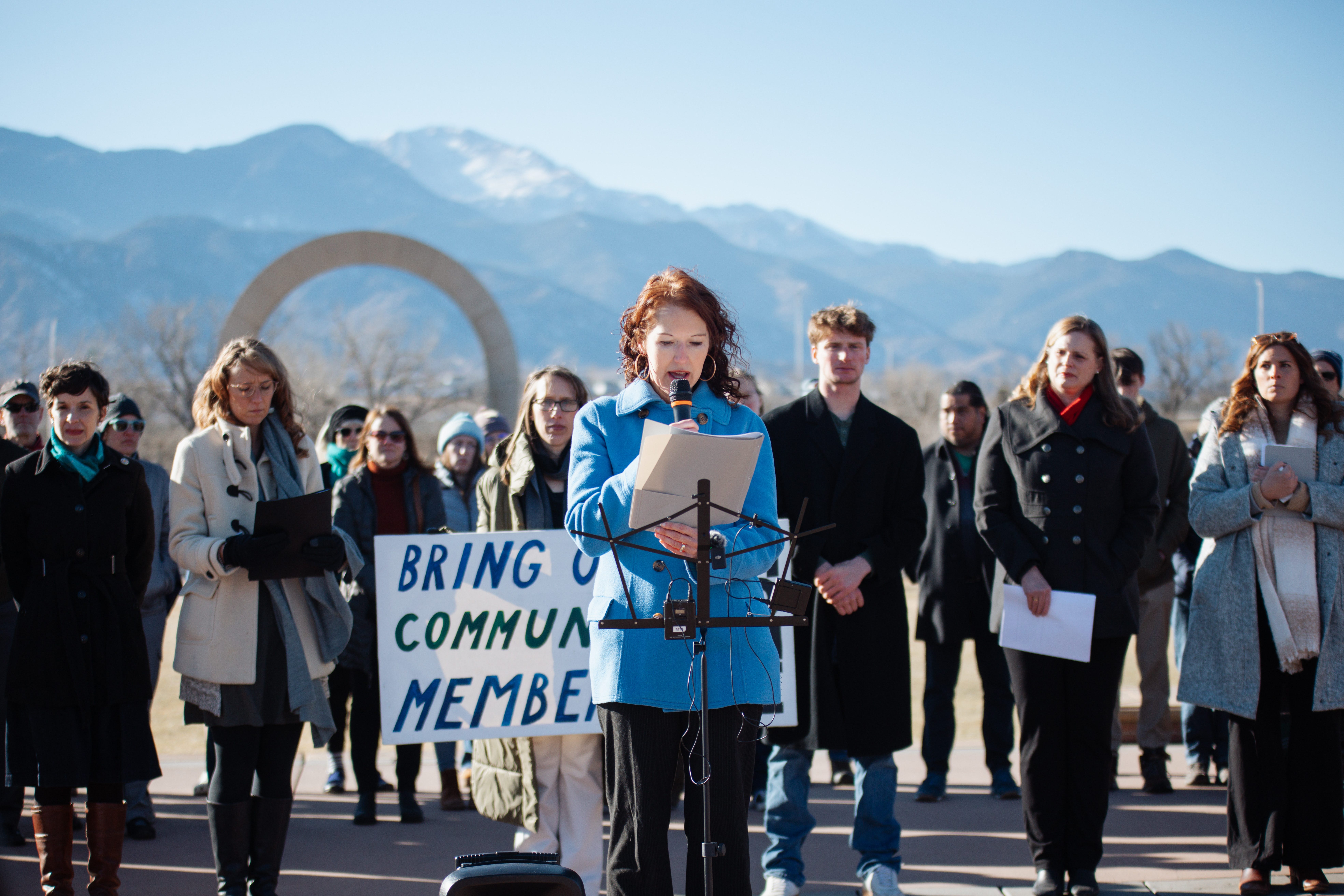
We showed up on Monday, Jan. 19 at 2 p.m. at Colorado Springs’ America the Beautiful park. Many drew signs with the words, “Bring Our Community Members Home.” Others prepared personal statements about what the family meant to them. Someone found a microphone and speaker. A professional photographer in our group offered to take photos. I wrote a press release and sent it to local journalists.
At first, some making statements said they wanted to use only their first names to identify themselves. Some in our group work for the government, the military, Christian nonprofits, mission organizations and local schools. Though we represent various religions and backgrounds, many of us mirror the conservative makeup of this town often called “evangelical Vatican” with its 500 Christian ministries, five military installations, and 56-year-long streak of voting for Republican presidential candidates.
In these politically divisive times, most of us had something to lose in advocating for an immigrant family whose father, Mohamed Soliman, was a terrorist. But then one woman decided to use her full name. The others quickly followed. Habiba wouldn’t be alone in speaking up.
Besides, for us, this wasn’t political. This was personal.
The day dawned cold in an otherwise warm and dry Colorado winter. Someone passed around hand warmers. We stood in a horizontal line. A crowd of people we knew from school, churches and neighborhood gathered behind us. Pikes Peak stretched wide, tall and strong in the background. One by one, we stepped up to the microphone, our papers shaking from the wind and nerves.
“I have known Hayam as a kind and open-hearted woman and mother, devoted to her children, honest about hardship and sincere in her desire to belong and to build community here; that spirit was visible to her neighbors,” said fellow school mom Jen Blazis.
Owen Watts was a classmate and fellow soccer player with the 16-year-old son.
“He was kind and even on the hard days made an effort to bring joy to the practices,” Watts said.
Lilah Pettey, a friend of 18-year-old Habiba, participated in the Big Brother Big Sister program with her. One day, the seniors in the program skipped meeting with their little “brothers” and “sisters” to work on their difficult physics homework.
“But not Habiba,” said Pettey. “Though she was struggling with the same physics problems as the rest of us, she was pretty much the only one who met with her little sister because she didn’t want to let the younger student down.”
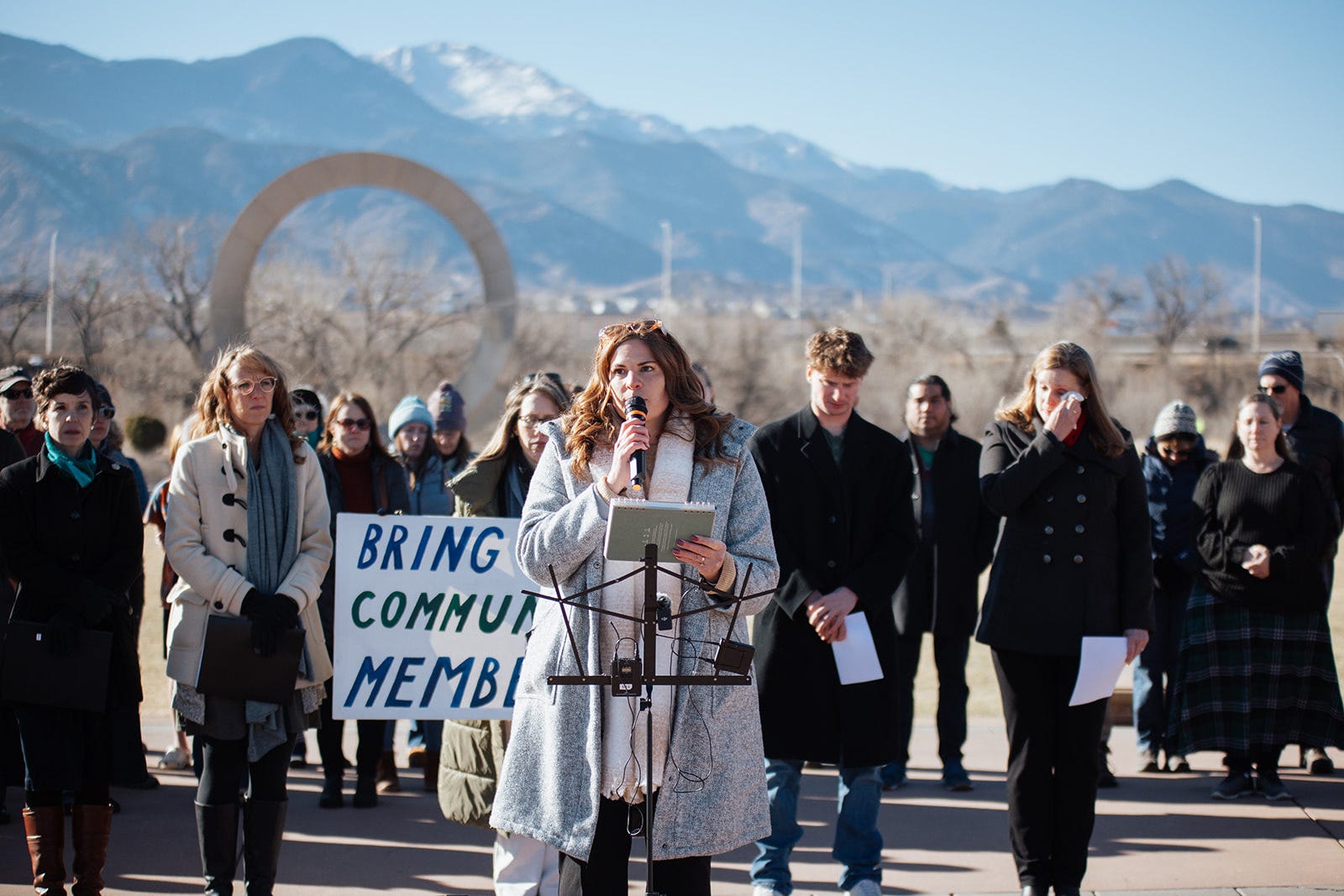
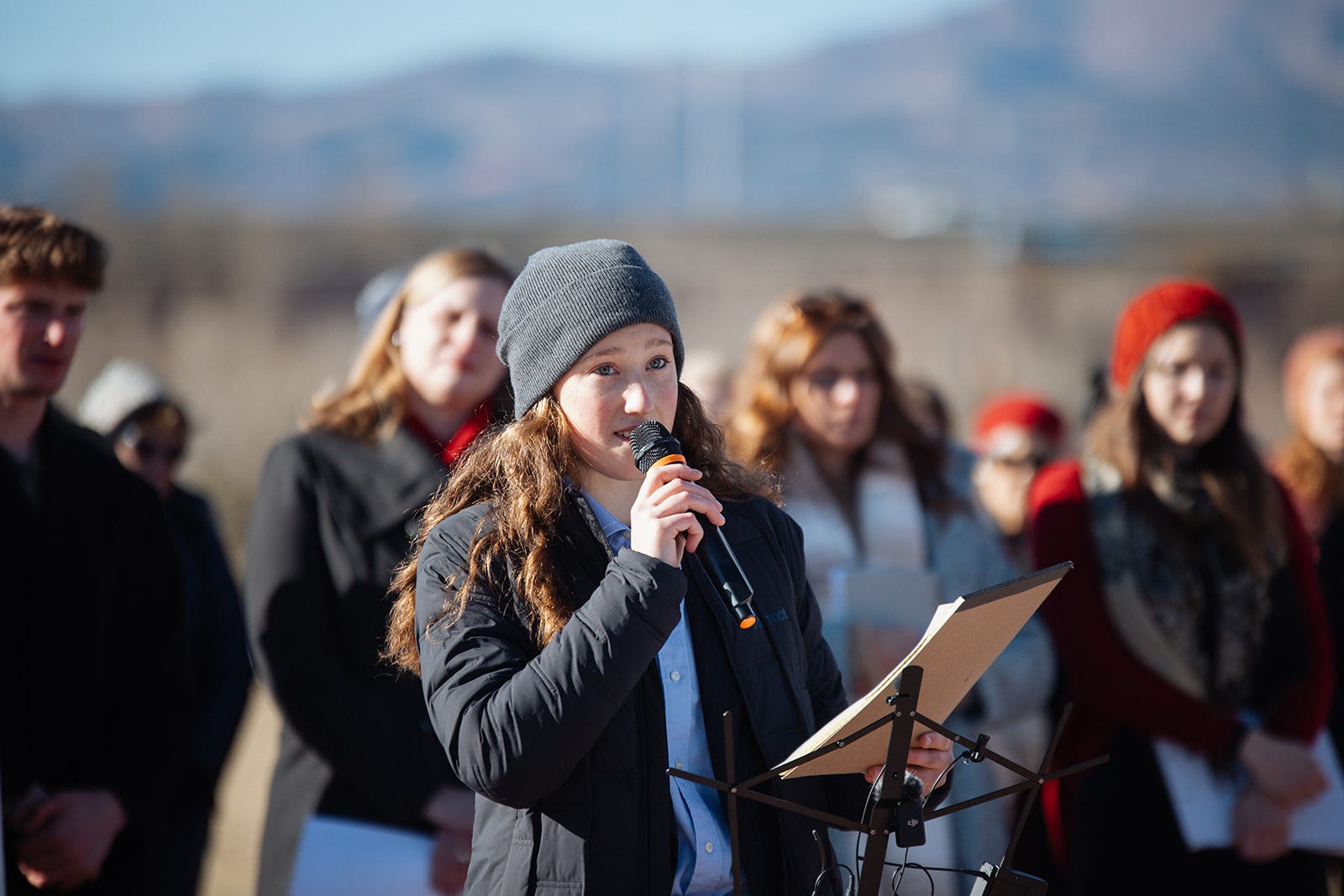
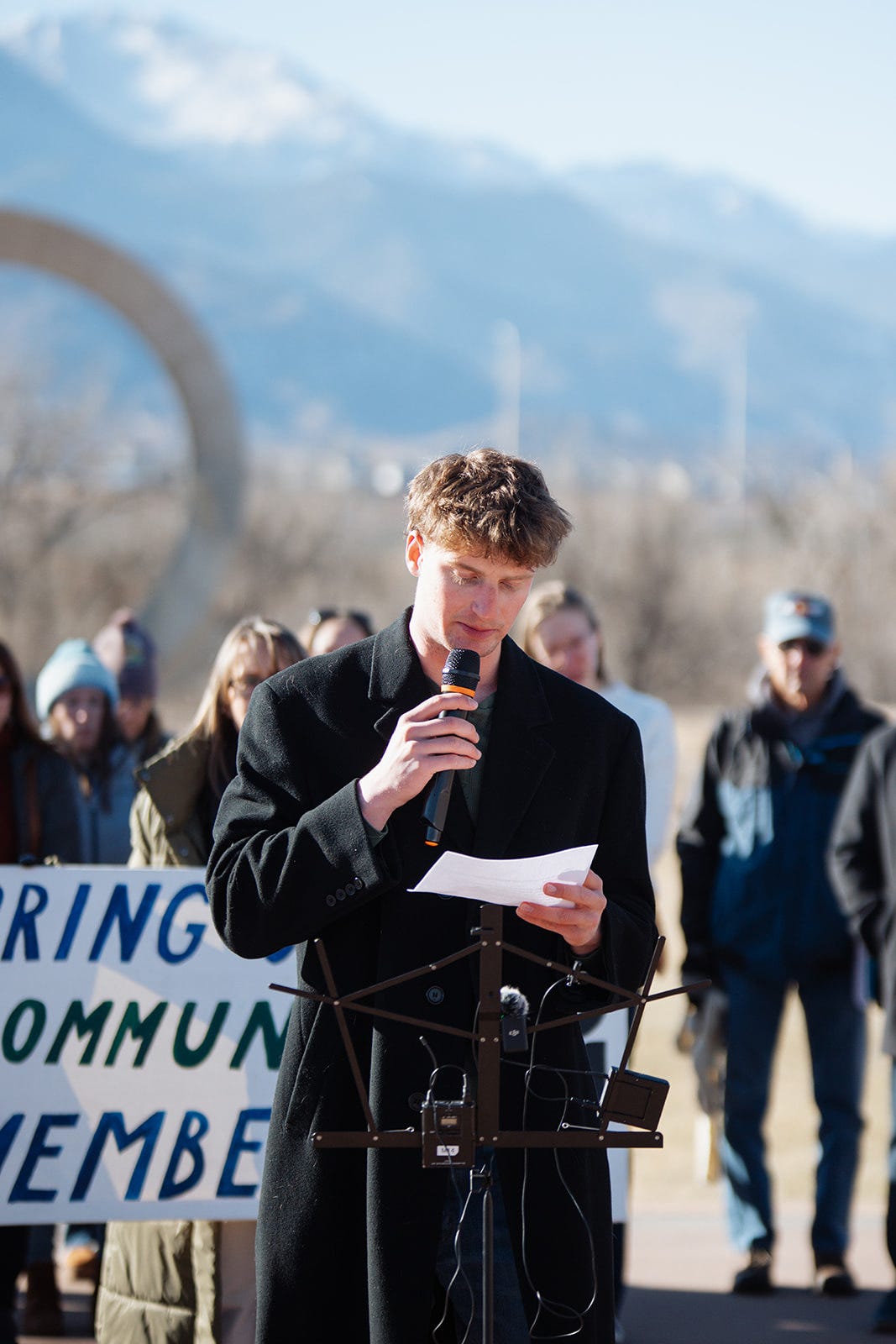
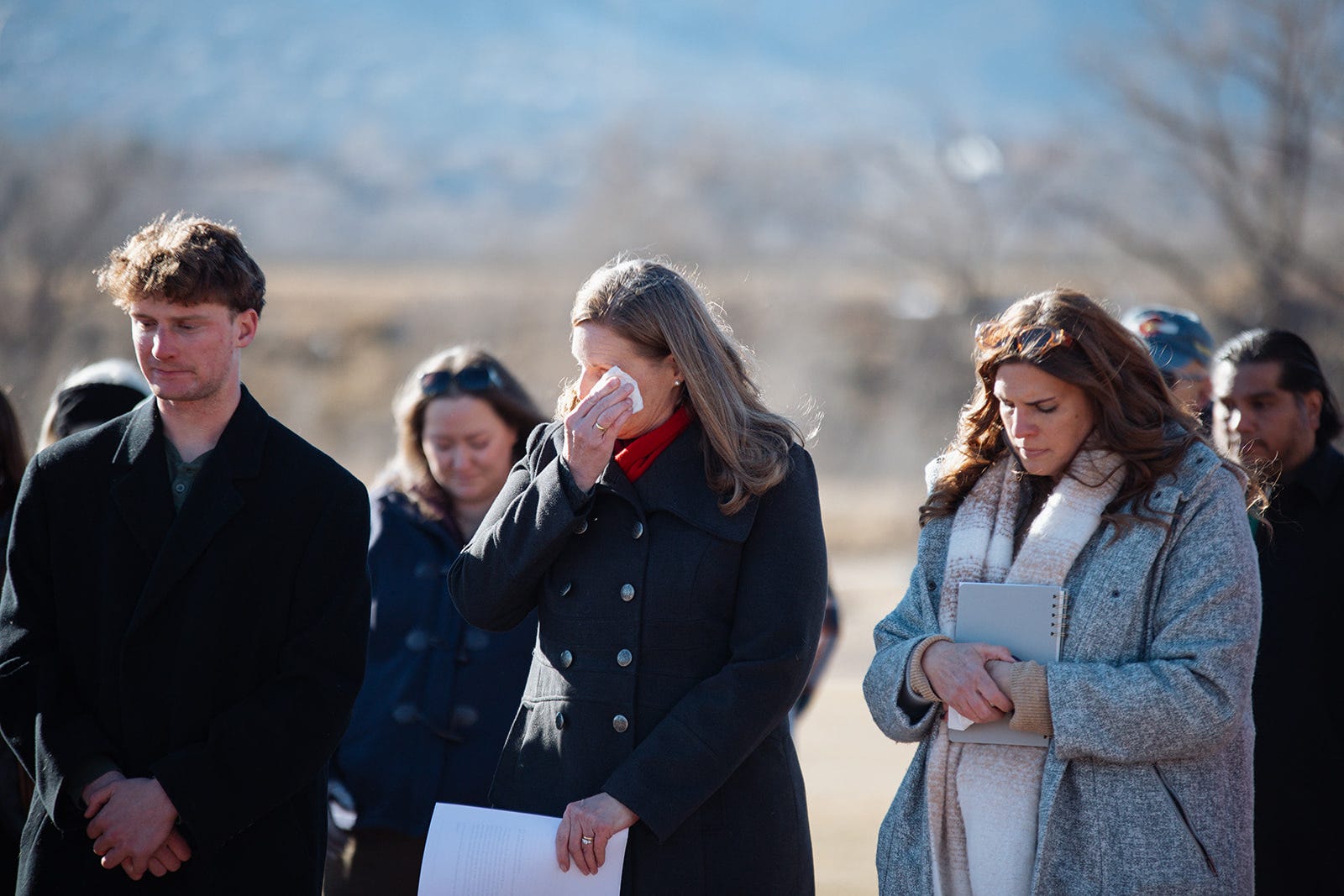
Soon we were all crying.
My turn was next. I was honored to be the one to read a portion of Habiba’s statement in which she described the terrible conditions at Dilley. Partway through my reading, a train rumbled through the park, just feet from us. I stopped talking. I was determined that Habiba’s words would be heard. Train car after relentless train car passed. But no one complained. No one left. We waited, staring down the disturbance.
I ended with Habiba’s final words.
“I don’t know when or how our detention will end,” she wrote. “I don’t know if it’s a happy or a sad ending … But I know one thing: the truth never dies. We just need more people who are willing to spend the time and effort to find it. I just hope when the truth comes out, that it will not be too late and that the damage is fixable.”
And then she wrote, “We pray for someone to look at us not as the family of a man who is accused of terrorism, but as humans who deserve to live freely.”
But two days later, the El Gamals’ attorney Eric Lee texted our group some devastating news. The same immigration judge who had, in September, granted their release on bond saying they weren’t a flight risk now denied it. No new evidence had been admitted. The judge said even the 5-year-old twins were flight risks.
“No words except. Make it make sense,” one of the moms texted to the group. “I’m heartbroken.”
We doubled our efforts. Now public with our advocacy, others who knew the family or were personally connected to our schools and churches eagerly joined us. A mom in our group started a GoFundMe for the family that raised more than $100,000 for the El Gamals and a petition with 1,200 signatures and growing.
We cheered on the tireless attorneys, who kept us updated. We scoured court records and judges’ statements, learning about immigration law and habeas corpus rights. Through it all, we kept our core message. We wanted the El Gamals home with us.
In late January, Eric Lee told us that ICE had separated Habiba from the rest of her family in a separate unit of Dilley. He told us he believed it was “retribution” for speaking out.
“We believe it was in response to (Habiba’s) letter that ICE separated the 18-year-old from her mom and siblings on Sat,” Lee wrote on X.
Lee later described in a legal petition filed in Colorado that ICE officers threatened to move Habiba to another detention center hundreds of miles away if her mother questioned them.
A couple weeks later, Lee reported further retaliation.
“I can confirm that ICE/Core Civic fed my client Habiba Soliman a DIRTY NAIL in her breakfast this morning at Dilley,” Lee wrote on X.
Habiba hasn’t been the only teenager to speak out about poor conditions for children in detention. In 1985, four immigrant children ages 13 to 16 sued the U.S. Attorney General and U.S. Immigration and Naturalization Service (INS) in Flores v. Reno (originally Flores. Meese). INS is the predecessor to the Department of Homeland Security. The teens alleged mistreatment while in federal immigration custody.
For instance, children were required to share sleeping quarters with adults they didn’t know. And children were subjected to strip and body cavity searches, the suit states.
At that time, INS also had a policy to indefinitely detain children, without their parents present, until these undocumented parents show up for an interrogation or their own deportation proceedings, the suit described. No matter if other responsible adults or family members were available to take custody of the children, the lawsuit stated. Locked-up children were essentially being used as leverage to apprehend their parents, the suit argued.
Flores v. Reno took 12 years to settle. But when it did, the 1997 Flores Settlement Agreement (FSA) established landmark standards for the humane treatment of immigrant children in custody. For instance, the government must process minors’ cases quickly to avoid long detentions. (In following years, judges added a 20-day detention limit for children.) The FSA stated families should be kept together. Also, conditions must be safe, sanitary and as least restrictive as possible.
But last year, a week before Habiba’s family was detained, the Trump administration tried to end the FSA and its protections of children, saying the FSA interfered with its immigration crackdown.
This was Trump’s second attempt to do so. The first was in 2019. Last Aug. 16, when Habiba and her siblings had been detained 74 days—almost four times the limit—a federal judge denied Trump’s request to end FSA.
As part of Trump’s litigation to end the FSA, opposing attorneys entered testimony about poor conditions at Dilley. These included smelly, cloudy drinking water, delayed medical attention, and excessive detention times for children.
A 2023, Futuro Media investigated sexual violence in immigration detention centers. More than half of sexual abuse allegations from 2015 to 2021 were made about staff, Futuro found. And only 40% of the 308 abuse complaints Futuro obtained prompted any action.
Even more grim, from 2010 to 2016, only 1% of the 33,000 reports of physical and sexual violence that the Office of the Inspector General received about DHS were investigated.
In October 2025, several advocacy groups reported medical neglect, miscarriages, inadequate food and water, and unnecessary infections of pregnant women in immigration detention. This is despite ICE directive from 2021 that prohibits the detention of most pregnant, post-partum and nursing women.
And U.S. Senator Jon Ossoff, a Democrat from Georgia, found 1,000 credible reports of human rights violations in detention facilities from January 2025 to January 2026. These included mothers being separated from their nursing infants sometimes for months, sexual abuse, medical neglect, denial of access to their immigration attorneys and unsanitary conditions.
In late February, ICE called accusations of Dilley’s poor conditions “media lies.”
“This facility is purpose-built to ensure that families in detention are comfortable and have all of their needs cared for — all at the taxpayer’s expense,” an ICE press release states.
But “Fair is foul and foul is fair,” the three witches chanted in “Macbeth,” Habiba’s senior play. Good can seem bad and evil look like good.
The federal government is contracted to spend up to $180 million a year to detain up to 2,400 people at Dilley. Recent daily detention costs per person at Dilley are hard to find and seem to vary depending on how full it is. In 2015, congressmen who visited Dilley estimated daily per-person costs at about $343. So, if costs didn’t change in 10 years, the U.S. government was spending more than $2,000 per day detaining the El Gamals.
At spring break, some in our group decided to use their resources and time off to take trips from Colorado Springs to Dilley in south Texas, driving the 14 hours through desert and plains to attempt to meet with the family. They texted our group heartbreaking reports from the family.
Others scheduled similar trips through April. A few women from our group started the organization, Neighbors of Faith and Conviction, initiating protests and visits to local politicians’ offices. Some women confessed they were struggling with nightmares. I watched, in admiration, at the relentless efforts of our group composed of mostly women.
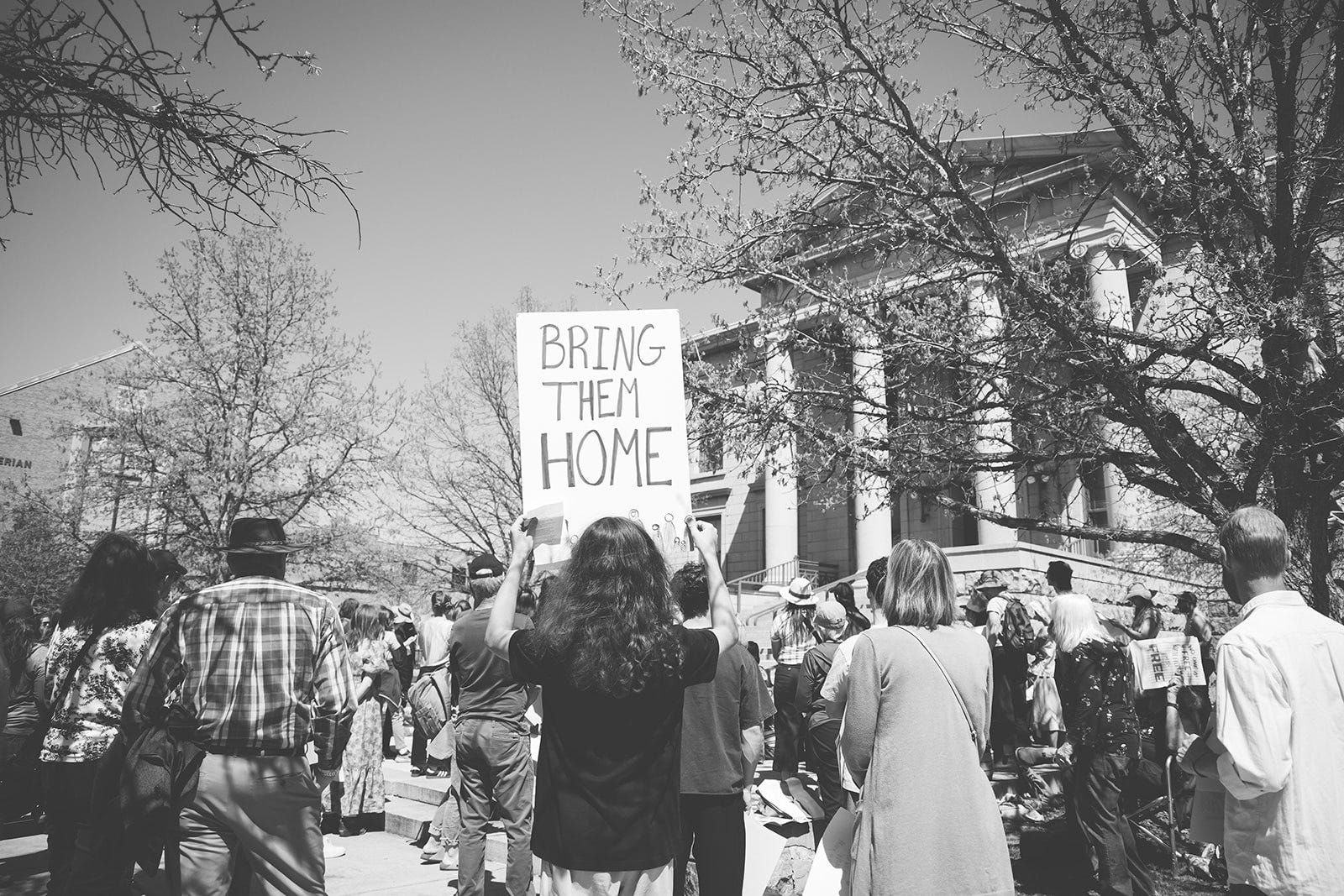
We said again and again, “Bring them home” and wondered if anyone was listening.
Meanwhile, the family’s days in captivity were racking up, breaking records and turning children into suicide risks.
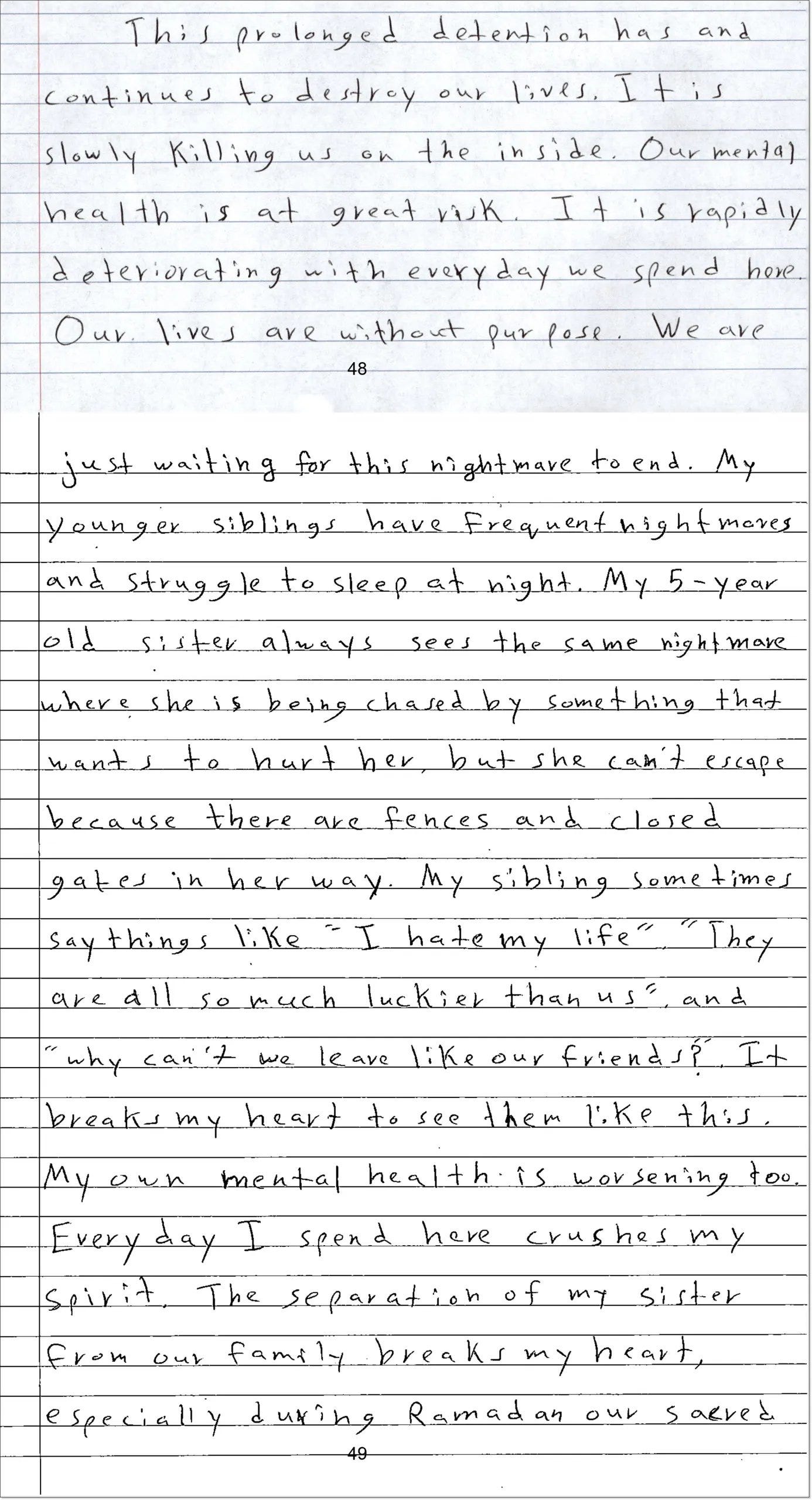
“This prolonged detention has and continues to destroy our lives,” the 16-year-old El Gamal boy wrote to the U.S. Senate Committee on the Judiciary in March. “It is slowly killing us on the inside.”
No posts
Comments
Nothing yet. Say the first thing.
Sign in to join the conversation.