
I’m currently in the field with limited bandwidth, so instead of an article, here are two short pieces about interviews recently published on Mongabay.
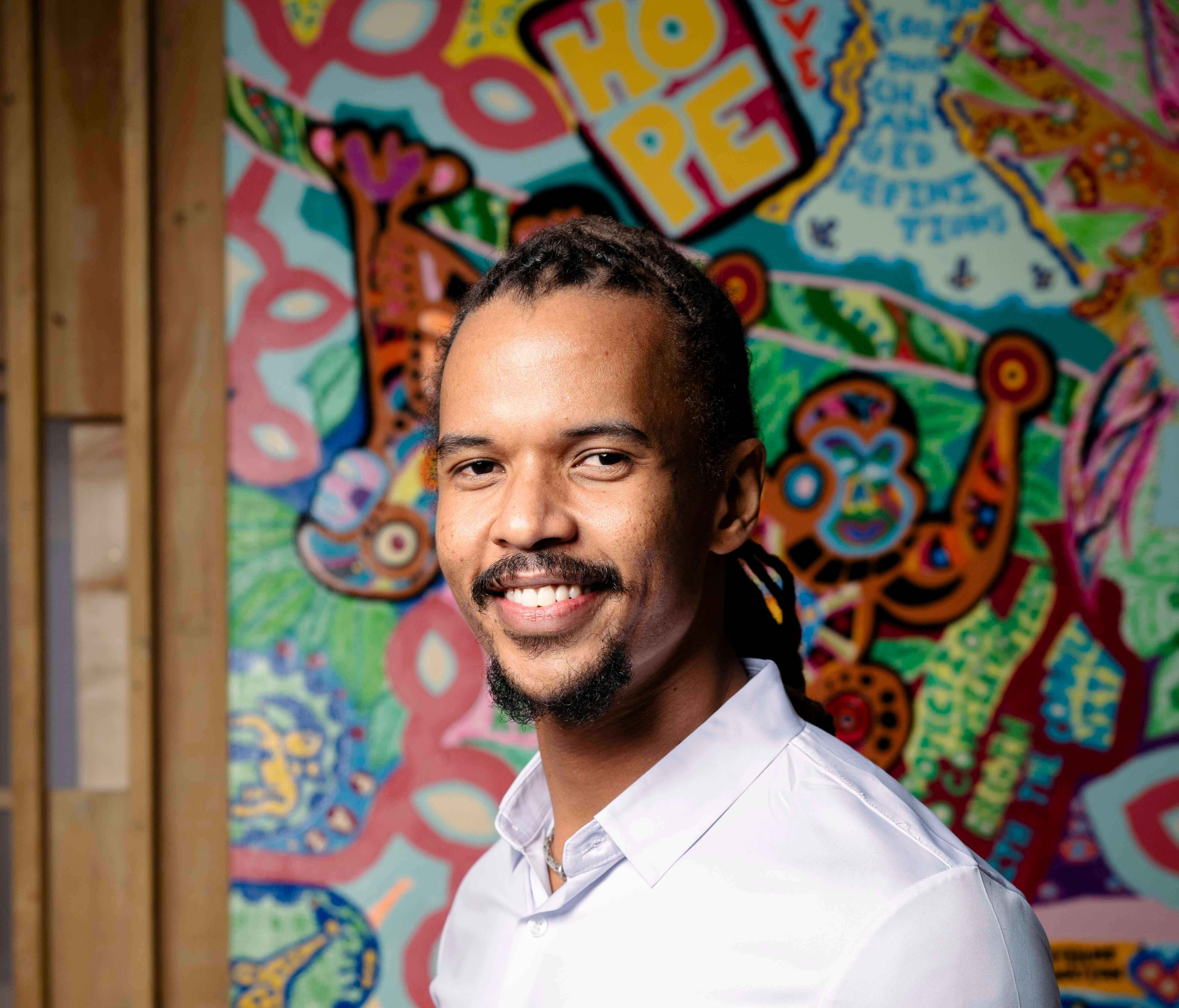
Five months after Jane Goodall’s death, her grandson Merlin Van Lawick appeared at the ChangeNOW environmental forum in Paris carrying something both public and personal. He was there not as a substitute for his grandmother, but as someone shaped by her work and now helping to carry it forward, reports Juliette Chapalain.
The easiest way to misunderstand Goodall’s message is to treat hope as a feeling. For her, as Van Lawick describes it, hope was closer to discipline. She used the image of a dark tunnel with light at the end. The light did not come to you. You had to crawl toward it, over obstacles and under them. “Hope is rooted in action,” he said.
That phrase can sound almost too easy until one considers the work behind it. Goodall’s career began with field research at Gombe, where she helped change how science understood chimpanzees. It became something larger: a life spent asking people to see animals as individuals, ecosystems as living communities, and young people as participants rather than spectators.
In Van Lawick’s telling, Goodall’s influence came through example. She did not push people into service. She made them aware of the consequences of their choices, then left the decision to them. Even with her grandchildren, the pressure was light. He once wanted to be a footballer. She told him she thought he would become a conservationist. She did not insist. The seed did its own work.
That may be the more useful lesson for conservation now. The movement does not lack warnings. It has plenty. What it often lacks is a way to keep people engaged without overwhelming them or making the future feel already settled. Goodall’s answer was not optimism in the sentimental sense. It was agency, practiced in small acts and carried by many people.
This is why Roots & Shoots, the youth program she founded, is such a central part to carrying on her legacy. Its premise is simple and demanding: young people should identify problems in their own communities and act on them. The scale can grow, but the starting point is local. A child plants a tree, protects an animal, cleans a stream, speaks to neighbors. None of this is enough by itself. That is not the point.
The point is that despair asks nothing of us. Hope, as Goodall taught it, begins when people act.
The interview: ‘Hope is rooted in action’: Interview with Jane Goodall’s grandson Merlin Van Lawick
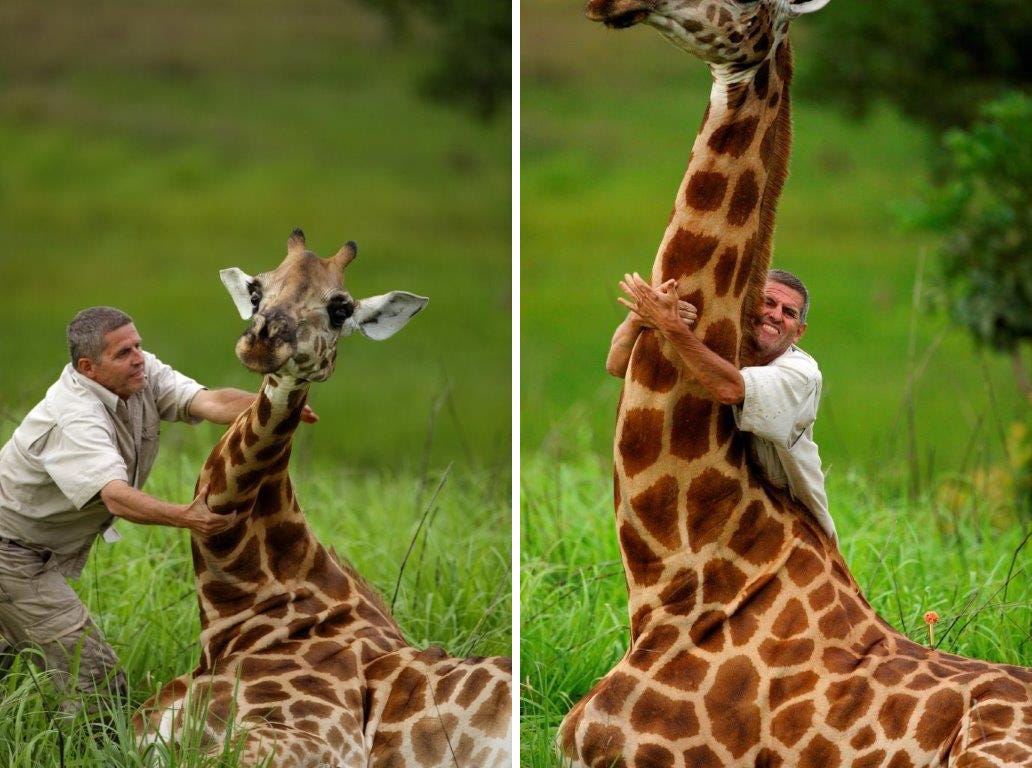
Conservation often sounds most persuasive when it is described as a plan. There are maps, budgets, governance models, community consultations, monitoring frameworks and theories of change. All are necessary. None is sufficient on their own.
Luis Arranz, who has spent more than four decades working in Central African conservation, makes a simpler point: the hard part is not usually knowing what should be done. It is keeping the work going long enough to make a difference.
In his telling, conservation is less like launching an initiative than holding together a working system under constant pressure. Patrols have to function. Radios have to work. Teams have to be paid. Roads, boats, airstrips and fuel supplies matter. So do relationships with local communities, especially where people depend on forests for food, income and security. A protected area that does not produce tangible benefits for nearby people will have weak foundations.
This is not a glamorous view of conservation. It is also probably the right one.
Arranz gives a stark example from Zakouma, in Chad. When he left in 2007, the park had more than 3,500 elephants. Within a year of the project stopping, poachers had killed around 3,000. What took years to rebuild was nearly undone in months.
That is the uncomfortable arithmetic of conservation. Gains accumulate slowly and can disappear fast. A forest can be protected on paper, and still be emptied in practice. A park can have a management plan, and still lack the day-to-day capacity to act when pressure comes.
For funders and conservation organizations, the lesson is plain. Short funding cycles and project-based thinking often sit uneasily with the realities of field conservation. Success depends on continuity, institutional memory and the people willing to remain in difficult places after the attention has moved elsewhere.
The work also has to become more locally rooted over time. Tourism, employment, revenue-sharing and public services are not add-ons. They are part of whether conservation can endure.
The central question is not whether a conservation plan looks convincing. It is whether the system behind it can survive the next funding gap, security shock, natural disaster, or political change. That is where conservation usually succeeds or fails.
Full interview: What it takes to make conservation work in Central Africa: Luis Arranz’s 46-year journey
No posts
Comments
Nothing yet. Say the first thing.
Sign in to join the conversation.