
This post was a sermon given to the saints at St. Paul Lutheran Church, Jonesville, Indiana, on the Eighth Sunday after Pentecost, July 19, 2026.
18 For I consider that the sufferings of this present time are not worth comparing with the glory that is to be revealed to us. 19 For the creation waits with eager longing for the revealing of the sons of God. (Rom. 8.18-19)
If you watch modern television preachers or scroll through religious social media, you will constantly hear or see articulated what we Lutherans call a “theology of glory” — this is the false promise that if you just have enough faith, your life will be an unbroken string of health, wealth, and effortless success. But if you don’t have enough faith, if you don’t pray enough, do enough good deeds, you may just be bringing troubles on yourself.
But we Christians are called to be true theologians of the cross, not of earthly glory. Christians are to call a thing what it actually is, and the reality of our lived experience is often defined by deep, exhausting suffering, even as our Savior suffered and died for us. Everything in this life is not going to be perfect health, unlimited wealth, and effortless success. Christians are hurt, abused, and die tragically or unexpectedly, or suffer greatly; as many who have been martyred recently in Nigeria and other places have suffered; or have you heard about the Lutheran lay-woman who served in the Finnish parliament and government who was recently persecuted for her Christian views of marriage and human sexuality, she was wrongly convicted of using “hate speech” in a higher court despite many lower courts declaring her innocent. On a recent return trip to Finland from America, the British government denied her permission to even change planes in London airport.
The theologian of glory might be tempted to ask what these Christians are doing wrong to “deserve” their sufferings. The theologian of the cross sees with the eyes of faith a greater, higher purpose to our sufferings in the present time.
As justified believers in our Lord and Savior Jesus Christ, baptized and adopted as sons of God in Christ, we live a dual existence: our status before God is completely settled by grace alone, yet our feet are still firmly planted in a broken universe. In Romans 8:18-27, the Apostle Paul does not ask us to put on a happy face or deny our pain or suffering; instead, he gives a holy vocabulary to our deepest hurts. God assures us through the Apostle that amid a fractured world, our tears are not a sign of absent faith, but the honest groaning of a people caught between the friction of this corrupt and dying age and the certain glory of the resurrection to come.
Because of human sin, the entire physical universe was “subjected to futility” (v. 20). Creation itself is described as being in “bondage to corruption.” Thinking back to the Fall of our first parents at the Garden of Eden, God told Adam that man would have to earn his daily bread by the sweat of his brow, the land would not easily produce plenteous crops but tend towards the thorns and the thistles side of things, and many of you farmers no that story all too well! And the woman would long to supplant and supersede her husband in the order of creation, just as Eve first listened to the serpent and took the fruit and ate, and further she would suffer pain in childbirth – what should have been the joy of bringing life into the world would be fraught with danger and heartache.
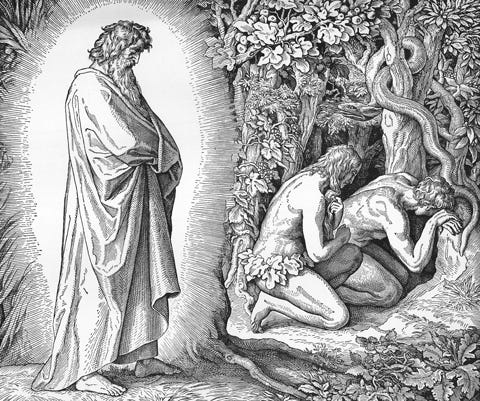
Christians are not immune to this planetary friction of corruption and futility. We do not escape our physical bodies or this broken world upon being justified before God on account of Christ – just because we are baptized into Christ and receive freely His blood-bought righteousness, does not mean there will be no suffering this side of heaven. Instead, our bodies feel the full weight of decay, sickness, and tragedy. I speak to you now as living proof of this.
Paul writes that We know that the whole creation has been groaning together in the pains of childbirth until now. The suffering of this present time is actually a passive waiting, a “birth pang” (v. 22). It’s a sign of something greater to come. The baby must leave the mother’s womb to the greater world outside of the womb that the baby cannot see. The baby must “die” to the womb through labor pains in order to live and breathe in this world. Likewise, we must die to this world in order to breathe and live in the world to come, which none of us can see.
God uses the brokenness of the world to kill our self-reliance and shatter our illusions of earthly glory. Christians are tempted to join this corrupt world and seek our own glory and answers to suffering in this life in political utopias, environmental rescue, or personal wealth and wellness. But through saying that the whole creation groans, God exposes these and any other human evasion of suffering as futile attempts to “save the world” apart from Christ. The world is fundamentally groaning, and we groan with it.
The Lord gently and yet firmly prods us in our sufferings to trust Him for all things and long for His heavenly inheritance He has promised to us. He wants us to eagerly wait for His certain glory. We who have the “first fruits of the Spirit” groan inwardly as we eagerly wait for the final adoption as sons — the inheritance given in the redemption of our bodies.
The letter to the Hebrews says that faith is the assurance of things hoped for, the conviction of things not seen, (Heb. 11.1) Faith in Christ waits and hopes with patience for the final story of our adoption as sons, the redemption of our bodies, which we cannot see or feel, but is only promised to us in God’s Word. True hope for today and tomorrow is anchored outside of ourselves, on the crucified and resurrected Christ, resting entirely on the promise of the Gospel, not ever on our feelings or experiences from day to day. Who hopes for what he sees? But if we hope for what we do not see, we wait for it with patience.
So how do we wait with patience for the hope we have in a more certain glory to come, when we are stuck in the midst of the sufferings of the present time? We have the Spirit’s intercession. When suffering leaves us speechless, weak, and unable to pray as God invites us to, the Holy Spirit himself intercedes for us with “groanings too deep for words.”
Jesus Christ and His heavenly Father do not leave you, their child and heir, to suffer alone. The Holy Spirit takes our broken, inarticulate cries and translates them before the Father’s throne according to the will of God. The same Spirit who raised Jesus from the dead is actively holding you in the faith when you lack the strength to hold onto Him. He does this holding onto you through tangible means of grace: by baptizing you and daily reminding you of your royal status as adopted sons baptized into the death and resurrection of the King of Kings, Jesus; by comforting you in the Holy Christian Church with the forgiveness of sins, the communion of saints, the Lord’s Supper that strengthens your faith, all leading you to hope and wait with eager longing for the certain glory of the resurrection of the dead and life everlasting with Jesus.
“For I consider that the sufferings of this present time are not worth comparing with the glory that is to be revealed to us.” Paul uses a ledger phrase from the financial accounting world here (“I reckon/calculate” that the sufferings of the present time do not outweigh nor do they even come close to the certain heavenly glory that is to be revealed to us...). It is a divine calculus on eternal scales. The weight of the cross you bear today is a light, momentary affliction compared to the absolute weight of glory awaiting you at the resurrection, that final harvest at the end of this age when the Son of Man will send His angels, and the enemy and all who sowed sin and death and suffering in this world will be cast out forever, while you who put your hope in Jesus will shine like the sun in the kingdom of your Father.
God grant the day of His coming in certain glory to come with haste for our sake. In Jesus’ Name we pray this: Amen.
Thanks for reading Ein gut Bekenntnis! This post is public so feel free to share it.
Comments
Nothing yet. Say the first thing.
Sign in to join the conversation.