
Way back in 2009, when I first started writing seriously, I attended the New York State Summer Writers Institute at Skidmore College. At the time, I hadn’t committed to pursuing my love of writing for young readers yet, and I was attracted to this particular program because of its stellar roster of faculty and writers-in-residence, which included some of the most revered literary figures in America.
I won’t lie: It was thrilling to spend two weeks basking in the glow of so many luminaries, including several previous (and future) Pulitzer Prize and National Book Award winners and finalists. But it was also profoundly eye-opening to get a brief glimpse into the elitist culture of the literary world.
For example, we were not allowed to share meals with the faculty and writers-in-residence, and with the notable exception of a handful of especially talented (and/or young and attractive) students—who were invited to cross the invisible velvet rope that always seemed to materialize at the wine and cheese receptions following public readings—we did not mingle with the faculty.
Moreover, some of the faculty were downright abusive. Although I was lucky to be in a workshop led by two of my literary heroines (Amy Hempel and Mary Gaitskill), who also happened to be able and helpful teachers, I heard several horror stories from my fellow students about the other workshops.
For example, there was the one about the very famous Pulitzer Prize-winning novelist who allegedly told one of her students in front of the entire class that she should probably quit writing because she was never going to be any good. Another Pulitzer Prize- and National Book Award-winning poet allegedly had a nasty habit of dozing off during the discussion of her students’ work because she was apparently so bored by it. Then there was the renowned novelist and short story author who allegedly dismissed a student’s piece by saying that it reminded him of The Lovely Bones, a novel he wanted to back his truck over, again and again and again.
In the seventeen years since I attended that program, I have diligently put in my 10,000 hours as both a student and teacher in many other fiction workshops. I now recognize not only the petty cruelty and disrespect of this behavior, but also how utterly valueless and ineffectual it was as a means to teach us anything about writing. But what’s most upsetting to me looking back is how accepting I was of this abuse at the time. I remember not being particularly shocked or appalled by any of it. None of us were. Sure, we commiserated with the “victims” and joked amongst ourselves that we were just lucky it hadn’t happened to us yet. Ha, ha. But nobody complained to the workshop administrators. Nobody demanded that their hefty tuition be refunded. Nobody wrote a blistering exposé naming names and blowing the lid off the toxic environment at the New York State Summer Writers Institute. Instead, we swallowed the horrible way these stories made us feel—small, worthless, and humiliated on behalf of our fellow students—and reminded ourselves how lucky we were to have been accepted into this prestigious program at all.
In retrospect, I believe this is because on some level we all expected to be treated this way. It was simply the culture of that place at that time, a culture driven by status and unchecked egos, with clearly defined boundaries between the haves and have nots. It was a culture that mirrored that of the larger literary community these famous authors emerged from, a world which has always tolerated (and to some degree celebrated) this kind of contemptuous behavior from those who possess sufficient renown, talent, and power. As a result, we simply assumed that whatever insults or indignities we suffered were the price of admission to sit at the feet of genius and snatch up any stray morsels we could get our grubby, mediocre hands on. We wanted to be writers, after all. Writers need to learn how to take criticism, right? Writers need to pay their dues. Writers need to grow a thick skin…
I was reminded of this experience last week during an otherwise delightful visit to Rochester, NY to give a craft talk on setting to the members of the Rochester Area Children’s Writers and Illustrators or RACWI.
Before the event began, my two hosts, one of whom is a former student of mine from Boyds Mills, took me to a lovely dinner at a nearby restaurant. Mostly we had a wonderful time, chatting about writing and our lives. But at a certain point the subject of the still-unfolding Mac Barnett controversy came up, and I could feel a small, black cloud descend over our table.
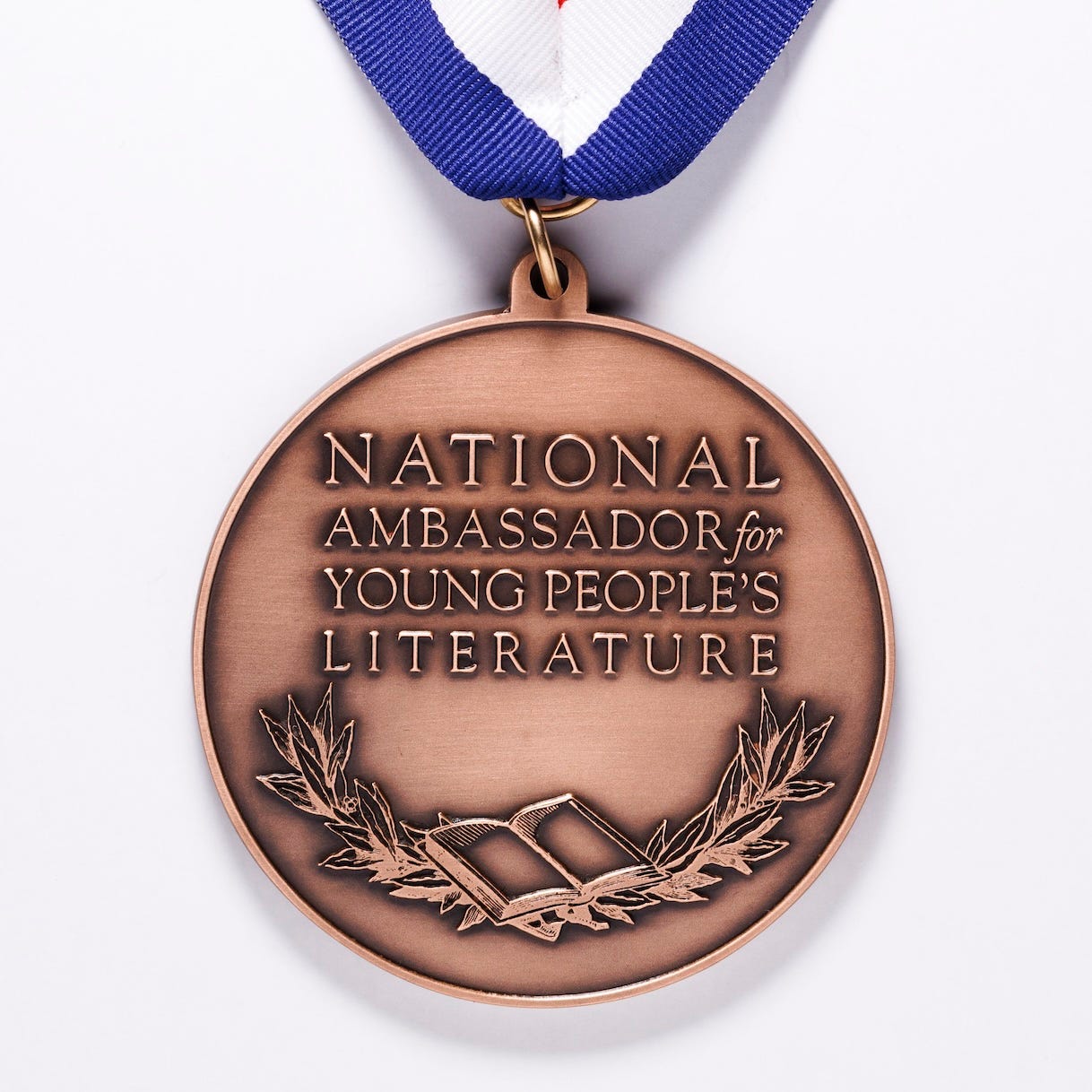
In case you’ve been hanging out under a rock or are currently on a social media cleanse, here’s a quick primer on what happened. In short: Mac Barnett is the current National Ambassador for Young People’s Literature—a bi-annual honor bestowed by the Library of Congress upon an accomplished children’s book author to serve as the nation’s most prominent cheerleader for children’s literature. Previous Ambassadors include Meg Medina, Jason Reynolds, Jacqueline Woodson, Gene Luen Yang, Kate DiCamillo, Walter Dean Myers, Katherine Patterson, and Jon Scieszka. (So, the very cream of the kid lit crop.) Mr. Barnett was appointed to this role in 2025, and his tenure has been largely unremarkable until last week, with the publication of his new essay collection, in which the following quote appears:
“I have a nagging fear that children’s literature suffers from a slightly higher crud percentage than literature as a whole… maybe more like 94.7 percent of kids’ books are crud.” — Mac Barnett
As you may have experienced yourself, my social media feeds exploded with angry posts from outraged friends and colleagues responding to this quote. Of course, nobody appreciates having their work described as crud. But as so many others have pointed out, between rampant book bans, the rise of AI, industry consolidation, shrinking school and library budgets, and the collapse in literacy among our readership, it feels like a particularly mean-spirited moment for the National Ambassador for Young People’s Literature to punch down on his fellow beleaguered kid lit creators like this.
Moreover, as some ominously warned, Mr. Barnett had inadvertently handed the perfect cudgel to the book banners, who would surely seize upon this quote from a prominent, cishet white male kid lit insider to bolster their bad faith claims that our books are dangerous “woke” crud from which children need to be “protected.”
Sadly, these warnings have since proven prescient.
As we discussed the situation, my hosts joked (with the kind of skin-thickening gallows humor that reminded me of my days at the New York State Summer Writers Institute) that they weren’t even crud yet, but were still “pre-crud” (as in pre-published). We all laughed at this because it was funny, but also because laughing masked just how small, humiliated, and worthless Mac Barnett’s comment had made us feel. Or at least that’s how I felt. (I don’t want to speak for my hosts.)
Fortunately, that’s a feeling I’ve rarely experienced since that summer in 2009. Shortly after that workshop ended, I made the leap to writing for young readers and never looked back. I have since found that the culture of the kid lit community prioritizes the very qualities of kindness, humility, generosity, and mutual respect that the adult literary world so often sacrifices upon the altar of success. Sure, we have our share of prima donnas, but by-and-large our community does a pretty good job of policing itself to ensure that those individuals set neither the tone of our discourse nor the standard of behavior in our spaces. Over the years, I have been both a student and teacher in countless kid lit environments, and I sincerely believe that the elitist vibes I experienced that summer at the New York State Summer Writers Institute would never be tolerated in any of them. In fact, some of the most generous, supportive, and down-to-earth people I know have a Newbery, Printz, or Caldecott in their bio. Leading with humility, kindness, and respect is just what it means to be a good citizen of our community, a fact that our Ambassador seems to have forgotten—if he ever knew it in the first place.
I’ve wondered about this last point a lot since the controversy broke. I’ve wondered how many published and pre-published writers Mac Barnett actually knows outside of his circle of fellow New York Times bestselling household names. It seems to me there can’t be that many, because if he actually knew the rest of us, he would never be able to so casually slander us just to make a silly and untrue point. If he understood the years (and sometimes decades) of hard work, sacrifice, and rejection most of us endure simply to publish a single book, he would be far too shamefaced to ever dismiss our efforts so glibly. If he was aware of how little money and respect we earn, how much abuse we take from reactionary parents and bigoted politicians, how much disappointment and personal humiliation we suffer at the hands of the publishing industry, he would feel mortified to say such flippant things about us out loud. If he was any kind of ally at all to the black and brown, queer and trans, disabled and neurodiverse writers who have fought at every turn for better representation and the freedom to tell their own stories, he would be far too humbled to ever belittle their achievements in this way. And if he took even a moment to acknowledge that the vast majority of us (94.7 percent or more) know perfectly well that we will never achieve even a tiny fraction of his success, and yet we still show up every day to do this work—because we love it as much as we love our young readers—it would never even occur to him to write such a hurtful thing about us in the first place.
But that’s just it, isn’t it? Mac Barnett doesn’t know us at all.
Which is why, I think, his comment has riled up so many of us. Sure, it smacks of elitism, insensitivity, and an inflated (white male) ego completely out of touch with the ethos of the community that has elevated him to the high platform he now enjoys. But more fundamentally, it feels like a betrayal of what it means to be a good citizen of children’s literature. That’s simply not how we do things here. We don’t shit on each other’s writing to make a point. We don’t diminish the hard work and sacrifice of our fellow kid lit creators in order to elevate our own brand and opinions. We don’t serve this kind of disrespect, especially not in public, where our comments can do real harm to those with less power and visibility. That’s not the sort of behavior we would ever model for our young readers, so why would we act this way toward each other? If Mac Barnett doesn’t know this about our community, then perhaps he shouldn’t be representing us to the world.
“Leading with humility, kindness, and respect is just what it means to be a good citizen of our community…”
I’m happy to report that despite the brief pall the topic of “Crudgate” cast over our dinner conversation, my hosts and I enjoyed the rest of our meal together. My subsequent talk was great fun! If you ever have the opportunity to speak to the members of RACWI, I highly recommend it. The group was warm, generous, and welcoming. There were young and old writers alike, picture book authors and novelists, newbies and publishing veterans. They were attentive, engaged, and asked many smart and insightful questions. I had a wonderful time, and it turned out to be the perfect antidote to the poisonous atmosphere stirred up online by Mac Barnett’s quote.
But the best part of all came at the very end of the evening. A man who’d been sitting toward the back and had asked me a very interesting question about why I like to write horror came up to introduce himself.
It was Alex Sanchez!
If you don’t know, Alex Sanchez is one of the pioneers of LGBTQ+ children’s literature. His seminal YA novel, Rainbow Boys (named one of the “100 Best YA Books of All Time” by Time Magazine), was one of the first books I read when I began toying with the idea of writing for young readers. Alex Sanchez showed me that there was a viable path for writers like me in children’s literature. He helped blaze the trail that I and countless other queer kid lit creators now walk upon. He was a role model and inspiration to me at a time when I was still feeling my way toward an eventual career in writing for young people, and here he stood before me, in the flesh.
Although he currently serves on the faculty of my alma mater, we’d never actually met or spoken before, and yet he couldn’t have been kinder, more gracious, or more supportive. I was too stunned to adequately convey to him what a deep honor it was for me to meet him, let alone to know that he’d come to hear me speak on a random Thursday night at his local RACWI event. (But I hope he’ll read this essay someday to know.)
And the thing is, Alex Sanchez didn’t need to be there that night. It’s not false modesty to say that I highly doubt I taught him anything about setting he didn’t already know. He didn’t have to show up to promote a new book or to raise his profile, and my lecture certainly didn’t feed his ego in any way. He simply came to listen, to enjoy the company of his fellow kid lit creators, and to be a good citizen of our community—and that meant the world to me.
This is the anecdote I choose to leave you with for all the obvious reasons. Please be like Alex Sanchez. Lead with humility, kindness, and respect.
In community,
Rob
Registration for the 2026 R(ev)ise and Shine! Residency closes tonight at midnight. Don’t miss your chance to attend our third annual event, one again taking place on the lovely Campus at Marlboro Music (formerly Potash Hill) in Marlboro, VT.
This year we are delighted to welcome Catherine Laudone (guest editor), Sera Rivers (guest agent), James E. Ransome (guest illustrator) and Alysa Wishingrad (guest author) to our residency!
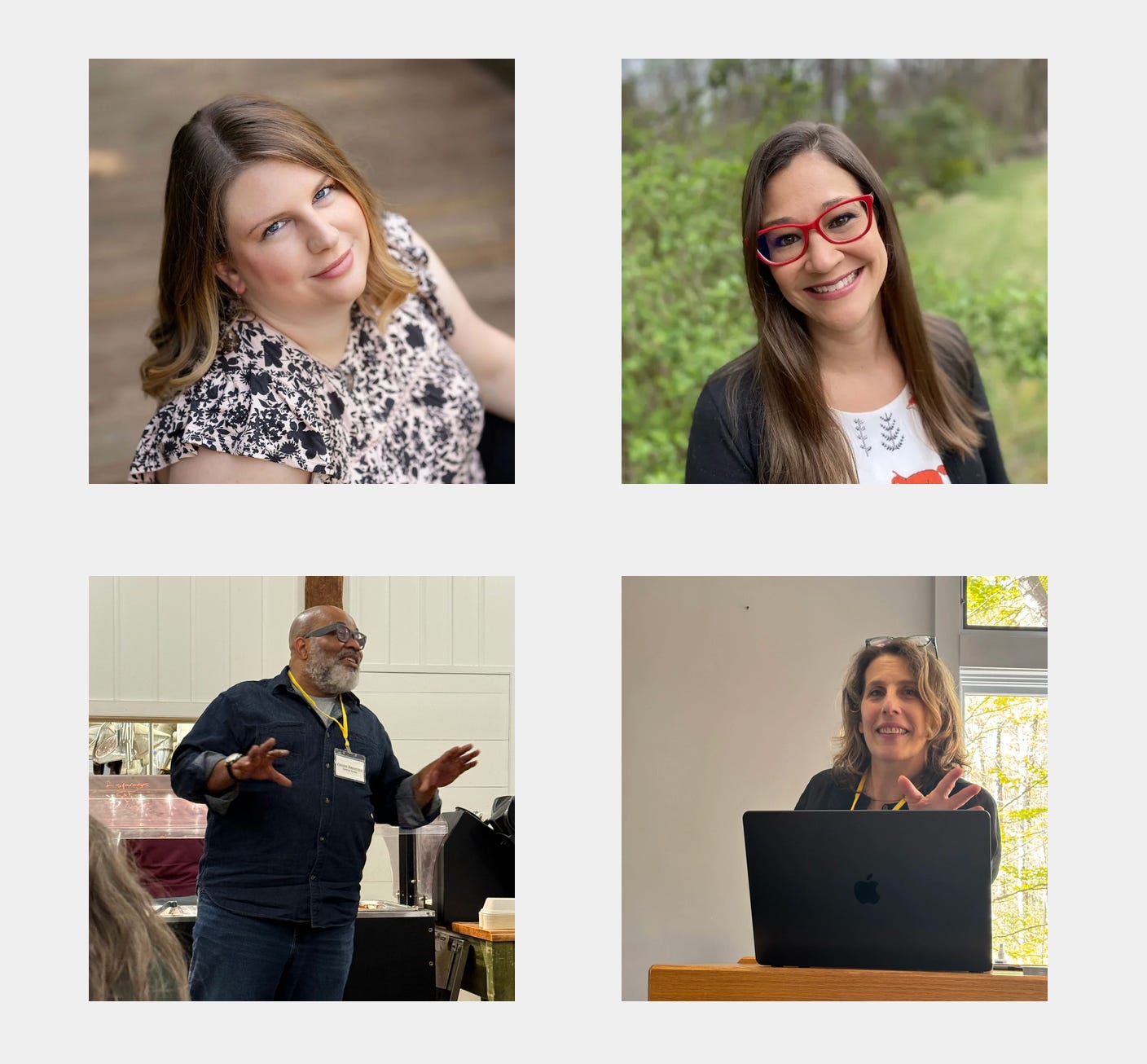
All four will be joining us in person to interact with students and participate in the residency. In addition, for a modest fee, Catherine will be offering one-on-ones to writers of middle grade and picture book manuscripts, while Sera will be offering one-on-ones to writers of young adult and adult manuscripts. For those who write in more than one age category/genre, we invite you to sign up for one-on-ones with both!
Three full and delicious daily meals prepared by the Brattleboro Food Co-op (including beer, wine, snacks, and appetizers).
A full schedule of programming, including multiple daily lectures, an evening art event, structured writing time, a group reading, and fun social activities.
Two 45-minute one-on-one meetings with your Critique and Revision Mentors to discuss your work-in-progress.
Written feedback from your Critique Mentor on your manuscript pages.
$500 scholarships available for BIPOC creatives.
Special guest editor, Catherine Laudone, will be offering one-on-ones to middle grade and picture book authors.
Special guest agent, Sera Rivers, will be offering one-on-ones to young adult and adult authors.
Newer accommodations in the state-of-the-art New Dorm.
A new “Accommodation Upgrade,” featuring a limited number of private apartments (with private bathrooms, entrances, and kitchenettes) available for an additional fee on a first come, first serve basis.
An optional additional day of retreat time available through Sunday, November 1st for a modest fee.
To Register:
Register now through May 15, 2026 (or until full) with a $500 non-refundable deposit on our Eventbrite page.
Balance of tuition due by July 1, 2026.
The number of participants for this retreat is limited to 20, providing a low attendee-mentor ratio.
Our website offers loads more details, including a full FAQ and additional information about the Campus at Marlboro Music.
Click the image below to find out more and register now:

Stories ground us in a chaotic world. We are in the midst of a reading crisis and the world is turning more visual. Picture books introduce story and visual narrative before language and are essential tor development and literacy. How do you write books that are relevant, interesting and that matter to a picture book reader and what do editors look for in picture books?
When: Wednesday, May 27, 2026 from 7:00 to 8:00 pm ET
Where: Online
Cost: $20*
*For those who can’t attend live, a recording of this session will be made available for 30 days after the event for all ticket holders.
Click the image below to find out more and sign up:
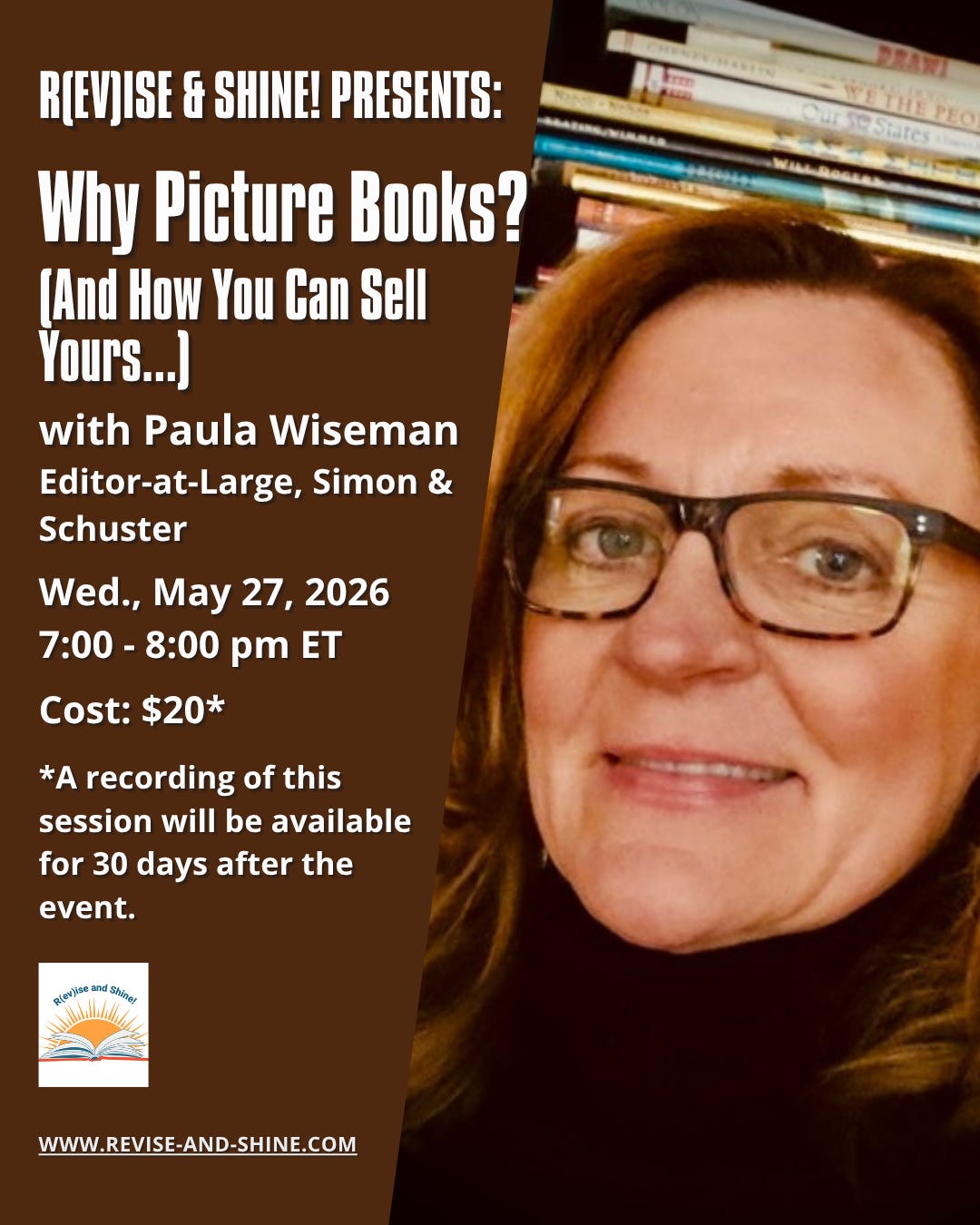
Paula Wiseman is editor-at-large for Simon & Schuster. She has 45 years experience in publishing, most recently as V.P and Publisher of Paula Wiseman Books/Simon & Schuster Books for Young Readers. She has worked with Lesa and James Ransome, Toni Morrison, Rosemary Wells, Raul Colon, Matthew Forsythe, Matt Van Fleet and many other amazing book creators.
No posts
Comments
Nothing yet. Say the first thing.
Sign in to join the conversation.